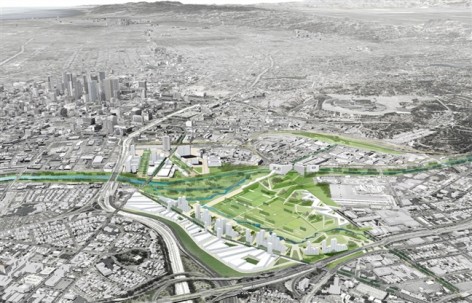
“Iconic. A simple, big, bold move. And it’s a cool idea to have a promontory overlooking Manhattan.”
—2012 Professional Awards Jury“标志性,简单,宏大。这个酷点子让我们(西海岸)能够超越曼哈顿(东海岸)”。
——2012专业奖评审委员会
Piggyback Yard Feasibility Study By Mia Lehrer + Associates, Los Angeles,更多请至:Mia Lehrer + Associates, Los Angeles on gooood
This project examines converting a 125-acre rail yard into a new terrain supporting riparian habitat and providing public accesswhile maintaining hydraulic performance during peak flows within the central corridor of Los Angeles. Outlining the development and hydrological programs that will transform Piggyback Yard from a concrete industrial landscape to a “River Destination”, an ambitious, transformative vision forms the cornerstone of the revitalization of the LA River corridor acting as a catalyst for urban regeneration.
本项目考察的是将占地125英亩的铁路站场改造成有益于河岸生态环境的新地形,在供公众使用的同时,还能在洛杉矶中央河道流量最大时保持水力性能。研究列出了将Piggyback Yard从一个具体的工业景观改造成“河流目的地”的开发和文水项目。“河流目的地”是一个宏大的改造性景观,是复兴洛杉矶河道的基石,是城市重建的催化剂。
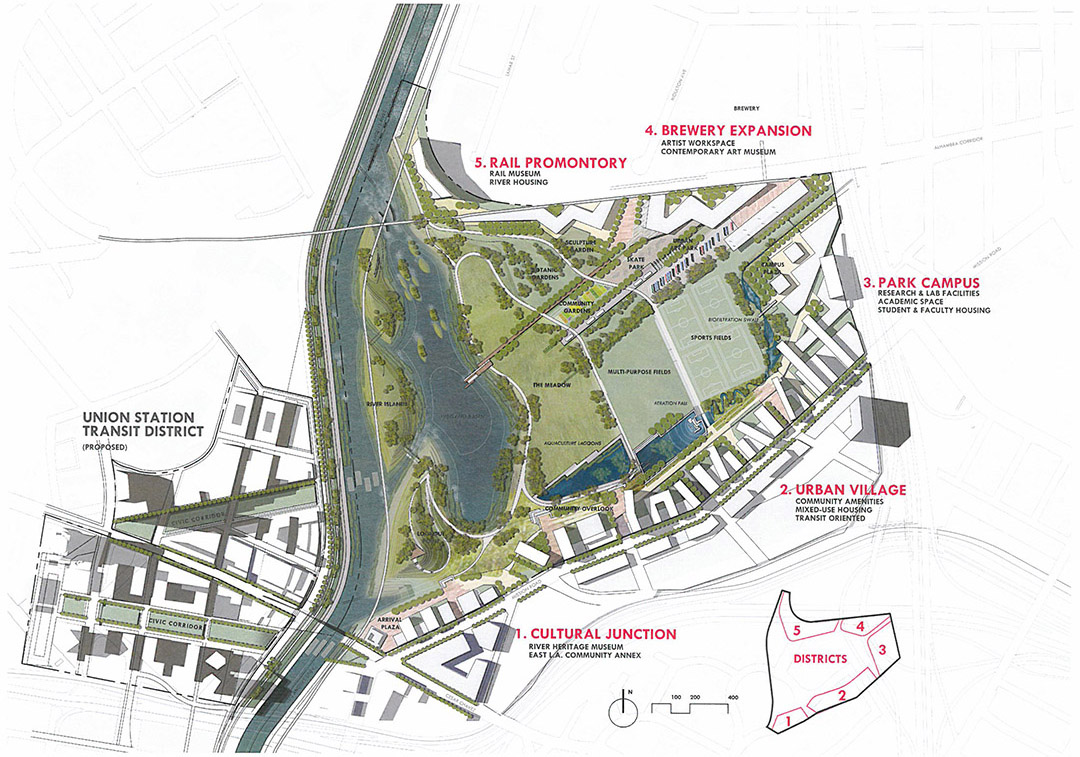
▲ Piggyback and the Los Angeles River
Site Plan
Piggyback和洛杉矶河 总平面
为了让我们的城市中心更具活力,中心城市的工业用地被改造以适应大都市的发展,这仅仅是21世纪城市的变化过程。与城市中心能容纳大量人口的优势比起来,土地整改和开放老工业区的负担就显得微不足道了。洛杉矶这座城市清楚地意识到,在保留工业区的同时将荒地更好地利用起来是多么重要。通过清洁技术走廊等改造措施,这座城市正在一步步搭建起与不断增加的住宅区兼容的新工业区,该工业区更清洁无害、更密集、经济更强健,并为技术发展和可持续/再生能源研究中心提供赞助。
Piggyback Yard代表了模式的转变,标志着该地区20世纪发展过程(为了实施便利和短期利益而规划土地)的终结,也标志着大型基础设施转变的重要性,这种转变让社区和环境获得了长远利益。Piggyback Yard可行性研究的目的是在公共Piggyback Yard概念总体规划书的基础上进一步了解该项目的范围。研究集中在 1)水文对场地与河流的影响 2)了解场地目前的市场价值和收购方案。
可行性研究是按照Piggyback概念总体规划书中的布局进行的——力求将改造洛杉矶河以及在洛杉矶市中心新建一块地的投资最大化。Piggyback Yard项目以城市重建理念为核心,充当城市发展的催化剂,采用以各类系统为基础的绿色基础设施的形式,让生态环境能最大程度造福于这个地方和这里的人。可行性研究提供了一个一举多得的方案来解决城市化对环境的多重影响,并阐述了河流改造计划及其对未来的影响所带来的不同层面的好处。
Piggyback Yard的概念规划建立在四个原则上:改造位于市中心的洛杉矶河;创造足够大的公共开放空间;连接附近的社区;建立一个供人们居住、工作、学习、娱乐的多样化充满活力的社区。Piggyback Yard的选址为提高东洛杉矶社区与市中心的连结性提供了绝妙的机会。至于与河对岸缺乏连结性的问题,场地周围的街道为步行者和骑自行车的人提供了重要的连接道。场地与河流将为沿岸和对岸的河堤提供新的连接点。作为一个合并的景观,该项目在持续提高城市流动性上扮演了重要角色,为社区主导型发展模式创造了机会。
Piggyback Yard可行性研究概括了将Piggyback Yard从一个混凝土工业景观改造为一个以洛杉矶河作为主要建筑特色的“河流目的地”的开发和水文项目。Piggyback Yard的场地范围和滨临洛杉矶河的位置让河流能恢复一部分自然特征,为强化社区、在重新发展中提高经济繁荣创造了机会。
如果Piggyback Yard得以重建,就能使洛杉矶河复原,对位于市中心部分的河流来说,这是唯一的方法。因此,河流流入Piggyback Yard的设计方案必须平衡水文、生态、文化和经济方面的利弊。该项目的水文计划提供了额外蓄洪,消除了目前位于泛滥平原范围内的周边建筑被洪水淹没的危险。水文计划包括水质改善措施,比如径流和水处理系统、创建生态环境、增加沿岸的植被和改造软土基底。蓄洪、水质、和生态环境的改善将Piggyback Yard 与洛杉矶河紧紧联系在一起,提升了河流的生态性能,缓和了场地的环境危机,在洛杉矶河上建立了一个供人们居住、工作和娱乐的新地方。
可行性研究中关于土地收购和开发的部分集中分析了两点:一、通过对目前市场上的理论依据进行评估,发现这是一个长期性的规划项目;二、认知有什么样收购策略能够控制属性。通过市场分析和咨询房地产开发商专家组我们了解到,正如概念总体规划书中预期的那样,收购和开发Piggyback Yard场地是可行的。可开发的区域环绕在场地的北边、东边和南边,将场地在河边的开
发边界最大化,同时保留大部分空间作为与河流融为一体的多功能开放空间。该项目需要收购洛杉矶运输中心(LATC),也被称为Piggyback Yard,以及其它七栋位于主场地西南角和东南角的建筑。
开发计划预计为多功能混合式开发,提供如同大学校园式的环境,包括USC健康科学院、酿酒艺术区,也激发了来自清洁技术走廊里的初创公司前来举办创业活动。Piggyback Yard距离联合车站不到一英里,位于一个交通便利的社区,吸引了更多人来河岸居住。由于新的高铁站可能会建在现有轨道和河流之间,巨大的开发改造计划将带来全天无休的城市活动。这个新的“河流公园校园”标志着洛杉矶创新经济的来临,同时也提供了有利于河流环境修复计划的绿化区和休闲区。
除了Piggyback Yard的可行性分析和收购方案之外,项目还需要联合太平洋公司洛杉矶运输中心的迁移方案。铁路设施的迁移将给铁路网和联合太平洋公司的货物运输造成巨大影响。交通和货物运输专家将为项目制定一份整合方案。除了洛杉矶运输中心的迁移方案以外,还需要提交Piggy- back Yard 场地的环境评估,因为在重新开发并投入使用之前,需要进行大规模的整改。在项目后期需要雇佣一个土地咨询师,在重新开发Piggyback Yard场地和迁移洛杉矶运输中心时协助进行区域和授权分析。
最后,本报告中描述的Piggyback Yard项目为今后涉及基础设施、开发和开放空间的类似项目打开了机会大门,成为推动该城市发展的催化剂。
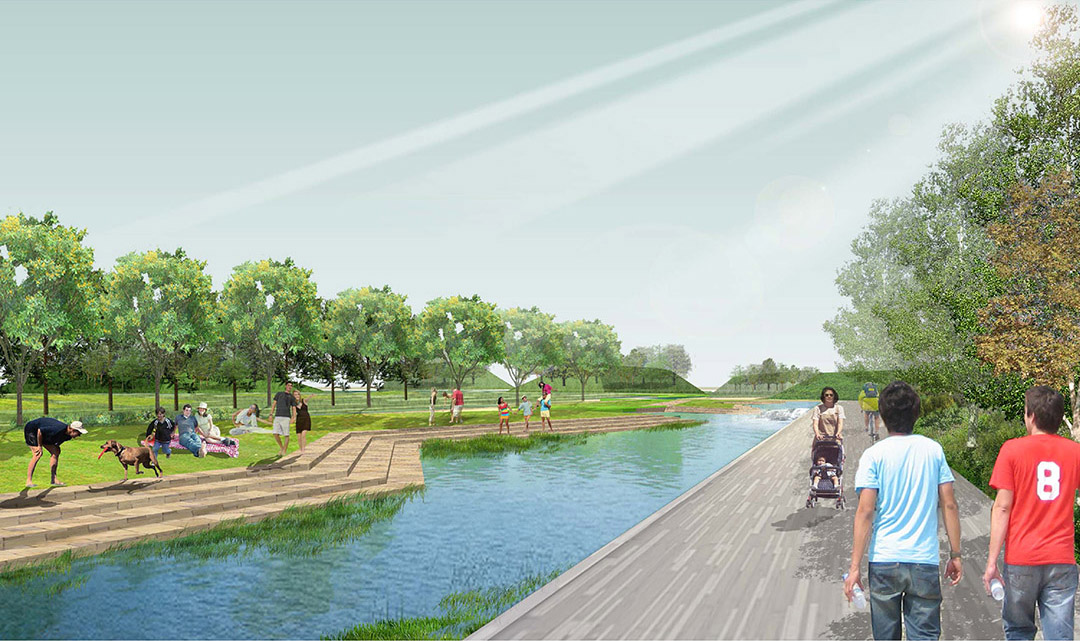
▲Piggyback and the Los Angeles River
The size and location of the Piggyback Yard site along the Los Angeles River offers a unique opportunity to allow the river to regain some of its natural character, create neighborhood enhancement opportunities and increase economic prosperity through redevelopment.
Piggyback Yard的场地范围和滨临洛杉矶河的位置让河流能恢复一部分自然特征,为强化社区、在重新发展中提高经济繁荣创造了机会。
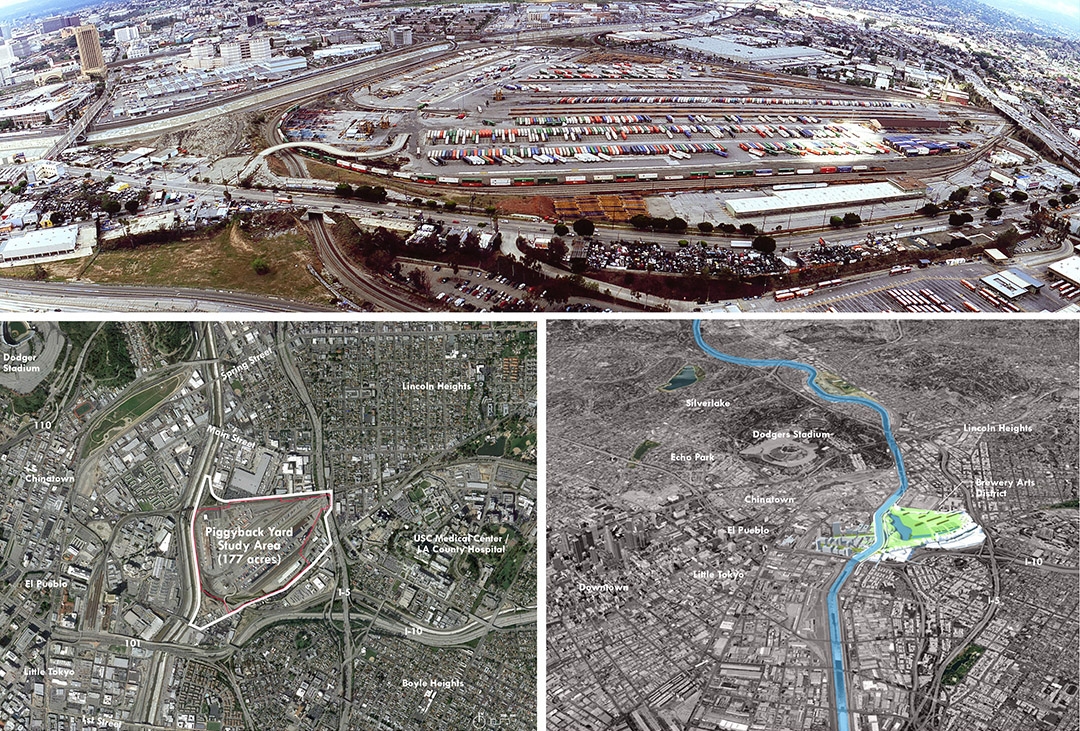
▲ Transforming a Rail yard
The project area includes the 125-acre Piggyback Rail Yard, technically referred to as the Los Angeles Transportation Center(LATC) and an assortment ofadjoining smaller parcels of predominantly marginalized light industrial uses, comprising a total of 177 acres.
改造一个铁路站场
该项目区域包含一个125英亩的铁路站场——洛杉矶运输中心(LATC)以及各式各样邻接的、主要位于边缘上的小型轻工业建筑,总面积为177英亩。
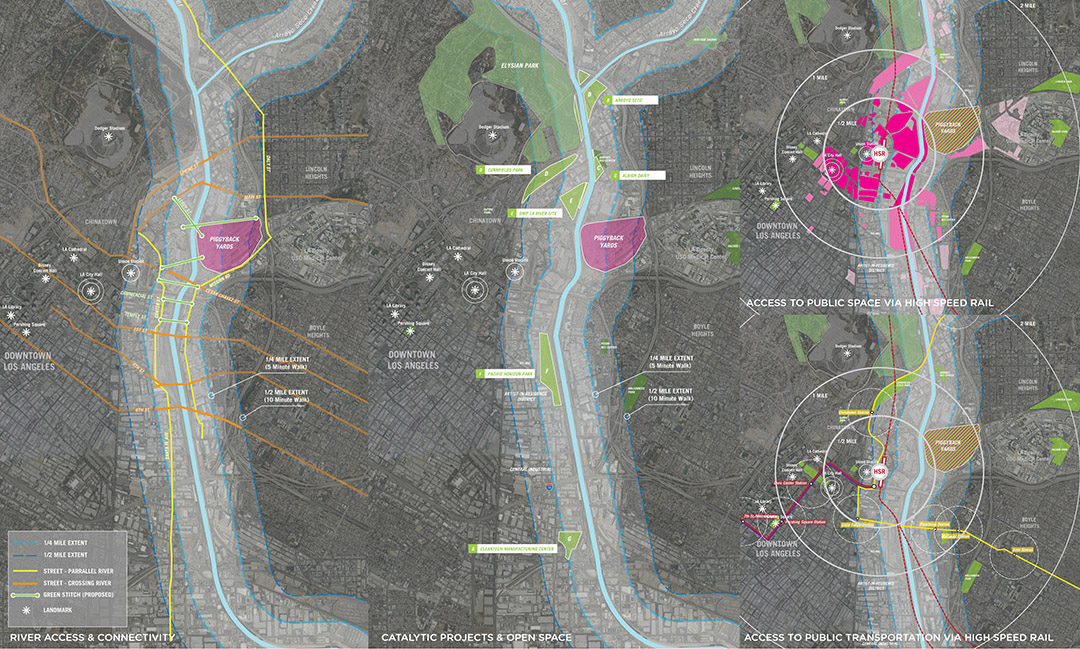
▲ A River Destination
Offering genuine access and connectivity to a unique urban riparian landscape for a diverse population, bridging a gap between east and west L.A, combining wetlands restoration, parkland creation, flood detention and community development that supports a livable Los Angeles River.
河流目的地
让不同人群都能进入到这个独一无二的城市河滨景观,搭建起了东西洛杉矶之间的桥梁,并将恢复湿地、创建公共用地、滞洪和开发一个适宜居住的洛杉矶河社区合并为一体。
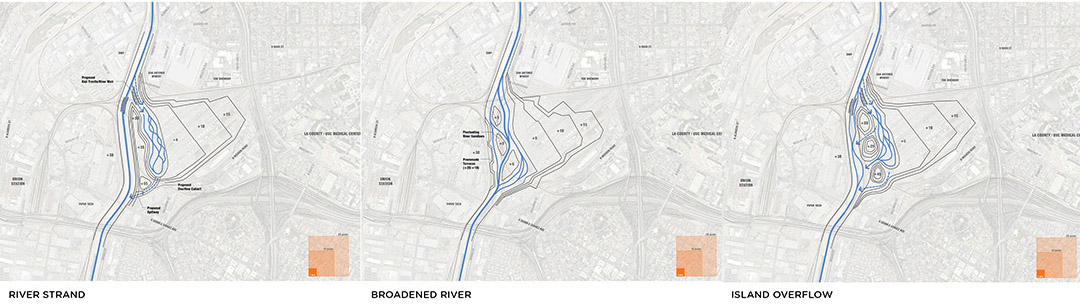
▲Exploring Design Concepts
After an initial assessment of two conceptual master plans – River Strand and Broadened River – each employing different approaches to managing flood attenuation and creating areas for habitat, third strategy Island Overflow was developed maximizing benefits from the two previous plans.
探索设计概念
在经过对两个概念总体规划书——River Strand和Broadened Rive(每一个采用不同方式处理洪水衰减和创建生态区)进行初始评估之后,制定出了第三个Island Overflow方案,将前两个方案的利益最大化。
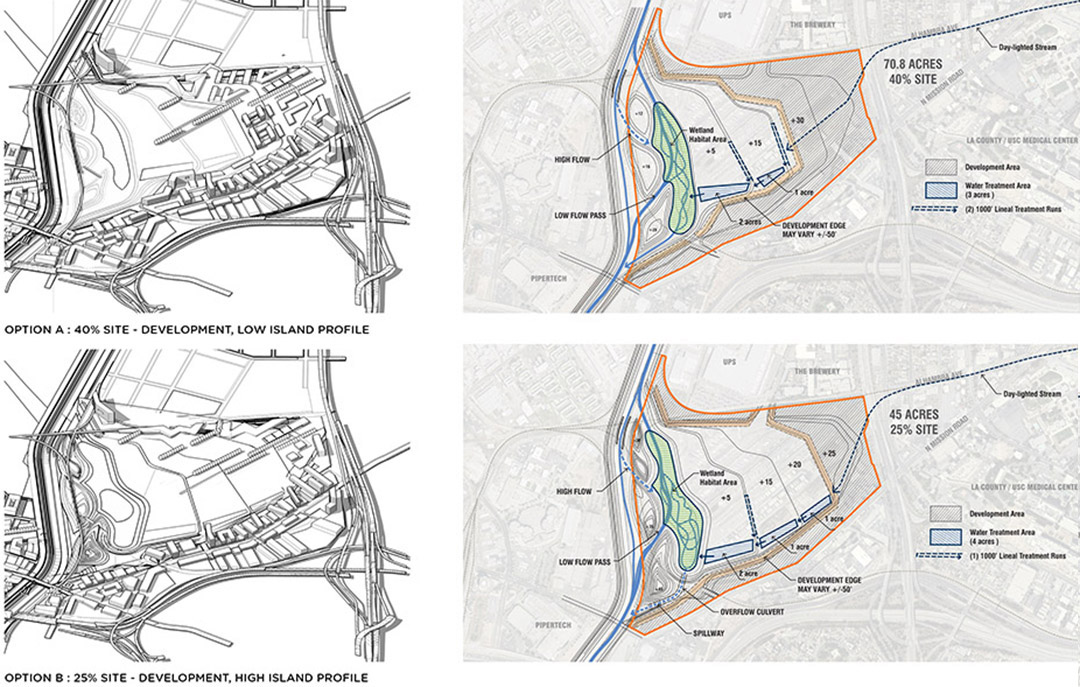
▲Open Space Development Balance
Studying strategies for maximizing connections and adjacencies to existing streets and neighboring uses.
开放空间开发平衡
研究方案致力于与现有街道和邻近建筑最大程度地连接起来。
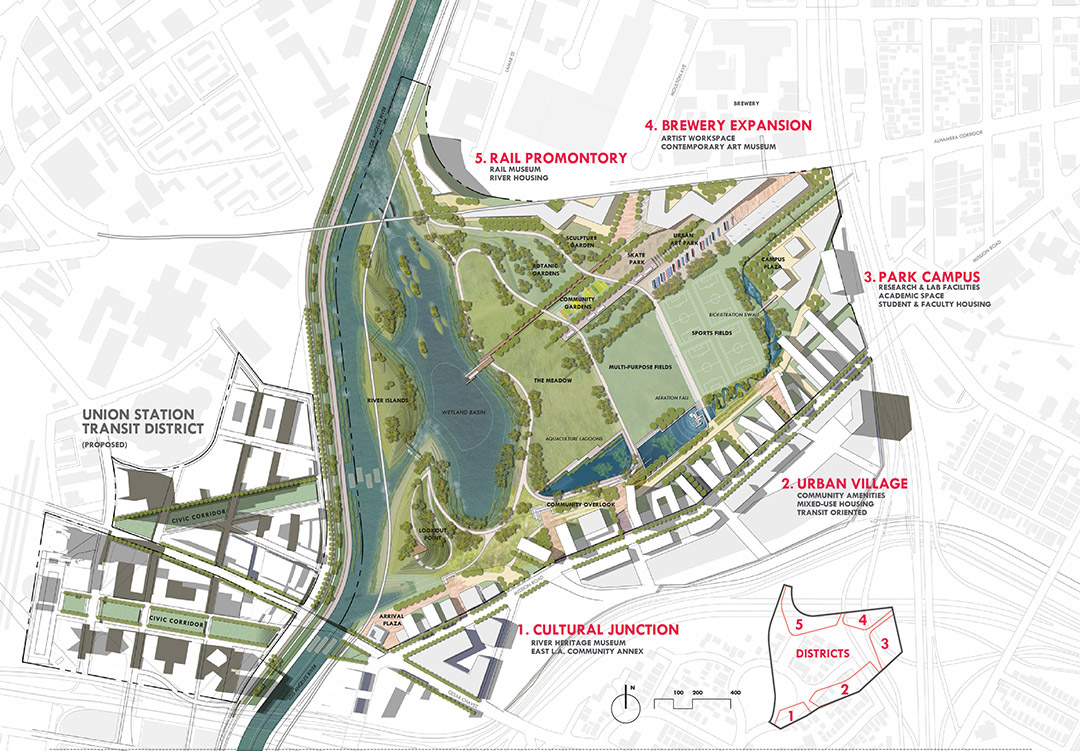
▲A Multibenefit Solution
Presenting a multi-benefit solution to resolve the compounding effects of urbanization on the environment, this river revitalization project acts as catalyst for future urban regeneration.
一举多得的解决方案
这个河流复兴计划提供了一个一举多得的方案来解决城市化对环境的多重影响,成为了推动城市重建的催化剂。
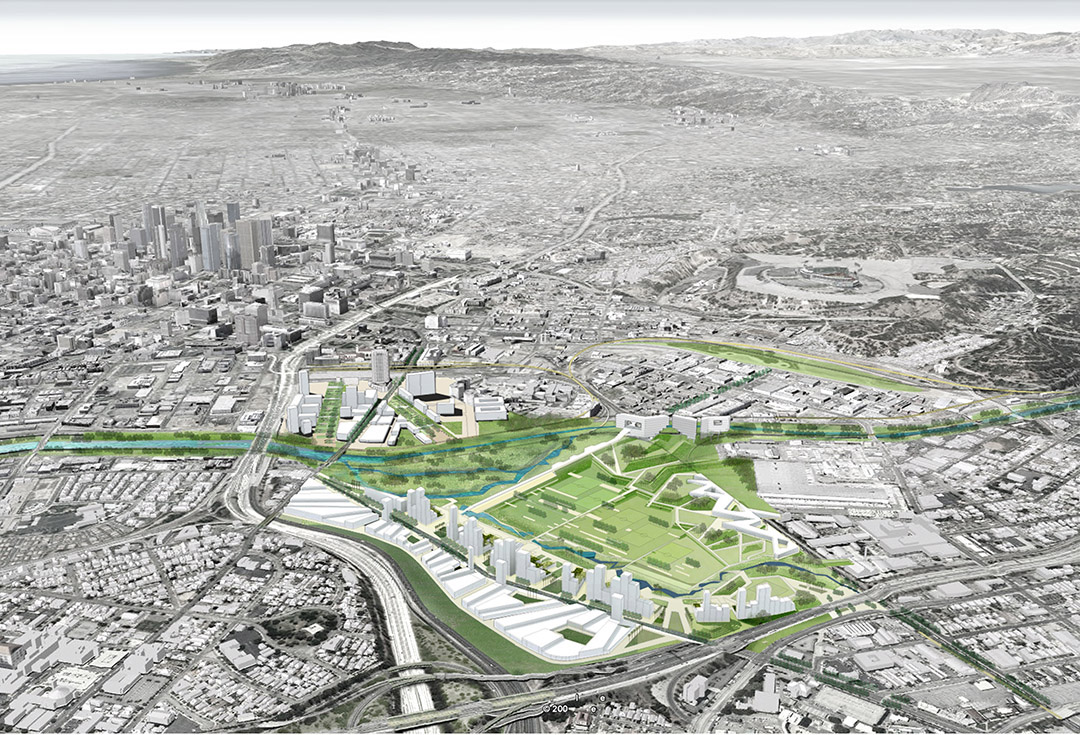
▲Urban Vitality and Resilience
Recognizing that the LA River navigates through many conditions of urban places, neighborhoods, and naturalized areas, thePiggyback vision embraces the industrial corridor of Los Angeles a as unique to itself.
城市的韧性与生命力
由于洛杉矶河经过了城市的许多地方、社区和自然区域,Piggyback景观涵盖了洛杉矶工业走廊作为其独有特色之一。
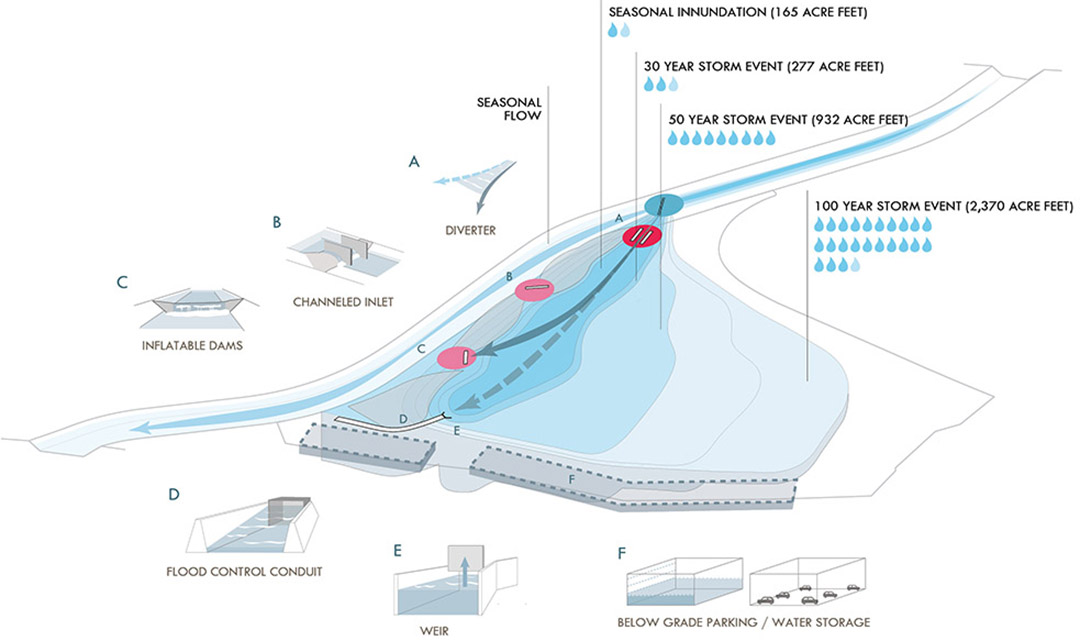
▲ Storm Event Management
Utilizing the full extent of the rail yard property, the 125-acre parcel allows for the unique opportunity to significantly alter the river channel creating a new terrain that supports riparian habitat and provides public access while maintaining hydraulic performance during peak flows.
暴雨应急处理
最大程度地使用125英亩的铁路站场,对河道进行大规模修改,以创建一个有利于河岸生态环境的新地貌,在洪流高峰期既能维持水力性能,又能允许公众入内。
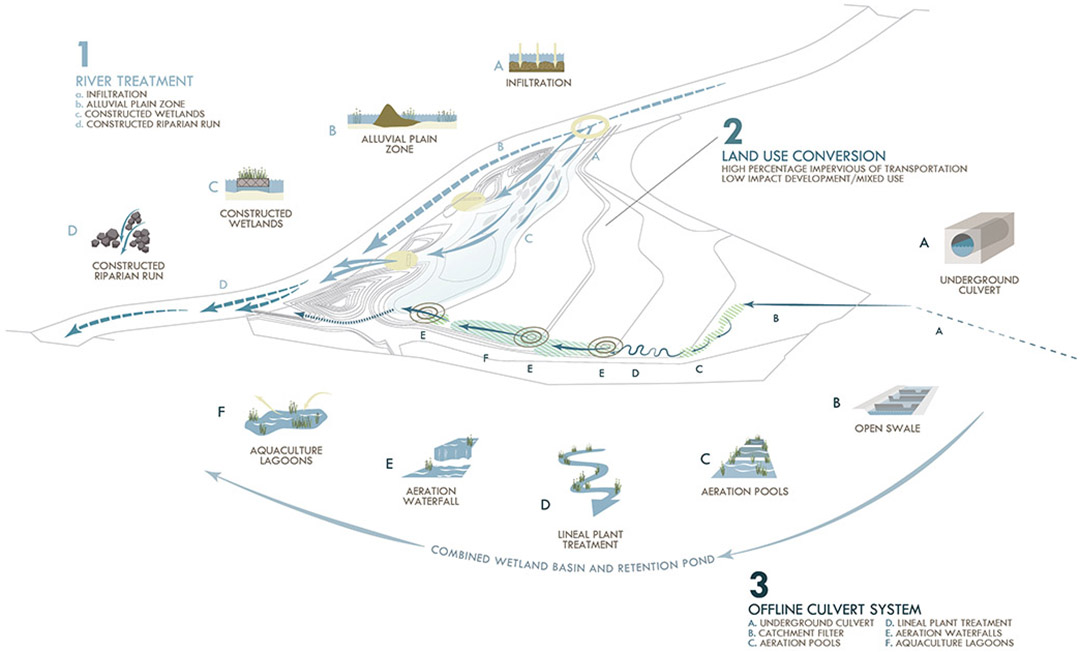
▲Improved Water Quality
The design of the Piggyback Yard site will improve water quality through a number of enhancements, including land use conversion of the site, improved ecological functioning of the LA River, and stormwater treatment technologies.
提高水质
Piggyback Yard 场地通过一系列改善措施提高水质,包括场地土地使用改造、提高洛杉矶河的生态功能和暴雨雨水处理技术。
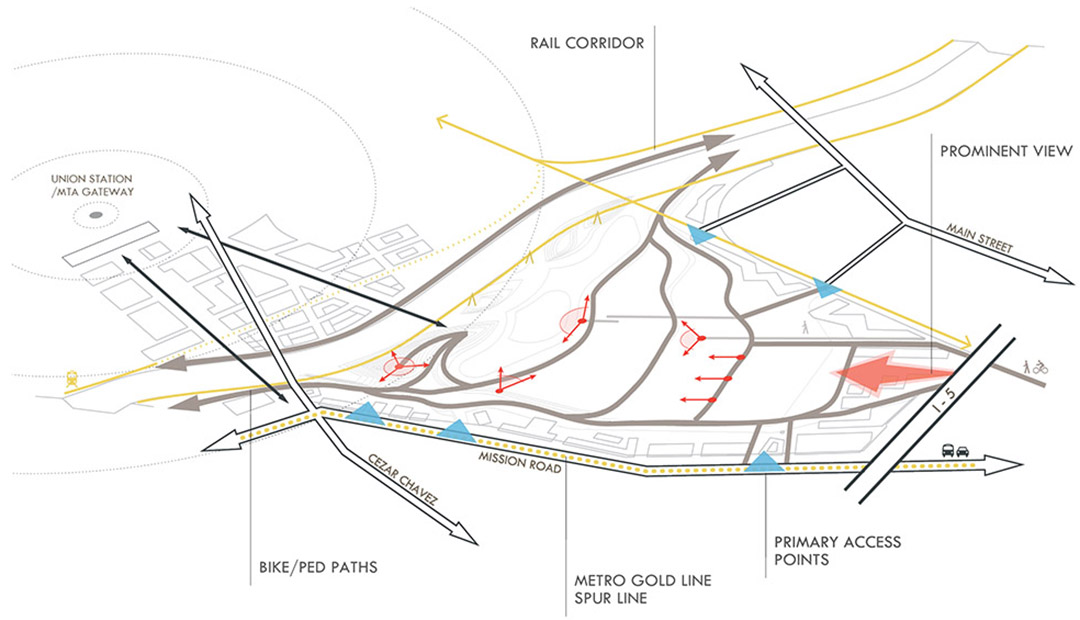
▲Connectivity
With respect to the lack of connections across the river, the Piggyback Yard site is an incredible opportunity to improve connectivity mending the neighborhoods of East LA together with downtown
连结性
至于与河对岸缺乏连结性的问题,Piggyback Yard的选址为提高东洛杉矶社区与市中心的连结性提供了绝妙的机会。
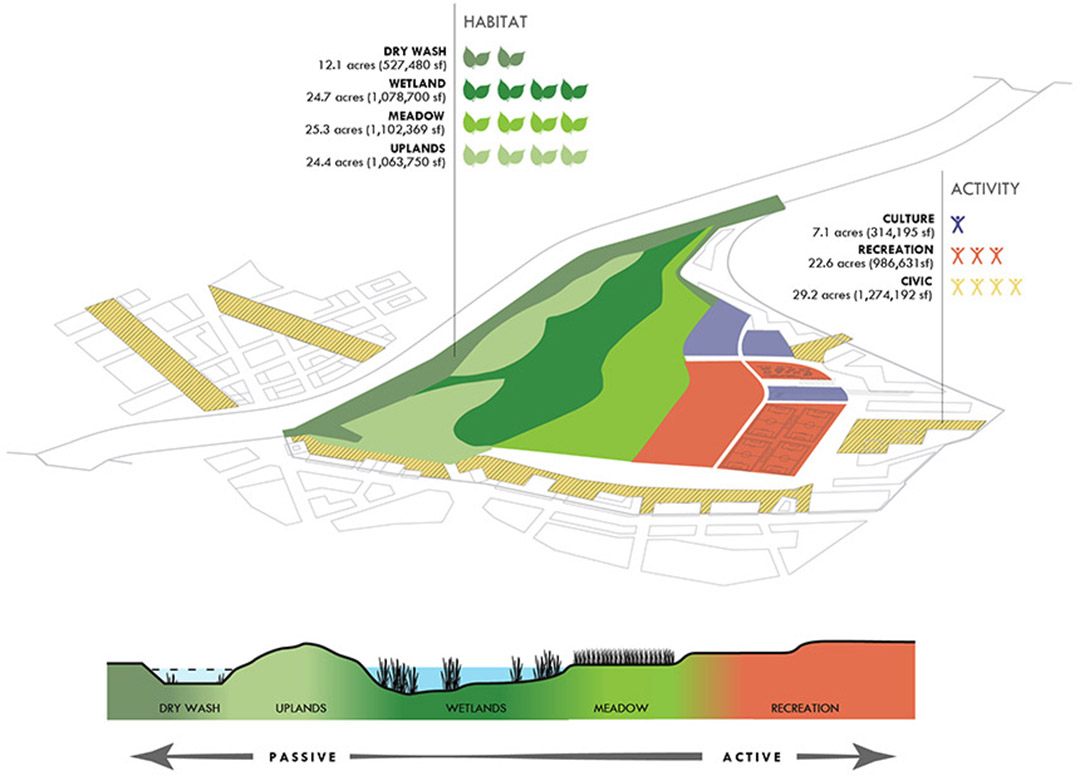
▲ Site Programming
Organized by elevation and proximity to the river; passive uses are located in the lower plateaus increasing in intensity as theelevation increases orienting people, ensuring the sanctity of habitat areas, minimizing maintenance, providing access, and heightening awareness of the sites relationship to the river.
场地规划
按到达河流的高度和距离进行规划,用途小的建筑建在地势较低处,建筑密度随着高度和人群的增加而增大,确保生态环境的整洁,将维修费用降到最低,允许公众进入,并强调场地和河流的关系。
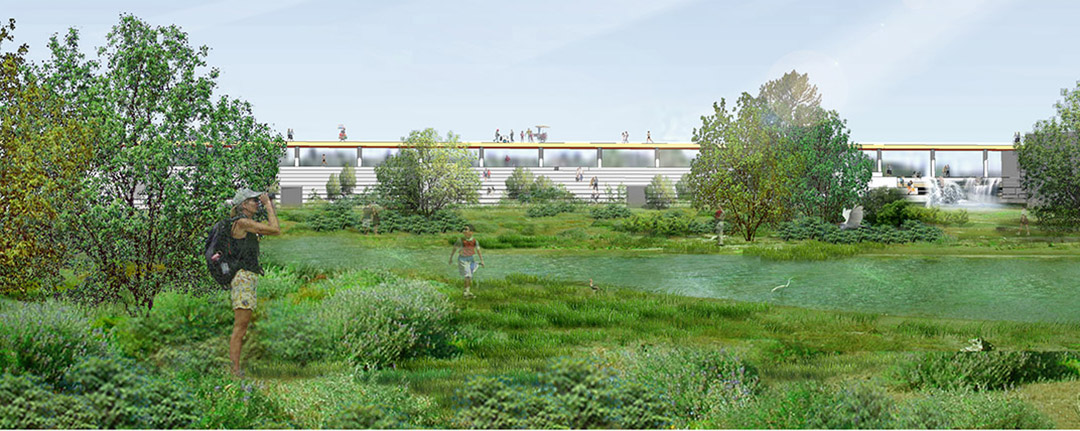
▲Recalibrating the Los Angeles River
Our cities must plan to recalibrate its infrastructural systems to handle the compounding effects of 20th Century urbanization combined with more frequent and severe storms as a result climate change.
重新检验洛杉矶河
我们的城市必须计划对基础设施系统进行重新检验,以应对20世纪城市化和气候变化带来的更加频繁剧烈的风暴。
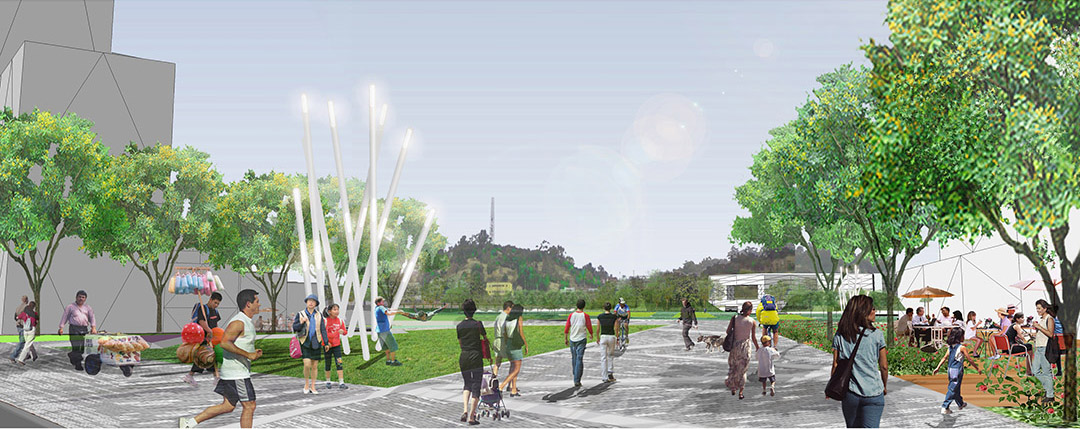
▲ Supporting Interactions
Transforming Los Angeles for the symbiotic betterment of its community and its ecology, creating a significant opportunity for meaningful interaction between people and nature.
有助于互动交流
对洛杉矶进行改造,使社区和生态环境得到共同改善,为人与自然和谐交流创造了重要机会。
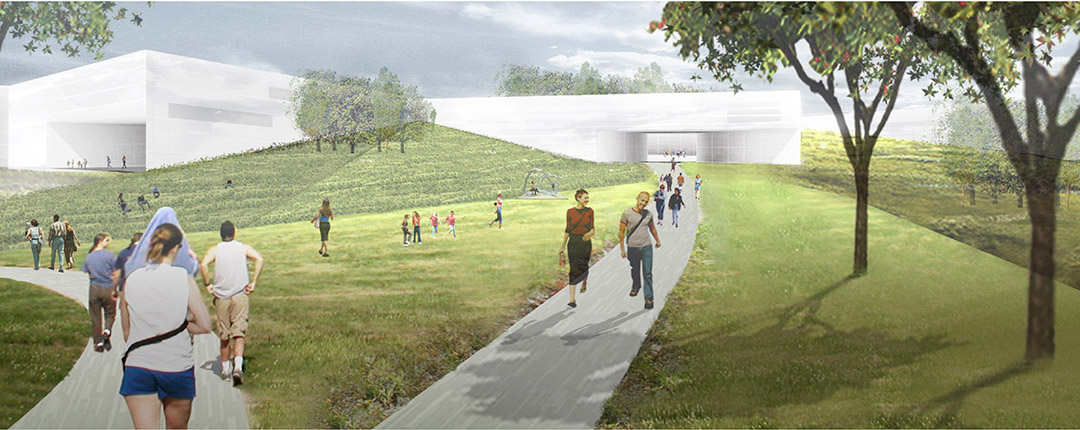
▲A New Industrial Landscape
The city is in process of fostering a new industrial landscape compatible for urban residential growth and fosters an industrial sector that is cleaner, non-harmful, denser and more economically robust; sponsoring centers for technological advancement and sustainable/regenerative research.
一个新工业景观
这座城市正在一步步搭建起与不断增加的住宅区兼容的新工业区,该工业区更清洁无害、更密集、经济更强健,并为技术发展和可持续/再生能源研究中心提供赞助。
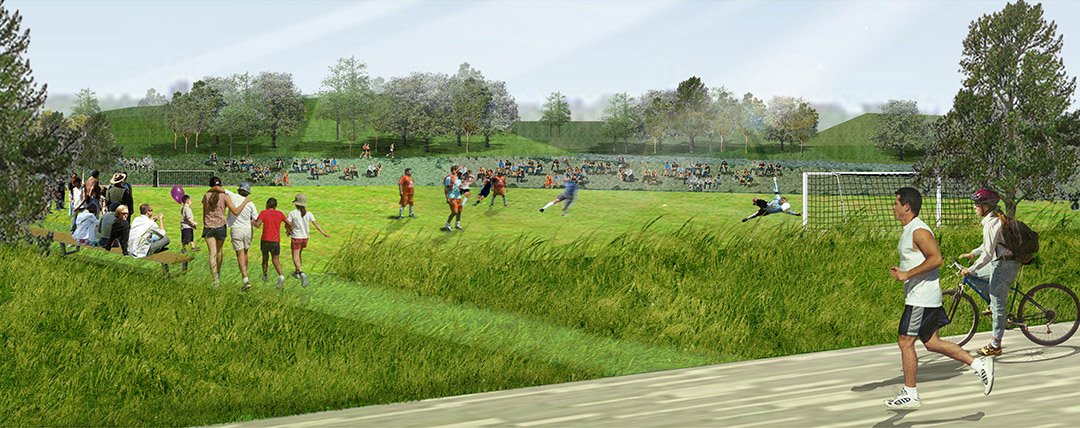
▲Shifting the Paradigm改变模式
The Piggyback Yard represents the paradigm shift, signaling a departure from the region’s 20th Century process of development and signals the importance of large infrastructural change that provide long-lasting benefits for both the communityand environment.
Piggyback Yard代表了模式的转变,标志着该地区20世纪发展过程的终结,也标志着大型基础设施转变的重要性,这种转变让社区和环境获得了长远利益。
As a means to make our urban centers more vital, the transformation of central city industrial lands to accommodate metropolitan growth is simply a process of 21st century change. The significance of the nucleus of city’s central space and ability to host significant populations within our cities urban centers will outweigh the burden of remediation of land and processes for unlocking historically controlled industrial properties. Los Angeles is actively recognizing the importance of the ability to accommodate for higher and better uses of derelict lands while preserving the industrial zoning. Through efforts like the Clean-tech corridor the city is in process of fostering a new industrial landscape compatible for urban residential growth and fosters an industrial sector that is cleaner, non-harmful, denser and more economically robust; sponsoring centers for technological advancement and sustainable/regenerative research.
The Piggyback Yard represents the paradigm shift, signaling a departure from the region’s 20th Century process of development (compromising land for the sake of ease of implementation and short-sighted planning) and signals the impor- tance of large infrastructural change that provide long-lasting benefits for both the community and environment. The purpose of the Piggyback Yard Feasibility Study is to further understand the project’s scope and extent based upon the extensive work developed from the pro-bono Piggyback Yard Conceptual Master Plan. The study focuses on two topics critical to understanding the project’s aspirations: 1) the effects of hydrology on the site and river, and 2) understanding the site’s current market value and strategy for acquisition.
The vision for the Feasibility Study follows the path laid out by the Piggyback Conceptual Master Plan – one that seeks to maximize investment for the revitalization of the LA River and creation of a new place within the landscape of Downtown Los Angeles. The Piggyback Yard exemplifies the notion of urban regeneration, serving as a catalytic type of project that employs a systems-based form of green infrastructure that maximizes the benefits of ecology for people and place. Presenting a multi-benefit solution to resolve the compounding effects of urbanization on the environment, the Feasibility Study provides a description of the layering of benefits as a river revitalization project and its relevance to the city’s future.
The conceptual plan for the Piggyback Yard is founded on four key principles – to revitalize the Los Angeles River at the heartof the city; create significant public open space; connect adjacent neighborhoods; and build a diverse, vibrant community where people live, work, learn and play. The Piggyback Yard site is an incredible opportunity to improve connectivity mending the neighborhoods of East LA together with downtown. With respect to the lack of connections across the river, the streets that surround the site will serve a more vital role to connect pedestrians and cyclists. The site and river will afford new connections along and across the river’s banks. As a combined vision the plan plays a significant role in continued improvements for mobility and opportunities for community-oriented development.
Outlined in the Piggyback Yard Feasibility Study, is the development and hydrological programs that will transform Piggyback Yard from a concrete industrial landscape to a “River Destination” with the LA River featured as its primary asset. The size and location of the Piggyback Yard site along the Los Angeles River offers a unique opportunity to allow the river to regain some of its natural character, create neighborhood enhancement opportunities and increase economic prosperity through redevelopment.
The Piggyback Yard’s potential redevelopment will allow the LA River to become revitalized in a way that is unique to the downtown stretch of the river. To this end, design concepts were developed that allow for the river flows to access the Piggyback Yard in a manner that balances hydrologic, ecological, cultural and economic benefits. The hydrological program of the project provides additional flood storage to offset the risks of adjacent properties that are currently within the limits of the floodplain.
The hydrological program includes water quality improvement elements, such as runoff and water treatment, and habitat creation, such as enhanced vegetation along the River and soft-bottom conversion. The flood storage, water quality and habitat enhancement components would establish a strong connection between Piggyback Yard and the LA River that enhances the ecological performance of the river, mitigates the site’senvironmental risks, and creates a new destination on the LA River for people to live, work, and play.
The land acquisition and development portion of the Feasibility Study focused on two key analyses: firstly, assessing the current market, what can be reasonably supported today, recognizing that this is a long term planning effort; and secondly, what is the acquisition strategy for controlling the property. A market analysis was conducted along with consultation from wan expert panel of real estate developers to understand the feasibility of acquiring and developing the Piggyback Yard site as envisioned in the Conceptual Master Plan. The developable area rings the site’s northern, eastern and southern edges maximizing the site’s potential for riverfront edge development while maintaining most of the site as a multipurpose open space that engages the river. The project would require acquisition of the Los Angeles Transportation Center (LATC), also known as the Piggyback Yard, as well as seven additional properties at the southwest and southeast corners of the main parcel.
The development program envisions mixed-use development, a series of campus-like settings that further promote adjoining uses that include the USC Health Sciences Campus and the Brewery Arts District, as well as spur on the entrepreneurial activity emanating from start-ups within the Cleantech Corridor. Situated within a mile from Union Station, the Piggyback Yard is positioned to foster a walkable, transit served community prompting a more active population on the river. With the potential for the new High Speed Rail Station to be located somewhere between the existing tracks and the river, the eventual transformation of the area could spark a dramatic development transformation bringing on a 24-7 level of activity. This new “River Park Campus” will signal the arrival of Los Angeles’ innovation economy, while simultaneously providing green and recreational space to support the River’s environmental revitalization efforts.
To move forward with the Feasibility Analysis and Acquisition Strategy of the Piggyback Yard, a relocation strategy for UnionPacific’s LATC must be developed. The potential relocation of the rail facilities will have dramatic effects on the rail network andgoods movement activities of Union Pacific. It is recommended that a Transportation and Goods Movement Expert would make an integral addition to the project. In addition to the relocation strategy of the LATC, an environmental assessment of thePiggy- back Yard site is recommended as it is likely that it will require significant remediation before it can be redeveloped and made ready for public use. At a later phase, it is recommended that a Land Consultant be hired to assist in the zoning and entitlements analysis required for the redevelopment of the Piggyback Yard site and for the relocation of the LATC.
Ultimately, the Piggyback Yard as described in this report offers the most significant opportunity to spur on similar projects that approach infrastructure, development and open space holistically and act as catalyst for future urban regeneration. via:asla
More: Mia Lehrer + Associates,更多请至:Mia Lehrer + Associates on gooood







666
666
很喜欢!很不错的方案!!!!
看似系统
看实际效果了。
英语学渣哭晕了,亡羊补牢为时未晚。