来自Thorbjörn Andersson对gooood的分享。更多请至:Thorbjörn Andersson on gooood,Sweco Architects on gooood
Appreciation towards Thorbjörn Andersson for providing the following description:
在古代,僧侣在修道院里种下各式花草,来分析它们的药理性能,为当代的研究打下了坚实的基础,瑞士巴塞尔Novartis校园里的这个药理花园也是基于相同的出发点。作为药理研究的试验地,这里芬芳的花草香、缤纷的色彩和更迭的季相也调动着人们所有感官,在研究的同时不禁沉浸在美丽的自然中。
The Physic Garden is a place to celebrate sensuous phenomena of all kinds. It is a place where mystic scents, changing colors, and seasonal variety can be enjoyed and studied. It is also a test bed for pharmacological research.
This Physic Garden at Novartis Campus is based on the monastery garden where, in ancient times, monks developed their knowledge about the pharmaceutical properties in plants, a knowledge that provided the foundation for today´s research efforts. These were often hidden places, laboratories in the outdoors, secluded from public life, containing secrets of utmost importance.
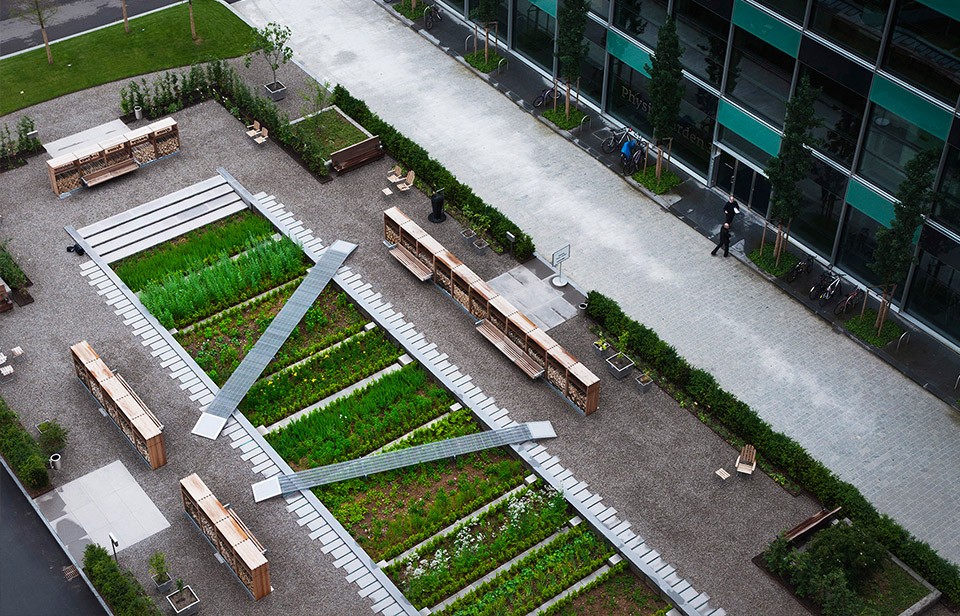
▽ 俯瞰药理花园,topview
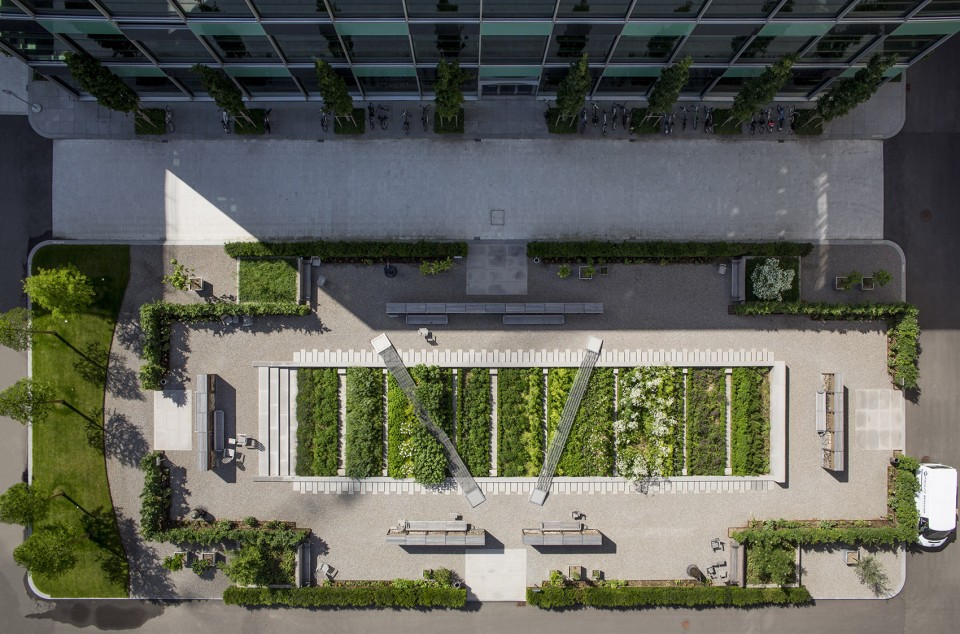
▽ 各种药用植物,different pharmaceutical plants
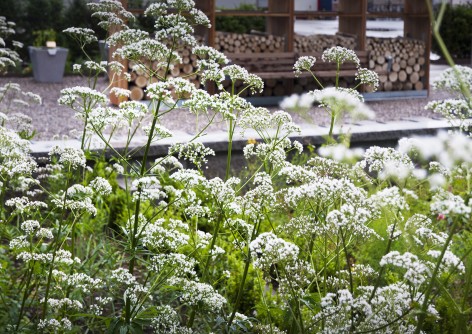
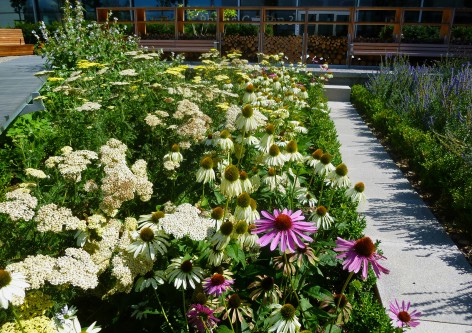
这些蕴含着重要秘密的花园往往被隐藏在户外的实验室中,远离人们的生活,Novartis校园的药理花园也是如此。这里如同一个封闭的剧院,一个迷宫中心又或者是被层层包裹的洋葱的内核,访客必须绕过环绕着花园的高大的紫杉和山毛榉树篱,才能来到这个半封闭的小花园。“不放弃探索的人才能得到答案”,曲折的路径也暗示着这句现代研究人员和中世纪僧侣都深有体会的道理。
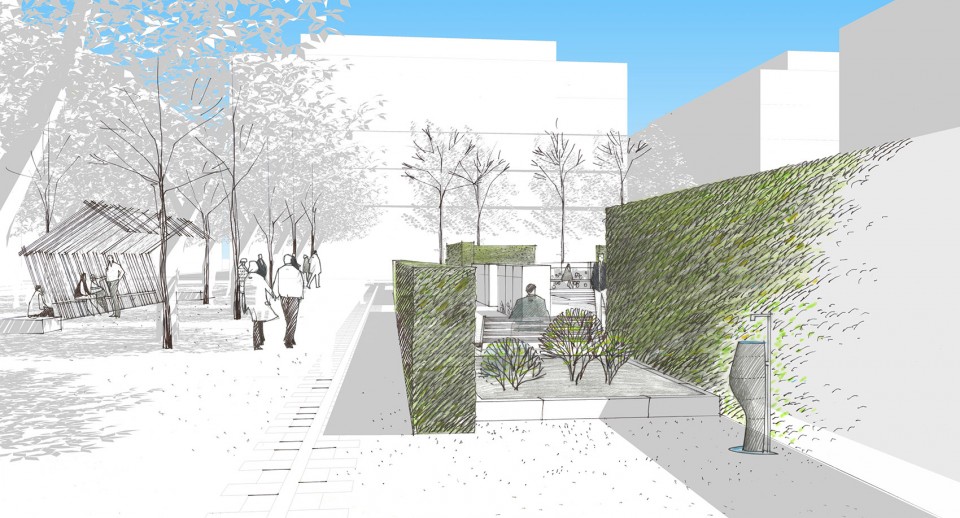
Consequently, the Physic Garden at Novartis is hidden, spatially organized as a theatre, or as a labyrinth, or as an onion with many layers. The garden is semi-enclosed, and the visitor enters through a zig-zag movement between backdrops of tall hedges of yew (Taxus) and beech (Fagus). The garden reveals itself step by step. The one who searches will find; a statement which is as relevant to the researcher of today as it was to the medieval monk.
▽ 半封闭的小花园,semi-enclosed garden
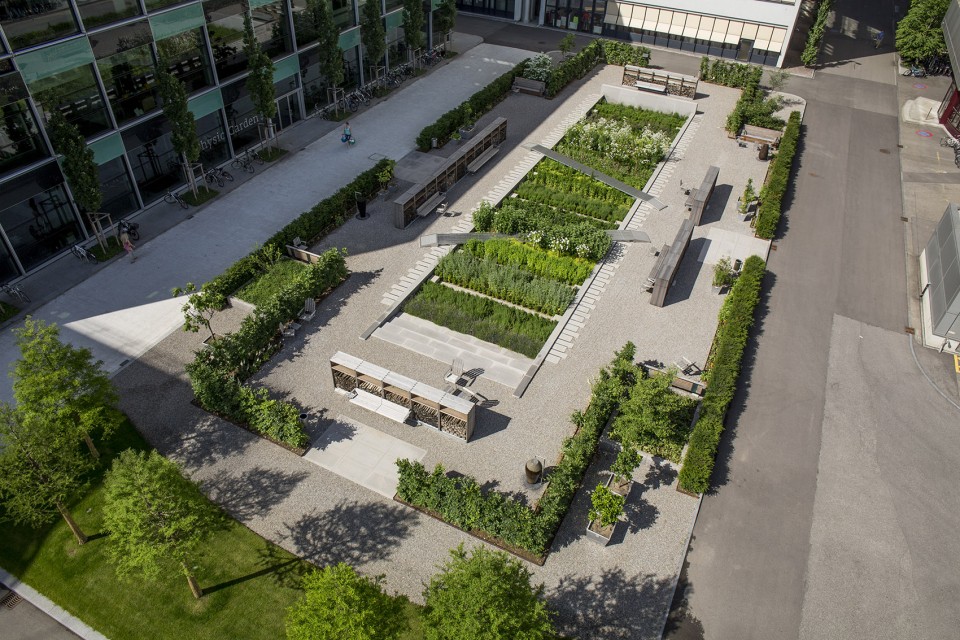
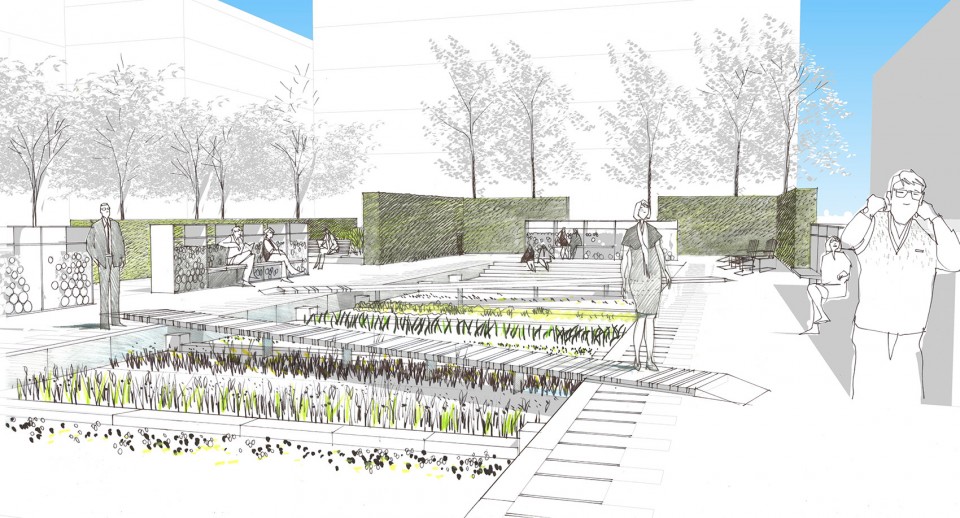
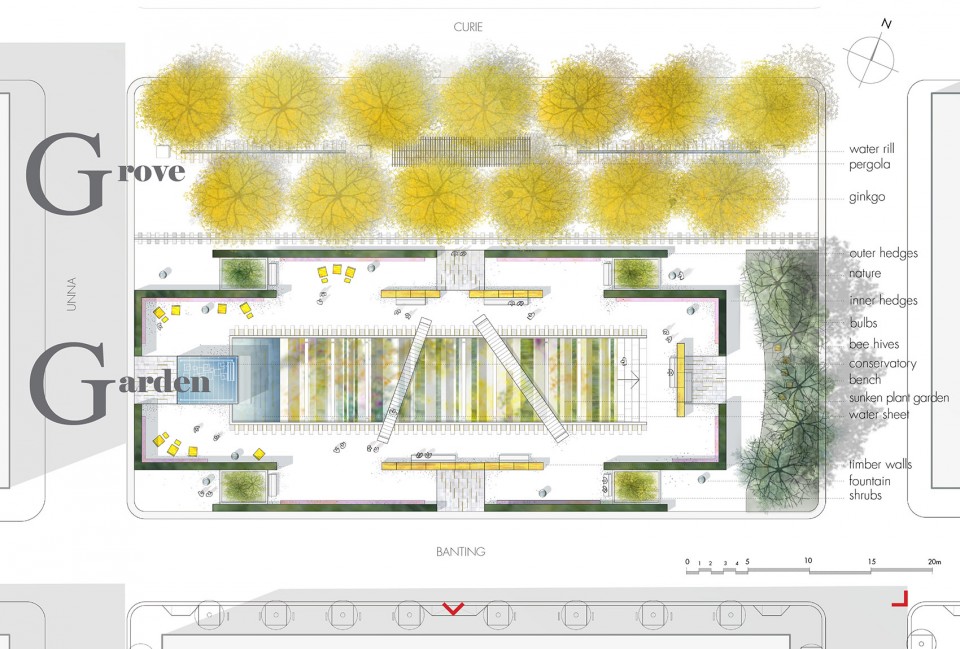
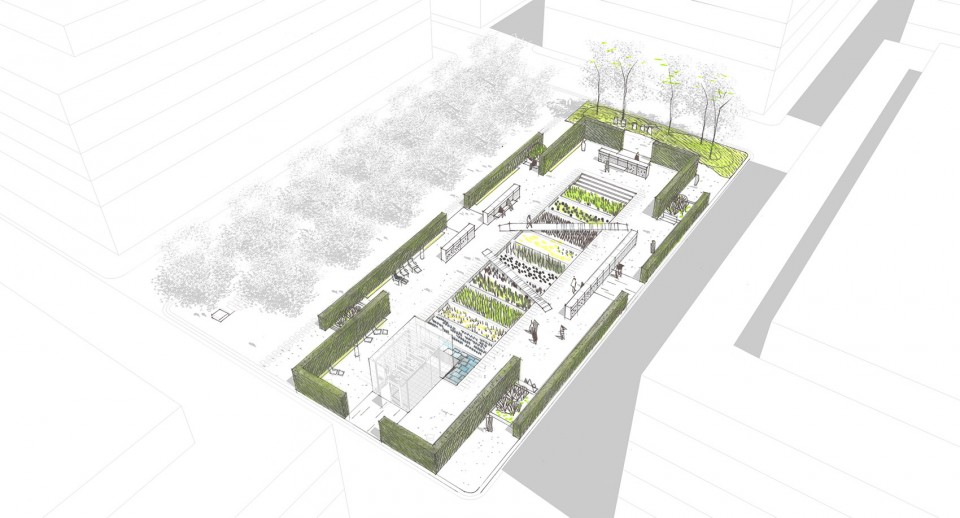
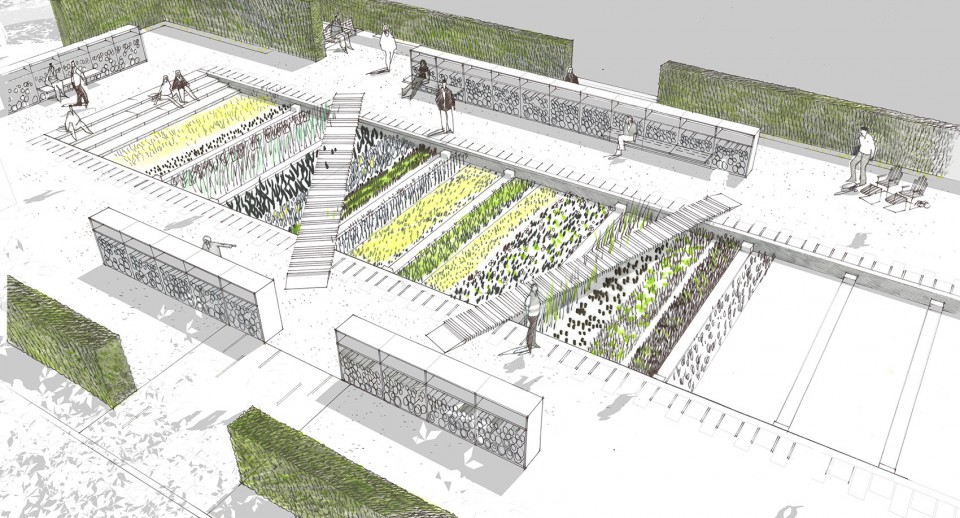
在花园的中央,31种不同的药用植物整齐地排列在一个下沉的种植池中。轻微下陷的种植区域暗示着这些植物的珍贵,花岗岩矮墙划分出明显的空间界限,保证这些脆弱的植物不会被随意触碰。这片花园如同一副色彩丰富、肌理细腻的艺术品一样,铺展在人们眼前。没有护栏的轻质栈道横跨了花园,让大胆的访客有机会和植物亲密接触。在每列植物尽端的土地上插有一个铜牌,向人们介绍着植物的具体信息。
下沉花园的侧面有四个堆满了木头的架子。这些位于树篱开口处的架子进一步挡住了外部的视线,同时也展示着在民间已得到验证,各种含有药物成分的树种。这个神秘的小花园中一共陈列着70余种药用植物。
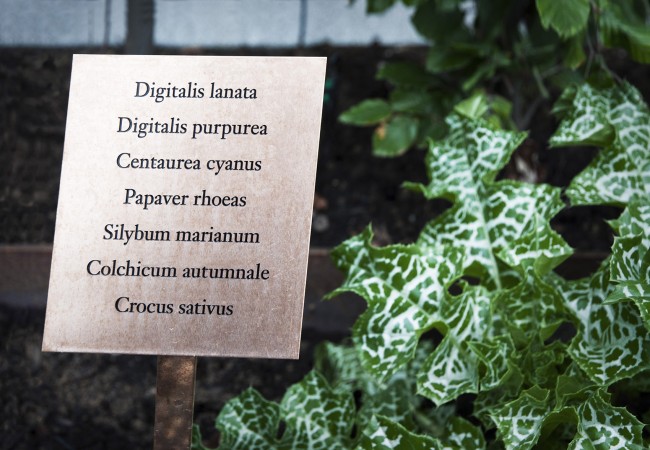
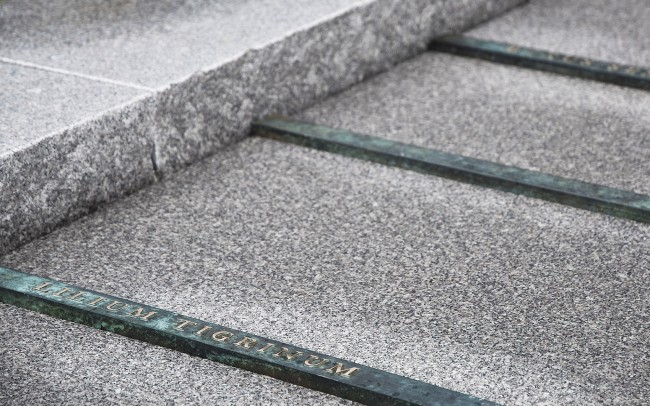
Having arrived at the center, a sunken planting bed opens up, containing 31 species of pharmaceutical plants organized in a striped pattern. The slightly sunkenness of the basin adds to the preciousness of the plants, and placed inside the frame of a low granite wall, these fragile specimens become untouchable. They are viewed from slightly above, and we can read the flower bed as a colorful and textured painting or a striped carpet. Bridges of light construction, without railings, span the sunken bed, permitting the daring visitor a closer examination of the plants, each of which is labeled with an engraved bronze plaque mounted at the edge of the bed.
Along the sides of the sunken bed are four “log racks”, a collection of logs stacked in piles whose forms complement the screens of hedges, and are also reminiscent of a library. The types of wood selected represent tree species from which substances have been extracted and used in ethnopharmacology. All in all, 70 plant species are on display in the Physic Garden.
▽ 鸟瞰,birdview
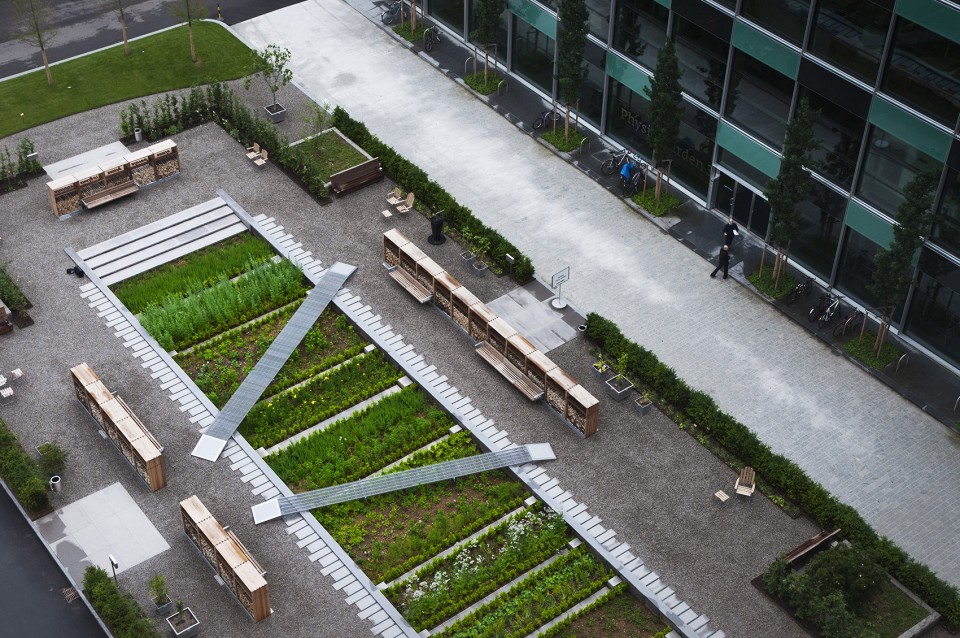
▽ 横跨花园的轻质栈道,light bridges spanning the sunken garden
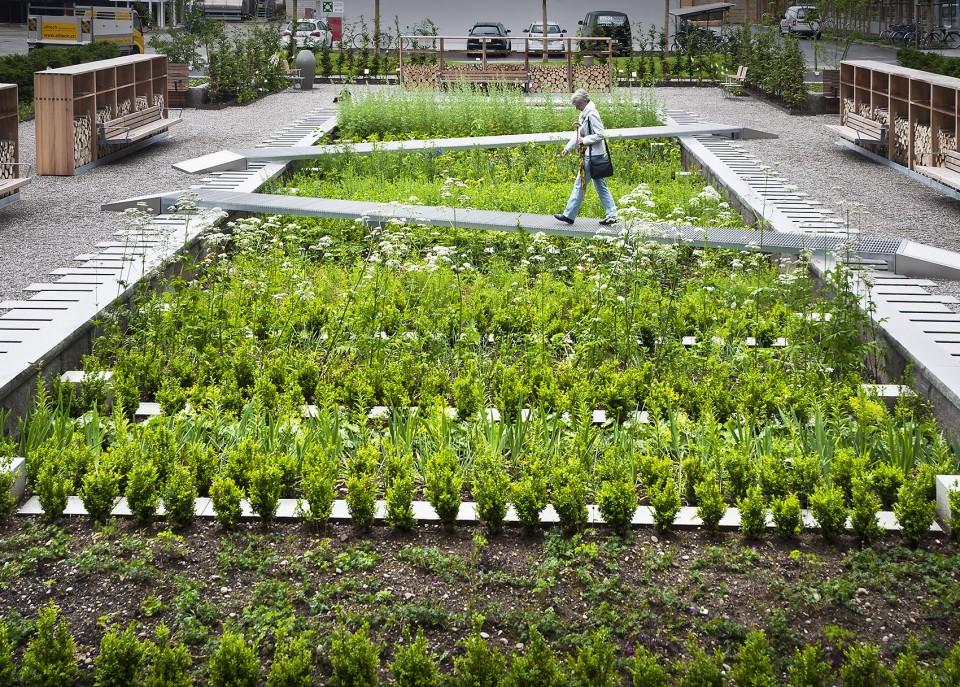
▽ 栈道和堆满木头的架子,light bridge and the “log racks”
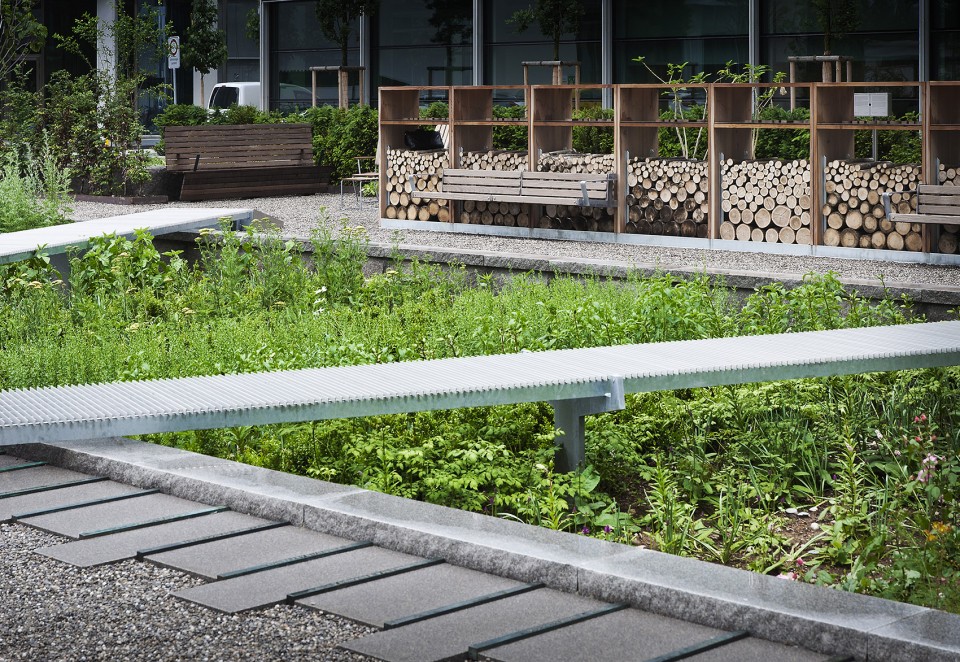
▽ 划分空间的花岗岩矮墙,low granite wall
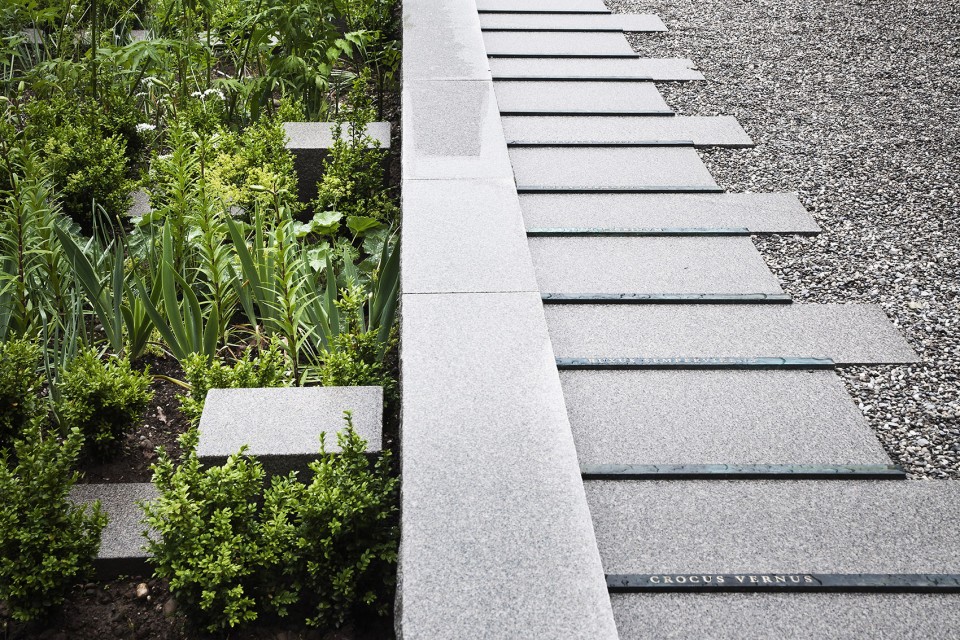
▽ 景观细部,details
▽ 平面图,plan
▽ 透视图,illustrations
Project: The Physic Garden
Location:Novartis Campus, Basel., Switzerland.
Landscape architect: Thorbjörn Andersson with Sweco architects
Team: Pege Hillinge, Johan Krikström, Johnny Lindeberg ,
Emma Norrman (plants), Therese Egnor (plants), Alexander Cederroth (light),
Markus Moström (graphics), Pål Svensson (drinking fountains).
Client: Novartis Pharma
Consultants: Schönholzer + Staufer GmbH/ Beat Rösch, Basler + Partner (structural engineering).
Area: 2800 sqm
Opening: 2012
Photographs by: Jan Raeber and Sweco Architects
Drawings: Thorbjörn Andersson
English Text: Thorbjörn Andersson
Chinese Text: gooood
MORE: Thorbjörn Andersson,更多请至:Thorbjörn Andersson on gooood,Sweco Architects on gooood









更是一张建筑的语言,好喜欢!
景观设计师似乎应该趋向于一种设计的趋势,那是一种在满足功能要求的前提下,用简洁的构图来表现精致的肌理变化,从而引导人们拥有一种身心的愉悦抑或是心灵的慰藉,多样化的设计语言无非都在为此而共同构建这一终极理想……
设计师应该有自己的选择 而不是大家都往一个趋势上努力
公共设施的人文关怀是每个城市都该具备的
让人能够对这个城市有更多的归属感
喜欢这样的表达方式!