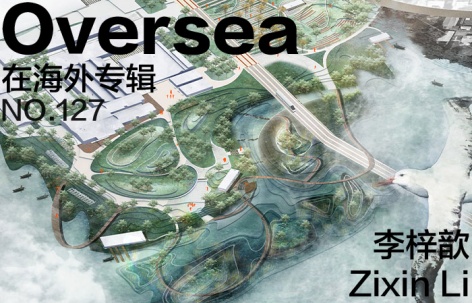
海外存知己,天涯若比邻。
在海外专辑分享海外华人的故事。希望这份分享可以让世界更加海阔天空。
第一百二十七期为您介绍的是毕业于罗德岛设计学院、现工作于 CBT Architects 的李梓歆
A bosom friend afar brings distant land near. The Oversea album shares the lives of Chinese living abroad with all.
The No.127 episode features Zixin Li who graduated from RISD and is now working for CBT Architects
为什么出国?
Why going abroad?
从小到大,我直到大学毕业都在同一个城市生活,在临近毕业又一个面临选择的节骨眼突然很害怕一眼望到头的生活。下定决心要离开,选择未知的生活,好奇自己能成长为什么样的人。
I have lived in the same city forever. As my undergraduate graduation approached, and I faced the decision of what was next, suddenly I felt very afraid of a predictable future. It took encouragement to make up my mind to leave, choosing the unknown path, but I was curious about what kind of person I could grow into.
在国外遇到了什么让你印象最深刻的事情?
What impressed you the most when you are abroad?
因为RISD所在的城市是一个地势很丰富的小城市,上坡下坡非常多,很多建筑就建在坡上,有时候高差很高,同一栋楼从地势低的一边一楼进入需要在地势高的一端五楼才到达地平。城市中间有一条小河,整个城市都非常步行友好,以我家为圆心丈量城市的话,走到上课的楼BEB 5分钟,商场15分钟,火车站20分钟。我喜欢在下午跑去河对岸买奶茶然后在散步。我的室友曾经斥巨资购入一辆自行车,我俩费劲吧啦地拼装好之后发现这辆车没有变速器,上坡十分费劲,只能推着走,而我们就住在坡上,于是这辆车就闲置了。
In Providence, there were many ups and downs, with numerous buildings constructed on slopes. Sometimes, there was a significant height difference, where entering the same building from the low side would require climbing five floors to reach ground level on the high side. In the middle of the city, there was a river, the Seekonk River, the entire city was very walkable and pedestrian-friendly. It took me 5 minutes to walk to the BEB building for class from my home, 15 minutes to reach the mall, and 20 minutes to get to the train station. I enjoyed running to the other side of the river in the afternoon to buy bubble tea and then taking a walk along the river. My roommate spent a lot of money to buy a bicycle when we first arrived. After we spent the whole afternoon assembling it, we found that the bike had no gears, making it very difficult to ride uphill. Unfortunately, we lived on top of a slope, so the bike ended up unused and stolen, that was a painful lesson learned.
最想念祖国的什么?
What do you miss the most about China?
家在哪里,胃最知道。想念家乡的碳水美食,和以此为展开的烟火气生活。不是说在海外就吃不到这些,或者不够正宗的味道这样简单,而是非常想念左手捧着奶茶,右手捧着热乎乎的糖炒栗子小拇指上还勾着夹馍和炸串手忙脚乱地在夜市步行街一边喊吃不下还不停的在小摊间排队的市井热闹。
My stomach misses home the most. I miss the food from my hometown, and even more so, the lively life that accompanies it. I long for the moments when I stroll through streets filled with vendors, holding all sorts of delicious food in my hands.
你会回国吗?为什么?
Will you come back? Why?
长远来看是会的。但具体什么时候,我还没有太多的规划。我不是一个会做长远计划的人,因为计划总是赶不上变化,人的想法也会随着阅历的增长产生变化。
In the long run, I will. But as for the specifics of when, I don’t have much of a plan yet. I’m not someone who makes long-term plans, because plans often fail to keep up with changes, and I know my thoughts could change as I get older.
出国后在不同的背景下再看中国是否看得更清晰,有哪些感触?
Is it more distinct to view China in a different environment after going abroad? Any thought?
说清晰谈不上,但感觉看到了不同的视角,并且理解这些视角的产生。见到不同教育背景,从而产生不同认知的人,大家接收到的信息和渠道可能完全不同,重点不是在于说服别人,而是在于尊重和了解自己和别人都有局限性。
I don’t think “clarity” accurately describes my feelings, but I believe that I have understood why people hold diverse viewpoints. Meeting individuals from diverse educational backgrounds, and life experiences can lead to varied cognitive processes, resulting in entirely different information being received. Respecting that all of us have cognitive limitations and accepting them is the most important thing.
你的学校有哪些教育特点?
What are the educational characteristics of your school?
RISD的可贵之处在于尽可能地鼓励学生探索挖掘自己的可能性。从课程的设置以及选课的机制来看,做任何你感兴趣的事都是被允许的,而在这种自我主导的学习当中可以收获更多的正反馈,这非常重要。比如最后一年的毕业设计论文,大家各自选择感兴趣的方向,每个人的节奏和方式都不一样,横向对比是没有意义的,所以只有专注自己和自己的课题,这个认识自己和独立生成观点的过程很磨人,但是通过教授们的引导进行独立思考探究,这个成长的过程非常珍贵并且受益终生。
RISD encourages students to fully explore their potential as much as possible. Professors provide guidance while also leaving space for students to be creative. For instance, in the final year’s thesis project, everyone chooses their area of interest, and each person’s pace and approach are different. Peer comparisons are meaningless, so everyone fully focuses on their project. This process of self-discovery and independently forming viewpoints can be challenging, but with guidance from professors to foster independent thinking and exploration, this growth process is extremely valuable and benefits students for life.
你现在工作公司的特色和有趣的地方?
What are the characteristics and interesting points of your firm?
我现在就职于CBT Architects,是一家主要建筑,室内,城市设计集合的综合性设计公司,景观隶属于Urban Design的部门下,正在慢慢成长。公司氛围很好,有不同的部门但是大家互相之间的合作交流和互动都很多,也会有很多有趣的工作之外的活动。位置在Charles River旁边,抬眼就可以看到河,船,还有波士顿的天际线和绝美夕阳。
I am currently employed at CBT Architects, a comprehensive design firm that encompasses architecture, interior design, and urban design. The company has a great atmosphere, with different departments fostering a lot of collaboration, communication, and interaction among colleagues. There are also many enjoyable activities outside of work. The office is located next to the Charles River, we have a beautiful view of the river, and boats, as well as the stunning Boston skyline and breathtaking sunsets.
最喜欢的艺术家(绘画音乐电影等广泛范围)是谁?给你创作带来了什么影响?
Who is your favorite artist (in wider range such as art, music, movie)? What is the influence?
石上纯也,在上海去看了他的展之后就不自觉会在做设计作业的时候想起他的模型,他的图纸,很纯净又很天马行空居然又很落地的感觉。总之他给我的灵感就是可以让思想更自由一点,大胆一点。但是设计很难说是受到谁的影响,它其实主体还是设计师本身的思想,是他或她遇到的事,人生,教育的总和。也可以从很多地方汲取灵感和力量,从细碎的生活中融入对世界和设计的理解。期待自己成为更有厚度的设计人。
Junya Ishigami’s work feels pure and imaginative, yet also down to earth. His designs, models, and drawings serve as a reminder for me to think boldly, always lingering in the background of my mind. However, it’s difficult to attribute one’s design solely to a specific influence. Ultimately, the design reflects the designer’s own thoughts, shaped by their experiences, life, and education received. Inspiration and strength can be drawn from various sources, incorporating an understanding of the world and design from everyday life.
觉得自己的作品集有哪些迷人的特质?
What fascinates viewers the most in your portfolio in your opinion?
我的作品集代表着我,在每一个项目里都在尝试做不同的事。在寻找自己的舒适区也在跳出舒适区。我想从我的作品集可以看到对一个对保有虔诚态度的设计人的摸爬滚打,困惑和执着,也能看出在这个漫长的修行过程中的一些成长和态度。
I constantly try new things in each project, viewing each one as an opportunity to find my comfort zone and push beyond it. I believe my portfolio showcases the journey of a young designer navigating through challenges, confusion, and growth. Through this unique journey of learning and practice, I hope to become a better designer with my own attitude toward design.
什么时候开始看谷德网的?欢迎你提出建议哦,谢谢。
When did you start to follow gooood? Any suggestions?
从本科学习开始,通过谷德做案例搜索。很喜欢在海外系列,对当时的我打开了更广阔的世界。
也希望可以看到一些设计人的故事。人做设计,设计为人。在谷德上可以看到很多很棒的设计,同时也希望可以看到这些设计背后有人情味的故事。
祝好,各位江湖上见。
I began using gooood for case studies during my undergraduate studies. The “overseas” series opened a broader world for me at that time.
I hope to encounter some stories of designers. People create design, and design reflects humanity. While gooood showcases many fantastic designs, I also hope to discover the human stories behind these designs.
Best wishes, see you out there.
W O R K
01.
Borderhood
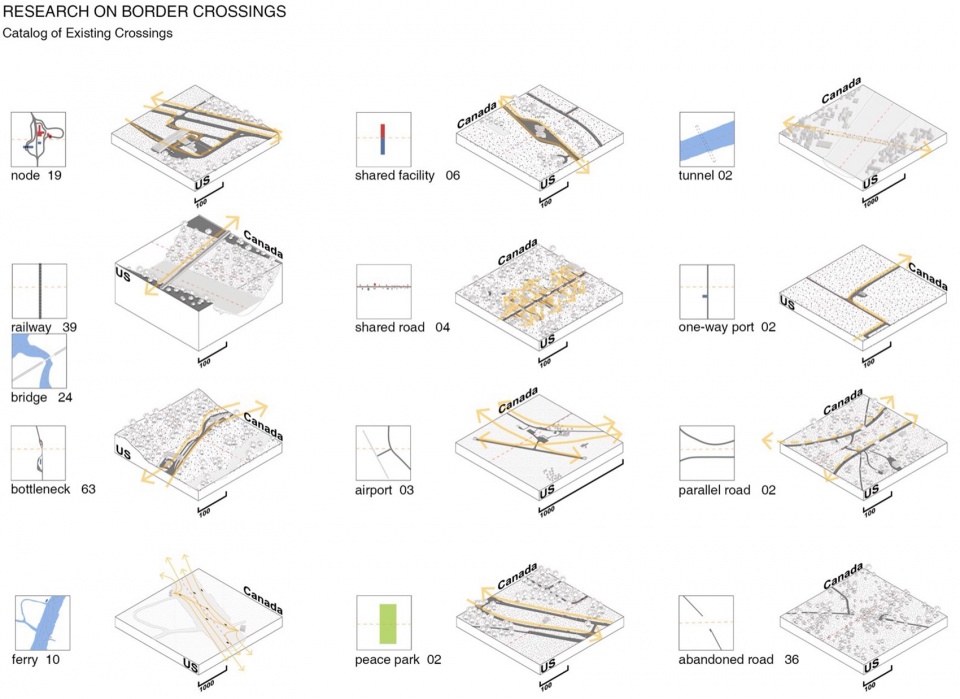
RISD的Advance Studio大家各自可以选择感兴趣的Studio 选题,我所选的Studio题目是探讨美国加拿大的边境线,他的有趣地方和挑战都来源于这是一个超大尺度的场地,从国家关系,文化,交通,生态等各个不同的角度去切入都可以,最终也可以落脚在任意尺度上。我的研究始于对美加边境口岸的归类,我逐个了解了每一个边境口岸的地理上布局,最终归类为13类。
In RISD’s Advanced Studio, students have the opportunity to select a topic of interest from 4 studios. The studio I chose is to rethink the concept of a border, considering the unique context of the Canada-U.S. relationship. Given that the two countries share the longest undefended border in the world and have historically enjoyed a close and friendly connection, we are challenged to explore new possibilities for what this border could look like. What makes it interesting and challenging is the scale is large, and various aspects such as national relations, culture, transportation, and ecology can be approached from different perspectives. The research can ultimately zoomed into any scale. I looked though all the existing border crossings between Canada and US, then put them into 13 categories depending on the characteristics and similarity of their layout.
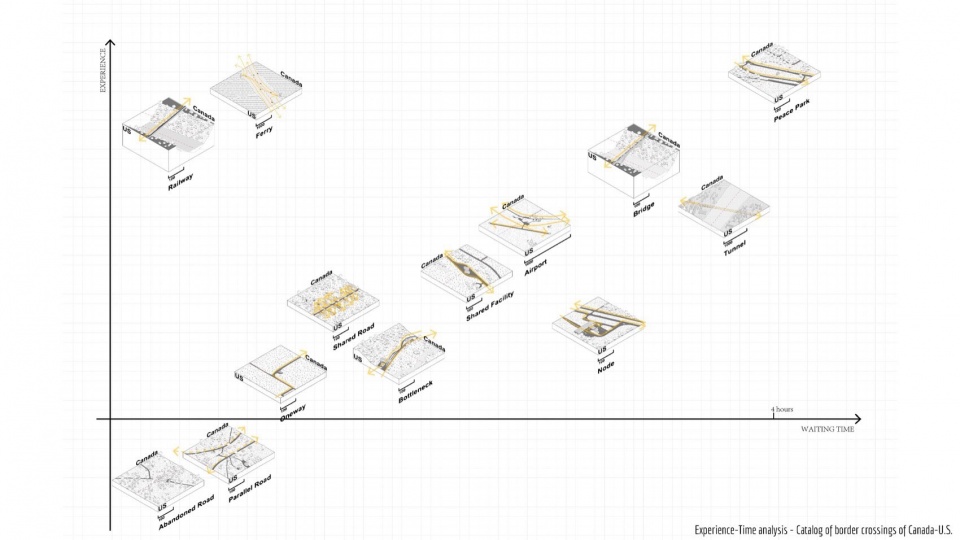
对所有类型的边境口岸进行评估,收集等待时间和体验的数据,然后在横轴和纵轴上定位它们。等待时间的信息来自在线评分、乘客描述和道路使用频率。根据四个方面(视图、服务、聚合和基础设施)的得分,对穿越体验进行量化加权叠加。
By collecting information from online ratings, passenger descriptions, and the frequency of road usage, I evaluate the crossing experience of each category based on scores in four aspects: view, service, facilities, and infrastructure.
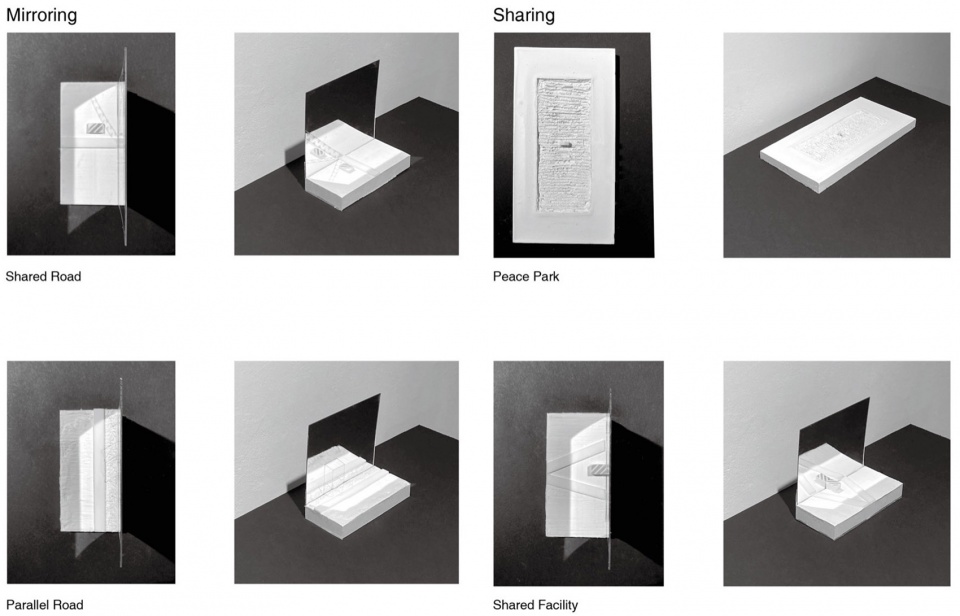
总体上来讲,所有的基础类型都可以归为两类:Mirroring&Sharing,大部分的边境口岸都可以被归类为这两类。Mirroring意味着以边境线为对称轴,两国的设施道路等互为对称;Sharing意味着两国共享一部分区域,这部分区域可以说一座公园,一段道路,一栋办公楼,里面的工作人员甚至共享同一个冰箱。
Most of these prototypes can be categorized into two main groups: mirroring and sharing conditions. “Mirroring” means that everything on each side is identical, the building, roads parallel to border, and even the road signs. “sharing” means that two lands share a mutual space. such a peace park, or a road crossing the border. Some examples of sharing include shared facilities, where officers inside even share the same refrigerator in the building.
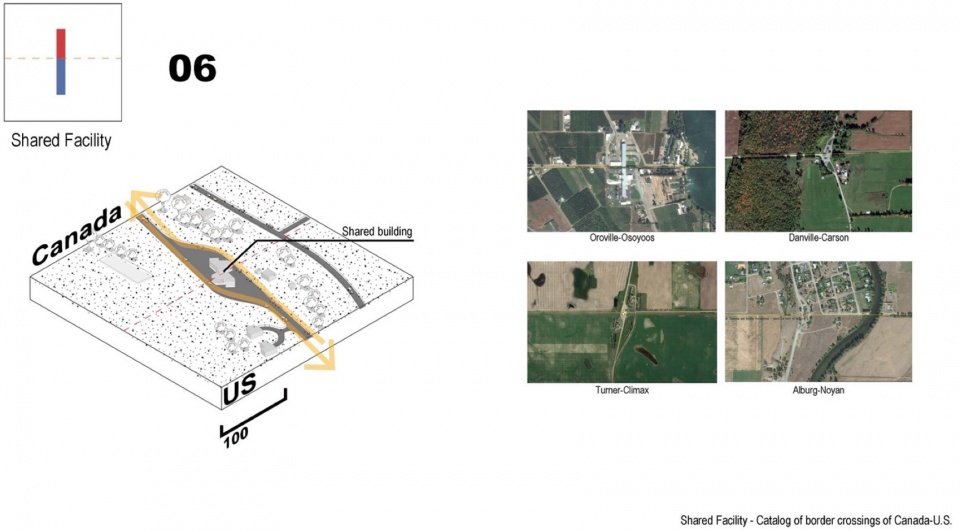
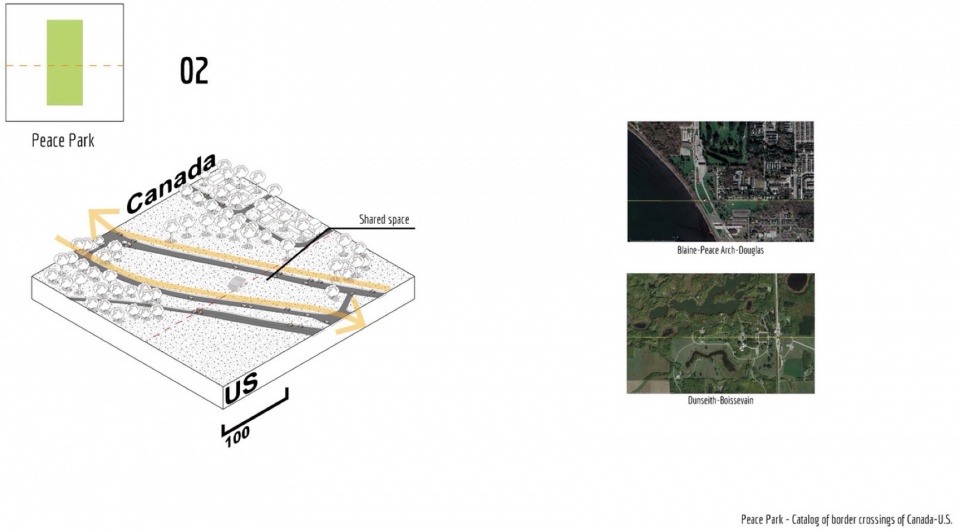
抛开边境线最浅显意义,对称的情况对空间和资源的使用可能产生浪费,赘余;而分享的情况则为空间的布局提供了更多的可能性。对于边境线的意义重新进行思考,它不一定要产生分割,或者说它并不一定只是产生空间的分割。对于国土意义上来说,它是存在的,但它在现实意义并不存在这条抽象的线,它是分割,也是交汇,是界限,更是机会。尤其是对于美国和加拿大这样的友好边境来说,边境线可以是两个国家共同处理某项问题的契机。
“Mirroring” conditions may lead to waste and redundancy in space usage and resources, whereas “sharing” conditions offer more possibilities in spatial layout. In terms of national territory, it exists, but in practical terms, this abstract line does not truly exist; it is both a division and a convergence, a boundary, and an opportunity. Especially for friendly borders like that between the United States and Canada, the border line can be an opportunity for both countries to collaborate and help each other with certain issues.
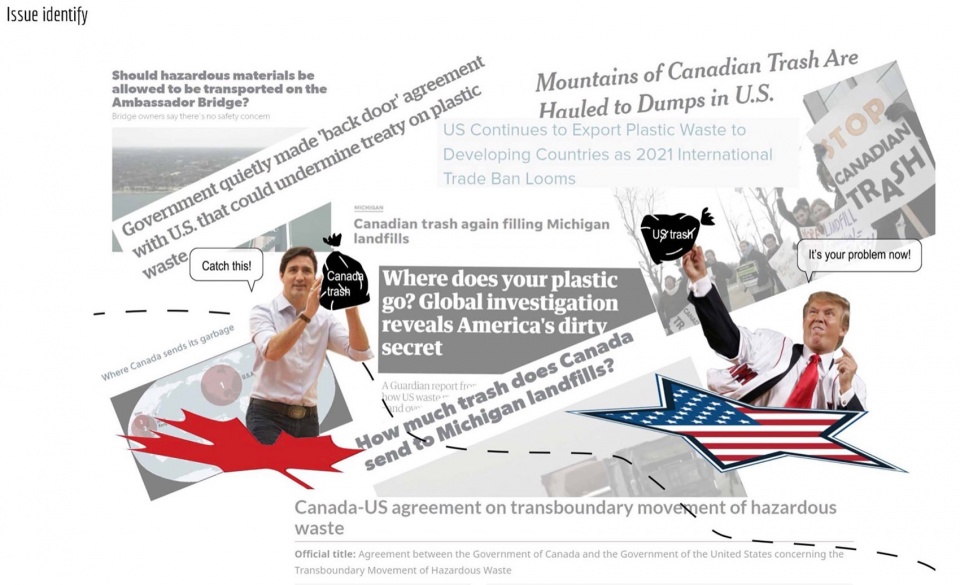
于是我最终把场地和问题落脚在Ambassador Bridge上的两国互相之间的垃圾运输。 一直以来美国和加拿大垃圾处理的主流方式,都是出口到世界其他国家进行填埋。直到巴塞尔公约修订,垃圾出的行为被制约,这种情况才得以改善。然而,暗地里两国在互相甩锅,以底特律和温莎为例,温莎出口垃圾到底特律进行填埋,引起社区环境和噪音等问题。更为严重的是,有毒垃圾也在两国之间被运输,使得Ambassador Bridge成为一条毫无预期的垃圾运输通道。站在环境公平的角度,最终两国都需要进化自己处理垃圾的能力,互相丢锅不是长久之计,互相帮助承担责任共同处理问题才是成熟的做法。
I ultimately focused on the issue of waste transportation between the two countries, and landed on the site of Ambassador Bridge. Historically, the mainstream approach to waste management in the United States and Canada was exporting waste to other countries for landfill. It wasn’t until the revision of the Basel Convention that such practices were restricted. Now, wastes are no longer exportable, so both the U.S. and Canada need to address this problem appropriately. Furthermore, wastes are being traded between the two countries: Taking Windsor and Detroit as examples, Windsor exports waste to Detroit for landfilling, resulting in environmental and noise-related issues in the community. What’s even more concerning is the transportation of hazardous waste between the two nations, turning the Ambassador Bridge into an unexpected route for waste transportation.
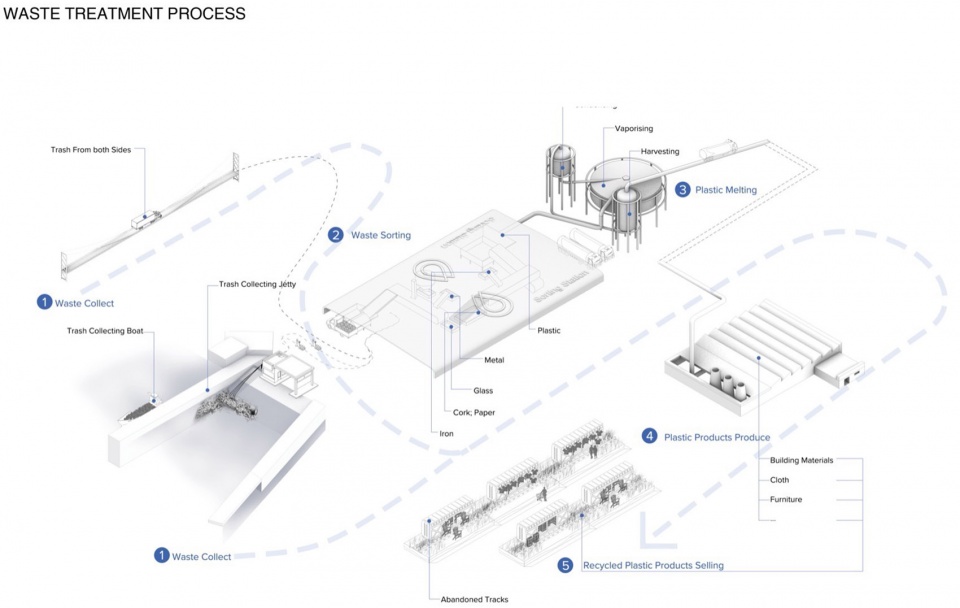
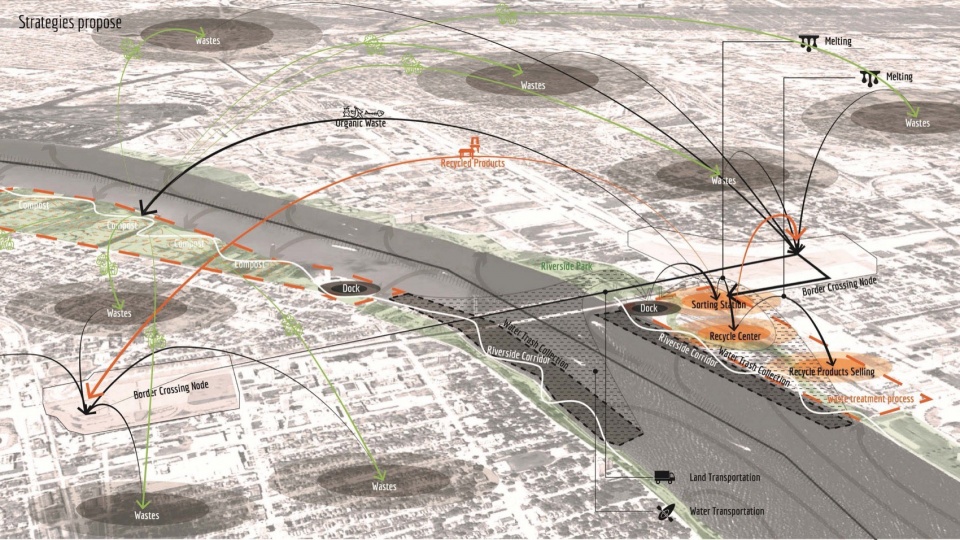
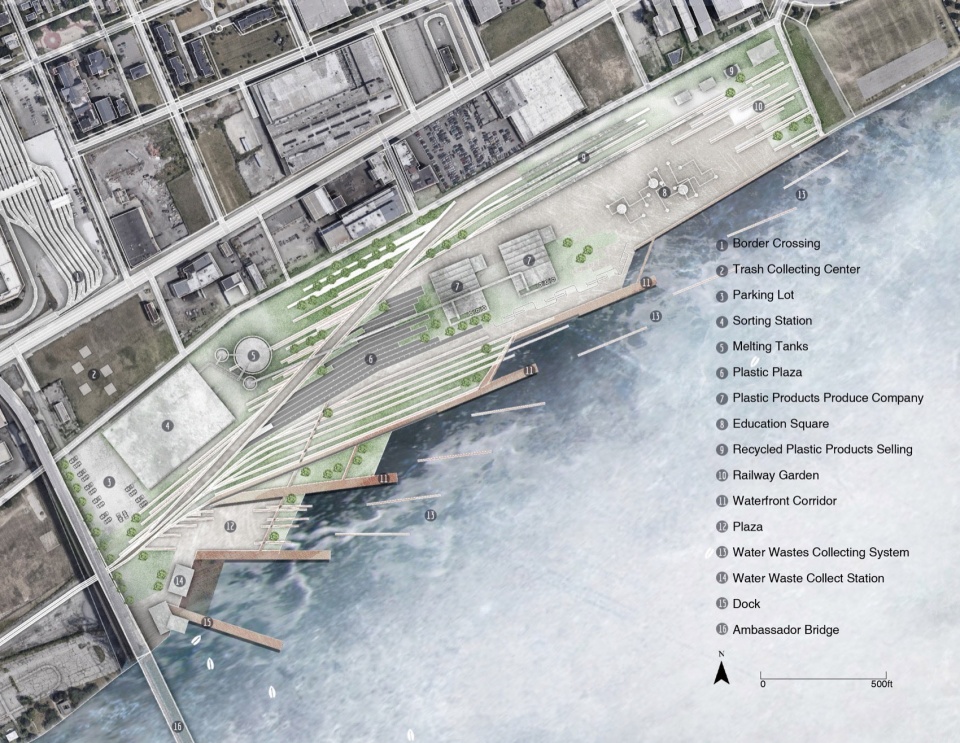
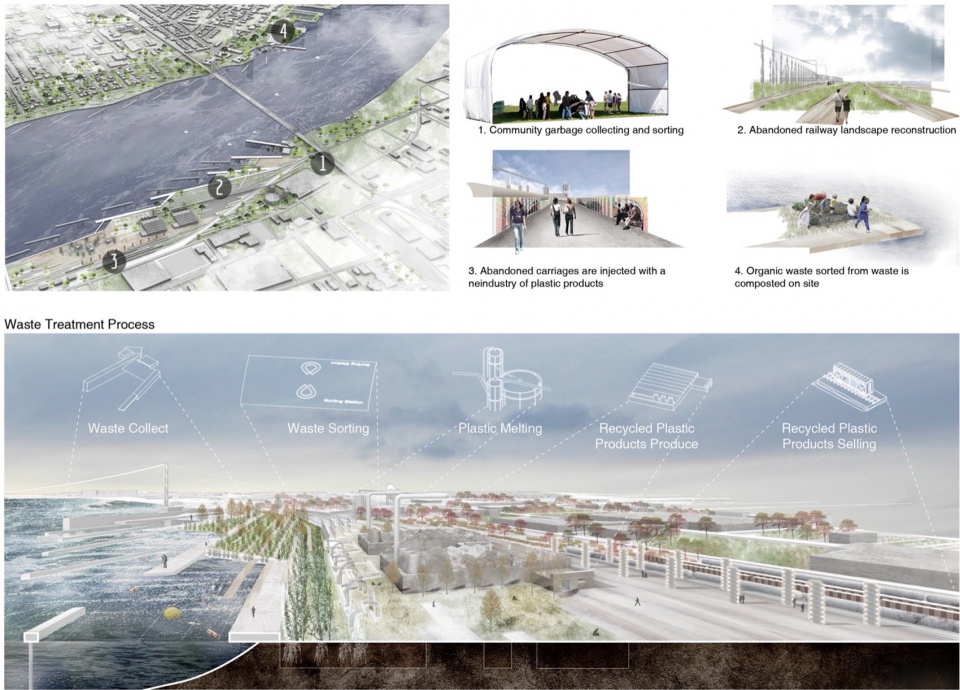
Ambassador Bridge作为底特律和温莎之间垃圾运输的主要通道,加之底特律河的污染状况,使得边境成为一个处理两国垃圾问题的理想场所。我的解决方案是首先,我们将在河流和边境过境处设立收集点,收集来自两地社区的垃圾。 然后在就地的垃圾分类站进行分拣,将垃圾分为可回收和有机填埋。可回收的物品将进入再生流程,我们将对其进行处理,并将其转化为各种有用的产品,其中包括可以在边境过境处销售的纪念品。至于有机垃圾,我们将采取措施将其填埋在现场,同时也希望能够以此为契机激发公众参与的热情,提高对环境教育意义的认识,并增加公众的参与度。让过境点不仅是一个过路站,更是一个目的地。
The Ambassador Bridge is the primary route for waste transportation between Detroit and Windsor, making the border an ideal spot to address waste issues for both countries. My design suggestions involve installing collection points along the river and at border crossings to gather waste from communities on both sides. The collected waste will be sorted at on-site stations into recyclable and organic categories. Recyclable materials will be processed into useful products, including souvenirs sold at border crossings. Organic waste will be landfilled on-site. I also aim to use this initiative to promote public engagement, raise awareness about environmental education, and increase participation, transforming border crossings into destinations, not just transit points.
02.
Unblocking the vessels
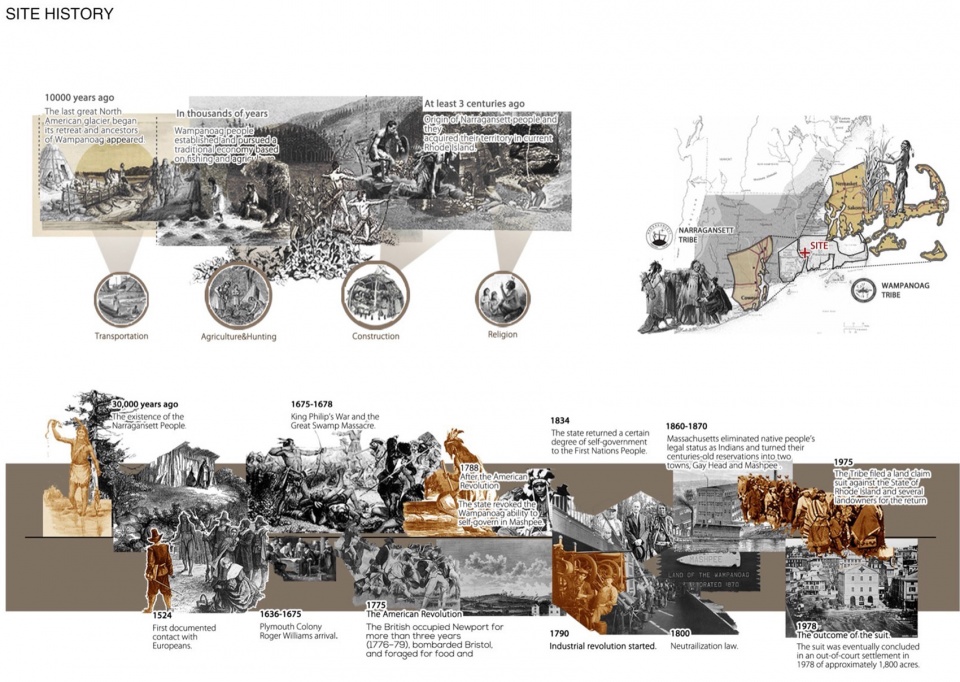
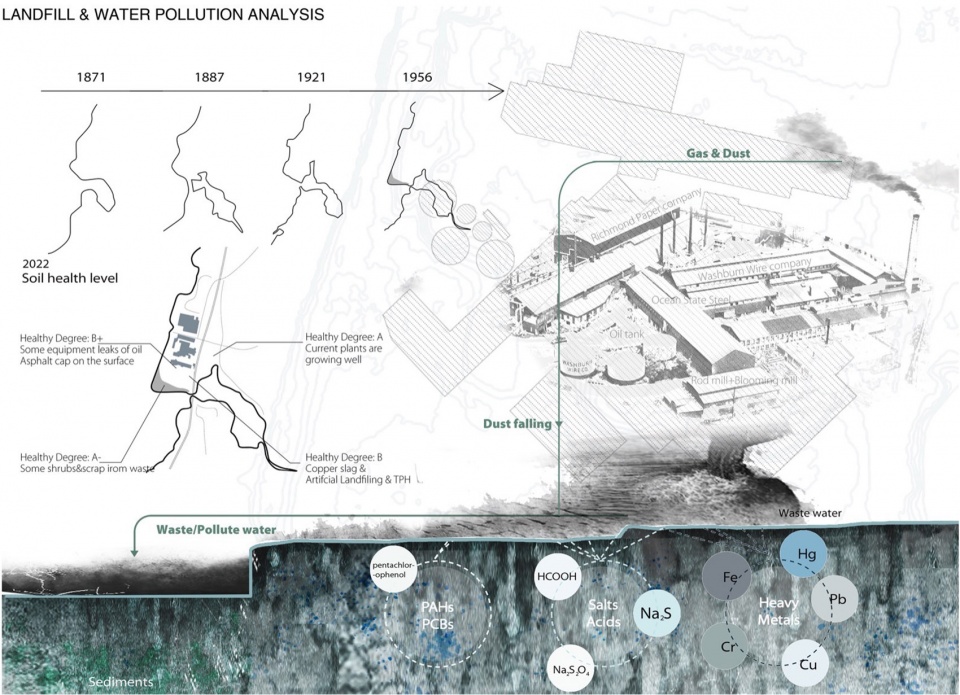
下一个项目是我在RISD参与的一个小组studio,场地是基于普罗维登斯上Narragansett Bay 和 Seekonk River的韧性城市生态系统设计。前期我们小组花了大量的时间对该地点的文化、污染情况以及曾经居住在此地的土著人历史的研究,我们提出了几个主要的措施来恢复该地的栖息地和文化。
The next project is a studio I took in RISD of resilient urban ecosystem design based on the coastline of the upper Narragansett Bay and Seekonk River in Providence. Based on the research on the culture, pollution, and indigenous people living history of the site. We proposed several key gestures to restore the habitat and culture of the site.
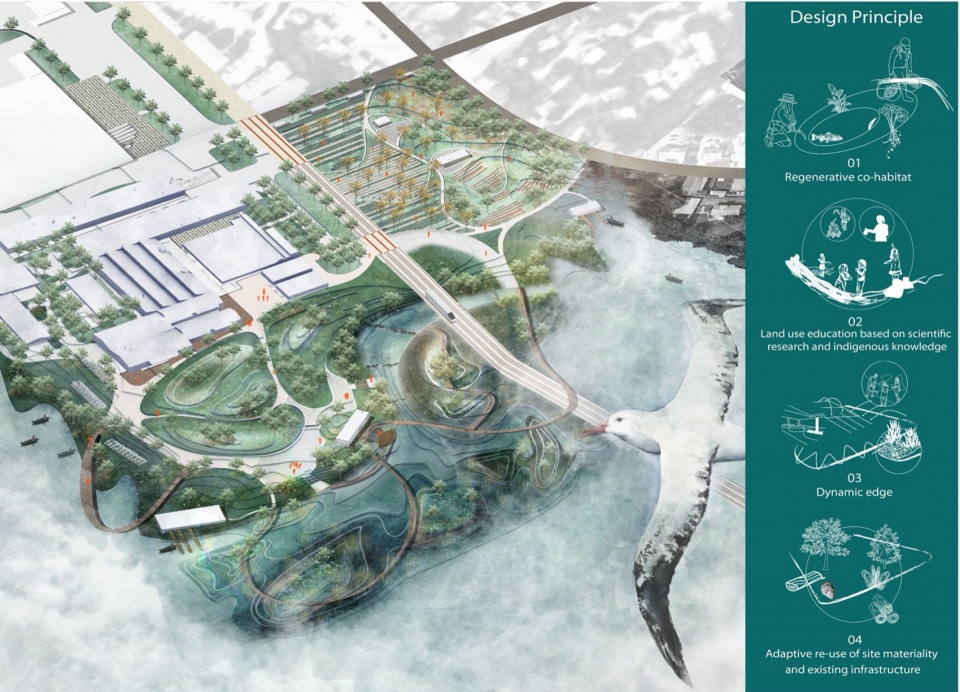
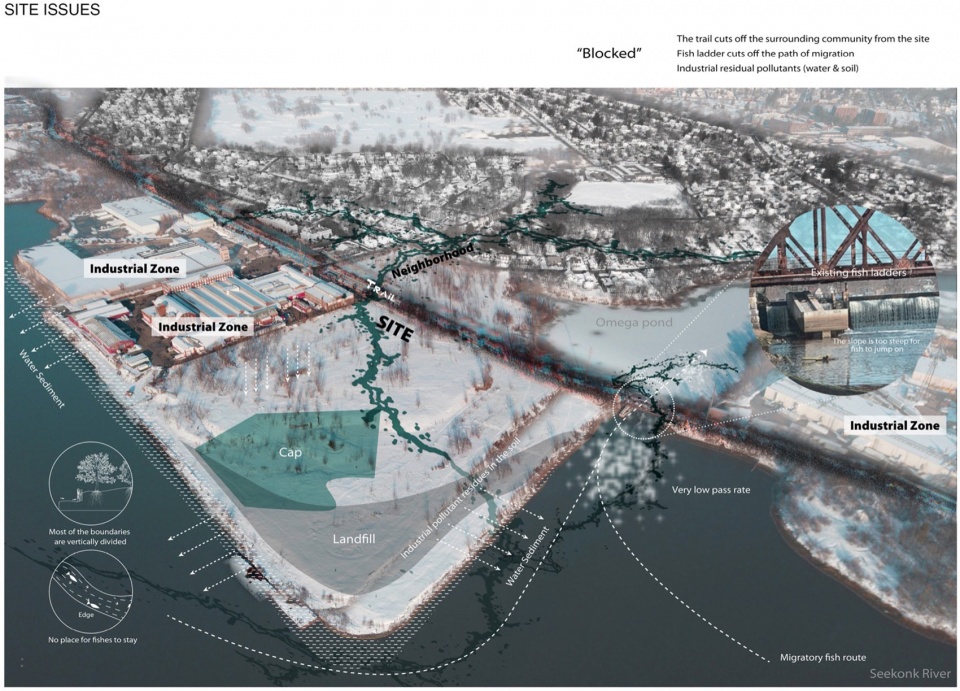
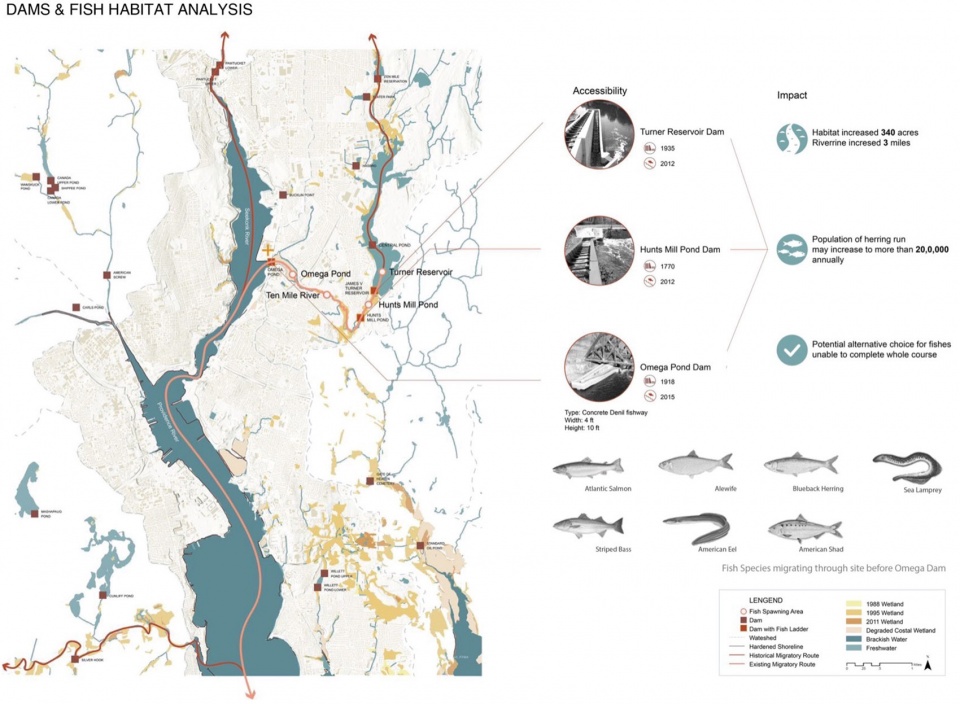
首先通过对Seekonk River生物状况的了解,场地位于一个非常重要的鱼类溯游路线上,当地许多鱼类都需要通过场地所在的堤坝。堤坝阻碍了鱼类洄游的正常路径,为了使得它们能够更加顺利通过,我们在设计中加入了鱼梯的元素,不仅是为了重新建立起洄游的通道,更为了以此为基础改善水域的生态环境。
Beginning with an understanding of the Seekonk River’s biology, we found it lies along a vital fish migration route. However, a dam at the site obstructs this route. To address this, we integrated a fish passage into our design, aiming to restore migratory pathways and improve the waterway’s ecological environment.
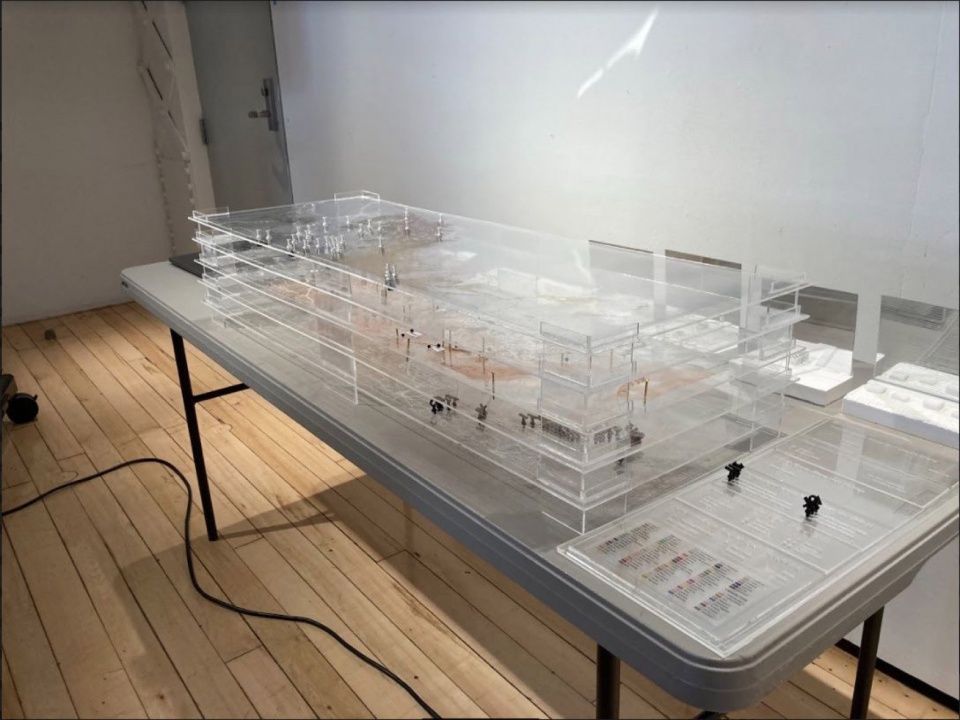
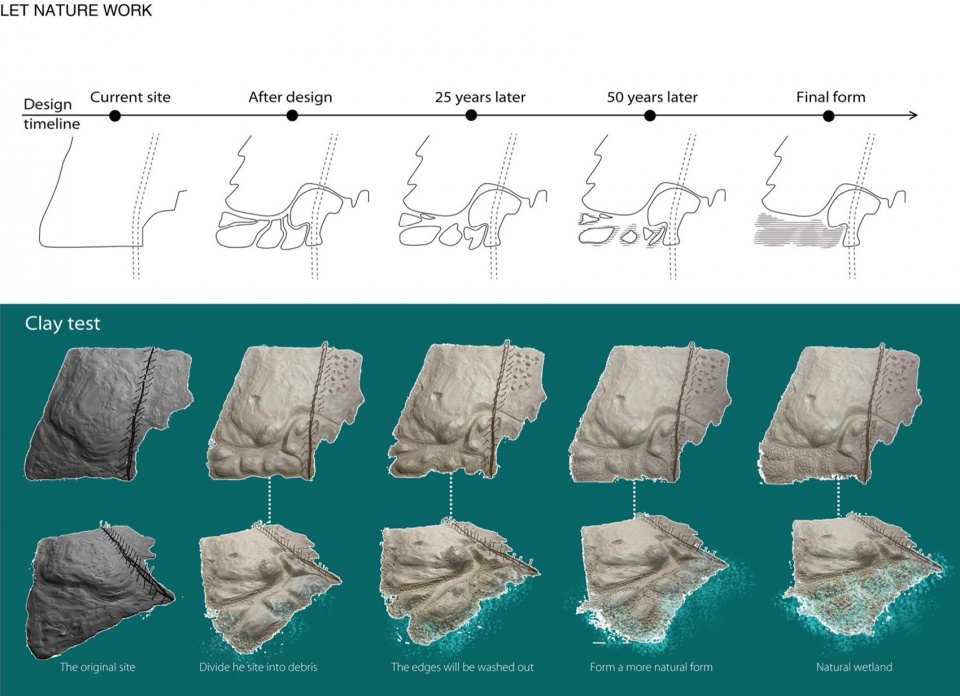
我们用泥模模拟鱼梯建造后的场地状况,意在提出鱼梯建造之后预留给予自然自我调整和变化的空间。
We modeled the site with clay to illustrate the space after constructing the fish passage, leaving room for nature to adapt and evolve the design naturally.
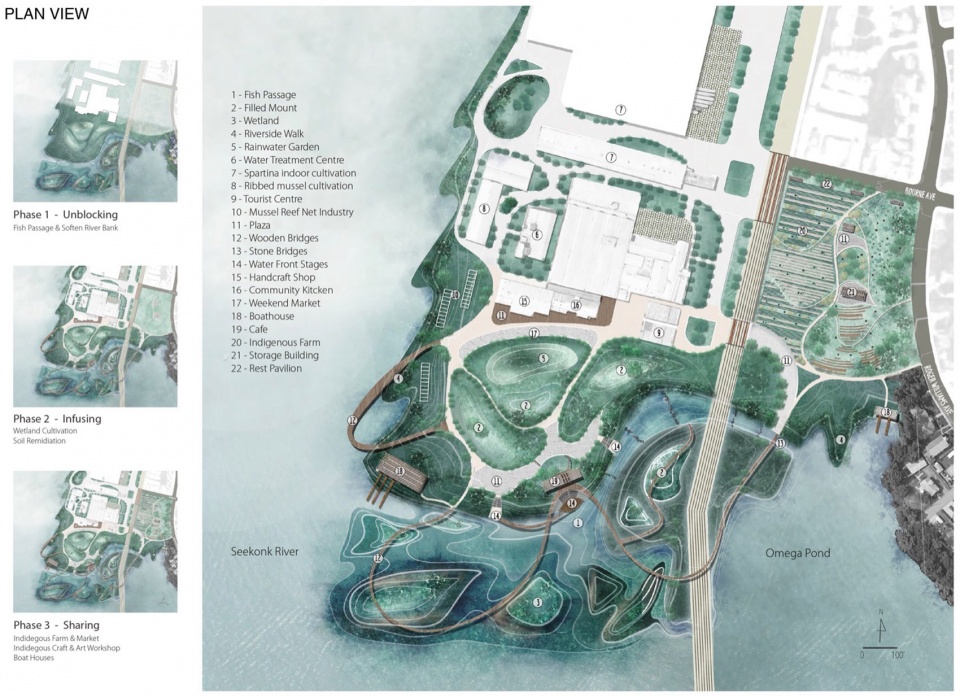
其次是在场地培育贻贝和米草(一种盐沼草)。贻贝的培育链的想法受到SCAPE牡蛎建筑项目的启发。我们发现,Narragansett bay的沟纹贻贝是该地区的关键物种,它们能够过滤细菌、金属和毒素,提供更好的水质,为潮间带其他小型动物提供更好的生存环境。考虑到沟纹贻贝和米草常常生长在一起,互利共生,我们也将它们包含在了我们的过程中。因此,当贻贝成熟后,它们将被运送到适合的海岸线,并与米草一起生长,为其他水生动物提供栖息地。
Next, we plan to cultivate ribbed mussels and spartina, a salt marsh grass, on the site. Inspired by the SCAPE Oyster-tecture project. Ribbed mussels are keystone species in Narragansett Bay, filtering bacteria, metals, and toxins to improve water quality for other intertidal zone animals. Given their symbiotic relationship, ribbed mussels often grow alongside Spartina. Once mature, they’ll be transported to suitable shorelines to grow alongside Spartina, providing habitat for other aquatic animals.
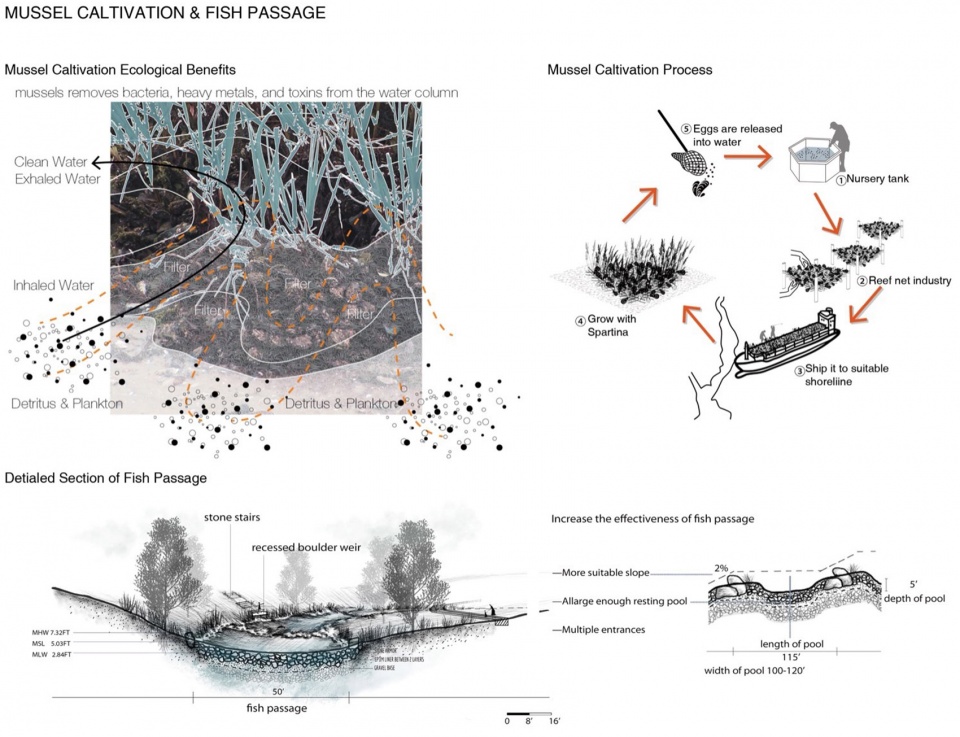
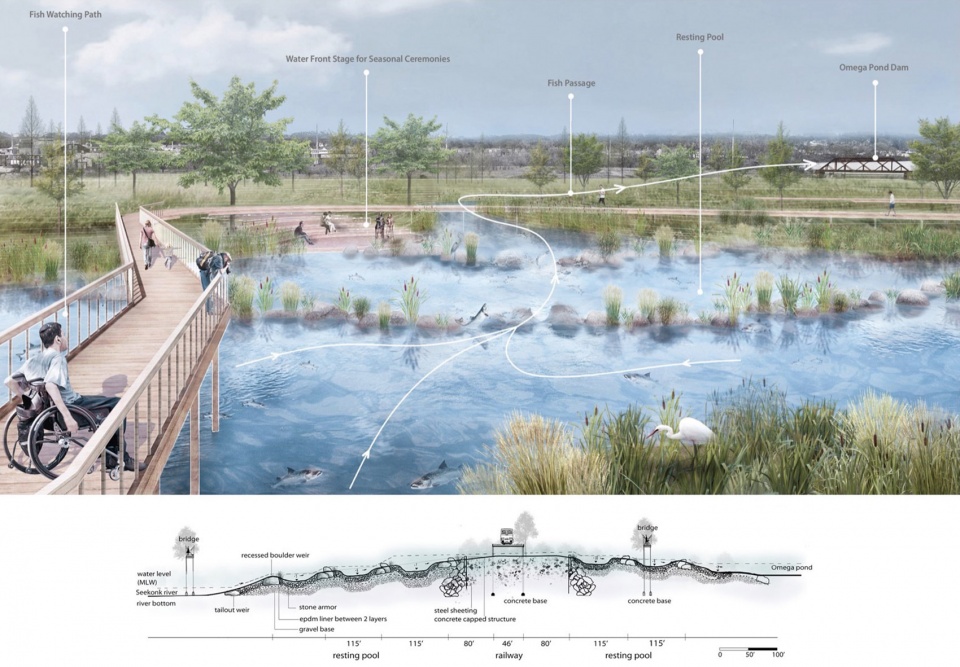
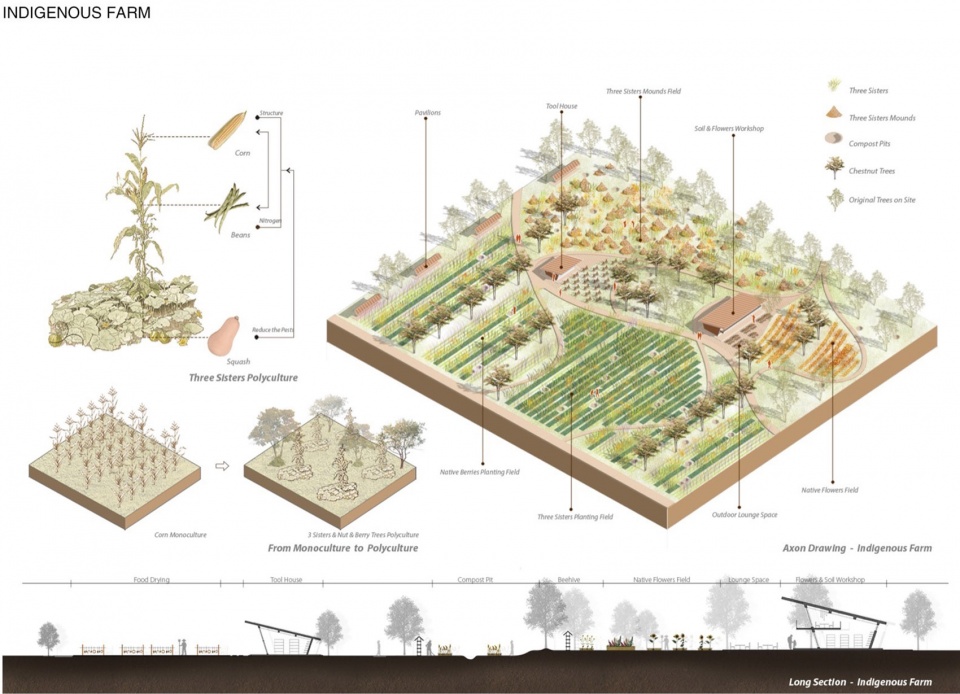
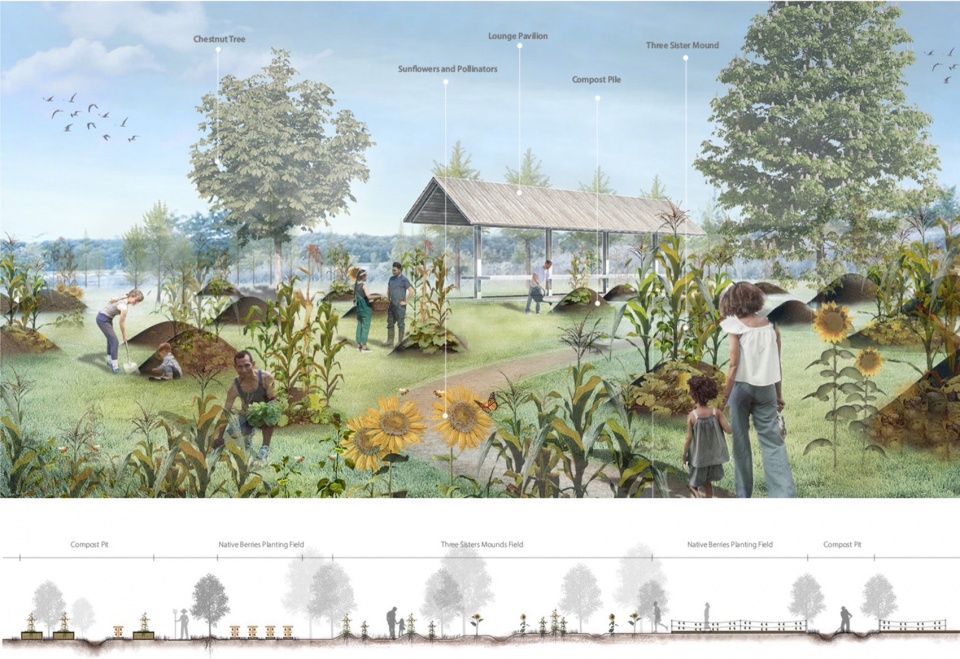
然后,场地有农耕的历史,我们想要将场地记忆融入场地故事,所以对本土的农耕方式产生兴趣并在设计中留出当地农场的部分以支持农业, 这种本土种植方式被称之为“三姐妹种植模式”。是将玉米、豆类和南瓜以一种共生互利的方式进行种植,其中每种植物都为其他植物提供了益处,从而提高了土壤肥力,减少了害虫和疾病,并增加了产量。这种传统的种植方法体现了可持续性、生物多样性和相互依存的原则。
Next, considering the site’s agricultural history, we want to incorporate its memories into the site narrative. Therefore, we researched on local farming history and reserved a portion of the design to support local agriculture. This native planting method, known as the “Three Sisters planting pattern,” involves cultivating corn, beans, and squash in a mutually beneficial way. Each plant provides benefits to the others, enhancing soil fertility, reducing pests and diseases, and increasing yields. This traditional planting method embodies principles of sustainability, biodiversity, and interdependence.
另外我想要和大家分享的部分是在RISD的选课生活,每个学期可以选择一门和自己本专业完全无关的课程,可以是文学,纯艺,或者如果你有自己想要研究的领域,你甚至可以自己开一门课。它可以跨越专业的边界,探索不同艺术形式的互通之处,和不同背景的同学一起学习交流,或者只是单纯的满足对于一个新领域的好奇心。
What I also want to share is the interesting elective courses I selected in RISD. Every semester, students can choose a course entirely outside their major. It could be literature, fine arts, or whatever you’re interested in researching, you can even propose to teach a course yourself. This allows for interdisciplinary exploration, delving into diverse art forms, and engaging in vibrant discussions with peers from various backgrounds. or just simply satisfying curiosity about a new field.
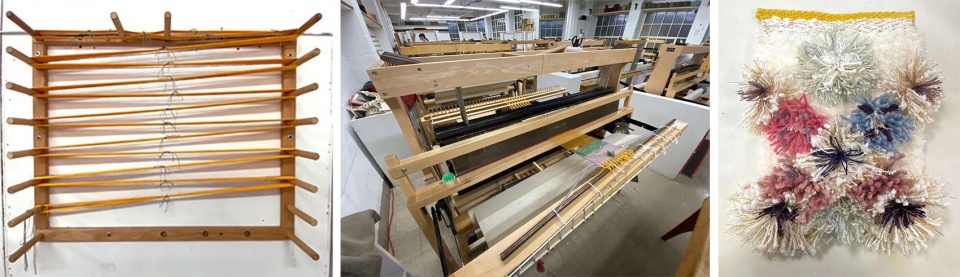
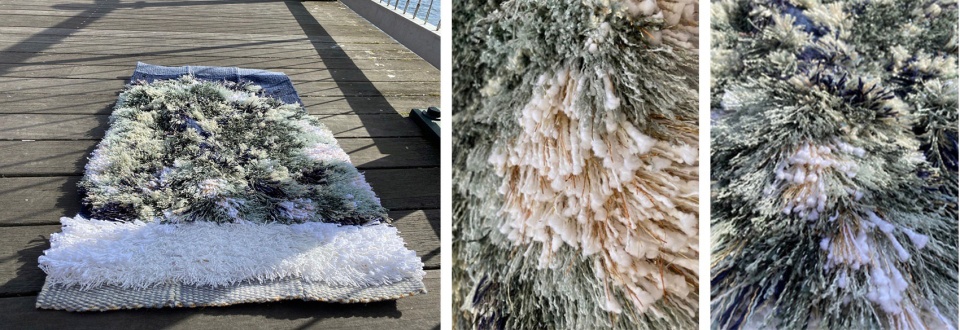
有一个冬季学期我选了textile的课学习编织,从零开始学习使用纺织机,然后因为热情使得东部漫长的冬季也显得不那么冰冷。我每天很早去工作室编织小样,有一天下了很大的雪,一开门埋到我小腿的样子,扫雪车也还没有开始工作,那是我记忆最深刻的一个冬天,做了一个月的纺织工。
One winter semester, I enrolled in a textile course to learn weaving rugs. Starting from scratch with weaving machines, my passion made the long Eastern winter feel less chilly. I arrived at the studio early every day to weave samples, spending a month as a weaver, that was a very interesting journey for me.
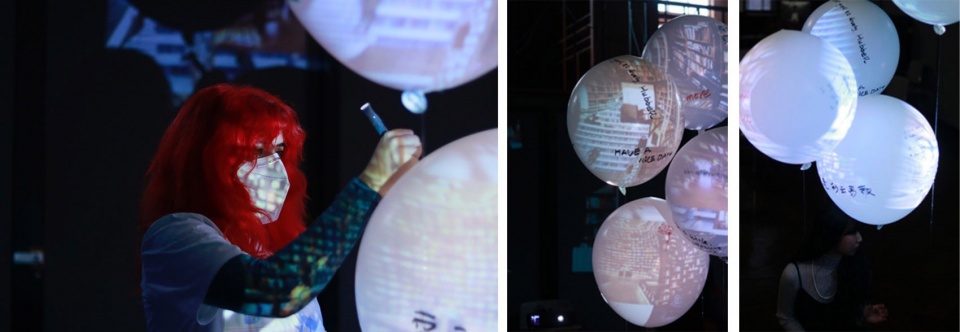
还有一个做装置设计的课,每一节课都会有一些投影装置的设计和小组作业,我们以投影为媒介,对光影,空间,音乐加以结合。总而言之,是非常有趣,非常RISD的体验。期中的作业我做了一个“空中图书馆”的装置,通过在气球上投影的方式展现,每个路过观展的人对展览的空间都会产生气流,使气球浮动,人们都可以在气球上留下一句令他们印象最深刻的书里的话或台词,任何语言形式。
“我们分享记忆,认知,当你走过,跑过,写下文字,对空间产生影响,也让空间影响你。“
I took another course in installation design, each session involved designing projection installations and group assignments. We combined light, shadow, space, and music using projections as a medium. It was an enthralling and artistically enriching experience. For the midterm project, I created an installation called the “Floating Library,” which utilized projections on balloons. As people moved through the exhibition space, their presence created air currents, causing the balloons to fluent. Visitors were encouraged to share their favorite sentence from a book or a memorable line in any language, leaving their mark on the balloons.
“We share memories and knowledge. As you walk, run, and write, you influence space and let space influence you.”
在海外时间:2021年至今
在海外地点:美国 普罗维登斯/休斯顿/波士顿
姓名:李梓歆
籍贯:陕西西安
学校or工作单位:西安建筑科技大学/罗德岛设计学院/CBT Architects
联系方式:Zixin199706@outlook.com:linkedin.com/in/zixin-li-57154a234
When: From 2021 to present
Where: Providence/Houston/Boston, USA
Who: Li Zixin
From: Xi ‘an, Shaanxi Province
School: Xi ‘an University of Architecture and Technology
Firm: Rhode Island School of Design /CBT Architects
Contact: Zixin199706@outlook.com
linkedin.com/in/zixin-li-57154a234
多实践
DK
多实践
多实践,期待看到你的作品