海外存知己,天涯若比邻。
在海外专辑分享海外华人的故事。希望这份分享可以让世界更加海阔天空。
第一百四十三期为您介绍的是毕业于宾夕法尼亚大学,现工作于Sasaki的章凌
A bosom friend afar brings distant land near. The Oversea album shares the lives of Chinese living abroad with all.
The No.143 episode features Ling Zhang who graduated from University of Pennsylvania and is now working for Sasaki
为什么出国?
Why go abroad?
一方面是想看看自己在不同文化环境里会变成什么样,会不会发现一些以前没意识到的可能;另一方面也想看看自己是否拥有在完全陌生地方不被打倒的韧性。
On one hand, I wanted to see how I might change in a different cultural context and discover possibilities I hadn’t realized before. On the other, I wanted to test my resilience in an entirely unfamiliar place.
在国外遇到了什么让你印象最深刻的事情?
What impressed you the most when you are abroad?
读书期间有一次楼下大厅正在进行公开评图。台上是一位国际学生在做展示,她的切入角度新颖,逻辑清晰,图面也表达得完整,是一个值得肯定的项目。但不知为何,在众目睽睽之下,她的气场逐渐削弱,语速放慢,言语开始卡顿,甚至一度动摇了自己做这个项目的初衷。这时院长从楼上经过,他穿着西装打着领带,路过楼梯口的时候看了垃圾桶一眼,然后把一沓被丢进“其他垃圾桶”的打印废纸捡起,放进“可回收”垃圾桶。大家的注视似乎并没有影响他一个看似权威的人在一个严肃场合下做一件显得有点怪的事。楼下宾朋满座,隔着玻璃,大家都看见了这一幕,不禁莞尔。
我们常常会因为太多注视而忸怩不安,甚至悄悄让出了自主权。但也许真正的主体性,是即使在众目之下,仍然坚持做你认为对的事——哪怕只是默默地把纸扔进该扔的地方。
During my studies, there was once an open critique session in the lobby downstairs. On stage, an international student was presenting a project—her approach was fresh, her logic clear, and her drawings complete. It was a project worth recognition. Yet, for some reason, under so many eyes, her presence began to shrink—her pace slowed, her words faltered, and she even started to doubt the very reason she began the project.
At that moment, the dean happened to walk by upstairs. Wearing a suit and tie, he glanced at a trash bin by the staircase, then calmly picked up a stack of discarded printouts from the “other waste” bin and placed them in the “recyclable” bin. The stares from others seemed not to affect him—an authoritative figure doing something slightly odd in a formal setting. The audience downstairs, separated by glass, saw the scene and couldn’t help but smile.
We often grow self-conscious under too much attention, quietly surrendering our autonomy. But perhaps true agency is the ability to keep doing what you believe is right—even if it’s just putting paper into the right bin under everyone’s gaze.
最想念祖国的什么?
What do you miss the most about China?
菜市场和大排档。当我在美式酒吧,啤酒花园或是Coscto巨大的货架前徘徊时,总是会被勾起对于国内那些空间的乡愁。它们鲜活真实,也琐碎喧哗,即使地面总是湿漉漉,塑料桌椅摇摇晃晃,杯盏相碰声此起彼伏,昏黄的灯光映得人脸发烫。我时常想念那些拥挤但充满了生命力的街头,洋溢着趣味和人间烟火气。
Wet markets and late-night street stalls. When I’m wandering through an American bar, a beer garden, or the towering aisles of Costco, I’m often struck by nostalgia for those spaces back home. They were vivid and real, messy and noisy—the floors always damp, plastic tables and chairs wobbling, glasses clinking in a constant rhythm, faces flushed under dim yellow lights. I often miss those crowded yet vibrant streets, brimming with charm and the warmth of everyday life.
你会回国么,为什么?
Will you come back? Why?
长远来看,应该还是会的。最近一次回国探望让我意识到,我在海外建立的生活锚点,其实一直是围绕着对国内的思念与想象:我读的是中文书籍,听的是华语音乐,吃的是中餐,与国内的朋友保持联系,也通过中文播客了解中国社会。但这些连接如果长期脱离了中国的土壤,其实是飘忽而脆弱的,它们支撑不起一个海外游子的“附近感”。我不想就这样慢慢切断和故乡的联结。
In the long run, probably yes. My most recent visit home made me realize that the anchors I’ve built abroad have always revolved around a longing and imagination for China: I read Chinese books, listen to Mandarin music, eat Chinese food, keep in touch with friends back home, and follow Chinese society through podcasts. But without being rooted in China’s soil, these connections are in fact fragile and adrift—they can’t truly sustain a sense of belonging for someone living overseas. I don’t want to slowly sever my ties with home.
出国后在不同的背景下再看中国是否看得更清晰,有哪些感触?
Is it more distinct to view China in a different environment after going abroad? Any thought?
我觉得是既清楚又模糊了。很多以前觉得理所当然的事情,我开始慢慢质疑;而许多曾经难以理解的观点,我也逐渐学着去接纳。过去我对周围环境的很多细碎感受,常常被“国家”“民族”“文化”“社会”这些宏大的词汇包裹着,来不及被真正解构和消化。有一次我参加一个海外华人社群的活动,原本是想寻找归属感,结果却意外感受到一种被强行代表的压力。那一刻我才意识到,“文化”并不总是自我认同的庇护所,有时候它也可能是一种无形的规训。可是一旦当我尝试将这些宏大叙事击碎、剥离的时候,又常常感到迷失:就像一个原本包裹你的巨大泡泡被瓦解成无数的泡沫,它们让你更容易触及,却也遮挡了视线。
I’d say it’s become both clearer and more blurred. Many things I once took for granted, I’ve started to question; while perspectives I used to find hard to accept, I’m learning to embrace. In the past, many of my small, personal impressions of my surroundings were wrapped in grand terms like “nation,” “people,” “culture,” or “society,” leaving no time to truly deconstruct or digest them.
Once, I joined an overseas Chinese community event hoping to find a sense of belonging, but instead I unexpectedly felt the pressure of being involuntarily “represented.” In that moment, I realized that “culture” isn’t always a safe haven for self-identification—sometimes it can be an invisible form of discipline. Yet when I try to break apart and peel away those grand narratives, I often feel lost, as if a giant bubble that once enclosed me had burst into countless smaller bubbles—easier to touch, but also obscuring my view.
你的学校有哪些教育特点?
What are the educational characteristics of your school?
我在两个风格迥异的教育体系中度过了本科与研究生阶段。本科在浙江大学,主修城乡规划。浙大是一所强调“通识教育”的学校,在五年制的本科学习中,我修读了许多本专业以外的课程:从数理基础课程、社会学、生态学,到文学、历史与传播学,内容非常广泛。那时我常觉得这些学习碎片化、杂乱无章,有时甚至让我感到迷茫。但现在回想,也许不是课程太杂,而是我始终没能在“如何规划城市”之外,学会如何规划自己的人生。
宾大的景观建筑项目则走向了另一个极端——高度职业化。很多人打趣地说,它是为美国顶级景观事务所量身打造的“训练营”。某种程度上,我的求学和职业路径也恰好印证了这个刻板印象。整个课程以设计 studio 为核心,其他理论课theory、工程课workshop和软件课media基本都是为设计服务的补充工具。前两年课程安排密集,直到最后一年才开放较多的选修空间。
也许是受本科经历的影响,我在最后一年强烈地想逃离“被预设好的轨道”,于是选修了不少来自环境系、考古系与人类学系的课程。最让我印象深刻的,是一门人类学系开设的“灵长类动物行为学”。课程从物种分类讲起,逐步延伸到它们的家庭结构、社群组织与行为机制。每堂课之后都有大量学术阅读,初看艰涩,但一旦读进去就很容易被吸引。那些我们在社会中无法理解的行为,那些混乱、矛盾甚至荒谬的情境,原来在灵长类动物中也普遍存在。通过生物学和人类学的视角重新看待这些现象,一切竟变得合理。像人类一样,它们也会面对两性矛盾、社群冲突、权力博弈与成长阵痛。当我开始用更专业和更抽离的眼光看待这一切时,突然觉得,也许我们终其一生面对的困惑,从来都不是独属于人类社会的难题。
所以无论是通识教育也好,还是职业导向教育也罢,学校的培养体系无法决定我们最终的人生走向。尤其在很多时候,我们并没有真正的选择权。但我慢慢意识到,自由也许并不意味着把选择权紧紧攥在手里。它或许是在某些时刻,允许自己的生活out of track。
I experienced two very different educational systems in my undergraduate and graduate studies. I majored in Urban and Rural Planning at Zhejiang University, a school that emphasizes liberal arts education. In the five-year program, I took a wide range of courses beyond my major—from math and science fundamentals, sociology, and ecology to literature, history, and communication. Back then, I often felt the learning was fragmented and chaotic, sometimes even disorienting. Looking back, perhaps it wasn’t the curriculum that was too scattered, but rather that I never learned how to plan my own life beyond “how to plan a city.”
The Landscape Architecture program at the University of Pennsylvania was the opposite—highly professionalized. Many joked it was a “boot camp” tailored for America’s top landscape firms, and in some ways my academic and career trajectory reinforced that stereotype. The curriculum centered on design studios, with theory, workshops, and media courses serving as supporting tools. The first two years were tightly scheduled, with more electives only available in the final year.
Perhaps influenced by my undergraduate experience, I had a strong urge in my last year to step off the “preset track.” I took many courses from the Environmental Studies, Archaeology, and Anthropology departments. The most memorable was “Primate Behavior” in Anthropology. It began with taxonomy and expanded to family structures, social organization, and behavioral mechanisms. Each class came with heavy academic readings—daunting at first, but deeply engaging once I got into them. Behaviors we struggle to make sense of in human society—the chaos, contradictions, even absurdities—are just as common among primates. Seen through the lens of biology and anthropology, they suddenly made sense. Like humans, they face gender tensions, community conflicts, power struggles, and growing pains. When I began to look at these phenomena more professionally and objectively, I realized that the confusions we face in life are rarely problems unique to human society.
So whether it’s liberal arts or professionally oriented education, an academic system alone doesn’t determine our life’s direction—especially when we often don’t have full control over our choices. Over time, I’ve come to see that freedom isn’t just about tightly holding onto the right to choose; it’s also about allowing life, at certain moments, to go off track.
你现在工作公司的特色和有趣的地方?
What are the characteristics and interesting points of your firm?
Sasaki从以景观起家,后续发展成为集建筑,室内,规划,城市设计,景观,生态和市政工程为一体的综合性设计公司。它的官方理念是“Better Design, Together”, 因此它始终强调跨学科和跨办公室合作。尽管同事们来自不同的专业背景,甚至身处不同城市的办公室,但我从未觉得自己是某个项目小组中的一颗螺丝钉。项目中我们协同紧密,交流频繁;日常工作之余,公司也鼓励设计师走进社区、走进校园,把公众的声音真正带入设计进程中,让设计不止服务甲方,也能反哺城市生活本身。
公司有近三百位员工,来自世界各地,彼此说着三十多种语言,也尊重着彼此国家的传统与文化。还记得特朗普当年颁布关税政策后的某一天,午休时,我和来自六个国家和地区的同事围坐在同一张桌子上,热烈地讨论着它将如何影响我们的行业和生活。那一刻有些魔幻,像是误入一场微缩版的联合国会议——但那份坦诚的交流让我感到很踏实。
这种合作让我不禁回想过去接受的教育。在学校的时候,老师们总是强调“批判性思维”,但我始终觉得,包容远比批判难得多。包容意味着你必须试着站在与你不同,甚至对立的视角去审视问题;意味着你要耐心地去理解分歧从何而来,去倾听彼此的背景、逻辑与情感。它不是一种退让,而是一种深层的思考、沉淀和接受,是对世界多元与复杂性的尊重。我希望自己永远都在学习成为一个更包容的人。
Sasaki began as a landscape architecture firm and has since grown into a multidisciplinary design practice integrating architecture, interior design, planning, urban design, landscape, ecology, and civil engineering. Its official philosophy, “Better Design, Together,” underscores a constant emphasis on cross-disciplinary and cross-office collaboration. Even though colleagues come from different professional backgrounds and work in offices scattered across cities, I’ve never felt like just a cog in a project machine. We work closely together, communicate frequently, and beyond project work, the company encourages designers to engage with communities and campuses—bringing the public’s voice into the design process so that our work not only serves the client but also gives back to urban life itself.
The firm has nearly 300 employees from around the world, speaking more than thirty languages and respecting each other’s traditions and cultures. I remember one lunch break shortly after Trump announced his tariff policy: I sat at a table with colleagues from six different countries and regions, in a lively discussion about how it might affect our industry and lives. It felt surreal, almost like stumbling into a miniature UN meeting—but the candor of that exchange was grounding.
This spirit of collaboration often makes me reflect on my education. In school, we were always told to develop “critical thinking,” but I’ve come to feel that inclusiveness is far rarer. Inclusiveness means making the effort to see from perspectives different from—or even opposed to—your own; it means patiently understanding where differences come from, listening to each other’s backgrounds, logic, and emotions. It’s not a concession, but a deeper form of reflection, grounding, and acceptance—a respect for the world’s diversity and complexity. I hope I’ll always keep learning to be a more inclusive person.
最喜欢的艺术家(绘画音乐电影等广泛范围)是谁?给你创作带来了什么影响?
Who is your favorite artist (in wider range such as art, music, movie)? What is the influence?
坂本龙一和黑塞。虽说一个是音乐家一个是文学家,看似风马牛不相及,但我觉得他们有一些深层的共性。他们都在尝试触及一种非常本质的、接近虚无的东西——却又不令人绝望,反而带来一种静默的平和感。如果要说给我创作带来什么影响,大概是在自己做不出来设计的时候重新体会他们的作品能让我开得开一些。
Ryuichi Sakamoto and Hermann Hesse. Though one is a musician and the other a writer—seemingly worlds apart—I think they share a deep commonality. Both seek to touch something essential, close to nothingness, yet without inducing despair; instead, their work evokes a quiet sense of peace. If their influence shows in my creative process, it’s that revisiting their works when I’m stuck in design helps me regain perspective and breathe a little easier.
觉得自己的作品集有哪些迷人的特质?
What fascinates viewers the most in your portfolio in your opinion?
虽然没有太多酷炫的技法和高深的理论,也没有野心想要尝试解决气候危机和社会问题,但我觉得它们都在尝试探讨很朴实和真诚的东西:人与自然的关系。
While it may not feature dazzling techniques or sophisticated theories, nor carry the ambition to solve the climate crisis or major social issues, I believe it consistently seeks to explore something simple and sincere—the relationship between people and nature.
什么时候开始看谷德网的?欢迎你提出建议哦,谢谢。
When did you start to follow gooood? Any suggestions?
从本科时期就开始看了,那时候很喜欢上面发布的一些有趣的海外项目。工作之后,反而更多地在谷德上关注优秀的本土设计作品。有时候我会把这些中国项目当作参考图推荐给外国同事看,他们也总是很兴奋。某种程度上,这是不是也可以被看作是一种中西之间的“文化反哺”?
另外我也想说,其实设计师的项目和投稿一直是平台内容的根基。媒体已经在为设计师发声、搭建公共讨论空间——希望未来谷德也能继续坚持这一点,帮助推动一个更健康、更可持续的行业生态。
I began reading it in my undergraduate years, drawn to the interesting overseas projects it featured. After starting work, I found myself paying more attention to the outstanding domestic designs on the site. Sometimes I share these Chinese projects with foreign colleagues as reference images, and they’re always excited—perhaps, in a way, this could be seen as a form of “cultural feedback” from East to the West.
I also want to note that designers’ projects and submissions have always been the foundation of the platform’s content. Gooood is already giving designers a voice and creating a public space for discussion—my hope is that it will continue to do so, helping to foster a healthier and more sustainable design industry.
W O R K
01.
史前花园
Prehistoric Garden
Site: U.S. National Arboretum, Washington, DC
Instructor: Karen M’Closkey
LARP 701 Studio, Fall 2022
现代植物园的角色引发了广泛争议。尽管有人认为它们是过时的遗迹或无关紧要的空间,但这些园区却为我们理解人与自然关系的复杂因素提供了重要的视角。通过将植物学展示与艺术展览相结合,植物园不仅向公众普及植物知识,还呈现出我们在生物多样性丧失、气候变化以及自然治理等议题上的态度演变。
该项目位于华盛顿特区的美国国家植物园,以植物进化为核心主题。通过展示植物的历史并探讨其未来,旨在凸显植物园的重要性。
The role of modern botanical gardens has sparked considerable debate. While some see them as outdated relics or insignificant spaces, these gardens offer valuable perspectives for understanding the complex factors shaping the human–nature relationship. By combining botanical displays with artistic exhibitions, botanical gardens not only educate the public about plants but also reflect our evolving attitudes toward biodiversity loss, climate change, and nature governance.
This project, located at the U.S. National Arboretum in Washington, D.C., centers on the theme of plant evolution. By showcasing the history of plants and exploring their future, it seeks to highlight the significance of botanical gardens.
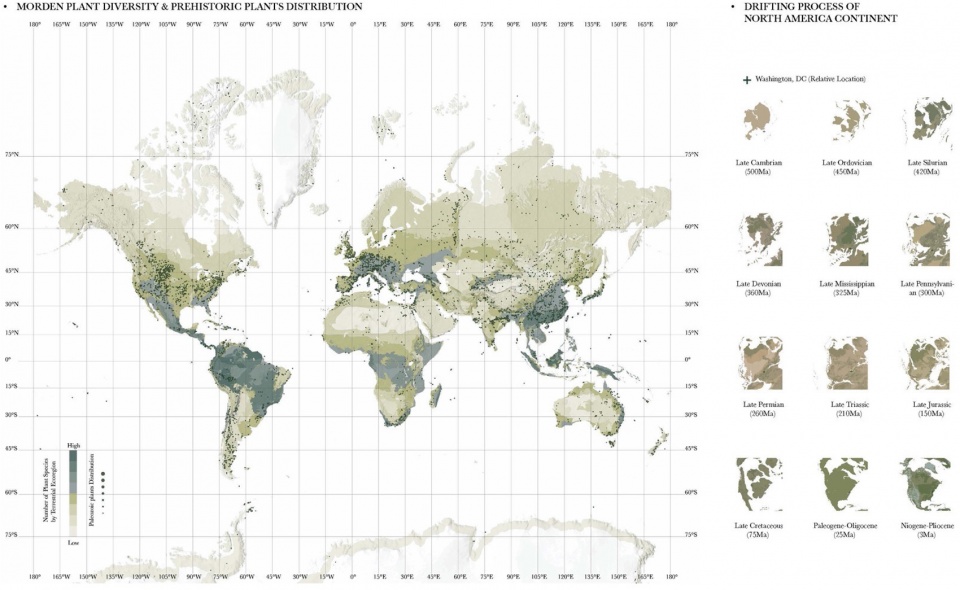
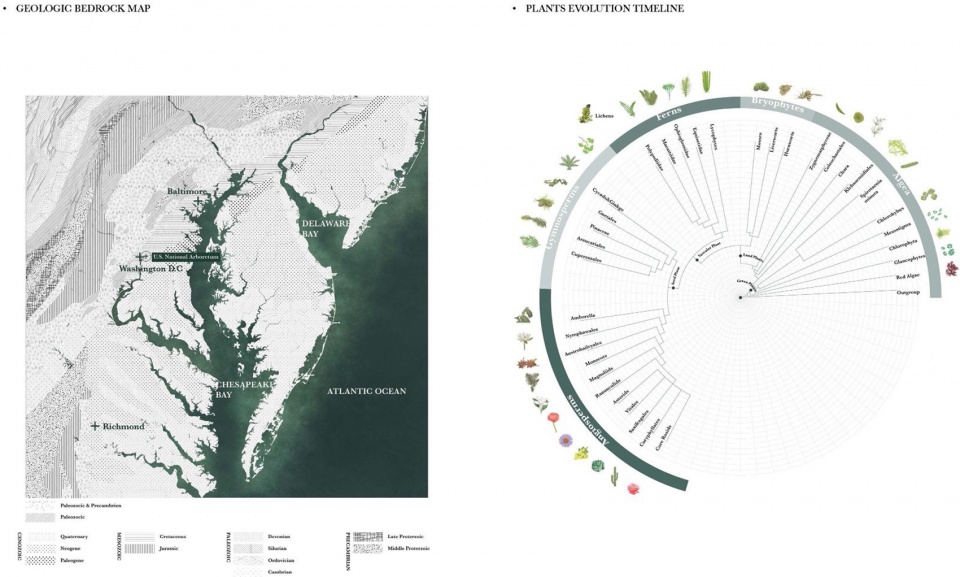
植物在地球上拥有可追溯至数亿年前的悠久历史。尽管现今被子植物已占据主导地位,但在很长一段时间里,裸子植物和苔藓曾是地球上的主要植被。随着气候的变迁,植物群落的组成也随之改变。然而,这些古老植物的残存种类——被称为“活化石”——至今仍在地球上存活。它们经历并幸存于远早于现代人类出现的重大气候变迁。
Plants have a history on Earth that stretches back hundreds of millions of years. Although flowering plants dominate today, gymnosperms and mosses were once the planet’s primary vegetation. As the climate has changed, so too has the composition of plant communities. Yet remnants of these ancient species—known as “living fossils”—still survive today, having endured major climatic shifts long before the emergence of modern humans.
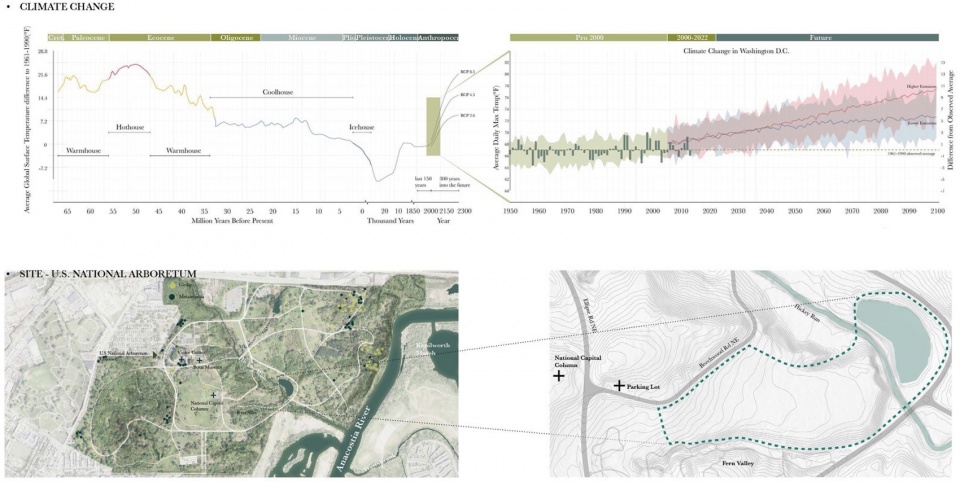
目前的挑战在于,人类每年向大气中排放数十亿吨二氧化碳,这将带来比地球过去缓慢气候变迁更为灾难性的问题。一些研究表明,地球未来的环境很可能会像史前时期一样炎热。气候持续变化的背景下,这些遗存物种能否继续存活,仍是一个悬而未决的问题。
The current challenge is that humans release billions of tons of carbon dioxide into the atmosphere each year, causing potentially more catastrophic impacts than the gradual climate shifts of the past. Some studies suggest that the planet’s future environment could become as hot as it was in prehistoric times. Whether these relict species can continue to survive as the climate keeps changing remains an open question.
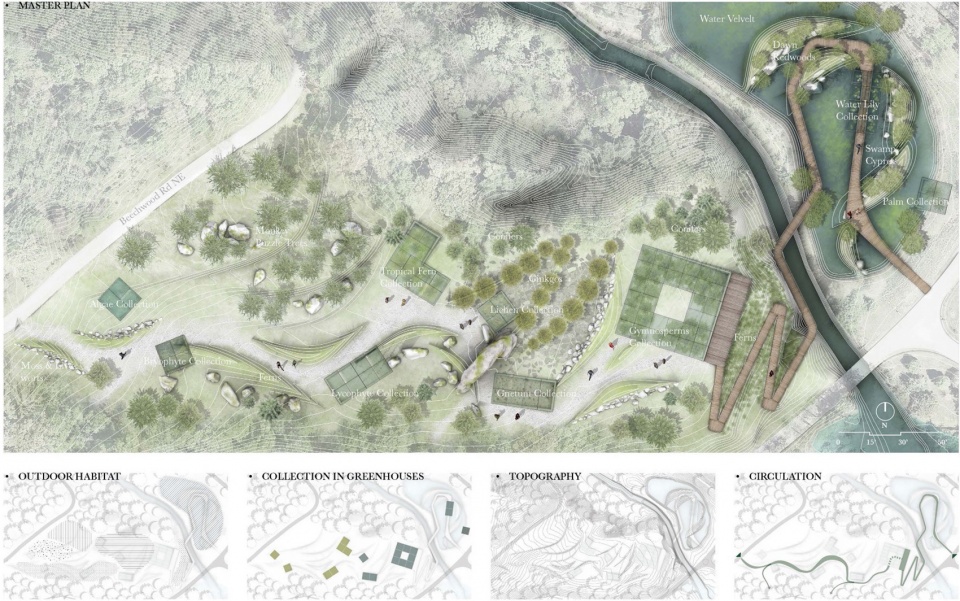
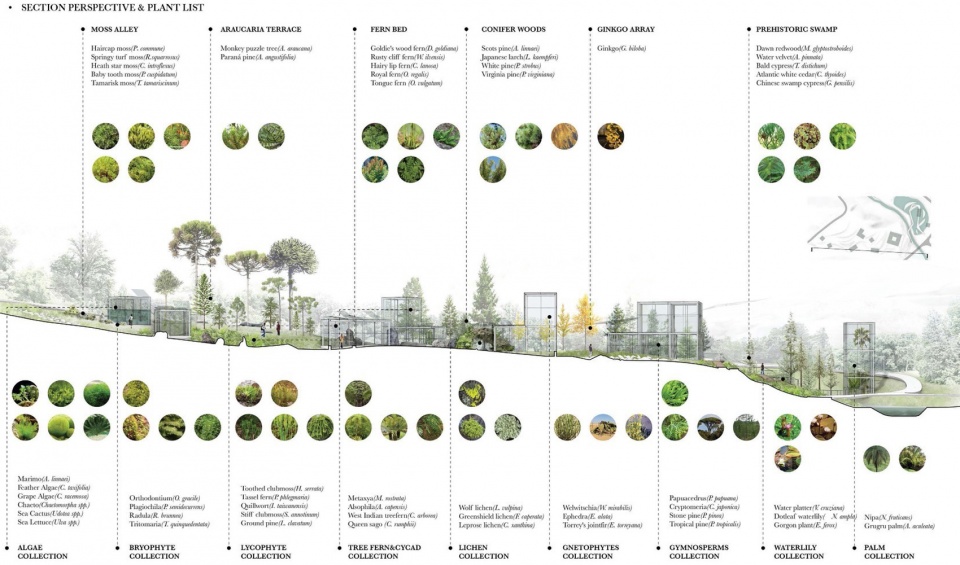
该项目位于华盛顿特区的美国国家植物园,旨在通过展示那些在剧烈气候变迁中幸存下来的植物物种,呈现地球在漫长历史中发生的巨大变化。展览由户外生境和温室组成,以此警示环境变化可能带来的后果。温室按时间顺序呈现植物的进化历史,重点展示在不同时期占据主导地位的物种;户外生境则利用适应华盛顿特区气候的遗存植物,重建史前植物生态系统。
Located at the U.S. National Arboretum in Washington, D.C., this project aims to showcase plant species that have survived dramatic climate shifts, illustrating the profound transformations Earth has undergone over its long history. The exhibition comprises both outdoor habitats and greenhouses to highlight the potential consequences of environmental change. The greenhouses present the evolutionary history of plants in chronological order, focusing on species that dominated during various geological periods, while the outdoor habitats reconstruct prehistoric plant ecosystems using relict species adapted to the climate of Washington, D.C.
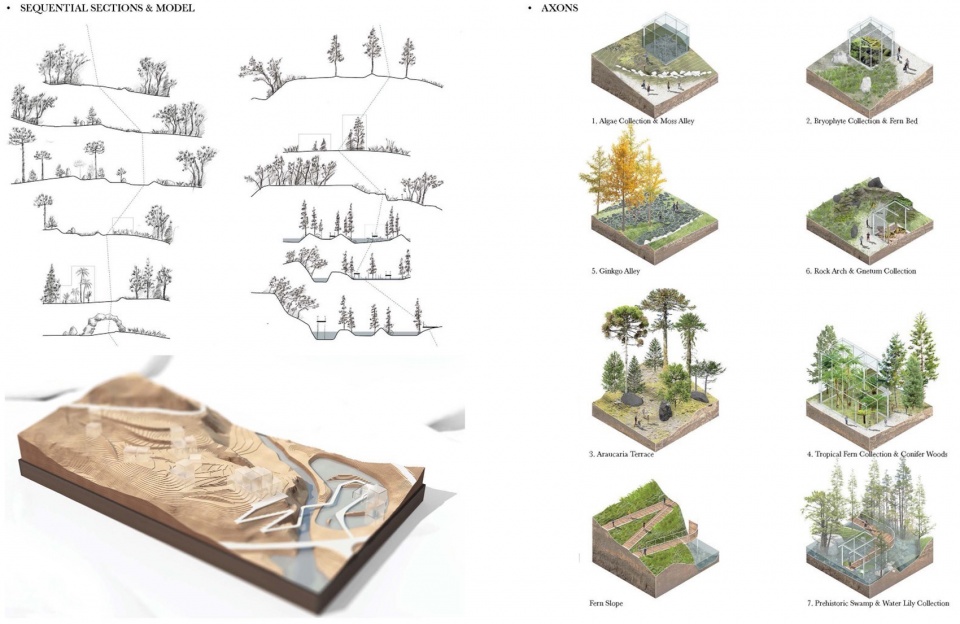
设计充分利用场地地形,用一系列的微地形和散落的温室结合,为不同历史时期的植物营造具有特色的生长环境,同时引导人们在如同生态缸的空间中穿行。
The design makes full use of the site’s topography, combining a series of micro-landforms with scattered greenhouses to create distinctive growing environments for plants from different historical periods, while guiding visitors to move through spaces that feel like ecological terrariums.
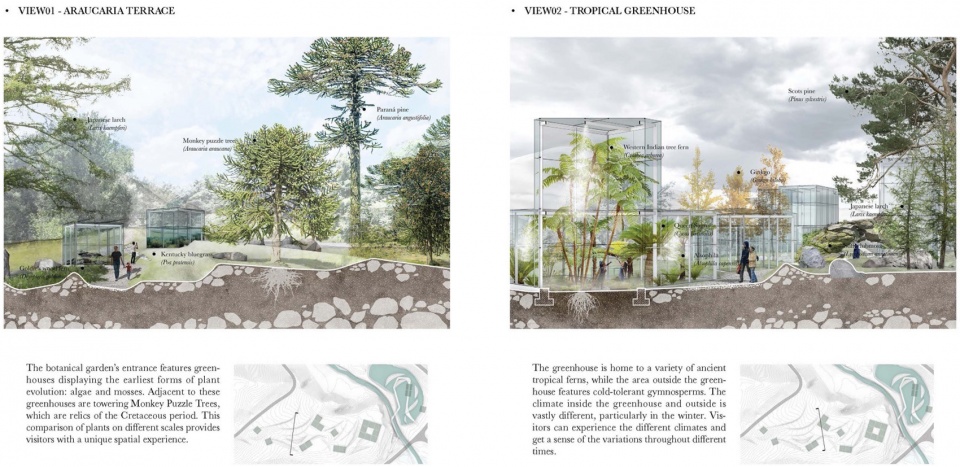
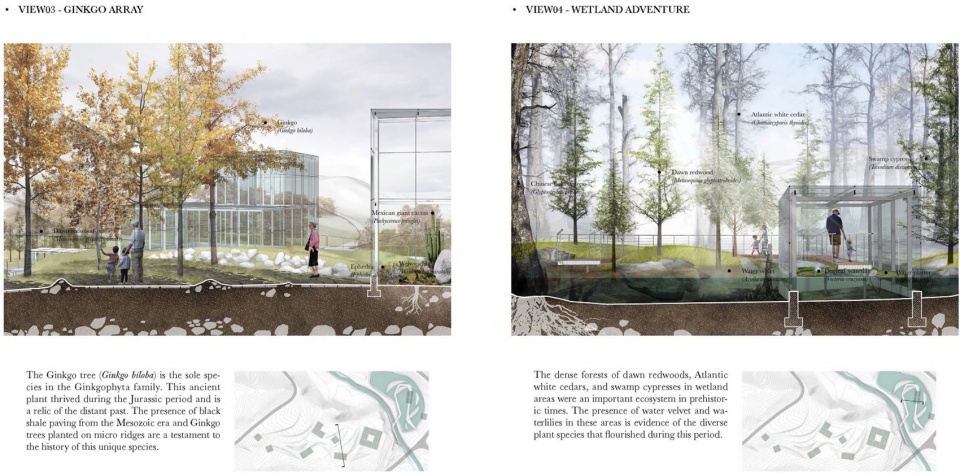
通过同时展示不同尺度,不同气候环境和生态系统的植物种类,使得人们能够更好的认识植物在地球历史上发挥的重要作用。
By showcasing plant species from different scales, climates, and ecosystems at the same time, the project enables visitors to better understand the vital role plants have played throughout Earth’s history.
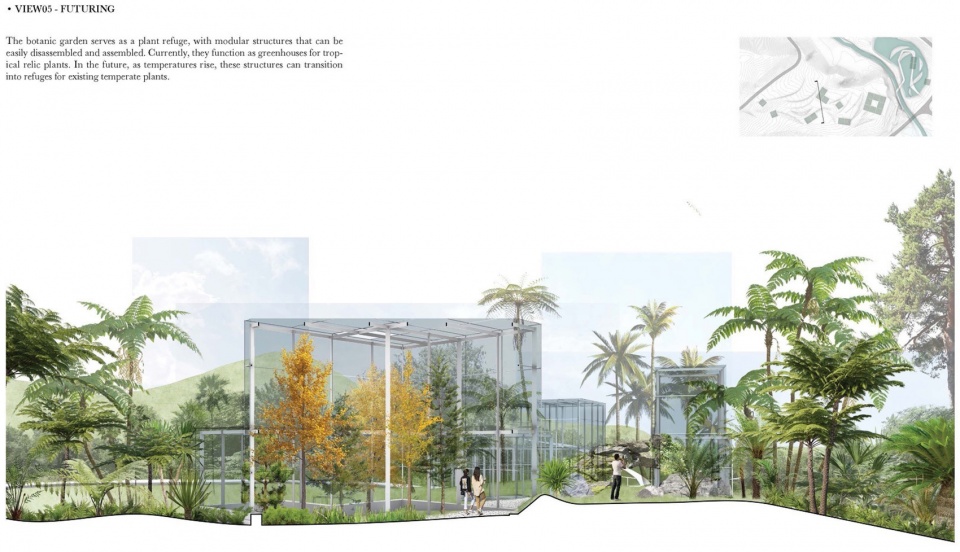
这种室内与室外的界限是相对开放的;随着气候变化,模块化温室可以作为“植物避难所”发挥作用。例如,适应热带气候的植物,如树蕨和铁树,可以移植到户外;而对温度更为敏感的植物,如银杏和柏树,则可以被转移到温室中。此举旨在呼吁人们采取行动,肩负起保护地球脆弱生态系统的责任——这些生态系统正是人类赖以生存的基础。
The boundary between indoor and outdoor spaces is intentionally porous; as the climate changes, modular greenhouses can function as “plant refuges.” For example, tropical-adapted species such as tree ferns and ironwoods can be transplanted outdoors, while more temperature-sensitive plants like ginkgos and cypresses can be relocated into the greenhouses. This approach calls on people to take action and assume responsibility for protecting the planet’s fragile ecosystems—systems that are fundamental to human survival.
02.
与自然交织:打破社会与环境壁垒的新扩张区
Weave with Nature: A New Expansion Zone for Breaking Social and Environmental Barriers
Site: Ibagué, Colombia
Instructor: David Gouverneur
LARP 702 Studio, Spring 2022
Colaborator: Bosheng Wang, Fan Wu, Yangyi Li
哥伦比亚正面临着因城市快速且不平衡发展、非正式住区扩张以及对农用地的侵占而带来的严峻挑战。这些问题因基础设施不足和城市规划法规不完善而进一步恶化。在城市发展与生物多样性保护之间取得平衡至关重要,哥伦比亚亟需推动兼顾包容性城市增长与环境保护的综合性方案。
Colombia is facing severe challenges from rapid and uneven urban growth, the expansion of informal settlements, and the encroachment on agricultural land. These issues are further exacerbated by inadequate infrastructure and weak urban planning regulations. Striking a balance between urban development and biodiversity conservation is crucial, and Colombia urgently needs integrated strategies that promote both inclusive urban growth and environmental protection.
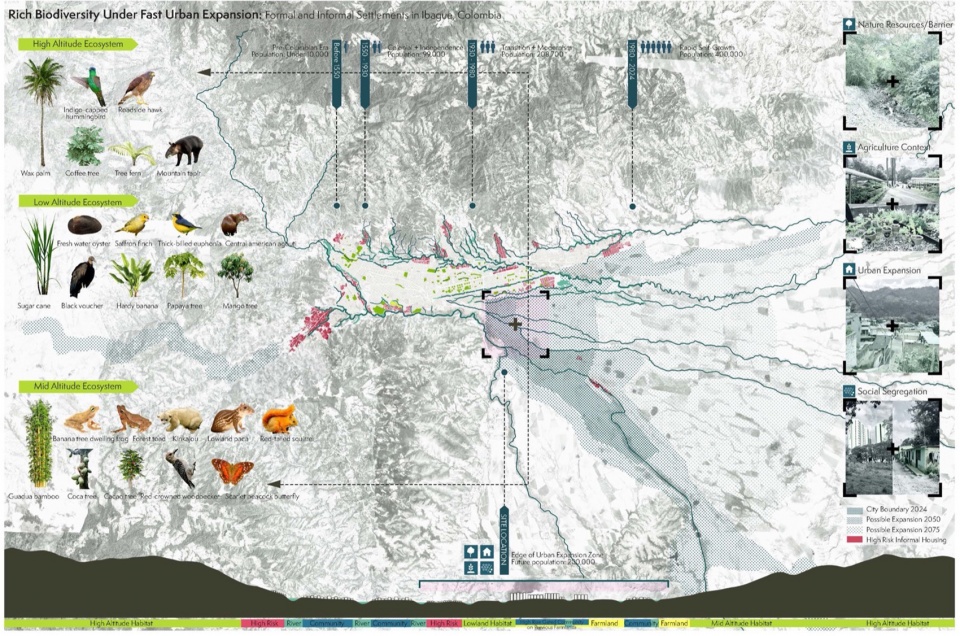
该项目位于哥伦比亚的音乐之都伊瓦格,哥伦比亚中安第斯山脉的崎岖地形中。项目场地位于两个现有城市扩张区之间,被规划为未来的城市中心,恰好反映了这些挑战。当前的城市形态支离破碎,缺乏公共空间、基础设施和公共交通系统,而城市的水系网络依然受到严重污染。
The project is located in Ibagué, Colombia’s musical capital, set within the rugged terrain of the Central Andes. The site lies between two existing urban sprawl areas and is designated as the city’s future center, embodying the very challenges the city faces. Currently, the urban form is fragmented, lacking public spaces, infrastructure, and public transportation, while the city’s hydrological network remains heavily polluted.
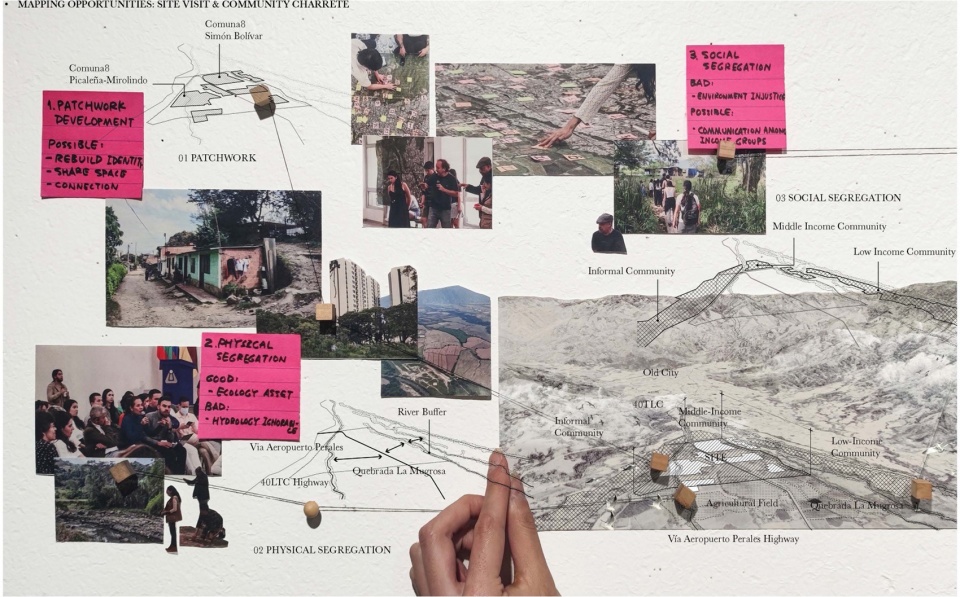
通过公共会议与公众参与工作坊,深入了解当地居民对场地的认知和真实需求,听取他们对于解决方案的设想。
Through public meetings and participatory workshops, the project gains a deeper understanding of local residents’ perceptions of the site and their genuine needs, while gathering their ideas for potential solutions.
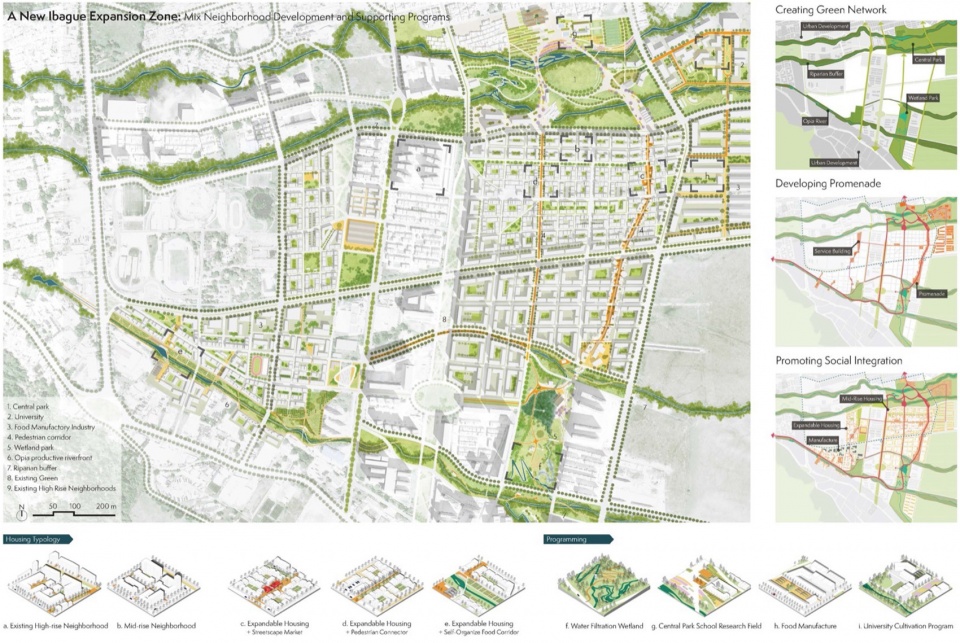
为应对这些问题,项目将重点打造一条综合性的绿色网络,将绿色空间与基础设施相融合。景观在其中发挥关键作用,作为支持城市扩张的示范模式。我们对伊瓦格的愿景是打造一座凝聚包容、环境可持续的城市。沿河岸缓冲带布设的互联绿色空间,将提升生物多样性,提供休闲机会,并促进社区参与。公共空间与市民建筑将保护公共土地,激发公众的归属感与管理责任感。
To address these challenges, the project will focus on creating a comprehensive green network that integrates green spaces with infrastructure. Landscape plays a key role as a model for supporting sustainable urban expansion. Our vision for Ibagué is to create a cohesive, inclusive, and environmentally sustainable city. Interconnected green spaces along riparian buffers will enhance biodiversity, provide recreational opportunities, and foster community engagement. Public spaces and civic buildings will protect public land, inspiring a sense of belonging and stewardship among residents.
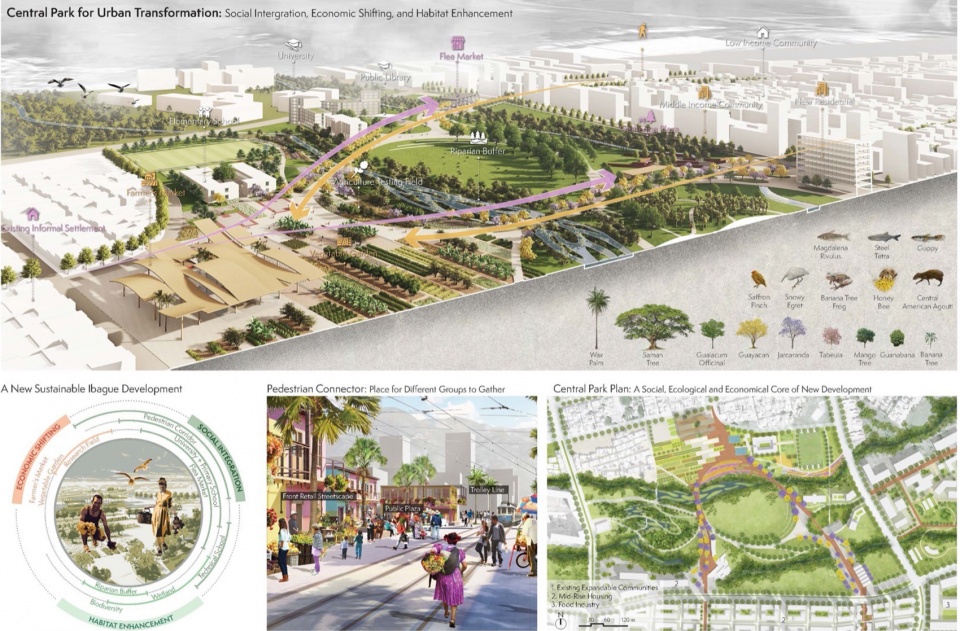
“城市中央公园”将成为社区的重要支点,既提供生态保护,又承载一系列有影响力的社会项目。它与周边社区协作,开展如跳蚤市场、高校合作、农夫市集和蔬菜园等活动,吸引多元人群,促进社会融合,培育强烈的社区归属感。
The “Central Park for Urban Transformation” will serve as a vital anchor for the community, providing ecological protection while hosting a range of impactful social programs. Working in collaboration with surrounding neighborhoods, it will organize activities such as flea markets, university partnerships, farmers’ markets, and community gardens—attracting diverse groups, fostering social integration, and cultivating a strong sense of community belonging.
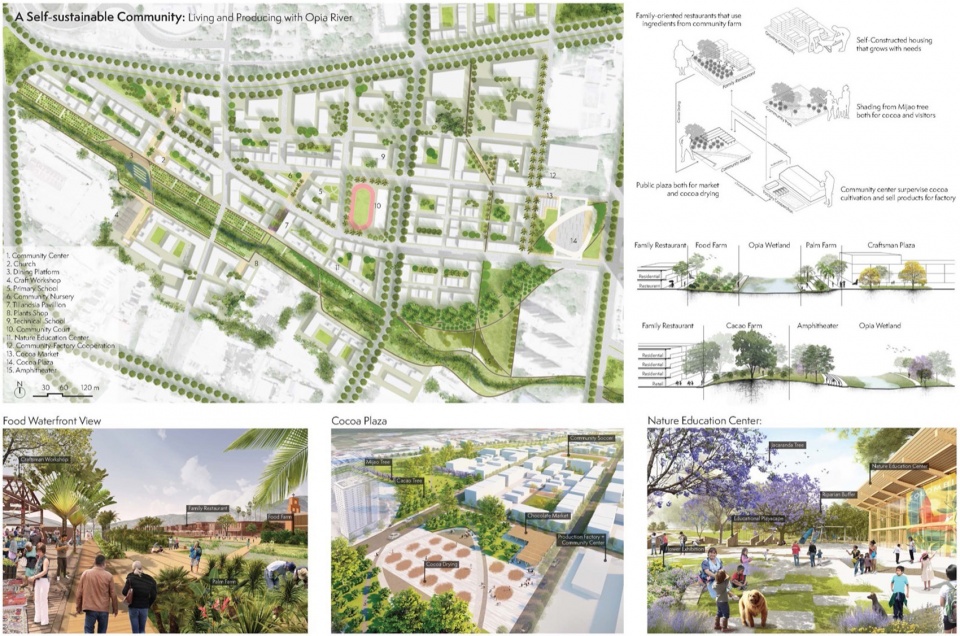
“奥皮亚河沿岸自给自足社区”计划则赋能于奥皮亚河沿岸的弱势群体,通过社区农场、教育机构与本地工厂的合作,带动经济增长、提升教育水平,并增强社区凝聚力。
The “Self-Sustainable Community along the Opia River” initiative empowers underserved populations along the Opia River. Through partnerships between community farms, educational institutions, and local factories, it stimulates economic growth, improves educational opportunities, and strengthens community cohesion.
03.
北京情景园
Beijing Scenario
Site: Chaoyang Park, Beijing, China
Instructor: Farre Nixon
LARP 501 Studio, Spring 2021
北京作为世界上最大的城市之一,拥有悠久的历史与独特的自然环境。这座壮丽城市的都市景观在不同时期经历了显著的变化。然而,与全球其他主要城市一样,北京也面临着一系列共同挑战,如交通拥堵、环境恶化和城市蔓延。
本项目从著名雕塑家野口勇的作品“加州情景园”中或许灵感,旨在将北京的自然环境凝缩为具雕塑感的元素,打造一个融入小型花园的微缩景观。其最终目标是激发市民的环保意识,鼓励他们积极参与保护身边的环境。
As one of the largest cities in the world, Beijing boasts a long history and unique natural surroundings. Over time, the urban landscape of this magnificent city has undergone significant transformations. Yet, like other major cities worldwide, Beijing faces a set of common challenges, including traffic congestion, environmental degradation, and urban sprawl.
Inspired in part by sculptor Isamu Noguchi’s “California Scenario,” this project seeks to distill Beijing’s natural environment into sculptural elements, creating a miniature landscape integrated into a small garden. Its ultimate goal is to spark environmental awareness among residents and encourage them to actively participate in protecting their surroundings.
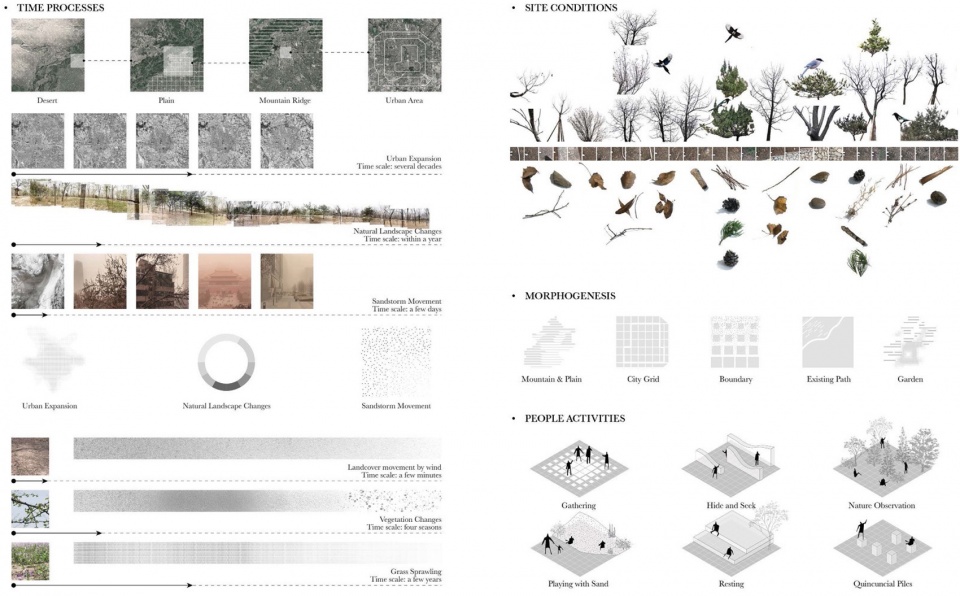
项目选取了对北京影响较大的四种环境类型,按尺度由大到小依次为:沙漠、平原、山地和城市区域。并从中提炼出三种具有不同时间尺度的过程——历时数十年的城市蔓延、在一年内发生的自然景观变化,以及持续数天的沙尘暴运动,并尝试在场地中利用树木、草本植物和地被等自然元素来模拟这些过程。
The project identifies four environmental types that have a significant impact on Beijing, arranged from largest to smallest in scale: desert, plain, mountain, and urban area. From these, it distills three processes with different time scales—urban sprawl over several decades, natural landscape changes within a year, and sandstorm movement over a few days—and seeks to simulate them on site using natural elements such as trees, grasses, and ground covers
.
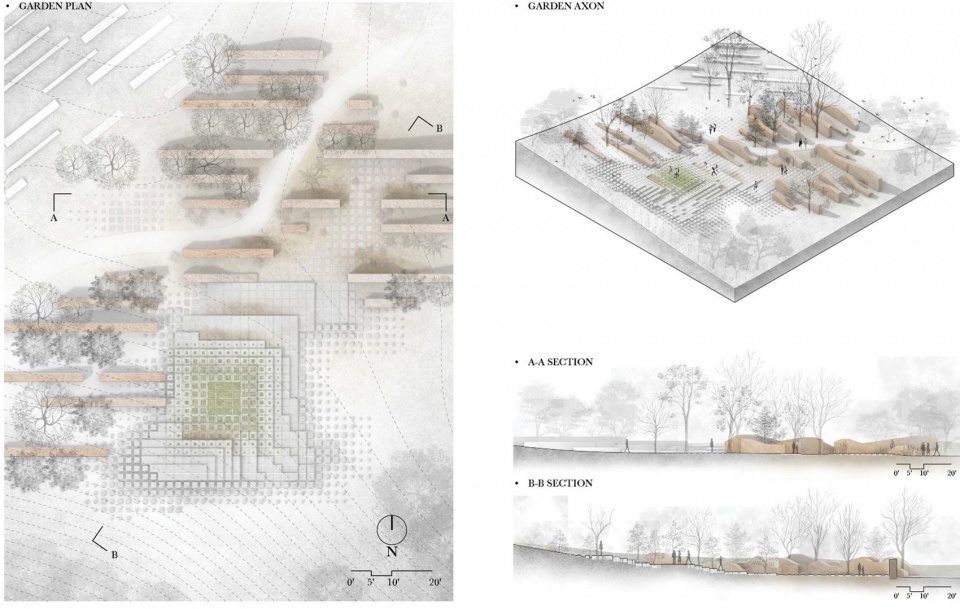
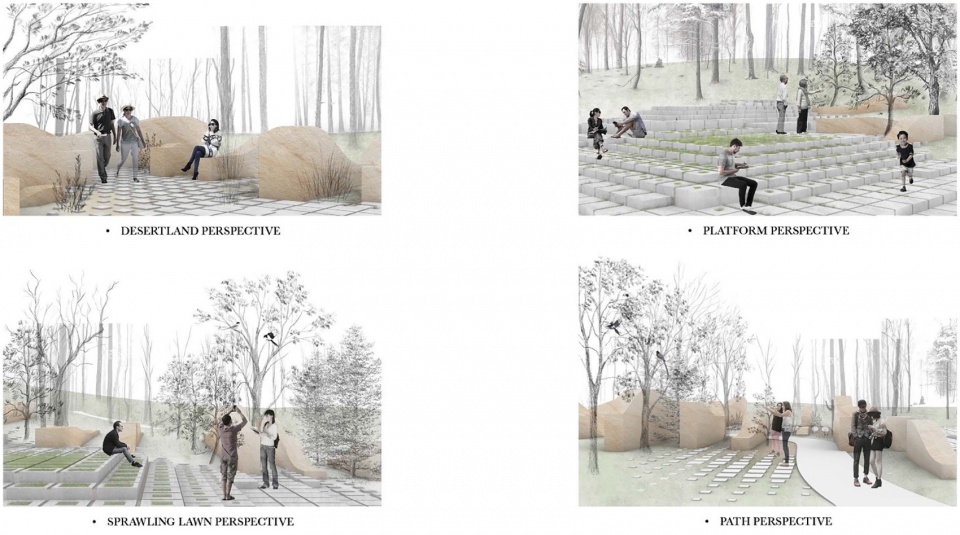
花园分为三部分:沙漠、山地和平原,但三者之间的界限是模糊的,以呈现不同环境间的相互作用。平行的石墙象征北京西部和北部的山脉,并在石墙顶部设计波浪形曲线,以体现山脊起伏的形态。平原中央的草坪代表城市区域,草坪的草会沿铺地缝隙向外蔓延,模拟北京的城市扩张。沙漠位于平原的北侧,北京的盛行风会将沙子吹向南方,沙子会在石墙和台阶的一侧堆积。当沙子与绿色植被相遇时,其运动形态便模拟了北京沙尘暴的过程。
The garden is divided into three sections—desert, mountain, and plain—but their boundaries are intentionally blurred to express the interactions between different environments. Parallel stone walls symbolize the mountains to the west and north of Beijing, with wave-shaped tops evoking the undulating ridges. At the center of the plain, a lawn represents the urban area, with grass spreading outward through the paving seams to simulate Beijing’s urban expansion. The desert lies to the north of the plain, where prevailing winds in Beijing blow sand southward, causing it to accumulate along the sides of stone walls and steps. When the sand meets the greenery, its movement mimics the process of sandstorms in Beijing.
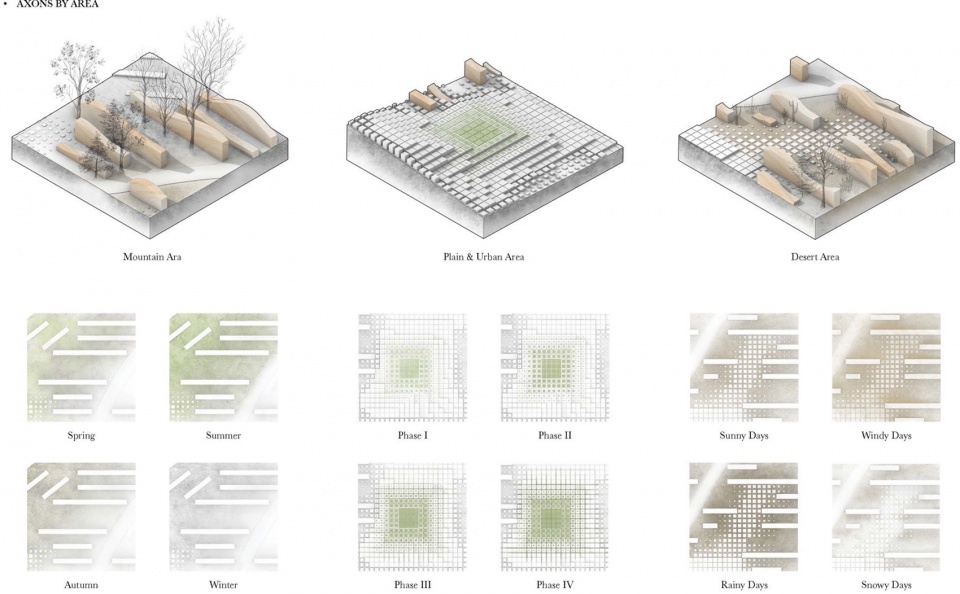
示意图展示了三个区域中不同的时间过程。山地区域的树木景观会随着四季循环而变化;沙漠地区的地被(沙子)会在不同天气条件的影响下,于数小时甚至数分钟内发生移动;平原地区的草坪则会在一年又一年的时间里逐渐覆盖大部分缝隙。
The diagrams illustrate the different time processes within the three zones. In the mountain area, the tree landscape changes with the cycle of the four seasons; in the desert area, the ground cover (sand) shifts within hours or even minutes under varying weather conditions; and in the plain area, the lawn gradually spreads to cover most of the seams over the course of years.
04.
种子方舟
Seeds’ Ark
Site: National Museum of Natural History, Paris, France
2023 LA+ Competition, 2nd Prize
Colaborator: Elaine Zhang, Yuehui Gong
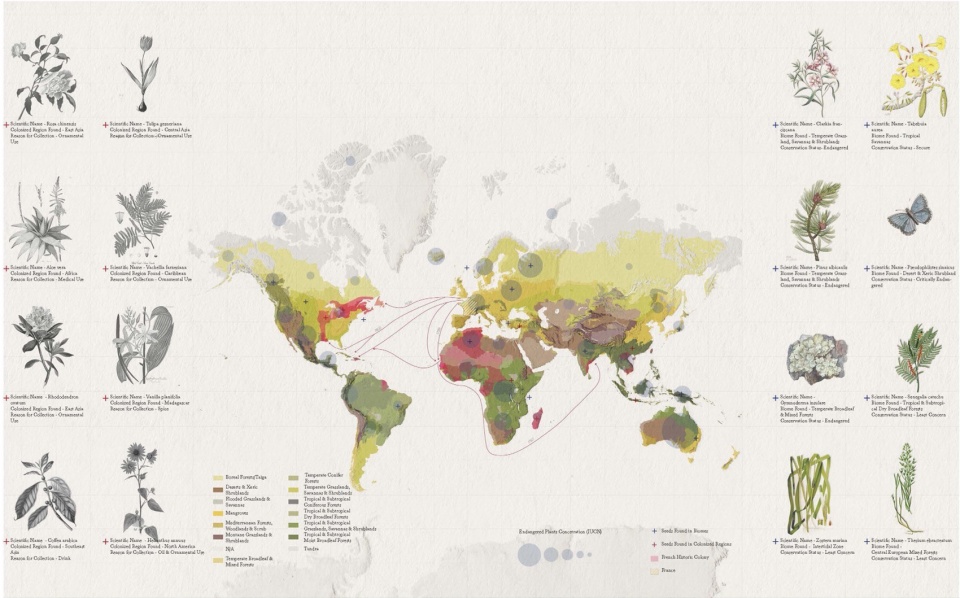
巴黎植物园曾汇集了从塞内加尔、马达加斯加、印度、北美、巴西等地带回的大量外来物种。只有具备药用或经济价值的物种才会被收集并在园中繁殖,从而帮助确立法国的殖民权力与自然秩序。随着非殖民化与全球化的兴起,历史上被视为“异域”的概念几乎已不复存在。
“种子方舟”将“异域”重新诠释为多元且以自然为中心的概念,通过建立一个地下种子库来挑战殖民主义意识形态,保存来自各类生物群落的植物,并重点保护濒危物种集中分布的地区。
The Jardin des Plantes in Paris once gathered a vast collection of exotic species brought back from places such as Senegal, Madagascar, India, North America, and Brazil. Only species with medicinal or economic value were collected and propagated in the garden, reinforcing French colonial power and its imposed order of nature. With the rise of decolonization and globalization, the historical notion of “exotic” has almost disappeared. Seeds’ Ark redefines “exotic” as diverse and nature-centered, challenging colonial ideologies by establishing an underground seed vault to preserve plants from all biomes, with a focus on regions rich in endangered species.
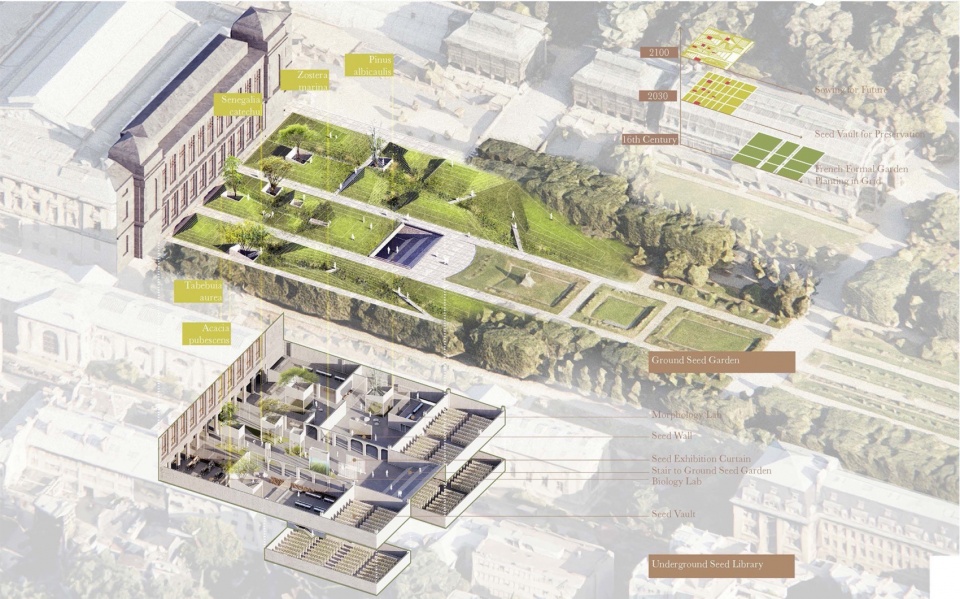
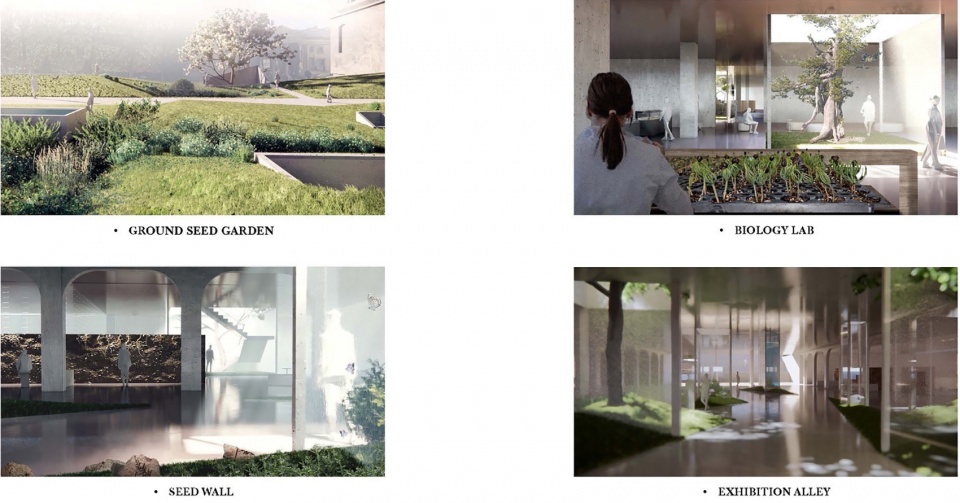
设计连接了巴黎自然历史博物馆和巴黎植物园,分为地上与地下两部分。地上部分延续了巴黎植物园传统的法式庭园几何形态,并塑造了一些便于植物传播种子的微地形,地下部分为兼具科研和教育功能的种子库。不同于仅作为安全设施来“备份”具有农业价值植物的种子库,本项目对博物馆前院的重新设计旨在让活体植物——那些从地下种子库中“逸出”的植物——能够突破地底的限制,在地面萌发生长。
The design links the National Museum of Natural History in Paris with the Jardin des Plantes, comprising both aboveground and underground elements. The aboveground portion continues the traditional French garden geometry of the Jardin des Plantes while incorporating micro-landforms that facilitate seed dispersal. Below ground lies a seed vault serving both research and educational purposes. Unlike seed vaults that function solely as secure facilities for “backing up” agriculturally valuable plants, this redesign of the museum forecourt aims to allow living plants—those that have “escaped” from the underground vault—to break through the confines below and germinate at the surface.
05.
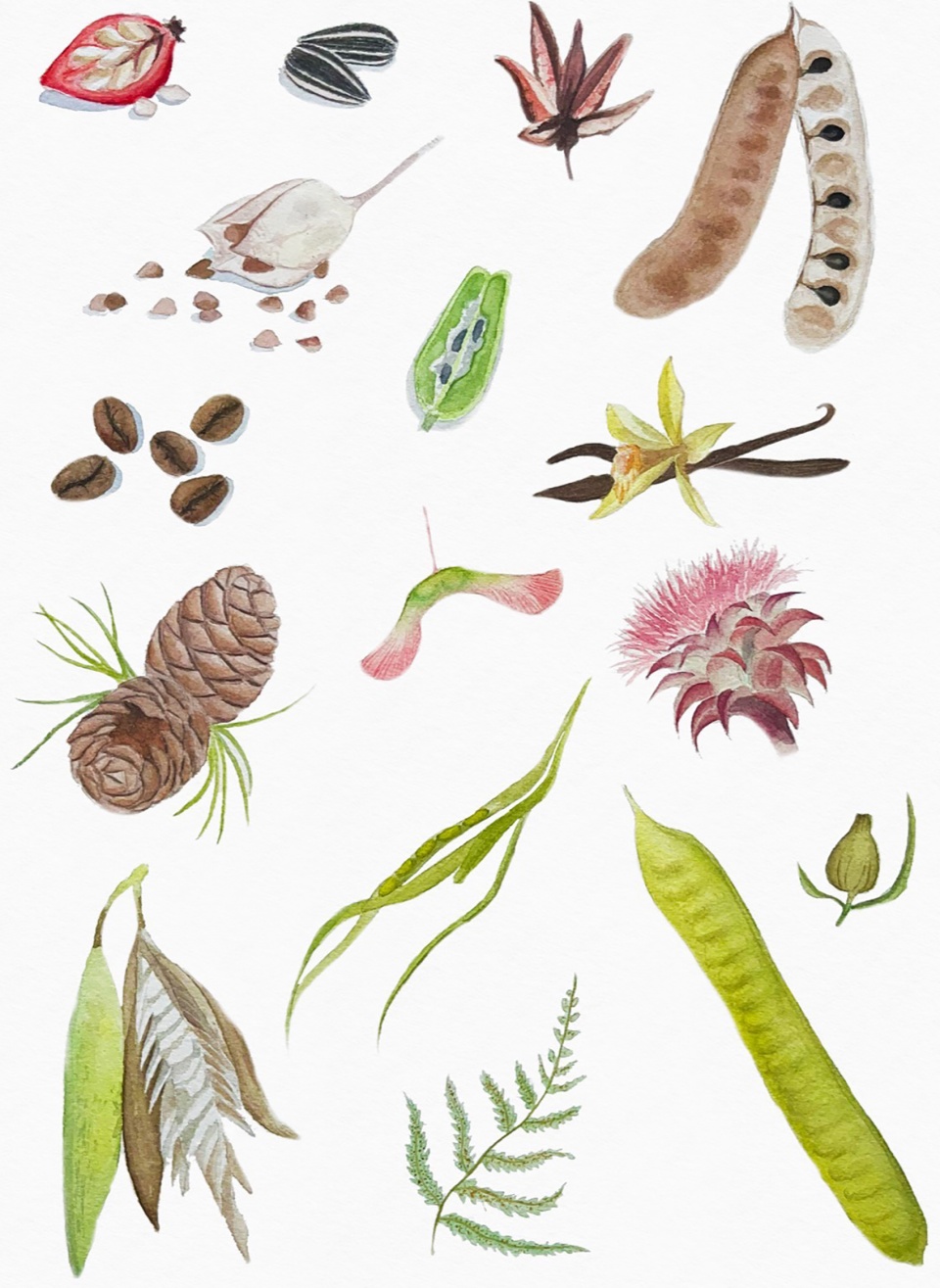
动植物插画
Botanical and zoological illustration
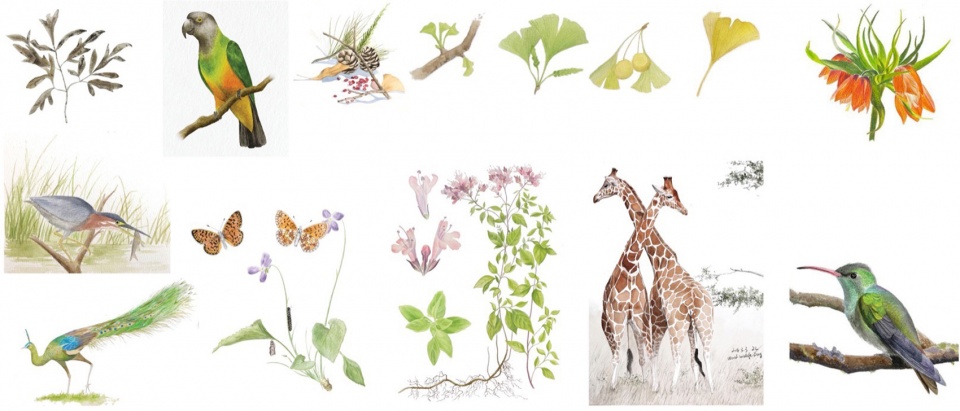
动植物插画一直以来是我的一个业余兴趣。它兼具科学和艺术的美感,不仅仅锻炼了我的手绘技能,还提升了我自己的观察能力。这是一项非常古老的技艺,在地理大发现时期就是科学家和探险家们了解和记录新物种的方式,直到现在它依然作为非常重要的自然教育工具和科学传播媒介。科学和艺术学科边界的触碰让我非常着迷。
Botanical and zoological illustration has long been a personal hobby of mine. It combines the beauty of science and art, not only honing my hand-drawing skills but also sharpening my powers of observation. This is an ancient craft—during the Age of Exploration, it was how scientists and explorers documented and learned about new species—and it remains today an important tool for nature education and scientific communication. I’m deeply fascinated by the way it blurs the boundaries between science and art.
在海外时间:2021年至今
在海外地点:美国费城,美国丹佛
姓名:章凌
籍贯:浙江金华
学校:浙江大学,宾夕法尼亚大学
工作单位:Sasaki
联系方式:lzhang9715@outlook.com
When: Since2021
Where: Denver, CO /Philadelphia, PA
Name: Ling Zhang
From: Jinhua, Zhejiang
School: Zhejiang University, University of Pennsylvania
Office: Sasaki
Contact: lzhang9715@outlook.com
喜欢清新的手绘效果
DK
开头就来了篇意林,真牛逼
手绘不错
作者的文字表述能力很强,感觉真的做到了念故乡,观世界。