来自DORELL.GHOTMEH.TANE / ARCHITECTS对gooood的分享。
更多请至:DORELL.GHOTMEH.TANE / ARCHITECTS on gooood
2020日本东京奥运会主体育场乌龙事件一直是建筑圈内的热点,日本将亲自选中的zaha方案撕票然后再重新组织竞赛选出本国建筑师方案。而在这经济,政治等多种因素博弈的复杂喧嚣之后,大多数竞赛方案概念面临的是被忽略。这次为大家介绍的 “KOFUN STADIUM”就是其中一个竞赛参赛落选方案。
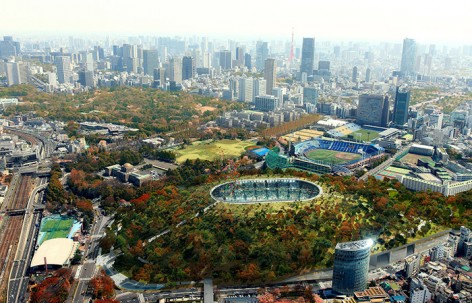
▽DGT创作的体育场 “KOFUN STADIUM”
日本东京奥运会主体育场建筑师评审团主席安藤忠雄在2012年的竞赛召集文中提到:“我们必须创建一个希望之象征,从而为人类的未来照明。”,这个主会场肩负使命,还要成为下一代体育馆的榜样。在古代,体育场是利用地形,开方挖土而建。而现代,体育场多成为现代技术的表现物,做成一个天外来物的UFO状或者成为郊区中庞大但是平庸的存在。而东京奥运会的主体育场位于东京最核心的地段,它需要为人们以及下一代创造空间。
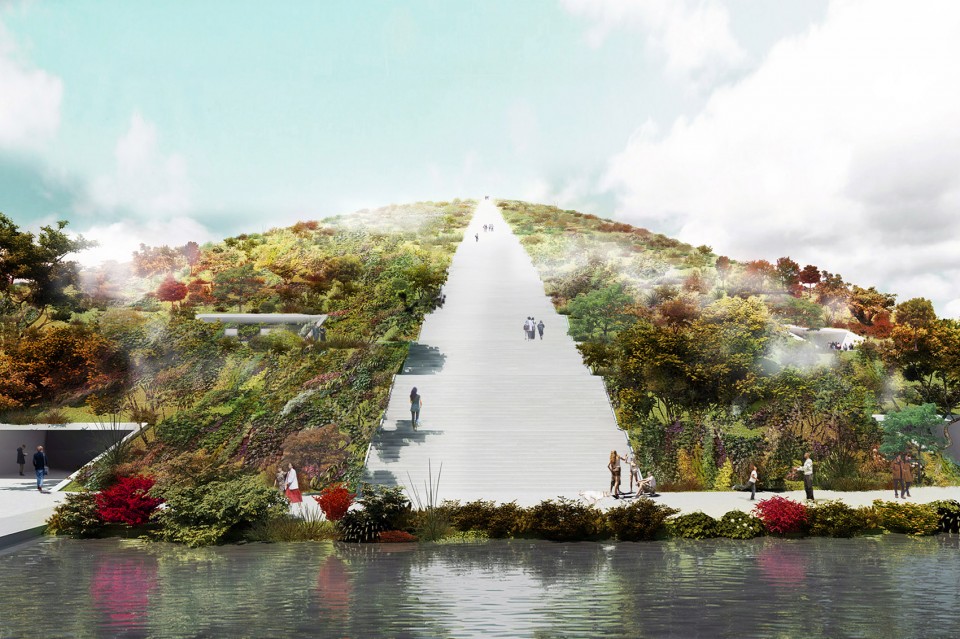
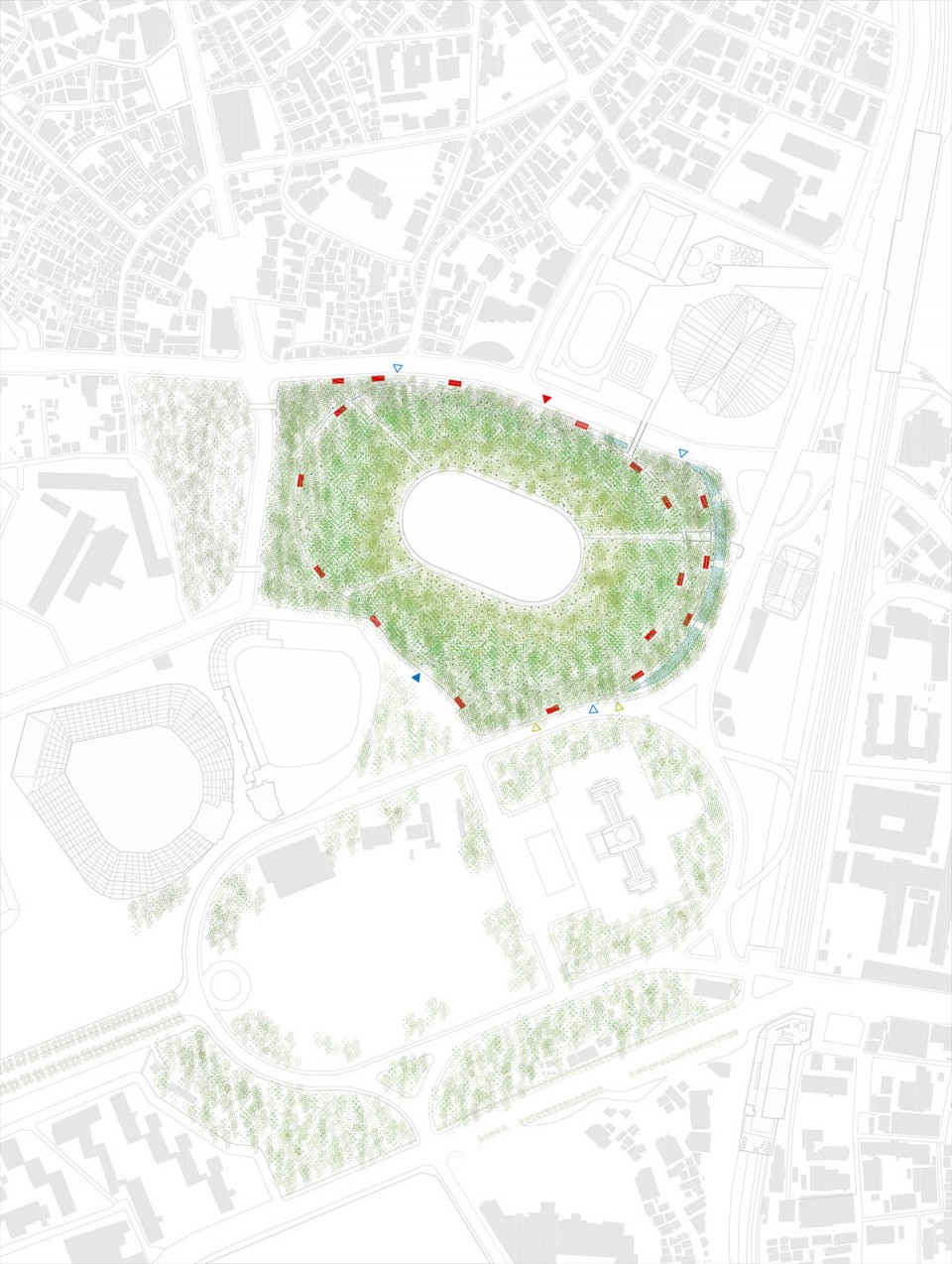
抱着这样的想法,DGT的建筑师希望创建一个坟一样的体育场 “KOFUN STADIUM”,忽略掉名字换个角度理解他们的意图,他们则是在东京中心基于大地建立一个纪念碑。这个纪念碑也是日本古代文明的丰碑,也与过去相连,比如现今已消失的明治时代纪念建筑外苑林。新的体育场将在城市中心创建出一片森林。
“We must create a place that serves as a symbol of hope and provides a light for the future of mankind.” An international competition for the New National Stadium of Japan started with this quote by Japanese architect and jury chair, Tadao ANDO, in summer 2012. The competition was to design what will become the main stadium for the Tokyo 2020 Olympic bid, and was open for the most innovative proposal for the next generation of stadia design from all over the world. In ancient times, the stadium was created by excavation of the earth to form a topography where people can gather. Today, the stadium has become more about the expression of modern technology, to make a sort of UFO or non site specific icon that is inevitably exiled to the outskirts of the city due to the large scale of its intervention. Since Tokyo is aiming to create a stadium in the centre of Tokyo, a ‘next generation’ proposal has to be installed to create a place for people.
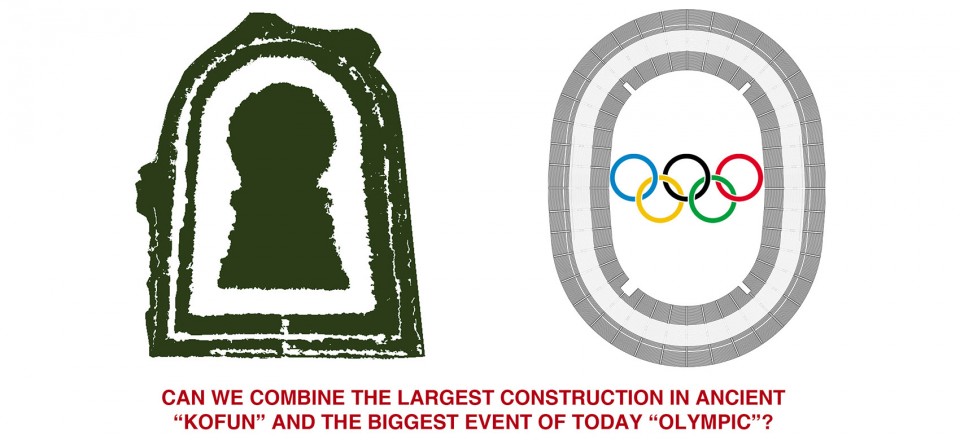
DGT’s proposal in response to this theme was to create a “KOFUN STADIUM”, a manifestation of an earth-based monument in the centre of Tokyo. The KOFUN itself, being the largest constructed monument of ancient civilization in Japan, was to combine the Olympics as the world’s largest event of today, into one architecture. In addition, it was important to connect to the origin of the place, the memorial construction of the Meiji Empire, and the Meijijingu-gaien forest of 100 years ago, which has lost its place and meaning after WWII. Therefore, the proposal should re-generate a memory of place, creating a forest to preserve the power of nature on this land.
▽将过去的事件与现今最大的事件奥林匹克盛会关联
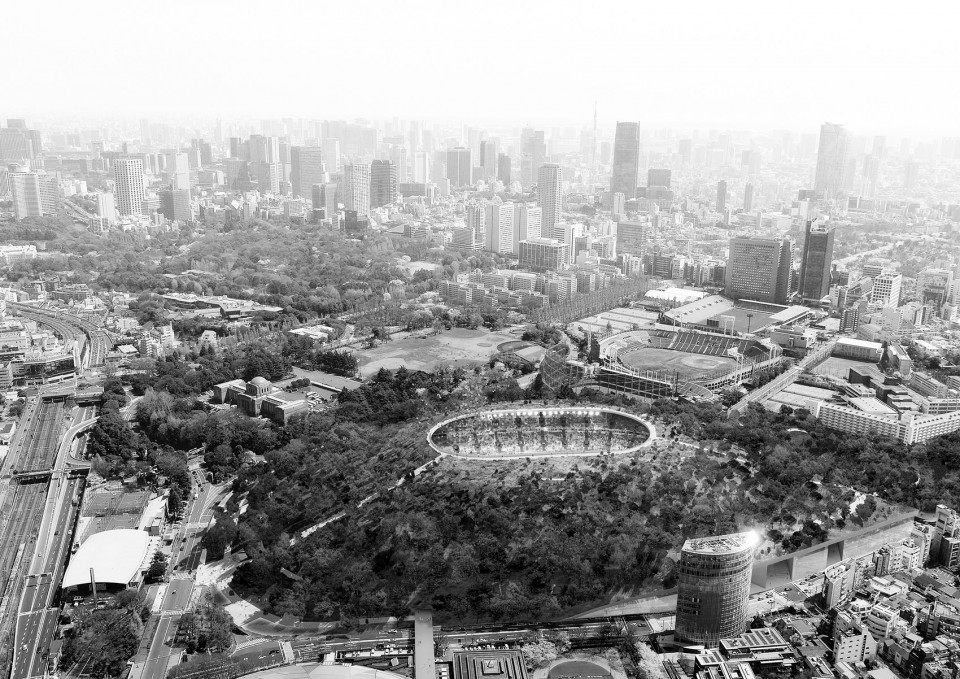
▽这座体育馆是基于大地的纪念碑,在东京最核心地带创建出一片森林的体育场 “KOFUN STADIUM” is a manifestation of an earth-based monument in the centre of Tokyo.
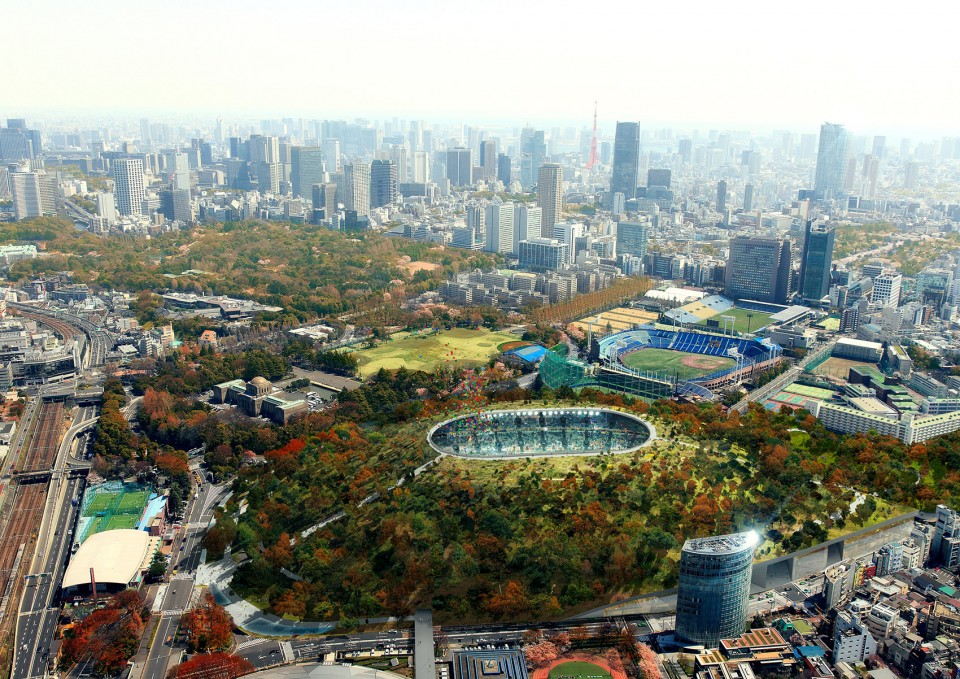
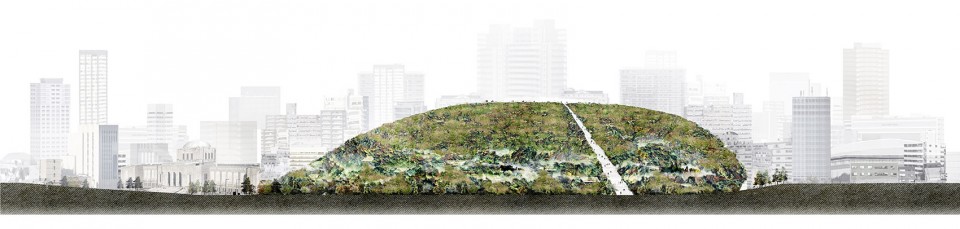
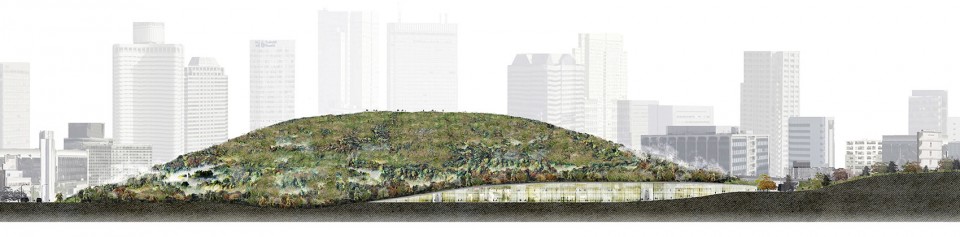
▽宛如一座大山,体育场为人们以及下一代创造绿色城市空间 The proposal seeming like a mountain create a forest to people and next generation.
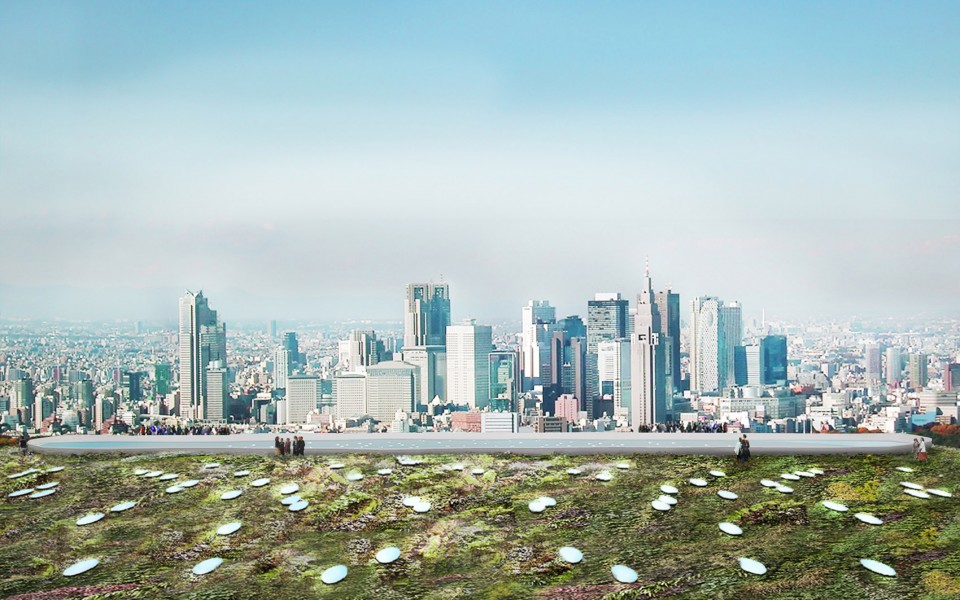
▽体育场顶部。人们在屋顶花园上可以观赏城市盛景。 Roof garden provide spectacular view of Tokyo.
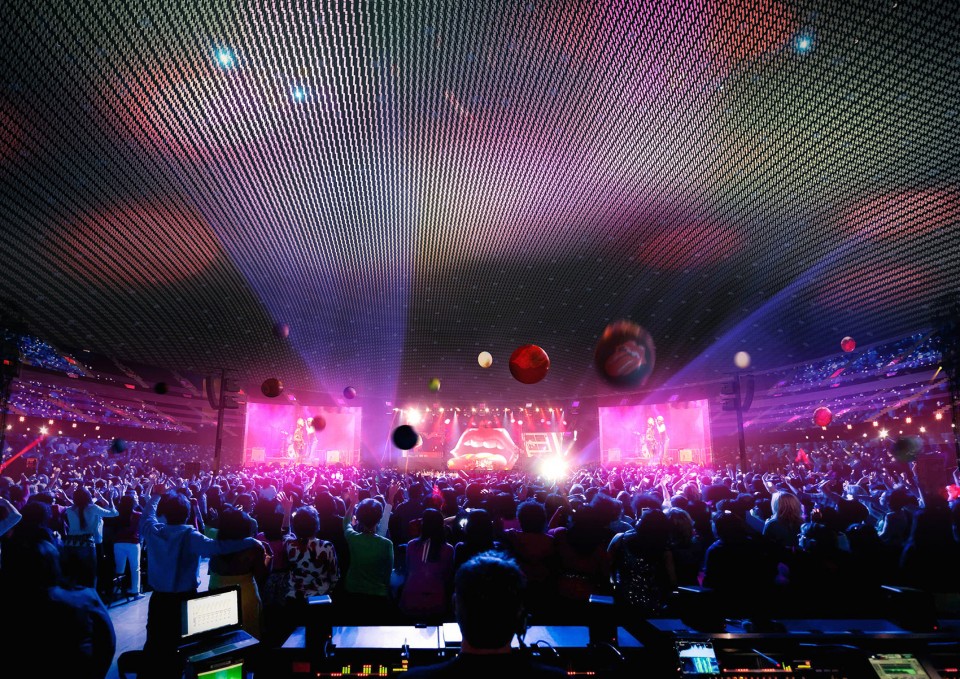
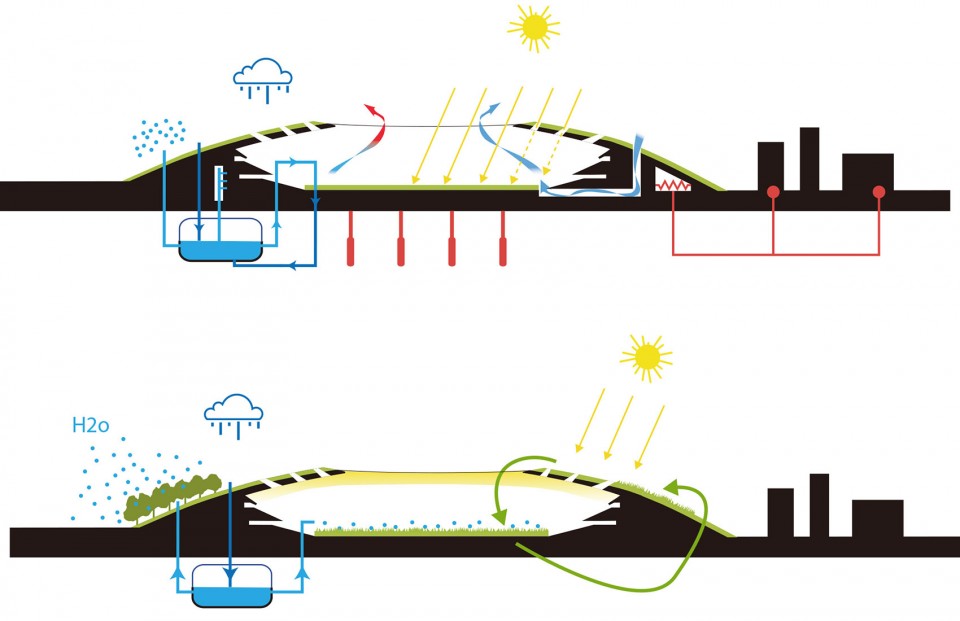
体育场可依据使用用途改造为奥运会会场,田径运动场和演唱会活动场所。场馆顶部可以伸缩的屋顶能让体育场适应各种天气条件。体育场是耗能大户,但这个被土壤覆盖的建筑具有极为优良的热工效应,能够实现低能耗的可持续运转模式,于此同时能够积极利用雨水,让森林繁茂,动物繁衍。精心设置的多孔通风道能够保证良好的通风。在过去,古坟是象征死亡的黑暗之地,而现在,这个球场却在光明中为人类的胜利庆祝。
这就是新一代的球场,面面俱到的联系着过去与未来,还具有永恒感。
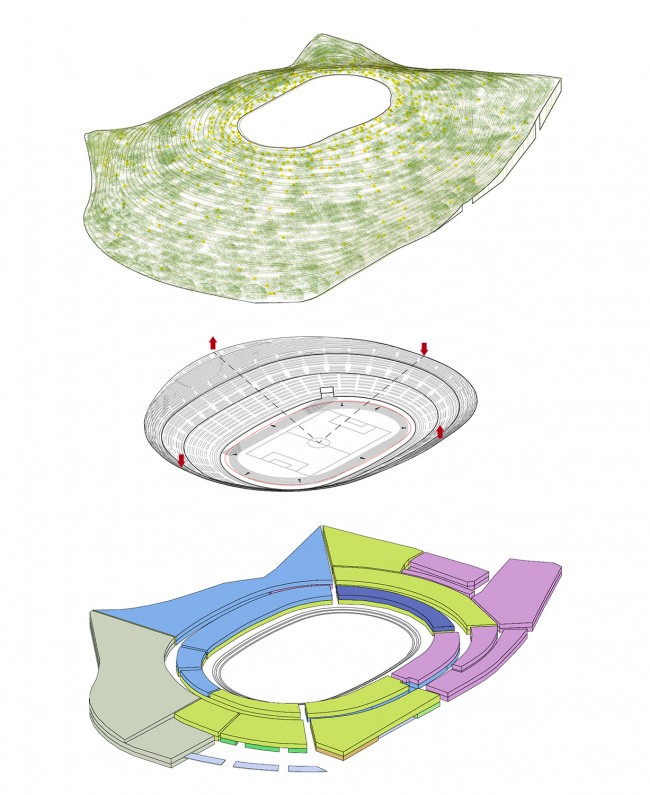
The stadium can be transformed according to the event it is hosting, whether it is The Olympics, field sports or concert events, and features a retractable roof in order to use the facility in all weather conditions. A stadium consumes the majority of its energy during peak event time, therefore we propose to share this excess energy to the surrounding district during non-peak times. In addition, materials from the demolition of the existing stadium will become part of the mountain. Rainwater will be collected and redistributed as a fine mist to benefit the forest and organic matter on the roof.
This roof covering will firstly cool against the city heat, creating a porous wind route for natural air ventilation, but will also enable a recycling exchange for the damaged field ground with the grass on the stadium roof. The idea of an environmental energy dynamic that can positively create sustainable transformation between natural environment and artificial innovation. The original form of the KOFUN were found to be dedicated to “death”, to cover darkness in ancient times, and today’s stadium will instead be dedicated to openness, to “human triumph”, to celebrate in light.
A stadium of the next generation should combine past and future to create a place for people in the city, a place to be together for events and where it manifests a sense of timelessness. A place for all.
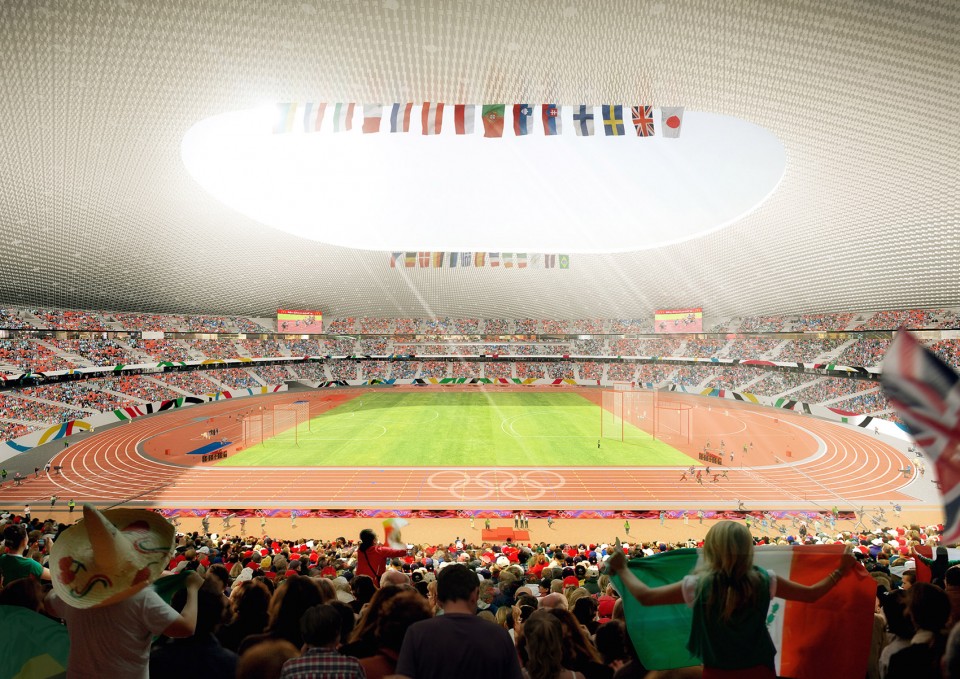
▽用于奥运会主会场的体育场 the main stadium for Olympic
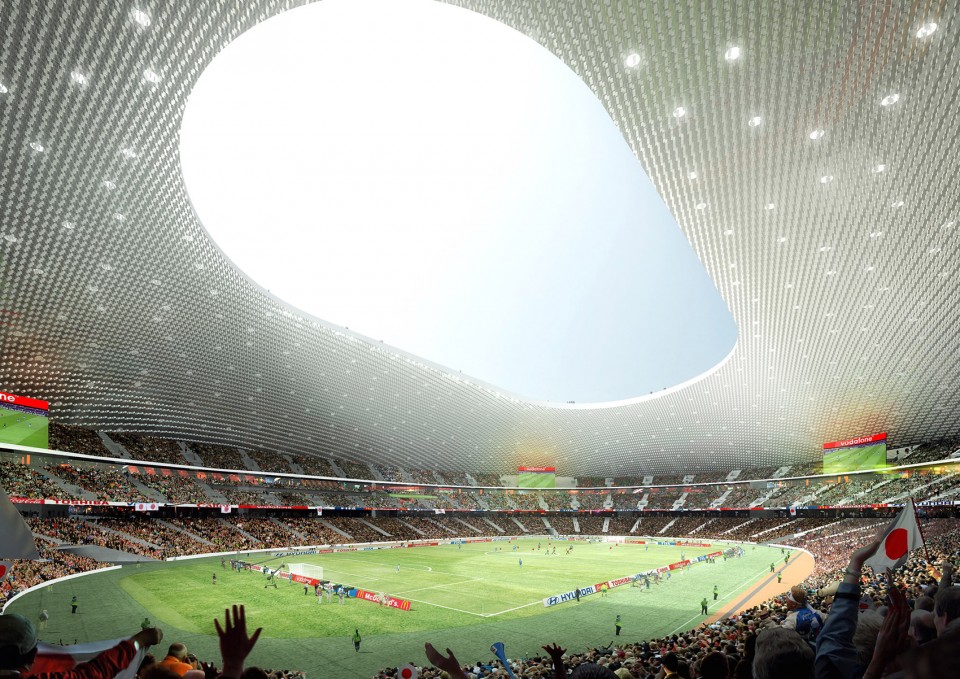
▽用于球赛的体育场 the stadium for football game
▽用于演唱会的体育场 the stadium for concert
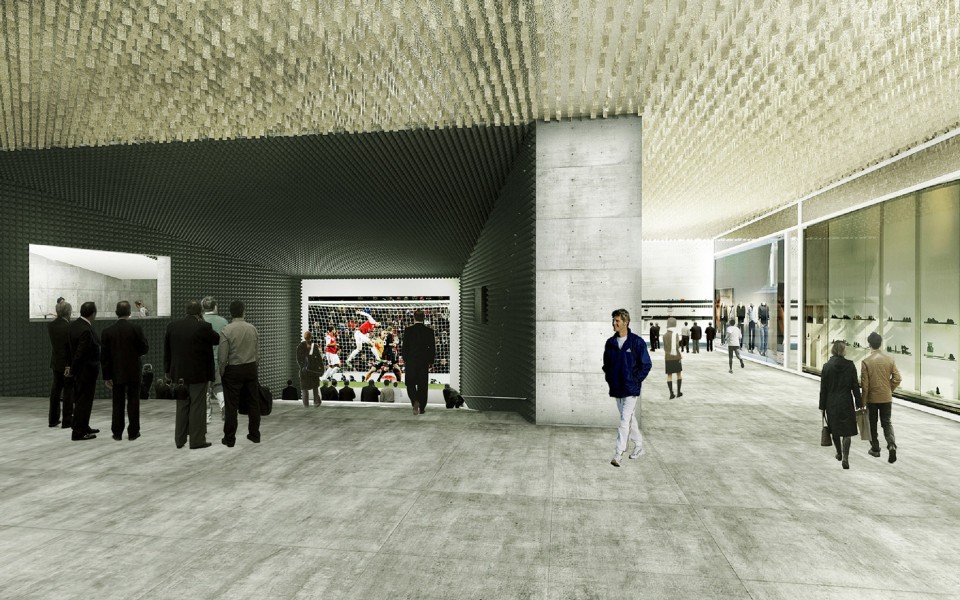
▽场馆内部的交通空间包含商业与娱乐空间 circulation space combines with commercial and entertainment space
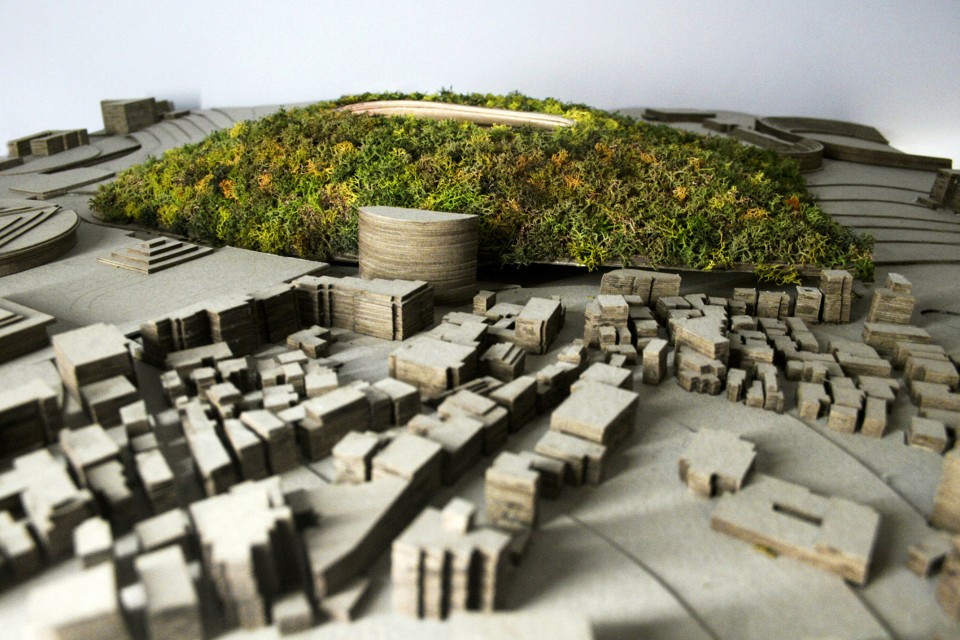
▽模型 model
▽立面 facade
▽功能分析 function diagram
▽环保可持续分析图 micro-climate diagram
▽总平面 Site Plan
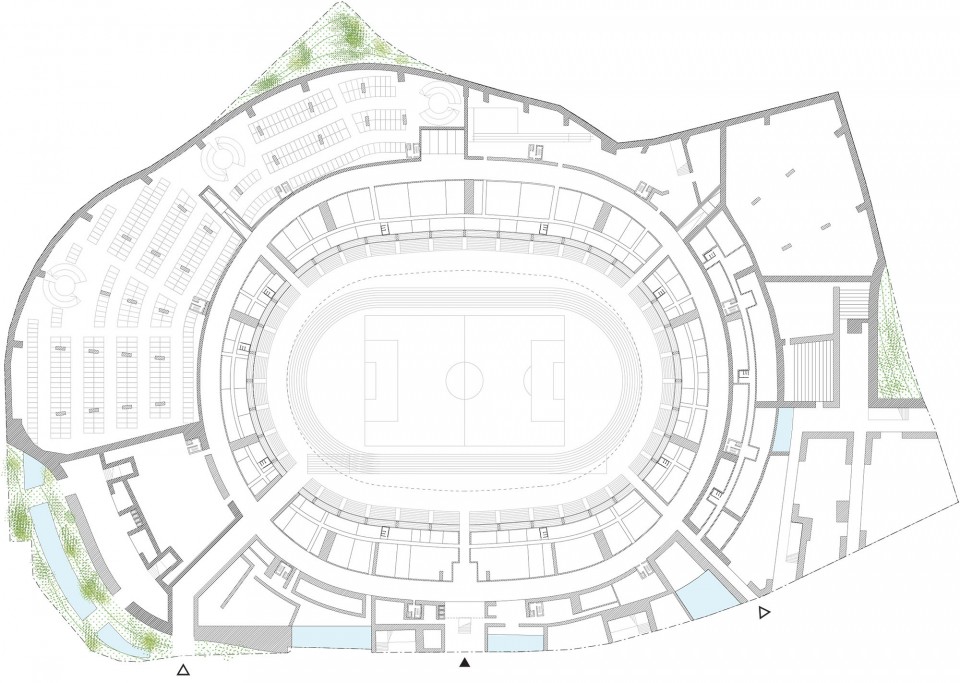
▽1F
▽剖面 section


JP14 NEW NATIONAL STADIUM IN JAPAN
Project Information:
Status: Ongoing
Location: Tokyo, Japan
Dates: 2012
Area: 290,000m2
Commission Type: Public
Client: Japan Sport Council, Tokyo
Cost :
Program: Olympic stadium
Project Team:
Architect: DGT & A+ Architecture
Structure engineer:
Acoustic:
Environment engineer:
Description
1,300,000,000 euro
Bollinger + Grohmann GmbH, Paris
Nagata Acoustics
Agence Franck Boutté, Paris
English Text: DGT
Chinese Text: gooood
MORE: DORELL.GHOTMEH.TANE / ARCHITECTS,更多请至:DORELL.GHOTMEH.TANE / ARCHITECTS on gooood


这也行?那我们搞个覆斗型?
如果你给我一片空地,我还你整个松林和一个体育馆
纵观下来概念确实是挺不错的,传承与延续符合日本文化理念,原本场馆后期利用率就是个不大不小的问题,也提出了粗略的解决方案,只是这坟墓的设定让我笑喷了。。。。
这不是日本皇陵的形状??
13格到位了。。。不知道有么有军备的作用
长长的阶梯上去还真有一种通往神社的感觉
好吧,这是一个大坟墓。
虽然是落选方案,但是初衷理念极好,将运动实施也自然景观结合本身是极富环保的。不仅能成为标志性建筑,同时能降功耗,消减了公共设施的某种庄严印象,参与感更强了。
我却在数怎么没有中国的大红旗
拿坟来做概念他们真的不在意吗
局面急转直下,最终定了这么个方案也是够讽刺的。没觉着种一堆植物一堆树不好,只是这是不是还得给您上几柱香才应景儿啊。
…这不是落选方案吗
抱歉,是我没看仔细。(也许是应该落选吧。)
环保的概念很好,但是设计太粗糙
ZAHA的天价确实不是谁都承受得了的