来自Studio Nomad 对gooood的分享。更多关于: Studio Nomad on gooood.
Appreciation towards Studio Nomad for providing the following description:
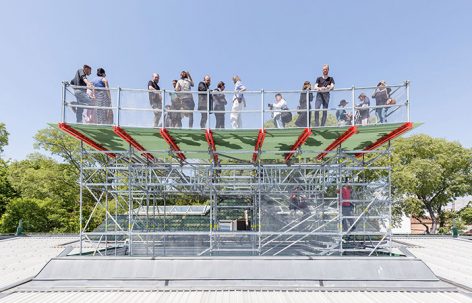
本次威尼斯国际建筑双年展匈牙利馆的展览主题,以布达佩斯一处独特的城市空间情节为例,为城市自由空间的塑造打开新的视野。自由大桥——城市新视野探讨了当今城市发展的基本问题。这个极具象征性的装置邀请来访者以全新的视角审视建筑物。
The exhibition of the Hungarian Pavilion this year aims to provide new horizon to the concept of free space through an exceptional urban episode in Budapest. Liberty Bridge – New Urban Horizons tackles fundamental issues of urban development. The symbolic installation invites visitors to explore the building like never before.
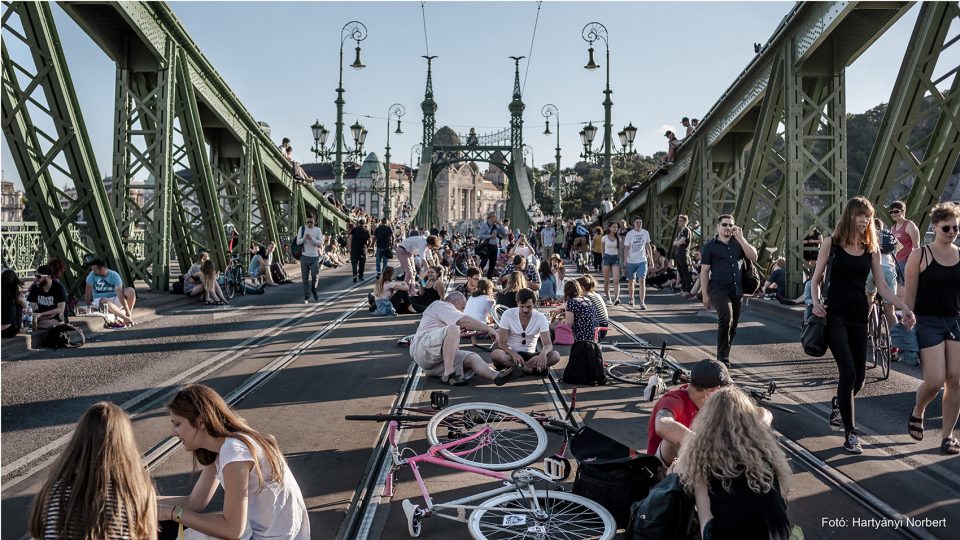
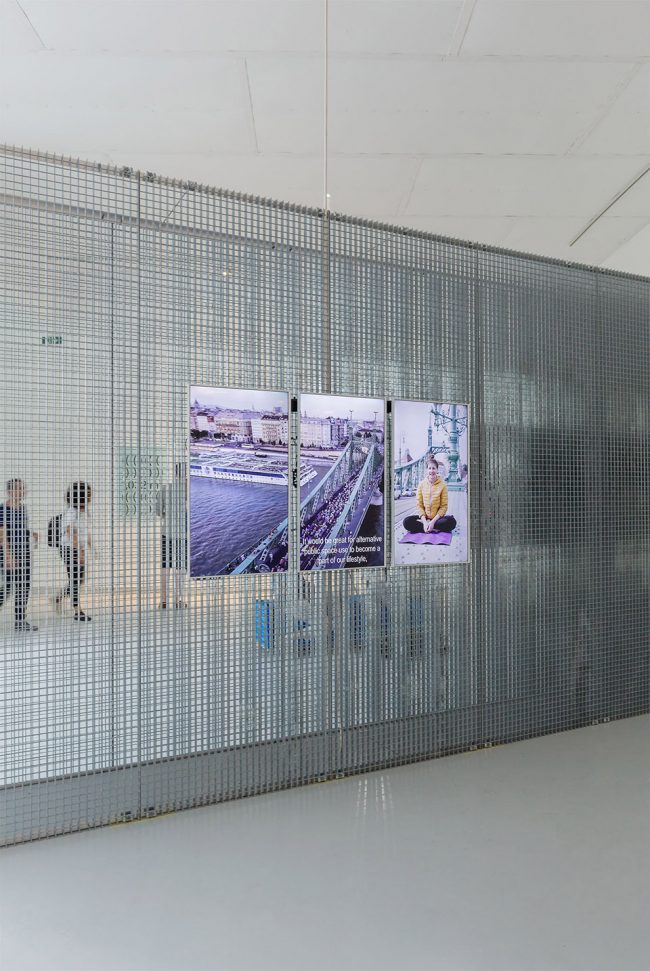
2016年由于周围社区中基础设施的发展,布达佩斯多瑙河上其中一座最老的桥梁“自由大桥”全面禁止汽车通行。市民们,尤其是新一代的年轻人们,迅速将桥上铁轨变为展现自己创意的舞台,为这个历史性场所打造出全新的面貌。原桥梁结构变为了城市小品,供人游憩,野餐,烧烤和举办瑜伽课程。这些“城市空间入侵者”有意无意的重塑了城市生活与自由空间,正式与非正式用途,以及公共空间与私人空间之间的关系。
In 2016, one of the oldest Danube-bridges of Budapest, the Liberty Bridge became car-free due to an infrastructural development in the neighborhood. Citizens, mostly millennials immediately put the road and tram tracks to creative use, and re-imagined the historic place. The construction turned into street furniture, hosting picnics, grill-parties, yoga classes. Though the crowd had no demand, the ”occupants” reframed the relation of city and liberty, formal and informal use, public and private spaces.
▼2016年“自由大桥”全面禁止车辆通行,市民涌上大桥进行各种活动,in 2016 the Liberty Bridge became car-free and the citizens are crowded on the bridge to enjoy the public space
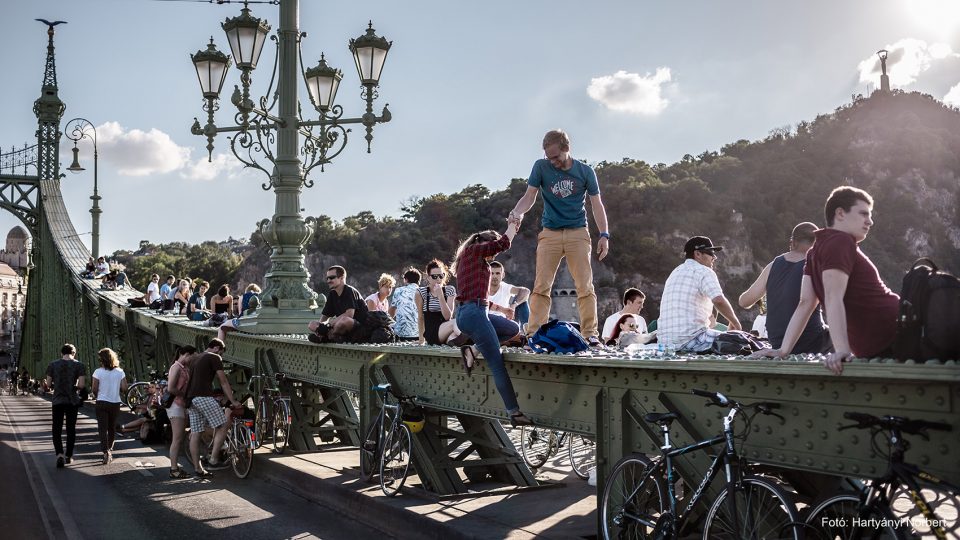
此次匈牙利馆选取这一案例作为展览主题,标记了城市发展的又一基本问题,即当今世界的自由公共空间代表着什么?如何使一座大桥或任何构筑物成为获得自由的媒介?我们如何通过改变城市而改变我们自己的角色?
The curators choose this episode to tackle fundamental issues of urban development: What does a free public space represent today? How can a bridge or any built structure act as a medium of freedom? How can we change our own identity by transforming our city?
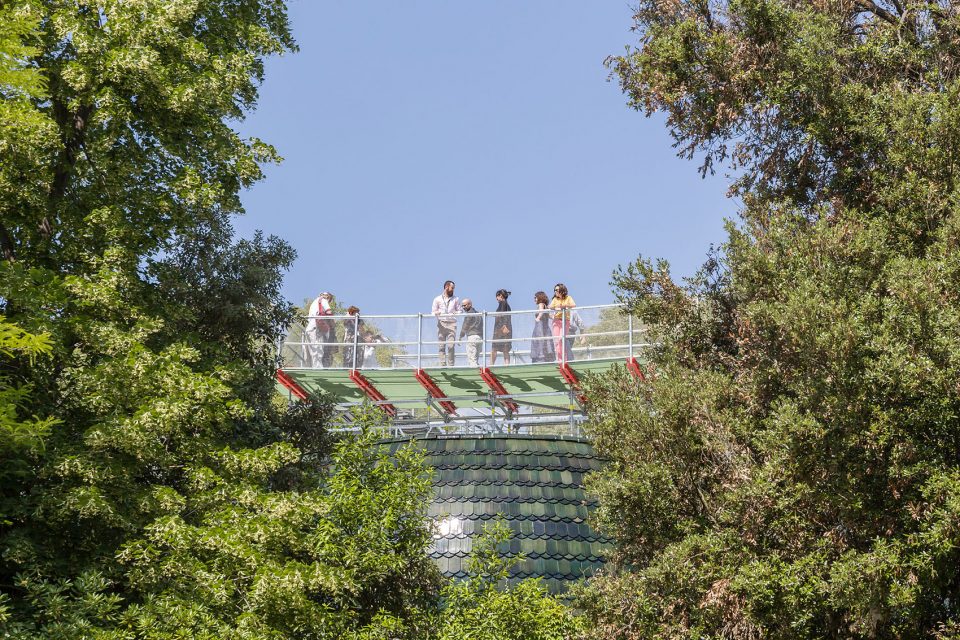
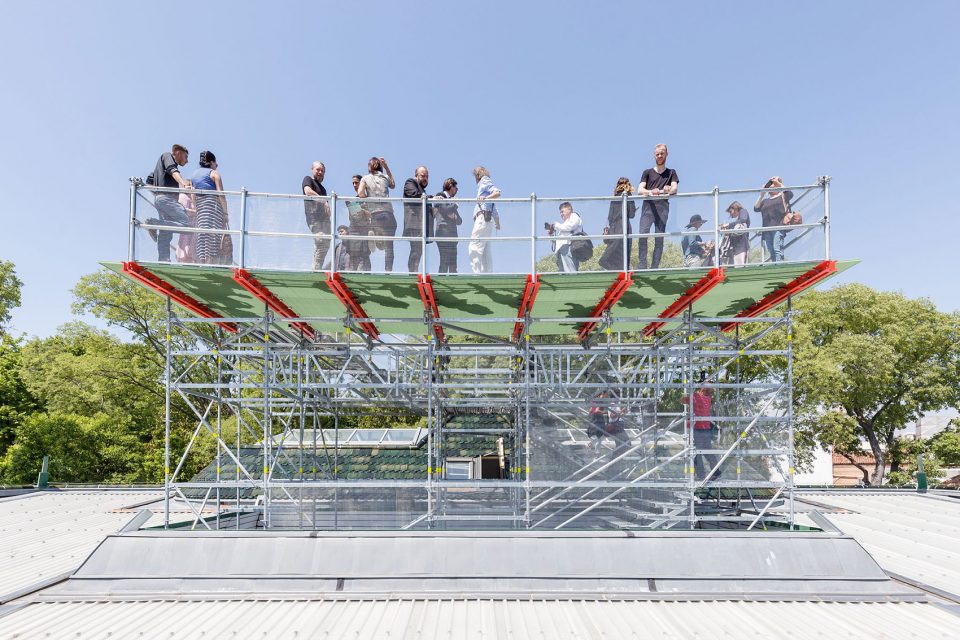
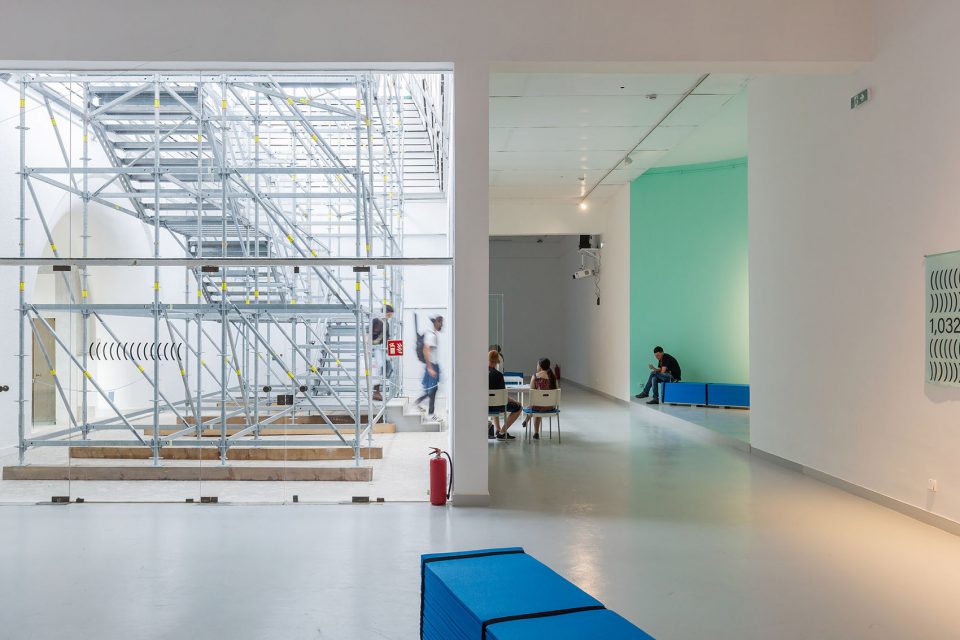
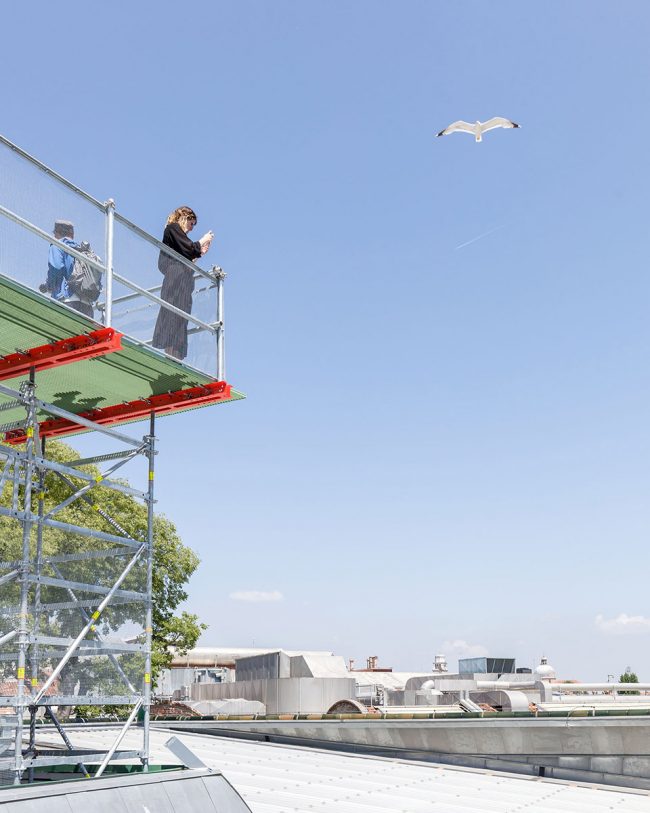
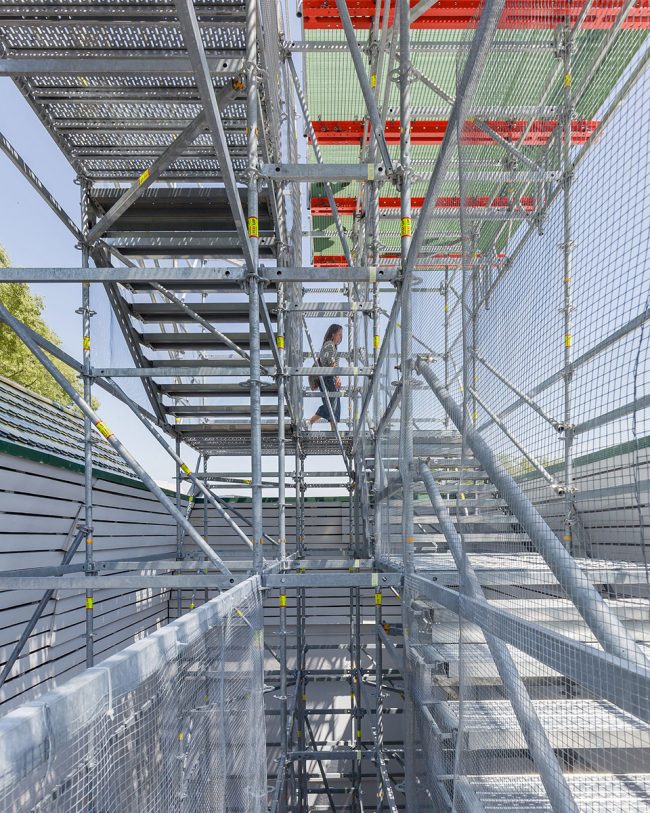
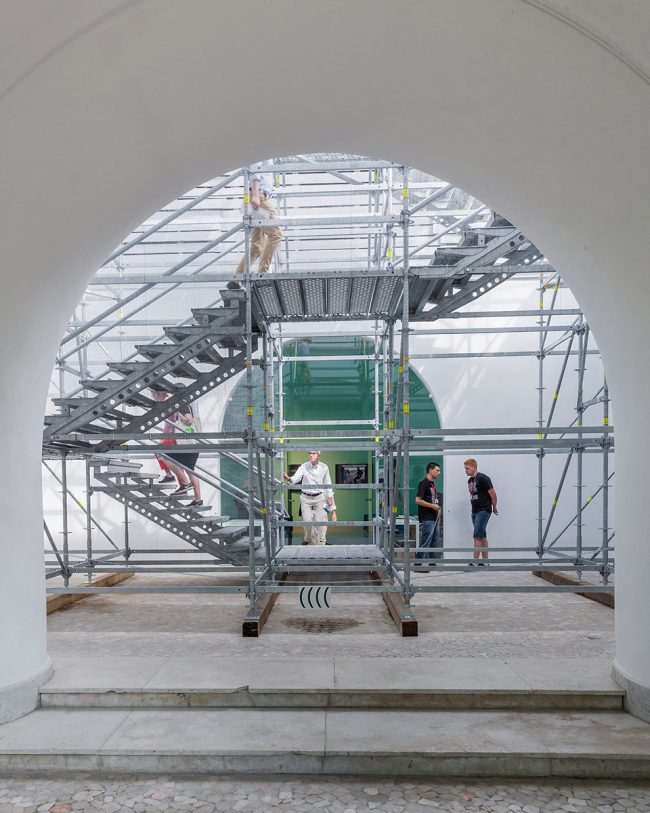
设计师在建筑顶部创造了一个全新的空间。该装置的所有材料均为临时性的,它们可以在任何场所任何时间灵活使用和建造。金属是公共场所构筑物的常用素材,其微微的光亮象征着水。该展览通过一些建造性实体,让来访者再次体验这种区域性和位于内部的自由气息。随着参观的脚步进入这个位于历史建筑内的展厅,来访者将获得全新的认知。此次展览揭示了这一自下而上的自由大桥占领运动,探讨了在政治环境改变后,公共空间关系在过去三十年间的变化。
We have created a new space above the building. The usage of the materials suggests temporariness: the components that can be built anytime and anywhere can be adapted flexibly to the space. The glimmer of the metal parts of the installation built of elements widely used also in public places, evokes the presence of water. The exhibition invites visitors to relive the experience of creating both spatial and inner freedom with a truly engaging architectural installation: we can literally gain new perspectives by accessing the heritage building of the pavilion. The exhibition also sheds light on the process that led to the bottom-up place-making on the bridge, and examines how the relation to public spaces changed in the last 30 years, after the political changes.
▼用建筑构造探讨自下而上的城市空间塑造,to examine the bottom-up place-making
16th International Architecture Exhibition – La Biennale di Venezia Hungarian Pavilion
Venice, Giardini di Castello
May 26 – November 25, 2018
National commissioner: Julia Fabényi
Curator: Kulturgorilla (Anna Göttler, Júlia Oravecz, Éva Tornyánszki) Architect: Studio Nomad (Bence Pásztor, Soma Pongor, David Tarcali) Graphic design: de_form
Organizer: Ludwig Museum of Contemporary Art, Budapest
Support: Nagév PERI
Collaborating partners: Drone Media Studio Arizona MPS
Studio X
biennale2018.ludwigmuseum.hu
More: Studio Nomad,更多关于: Studio Nomad on gooood

弯了