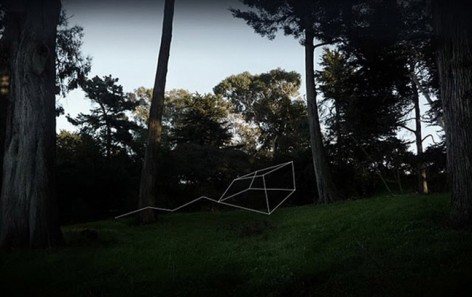
非常感谢艺术家 Moneyless 将项目介绍和项目图片授权gooood发行。更多请至: Moneyless on gooood
Appreciation towards Moneyless for providing the following description:
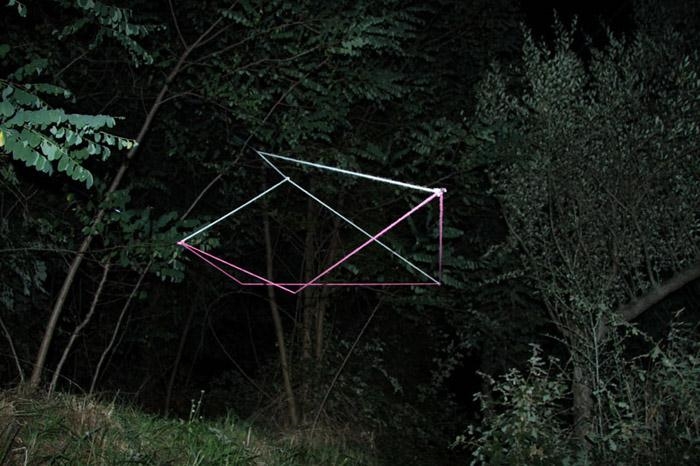
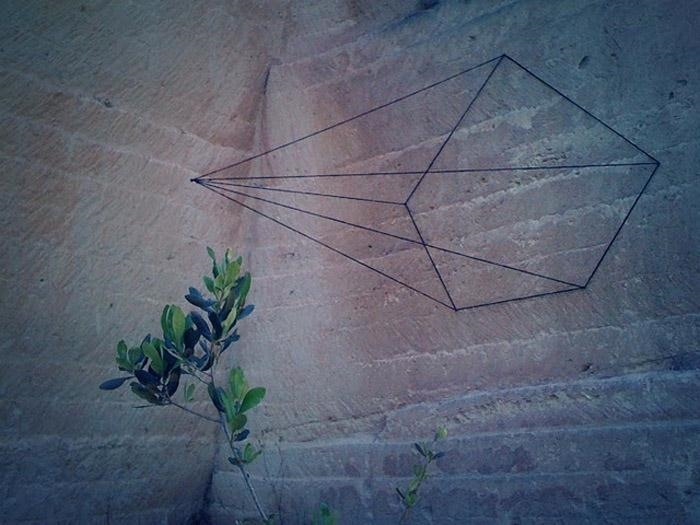
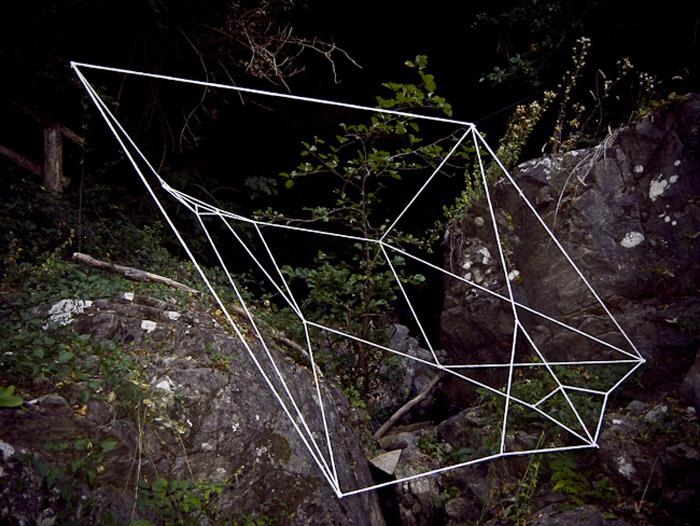
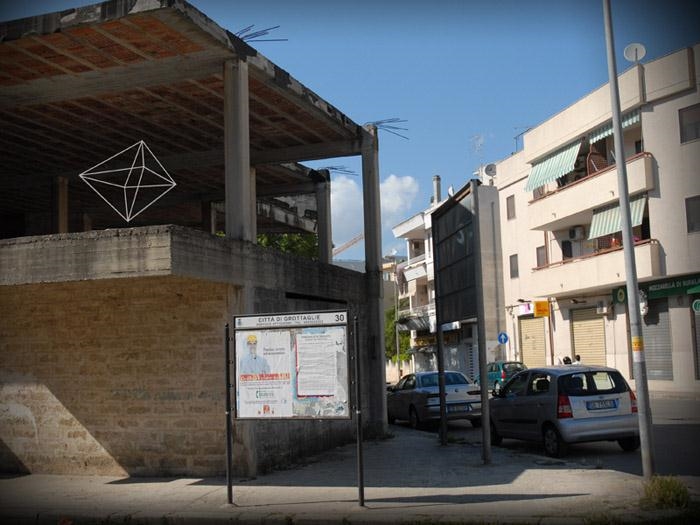
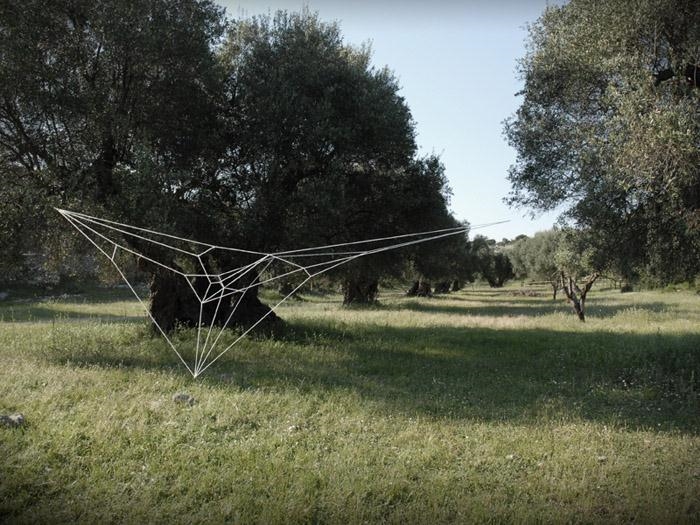
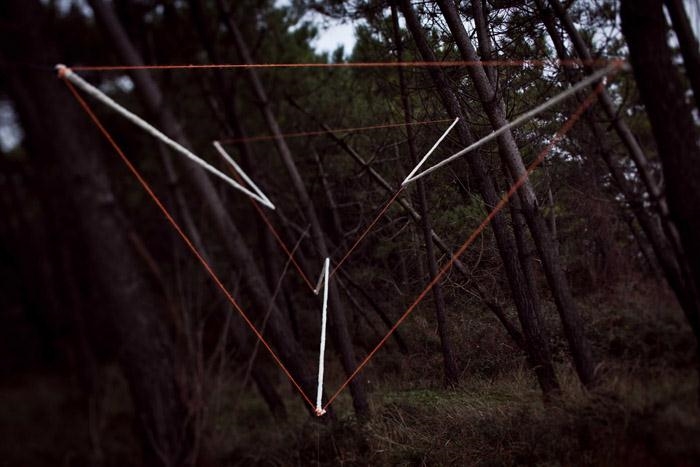
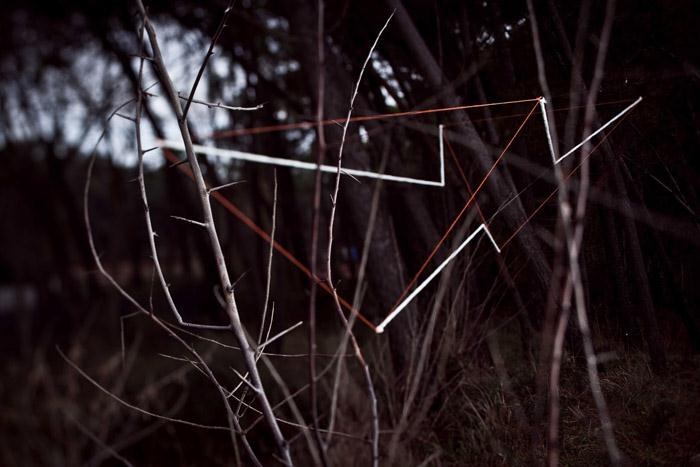
来自艺术家Moneyless的“飞着的”涂鸦。
这些涂鸦被评价为水泥丛林的吐纳与森林的轻叹。
也许走进树林,仅仅是因为想生活,想最低限度的生活。
艺术家的艺术呈线型呈现。先看到形状,再是色彩,接着空间被启示,缤纷的世界就此被打开。极简的图形,纯粹形状的框架,简单却具有维度。由内至外,占领比实际要多得多的空间。似是而非的特别,对人的观念进行着轰炸。作品极具张力,你可以听见呼吸,在墙边,树叶里,露水中。超越绘画,根植于环境,在你耳边低语的不可忽略的艺术。
自由,直白,无视所谓“文明”。
不属于新生,也不会灭亡,只会溶解并同步于周围的环境。
从有形到无形。即便岁月蹉跎,时过境迁,四时烂漫不复返,也积极从过往汲取力量。
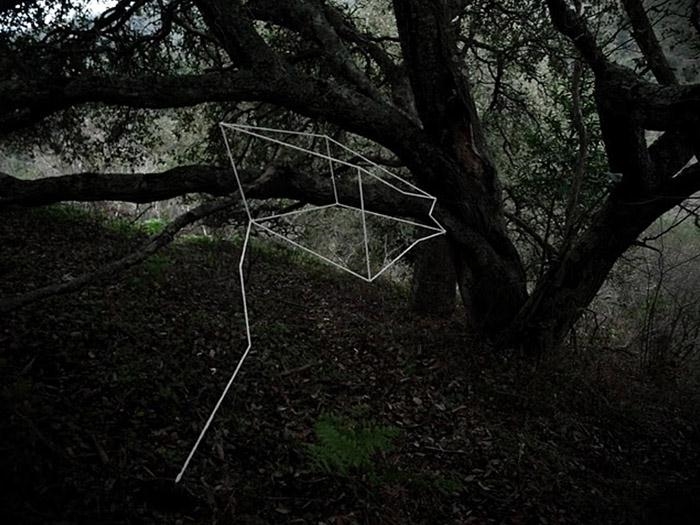
Breathing out the concrete jungle, breathing in the woods.
by Serena Valietti
I went into the woods because I wished to live deliberately, to front only the essential facts of life and not, when I came to die, discover that I had not lived.
I wanted… to live so sturdily and Spartan-like as to put to rout all that was not life, to cut a broad swath and shave close, to drive life into a corner and reduce it to its lowest terms.
Henry David Thoreau.
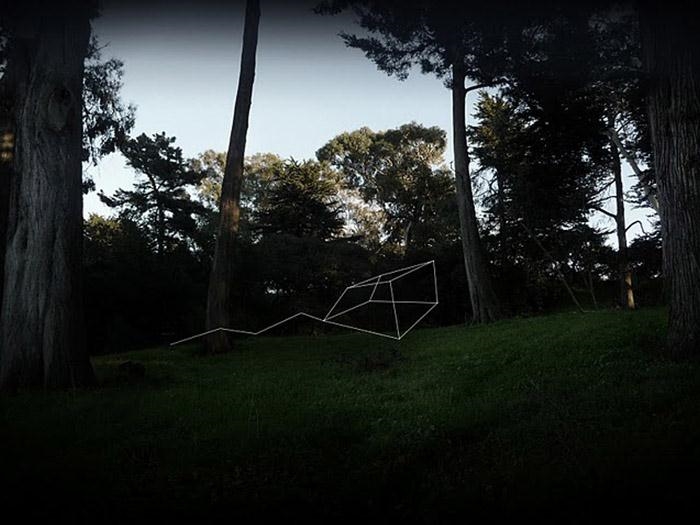
3. To put to rout all that was not life.
“I spent ages doing graffiti, painting trains in yards and covering with color every surface, putting my name everywhere. Then I got to a stage where that approach to me looked like leading to an exaggerate proximity with advertisement. But the world was flooded by it.
It was a nonsense for me to keep on adding chaos to chaos”. The chaos of the concrete jungle. Graffiti has been and is an essential element on which the artist’s attitude lays its foundations. It’s something that has been Moneyless’ life companion since he was 13 and it still is. But leaving behind the burden of fat caps and throw ups, the artist started to sublimate his graffiti, a process made by conceptual subtraction and material removal, that led him literally to strip the flesh from his body of writing. Even if he was still tagging Moneyless, yet developing a geometrical style, he felt like the tag lost its interest and it was pointless for him to push a name. What he’d been doing for years was to him like running into a dead end: “I wanted to push concepts through my work, something that could go beyond”.
“To me the traditional rules of graffiti started to be a constriction and I felt I didn’t wanted anymore to feel linked to a culture that gave its best in the Eighties and Nineties”.
So Moneyless’ solution has been refusing those norms, trimming what was becoming dead wood to him, to allow something new to be born.
“Letters were too strict a bond with something I had enough of, especially in this period invaded by logos. I felt the need to take distance from the letter”.
That process started was irreversible. Letters had to fade away, becoming just shapes first. And disappear then.
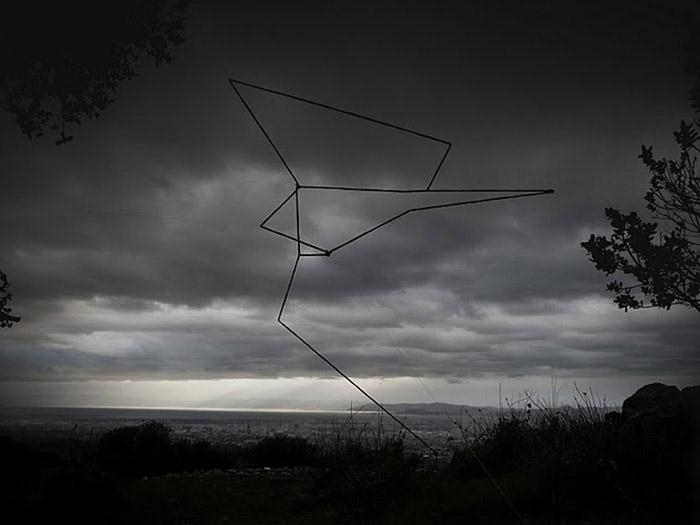
2. And reduce it to the lowest terms
Abandoning lettering was the first step of Moneyless’ artistic sublimation, a matter of conceptual subtraction: his artistic research relieved by the weight of a fixed form made his style flow into pure geometry, defined by Johannes Kepler “the archetype of the beauty of the world.”
So came the material removal:
“When I was still working with lettering, I used rollers to paint and my strokes were getting so thin. To be able to do them even thinner I shifted to brushes and I started to paint hair-like outlines”.
And then the artist realized what was already apparent: his outlines had become threads. Threads, lines, strokes. And colors. Acting both as mirrors and windows open on the inside. And as Ralph Waldo Emerson says in his Essays, “If the thought is shape, then the feeling is color. It twirls the world’s skeleton with space, variety and splendor.”
“The color that used to create space inside my geometries, now generates their background, it’s outside now. On canvas it still acts as a projection of my graphic imaginary and it’s often inspired by some of the weirdest national flags and their symmetries. But in the open space the color survives in the thread only, marking the boundaries of my pure shapes, not filling them anymore”.
Moneyless had shape and colors then, but to get a skeleton to twirl with them he needed something else. A new dimension, the third.
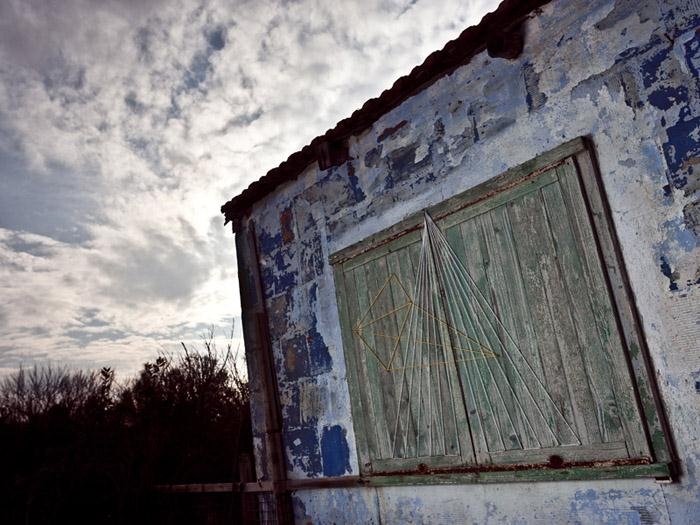
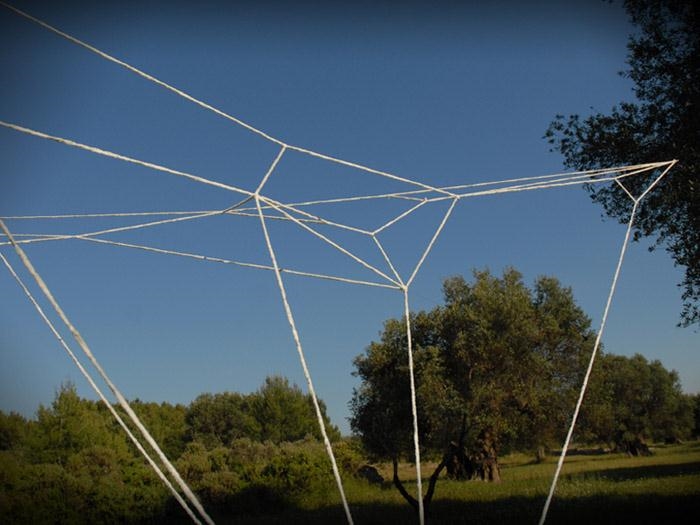
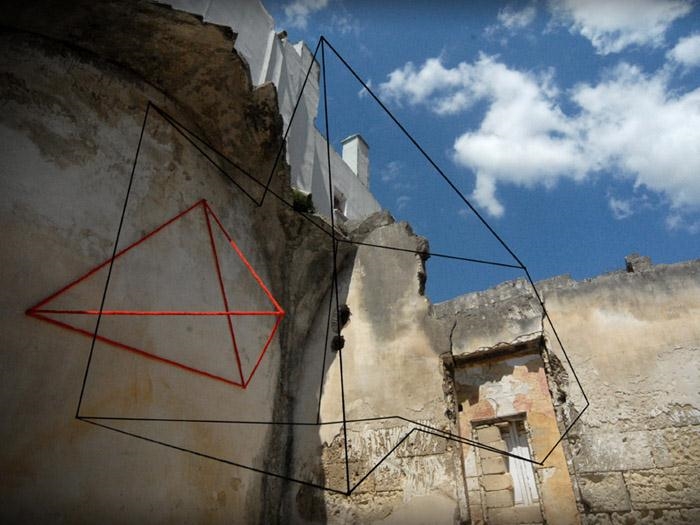
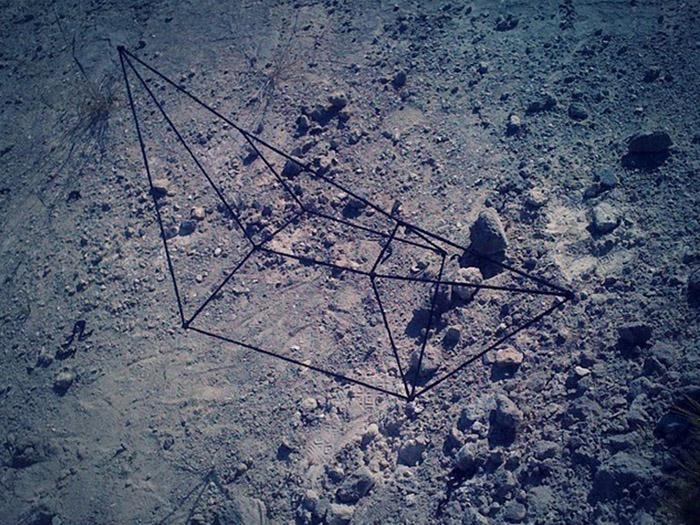
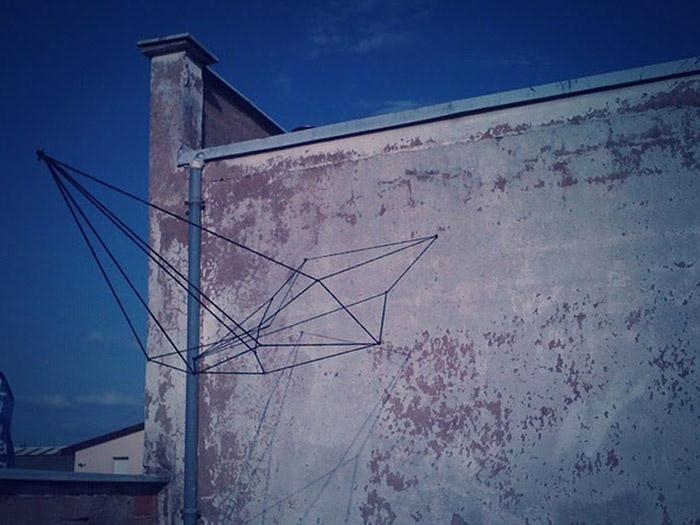
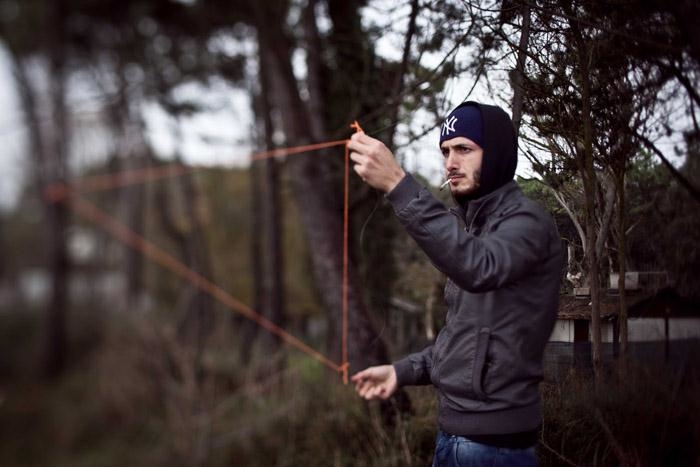
Reduced and streamlined, his artwork still had matter cemented on a surface. But then came the humble wool thread to broaden the boundaries of the wall. Cheap but effective, it hit even harder thanks to its simplicity. Simple as this wool thread, Moneyless artworks started to reel off, breathing and taking shape in the third dimension, with all the decaying flesh stripped away.
The flat space was finally able to breathe through the threads.
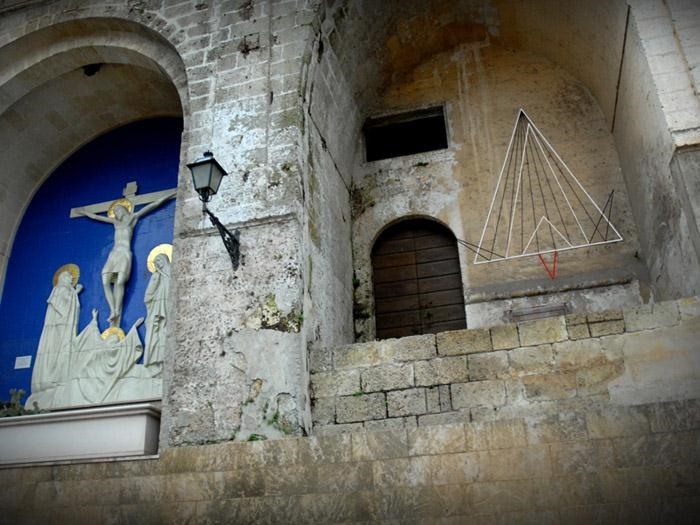
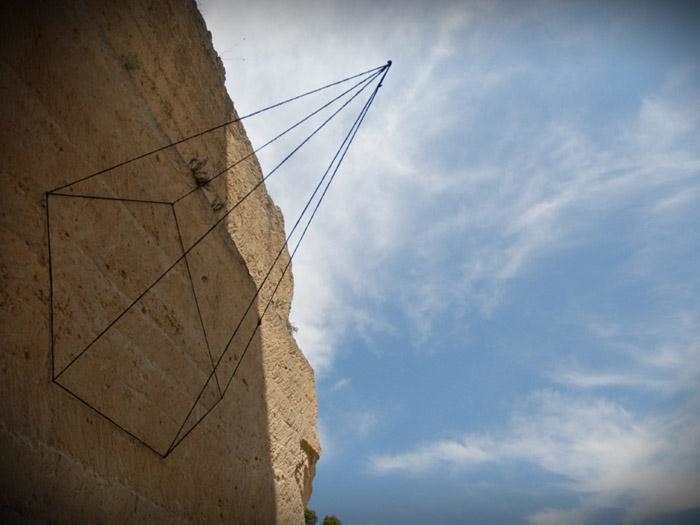
Taking shape doesn’t mean that the two dimensions of a wall are something the artist wants to leave behind: “Occupying a mural surface is one of the things that satisfies me more. It’s there, abandoned and no one is reclaiming it. Before I used to follow the bombing philosophy of choosing the most visible places, to be as visible as possible.
Now I’m an antibomber: I’m looking for places, hard to find, hard to be seen”.
In the middle of nowhere.
And his artistic interventions make this nowhere an elsewhere and an everywhere as doing something unique acts as an exemplum, a metonymy, a paradoxical powerful figure of speech to portray the essential part to represent the whole.
An inner/outer whole that as to be sought in the open air, breathing out the poisoning concrete jungle and breathing in leaves, soil, dew and bark.
Looking for that wall now is something that takes Moneyless more time than the act of painting itself.
Finding the right place, a place that whispers in his ear is essential to him, as his art is deeply rooted in the environment that nourishes his thoughts.
Finding the right place is not just about the act of finding.
But is about the one of looking for it and pushing his way to a path sometimes covered in brambles and mud.
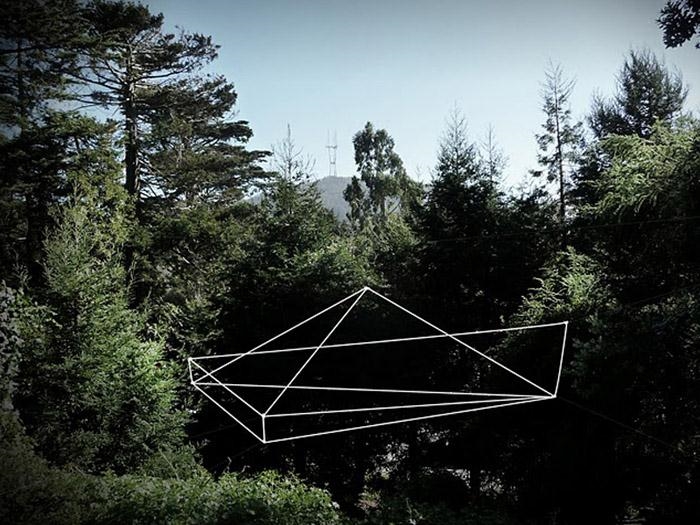
Transition
Whether the mud gets to the artist’s knees and the brambles grow stronger, he’s into an homeward journey to the essential and the bare, where civilization is annihilated by the unbridled Nature.
A Nature that knocks you down with its sublime beauty and with the very same beauty arouses you.
As water that can save you from thirst or drowning you down.
Woodland bites back the soil, the concrete stolen her.
Nature that takes over again what has always been hers.
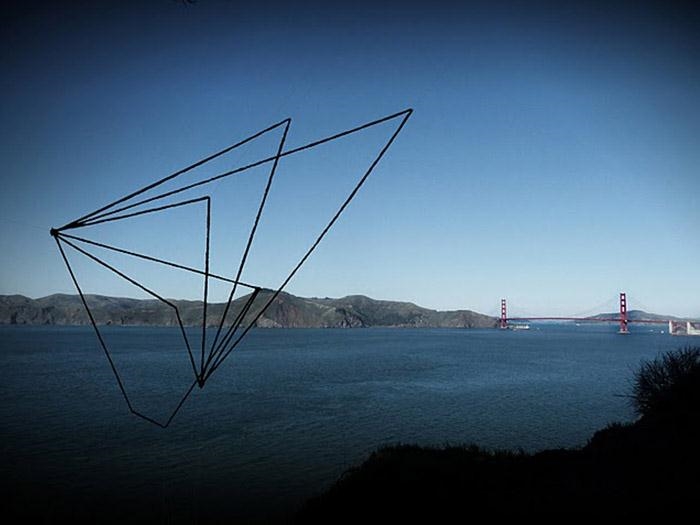
1. Into the woods
What can be seen on the white walls of a gallery is a compendium of lines and colors of Moneyless’ outdoors interventions, in abandoned spaces, “where the human trace is not visible anymore” and in the wild, “the only environment where I feel free, where I can find peace of mind”. Because “the mind loves his old home, as water to our thirst, so is the rock, the ground to our eyes and hands and feet” as Emerson writes in his Essays.
While the mind attempts to rejoin its old home, through his research Moneyless tries to discover and reach a higher state of clarity and awareness, allowing himself to make “a conscious experience at once of the most familiar and most mysterious aspect of our lives” – says the co-founder of the British Psychological Society Max Velmans.
This research leads him to experience himself , his life and the world in a double way power: he generates the artwork in Nature and its creation, fed by the natural element, regenerates him.
After this process he simply lets things go and his artworks abandoned in space, as time capsules, can be discovered and experienced by whoever, an insect or an old man walking in the wood or in an abandoned place. It’s beyond philanthropy, it’s philEarthopy.
A love for the planet Earth as a way to rebuild a dialogue through the silent language of shapes and colors, a way to transcend our material existence, losing the self to restore the bond with nature.
Speaking the language of nature doesn’t need letters anymore, a wool thread is enough.
And together with it the dregs of society, its remains, its leftovers are the once-dead, nonliving material moulding Moneyless’ artwork.
This flows out creatively, finds a shape and then loses it again through Nature’s action.
As Anaxagora said “Nothing comes into being nor perishes, but is rather compounded or dissolved from things that are.
So we would be right to call coming into being composition and perishing dissolution.”
A transition from the solid to the aeriform, the same that affects Moneyless’ floating and volatile graffiti.
In this coming into being and dissolution, in this alluring tension to reach the marrow of life Moneyless’ floating graffiti are the result of a transition from the solid to the aeriform.
Here resides the fascination of Moneyless’ research and his artistic wandering/wondering back into the woods.
A process to cleanse and reach purity. An attempt to distillate the essence of our ephemeral existence.
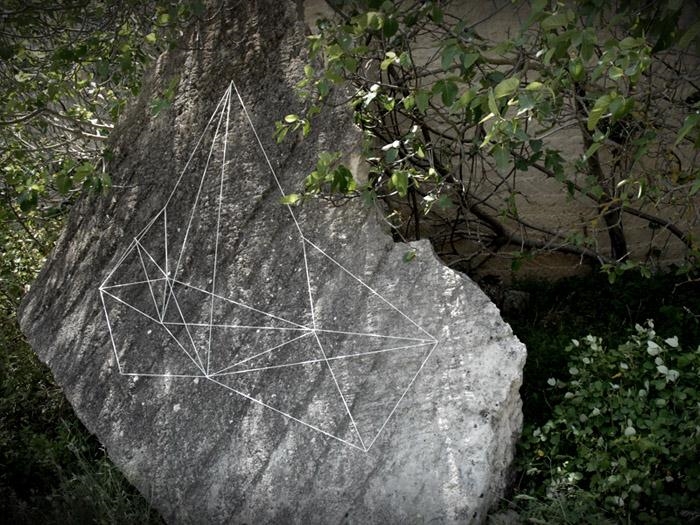
0. Zero
Though nothing can bring back the hour of splendor in the grass, or glory in the flower, we will grieve not, rather find strength in what remains behind.
Intimations to Immortality.
William Wordsworth. 1803-06
London, Fall 2010.
MORE: Moneyless,更多请至: Moneyless on gooood







发表评论
你需要先 才能发表评论
社交登录