非常感谢DCPP将以下内容授权gooood发行。更多请至:DCPP on gooood
Appreciation towards DCPP for providing the following description:
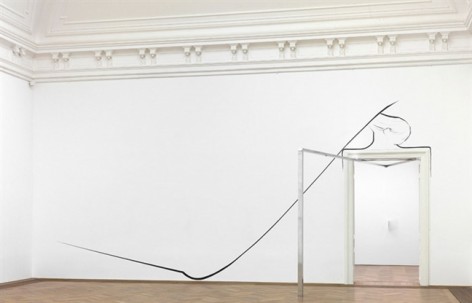
秘鲁出生,现居墨西哥的艺术家 Rita Ponce de León (1982)与墨西哥当地建筑师Pablo Pérez Palacios (1980)通过密切合作在巴塞尔美术馆举行了独展Endless Openness Produces Circles。作品主要是艺术家Rita Ponce de León将一些对话转化成为图像,装置等视觉小品。这些对话源于艺术家真实的生活经历和体验,结合艺术家对舞蹈的研究,演化为纯粹的感性而开放的艺术视觉表达。更多内容请见下方英文。
Rita Ponce de León_KHB 2014
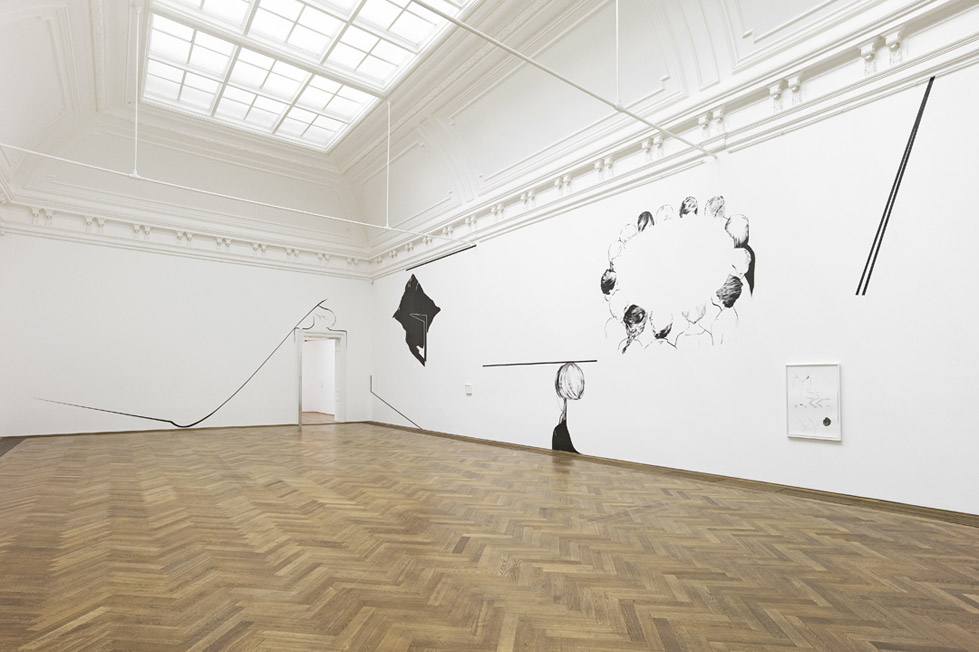
Rita Ponce de León, Endless openness produces circles, Installationsansicht/installation view
Which point of view is actually mine? (¿Qué punto de vista es realmente el mío?), 2014
Wandzeichnungen, Aluminiumkonstruktion/wall drawings, aluminium construction
Masse variabel/variable dimensions
Untitled (Sin título), 2014
Tusche, Bleistift, Buntstift auf Papier, gerahmt/ink, pencil, colored pencil on paper, framed
18.5 × 23cm
Untitled (Sin título), 2014
Tusche, Bleistift, Buntstift auf Papier, gerahmt /ink, pencil, colored pencil on paper, framed
99 × 70cm
Rita Ponce de León_KHB 2014
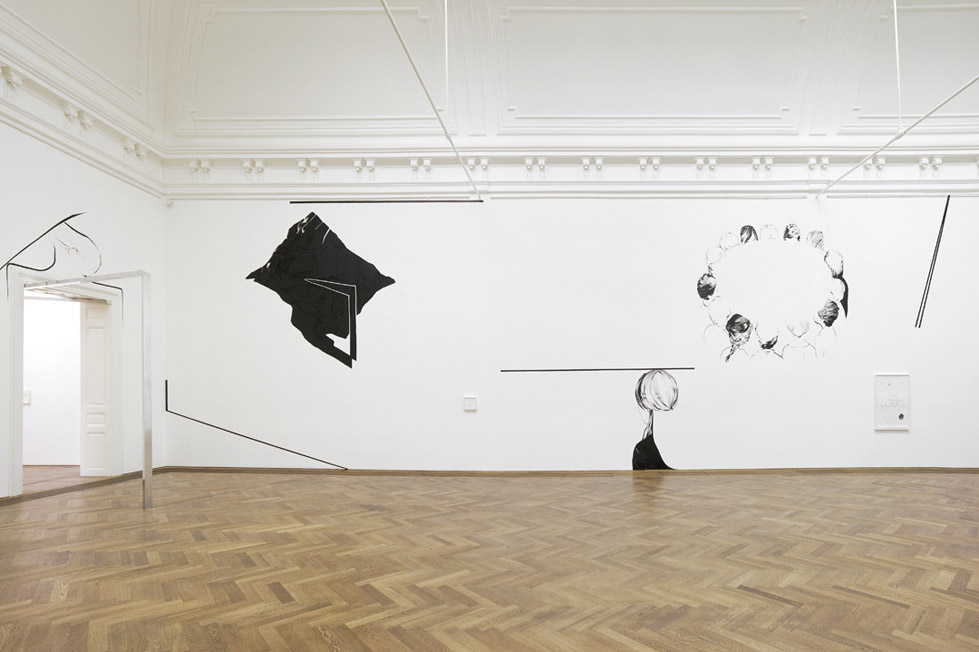
Rita Ponce de León, Endless openness produces circles, Installationsansicht/installation view
Which point of view is actually mine? (¿Qué punto de vista es realmente el mío?), 2014
Wandzeichnungen, Aluminiumkonstruktion/wall drawings, aluminium construction
Masse variabel/variable dimensions
Untitled (Sin título), 2014
Tusche, Bleistift, Buntstift auf Papier, gerahmt/ink, pencil, colored pencil on paper, framed
18.5 × 23cm
Untitled (Sin título), 2014
Tusche, Bleistift, Buntstift auf Papier, gerahmt /ink, pencil, colored pencil on paper, framed
99 × 70cm
Rita Ponce de León_KHB 2014
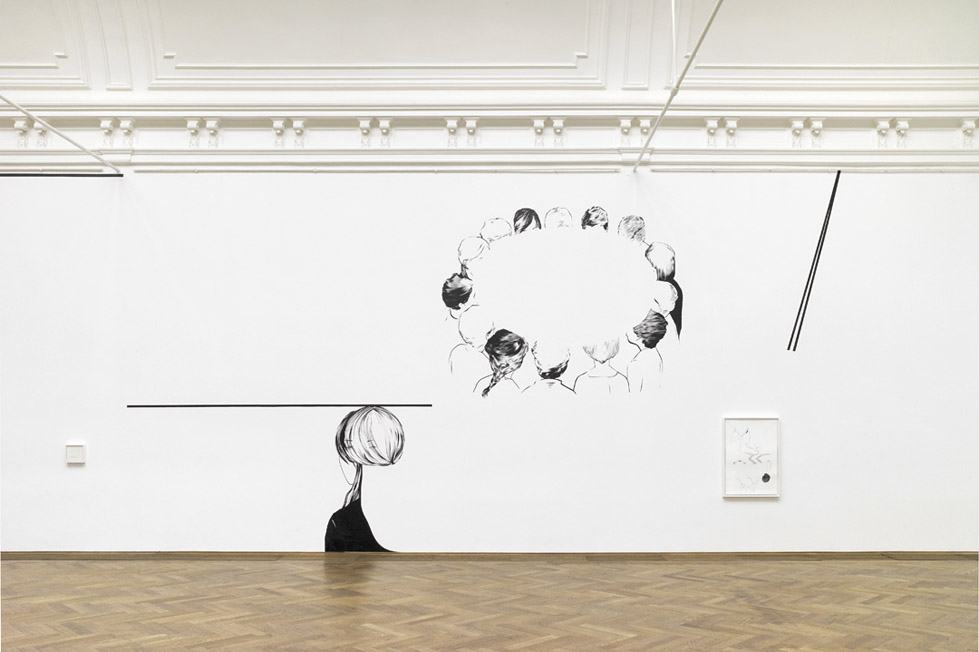
Rita Ponce de León, Endless openness produces circles, Installationsansicht/installation view
Which point of view is actually mine? (¿Qué punto de vista es realmente el mío?), 2014
Wandzeichnungen, Aluminiumkonstruktion/wall drawings, aluminium construction
Masse variabel/variable dimensions
Untitled (Sin título), 2014
Tusche, Bleistift, Buntstift auf Papier, gerahmt/ink, pencil, colored pencil on paper, framed
18.5 × 23cm
Untitled (Sin título), 2014
Tusche, Bleistift, Buntstift auf Papier, gerahmt /ink, pencil, colored pencil on paper, framed
99 × 70cm
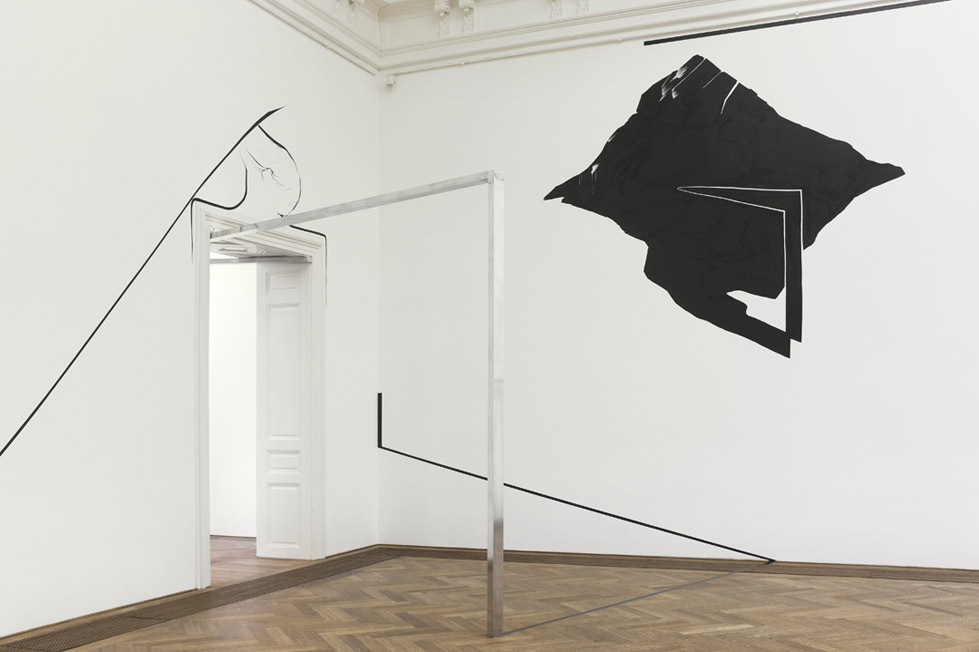
Rita Ponce de León_KHB 2014
Rita Ponce de León, Endless openness produces circles, Installationsansicht/installation view
Which point of view is actually mine? (¿Qué punto de vista es realmente el mío?), 2014
Wandzeichnungen, Aluminiumkonstruktion/wall drawings, aluminium construction
Masse variabel/variable dimensions
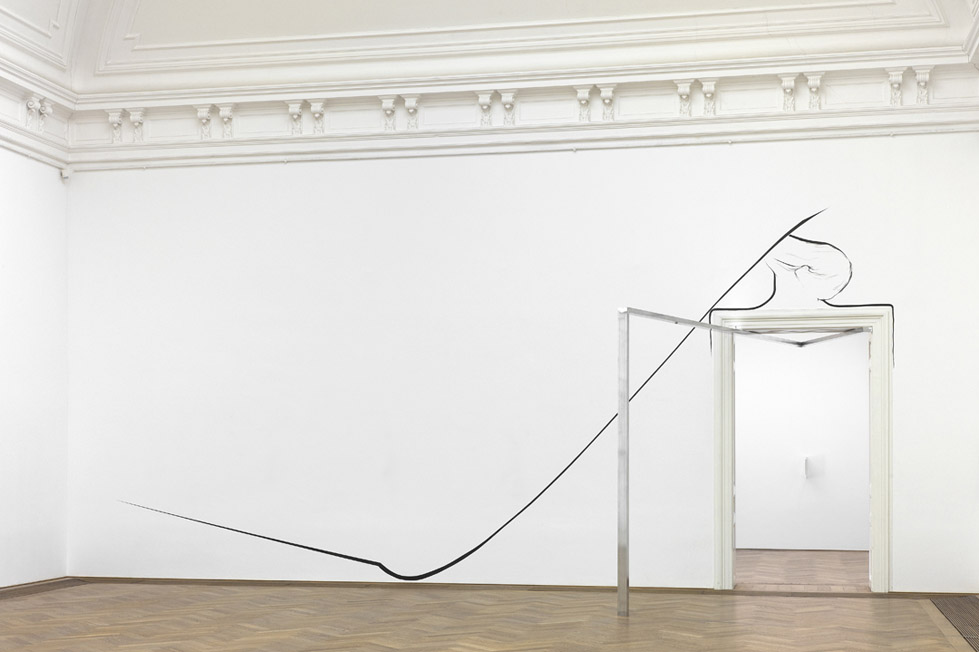
Rita Ponce de León_KHB 2014
Rita Ponce de León, Endless openness produces circles, Installationsansicht/installation view
Which point of view is actually mine? (¿Qué punto de vista es realmente el mío?), 2014
Wandzeichnungen, Aluminiumkonstruktion/wall drawings, aluminium construction
Masse variabel/variable dimensions
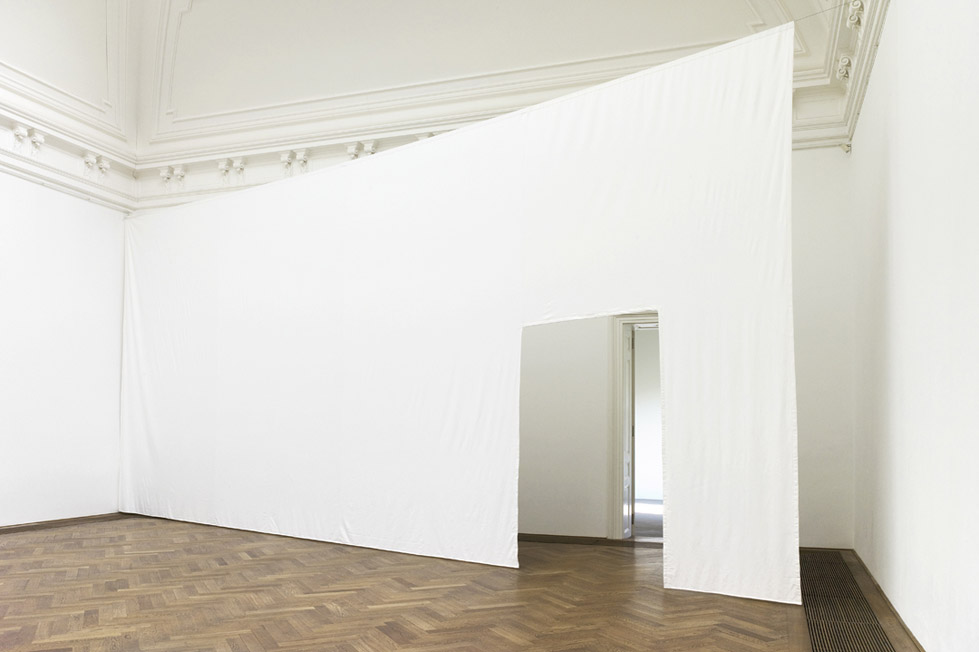
Rita Ponce de León_KHB 2014
Rita Ponce de León, Endless openness produces circles, Installationsansicht/installation view
Untitled (Sin título), 2014
Molton, weiss/Molton fabric, white
550 x 1120 cm
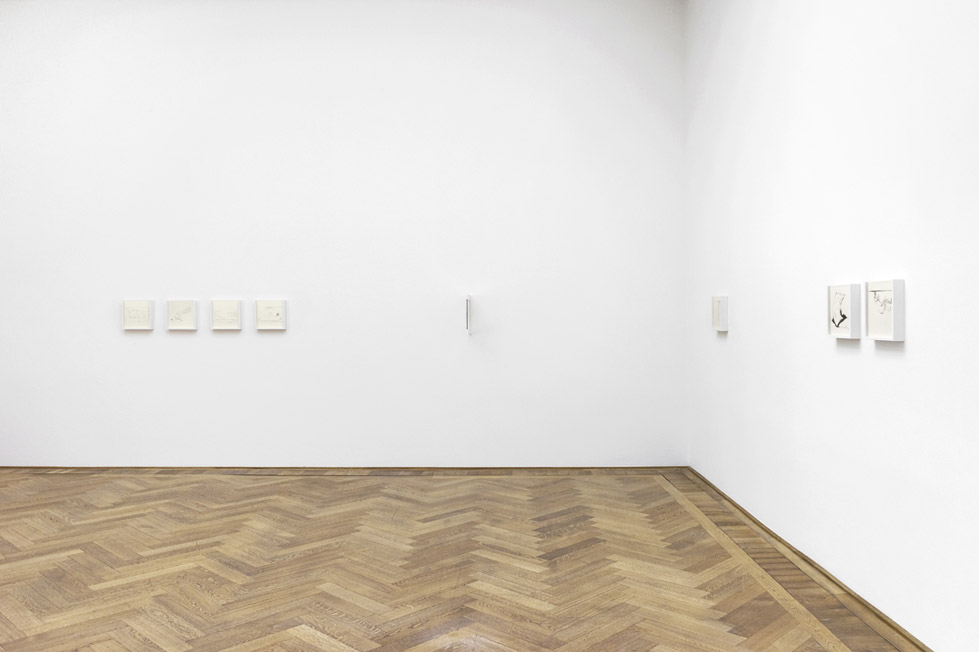
Rita Ponce de León_KHB 2014
Rita Ponce de León, Endless openness produces circles, Installationsansicht/installation view
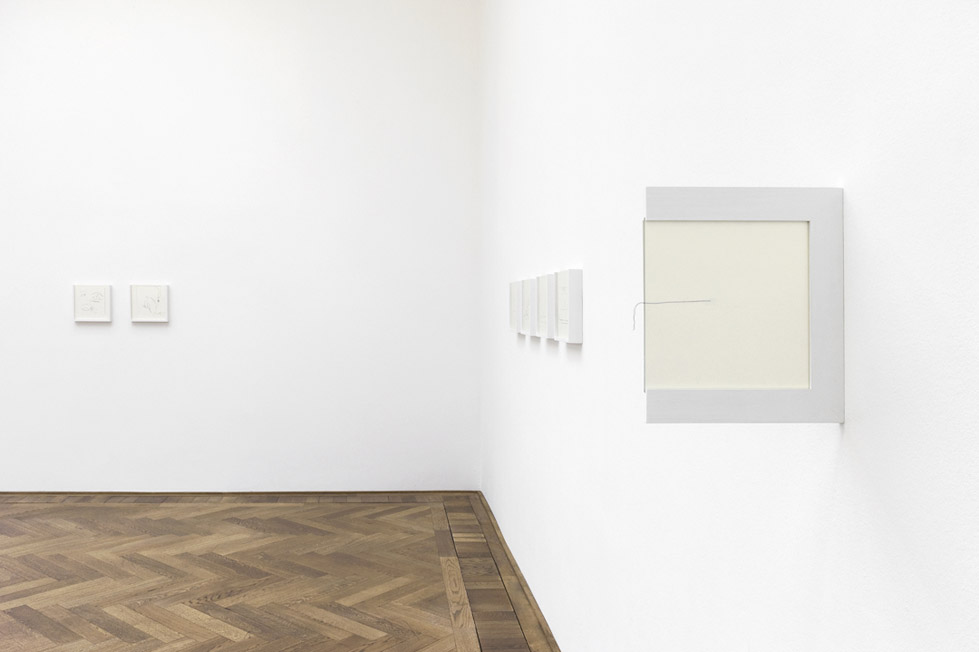
A Change Of Mind Serves To Advance An Honest Mind Drawings (I Started Saying Something But I Forgot And Said Something
Else) (Dibujos de Cambio de Idea-Comencé diciendo algo pero lo olvidé y dije otra cosa-), 2014
11 Zeichnungen (Tusche, Bleistift, Buntstift) auf Papier, gerahmt/11 drawings (ink, pencil, colored pencil) on paper, framed
Verschiedene masse/various dimensions
Rita Ponce de León_KHB 2014
Rita Ponce de León, Endless openness produces circles, Installationsansicht/installation view
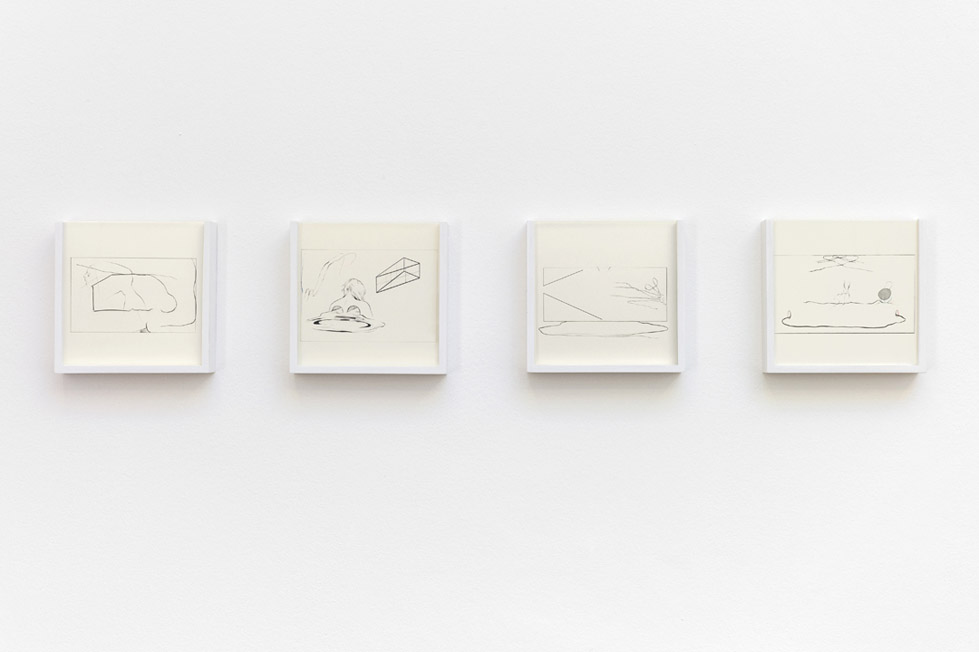
A Change Of Mind Serves To Advance An Honest Mind Drawings (I Started Saying Something But I Forgot And Said Something
Else) (Dibujos de Cambio de Idea-Comencé diciendo algo pero lo olvidé y dije otra cosa-), 2014
11 Zeichnungen (Tusche, Bleistift, Buntstift) auf Papier, gerahmt/11 drawings (ink, pencil, colored pencil) on paper, framed
Verschiedene masse/various dimensions
Rita Ponce de León_KHB 2014
Rita Ponce de León, Endless openness produces circles, Installationsansicht/installation view
A Change Of Mind Serves To Advance An Honest Mind Drawings (I Started Saying Something But I Forgot And Said Something
Else) (Dibujos de Cambio de Idea-Comencé diciendo algo pero lo olvidé y dije otra cosa-), 2014
11 Zeichnungen (Tusche, Bleistift, Buntstift) auf Papier, gerahmt/11 drawings (ink, pencil, colored pencil) on paper, framed
Verschiedene masse/various dimensions
Rita Ponce de León_KHB 2014
Rita Ponce de León, Endless openness produces circles, Installationsansicht/installation view
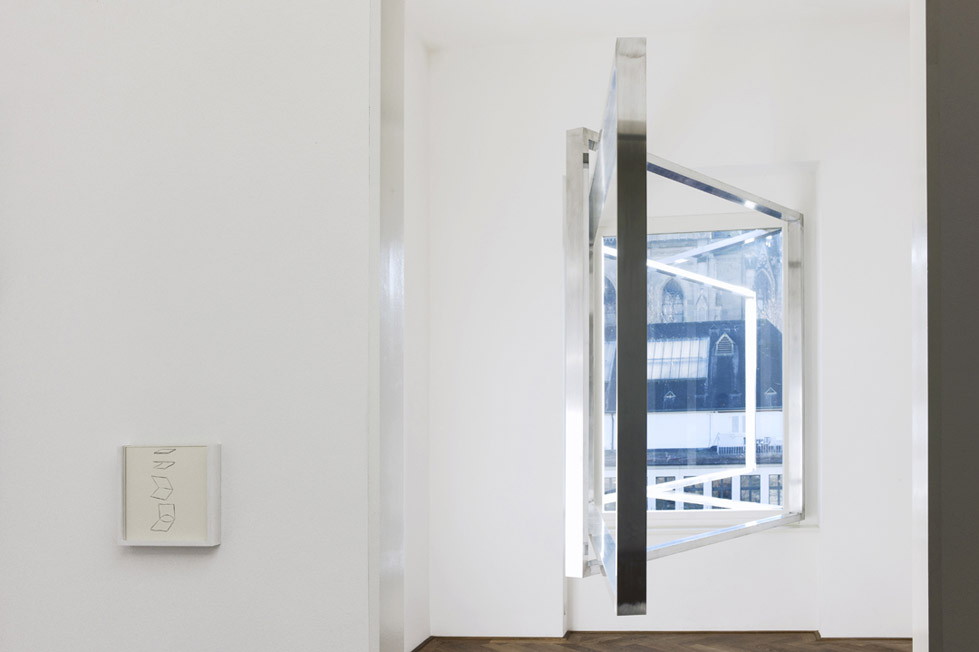
Uma, 2014
Tusche, Bleistift, Buntstift auf Papier, gerahmt/ink, pencil, colored pencil on paper, framed
22.5 × 18cm
Endless openness produces circles (La apertura sin fin produce círculos), 2014
Aluminiumkonstruktion/aluminium construction
Masse variabel/variable dimensions
Rita Ponce de León_KHB 2014
Rita Ponce de León, Endless openness produces circles, Installationsansicht/installation view
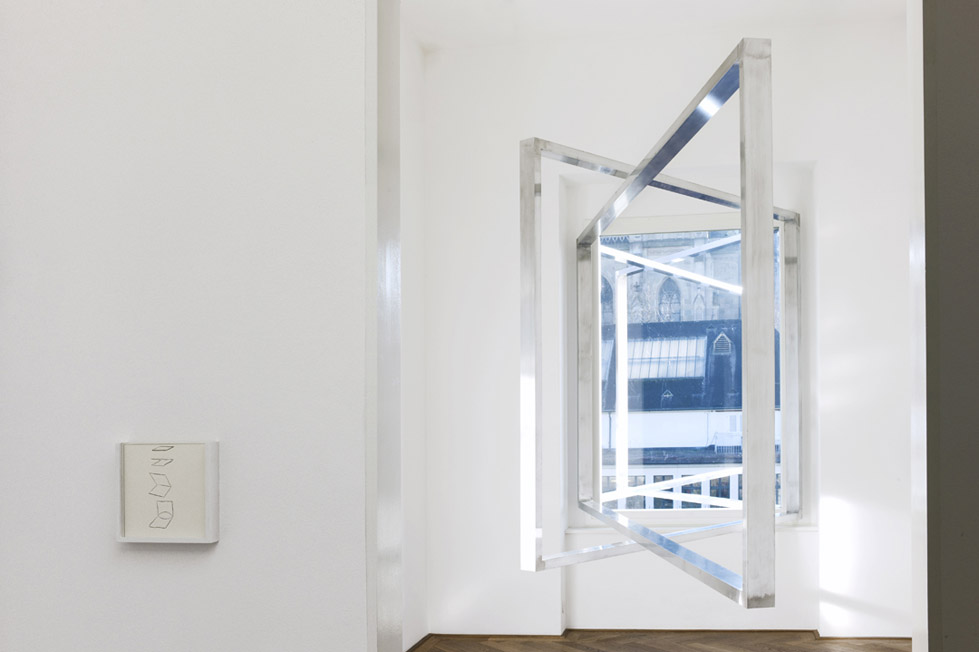
Uma, 2014
Tusche, Bleistift, Buntstift auf Papier, gerahmt/ink, pencil, colored pencil on paper, framed
22.5 × 18cm
Endless openness produces circles (La apertura sin fin produce círculos), 2014
Aluminiumkonstruktion/aluminium construction
Masse variabel/variable dimensions
Here is more information form the DCPP
ENDLESS OPENNESS PRODUCES CIRCLES
Rita Ponce de León in collaboration with Pablo Pérez Palacios
By: Fabian Schöneich / Assistant Curator
INTRODUCTION
At the Kunsthalle Basel, we are pleased to present the first solo exhibition to take place in Europe of the artist Rita Ponce de León (1982), a native of Peru now living in Mexico. The show has been realized in close collaboration with the Mexican Architect Pablo Pérez Palacios (1980).
Conversations with her friends and acquaintances from the point of departure for many of the drawings by Ponce de León featured in the exhibition Endless openness produces circles at the Kunsthalle Basel. The wall drawings in the main gallery are likewise based on drawings executed following this principle. The emphasis of the conversations which Ponce de León records is on subjective feelings, opinions and interests as well as on events of personal relevance and importance to the respective conversation partner. The artist’s chief concern is to develop something in which she already shares. Taking her recordings and the texts she has written about the conversations as her orientation, her next step, therefore, is to analyze not only her vis- à-vis’s utterances but also her own, and to transform or translate them into visual sketches, und thus to reinterpret them. The subjective statements thus become objective text fragments, which are then, in the final stage of the artistic process, turned into drawings. The act of drawing itself, which she describes as the most emotional part of the process, reflects and creates an intuitive and discerning exploration not only of text but also of the experience of relating to the people she knows.
For the artist, it is the underlying friendship that forms the most important aspect of her interest in visualizing conversations. The unique element of sincerity and truth is what inspires her. And it is precisely that which can also be understood as the social element–or social point of departure- in Ponce de León’s art. This entire process, however elaborate it may seem, proceeds on the assumption
that pictures are capable of communicating something real if they are based on genuine life experience, on knowledge that has been generated by experience. That is also the reason why the artist has been studying Butoh, a form of Japanese dance theatre, for quite some time. Since the late sixties, dancers and dance theatres in Japan have been devoting themselves to this self-reflective expressive from of dance, which –meanwhile practised worldwide- evolved as a gesture of resistance against a certain Western dance culture with its focus on pure individual expression and entretainment, but also against rigid Japanese traditions, with the aim of finding a contemporary Japanese form of expression. The original Butoh was thus a form of artistic protest comparable to European currents such as Viennese Actionism. Primarily between the years 1962 and 1970, with protagonists such as Otto Muehl and Hermann Nitsch, the latter movement sought to counter the repressive circumstances in society with forceful performances that involved extreme forms of work with the body.
However, Ponce de León’s interest in Butoh focusses primarily on the experience of life, and every single element of it, with the human body. The so-called “dance of darkness” and “dance of death” were early forms of Butoh developed by artists such as Tatsumi Hijikata (1928-1986) or Kazuo Ohno (1906-2010) in order to achieve a new form of dance by metaphorically opening the body and using it as a means of expression. What appeals to Rita Pince de León about this type of dance theatre is the mode of commonality among the participants. When one spends time with people, one also shares a space with them, breathes the same air, and uses the same objects.
A dialogue ensues even before one engages in verbal Exchange. This relationship is the artist’s tool for inquiring into and depicting “togetherness”, “co-existence”, and how people deal with it. The imposing main gallery, which on account of its architectural design is flooded with daylight, suggests precisely the kind of openness intended to come about here –an openness between the visitors and the Works, and between the work themselves. The exhibition architecture, created in collaboration with the Architect Pablo Pérez Palacios, makes only minor changes to the room, but points all the more insistently to those changes. The focus of this collaboration was on further opening up the space, and on linking the three rooms to make them perceivable as a single open space and experience. Untitled (Sin título) (2014) is a light artificial wall made of white fabric that responds to the existing masonry wall and turns it into the room by 18°.
The gesture is simple, the effect disconcerting. The entire reality of the rectangular space is altered, and with it the visitor’s perception of the room and, naturally, him of herself and his or her movements. Even the entrance into this nineteenth-century gallery repeats itself; now one enters the actual space twice. Further transformation of the space is achieved by connecting the lines running across the gallery walls with angular metal structure expanding from the main gallery, through the doorway, into the adjoining space. Thus, the main space is literally “drawn” into the one that follows.
Which point of view is actually mine? (¿Qué punto de vista es realmente el mío?) (2014) is the title of the wall drawing and sculptural installation in the space. The work, which combines figurative and abstract elements, is based in small-scale drawings by the artist and makes reference to people she knows, as well as to her reflections on the Kunsthalle space and on the act of drawing in general. The people in question are not necessarily part of her everyday surroundings, but also include acquaintances from the past. Details such as hairstyle, for example, might be completely out of date but are nevertheless correct since they are based on Ponce de León’s memories. Identities are not depicted, nor is that the artist’s concern. The idea of the visual transformation of experiences and memories, described above, here becomes tangible. In the hair at the back of a large-scale woman’s head we encounter eyes that look out at us.
Whereas this work illustrates the gaze suspended between the inward and the outward, in the relief opposite that gaze takes shape: Me-something (Yo-algo) (2014), a negative oval- shaped relief roughly the size and shape of a human face exhibits no details whatsoever.
The point, rather, is irritation of perspective, and to have the viewer perceive the entire wall as a wearable mask. If one actually decides to don this “mask”, one leaves the room and enters a realm of one’s own. And metaphorically speaking, the mask affords a view of the Kunsthalle courtyard outside, and thus once again opens up the space.
The series of drawings executed for the show at the Kunsthalle and now displayed in gallery 11 is entitled A Change Of Mind Serves To Advance An Honest Mind Drawings (I Started Saying Something But I Forgot And Said Something Else) (Dibujos de Cambio de Idea-comencé diciendo algo pero lo olvidé y dije otra cosa-) (2014). Rita Ponce de León sees these Works precisely as the visualizations of experiences realized very emotionally and intuitively with the drawing médium. Once again, openess is suggested by leaving the frame open at the top of each drawing.
Endless openness produces circles (La apertura sin fin produce círculos) (2014), the title of the exhibition as well as the installation in the last room of the skylight gallery, plays with exactly this idea of infinite openness. The willingness to immerse oneself in this environment leads to the openness the artista here endeavours to address. The construction of two large intersecting aluminium frames protruding outside the window in the last gallery is mirrored inside the gallery by similar frames extending from the window. The “door-window” thus multiplied also multiplies the views one can experience, and elaborates the openness of the window as such. The visitor is moreover invited to change the frames’ position inside the gallery and thus to modify the view from the window.
In her show Endless openness produces circles at the Kunsthalle Basel, Rita Ponce de León employs a médium that sketches, outlines and depicts to record subjective and collective experiences and memories and transform them into a discussion of how we are shaped by our experiences. She thus gets to the core of what characterizes our co- existence. The combination of the “light” medium with an equally “discreet” exhibition architecture invites the Kunsthalle visitors to involve and integrate themselves, to connect with their vis-à-vis, to give their emotions full scope, and to reflect on what they have experienced and what they would like to remember.
MORE: DCPP,更多请至:DCPP on gooood




这是啥? 这又是啥?
艺术