非常感谢 惠栢設計 予gooood分享以下内容。更多请至:Studio TING on gooood
Appreciations towards Studio TING for providing the following description:
“探秘台湾”是国立台湾博物馆历史展区的永久性展览,这里展出了台湾本土的自然历史,以及追述到一个世纪前的建馆历史。该展览空间设计利用透视性手法将367件展品(其中包含全馆珍藏265件)依次展现,并与来自台湾本土当代艺术家的雕塑和影像作品向对视,呈现出古往今来的时代对话。
Discovering Taiwan is a permanent exhibition dedicated to the History of the collections of the National Taiwan Museum, the History of the Natural and Aboriginal Treasures of Taiwan, and the History of Japanese Researchers who built this institution one century ago. The exhibition scenography links this past to the future by questioning the prospect of cultural heritage through 367 pieces including 265 of the most important pieces from the Museum’s collection, facing sculptural, video and sound installations created by contemporary Taiwanese artists.
▼国立台湾博物馆鸟瞰图,the National Taiwan Museum
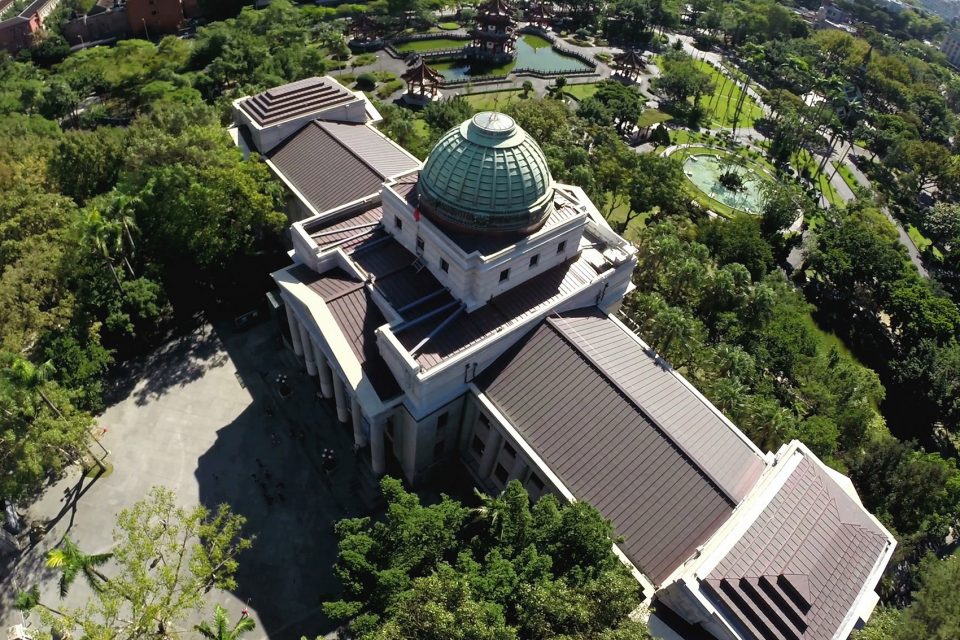
国立台湾博物馆的前身是自然历史博物馆。在它的百年之际,极具多元化的惠栢設計团队有幸参与到博物馆的永久性展区设计。借由博物馆馆长提供的有限手工制品,带着对这栋历史建筑的尊敬之心,这个由科学家,建筑师和设计师组成的设计团队,与博物馆的工作人员共同组织了此次展览的总体流线,将各展品串联成完满的故事。展览的整体设计以自然的隐喻为设计构思,将自然元素抽象为空间的形状和色彩,激起参观者的好奇心,在获得知识的同时诱发无限想象力。
The National Taiwan Museum is the earliest Museum of Natural History in Taiwan. For its centenary, the multicultural team of Studio TING (惠栢設計) had the privilege to contribute to the global renovation by designing the permanent exhibition dedicated to the institution’s heritage. Based on the artefacts provided by the museum curators, and respecting the historical nature of the building, our team composed of scientists, architects and designers worked closely with the museum teams to organize and display the content, and tell the story of the collections. The overall design of the exhibition plays with the metaphor of nature, using natural elements converted to an abstract language of shapes and colors in the space, stimulating curiosity and transcending the knowledge with a dimension of imagination.
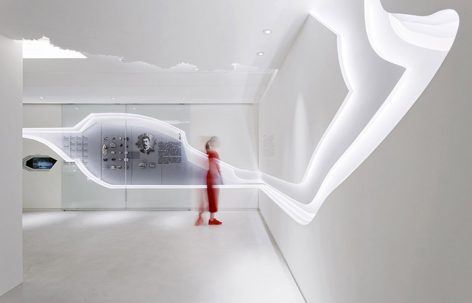
▼位于顶层的展区内部,interior view of the exhibition on the top floor
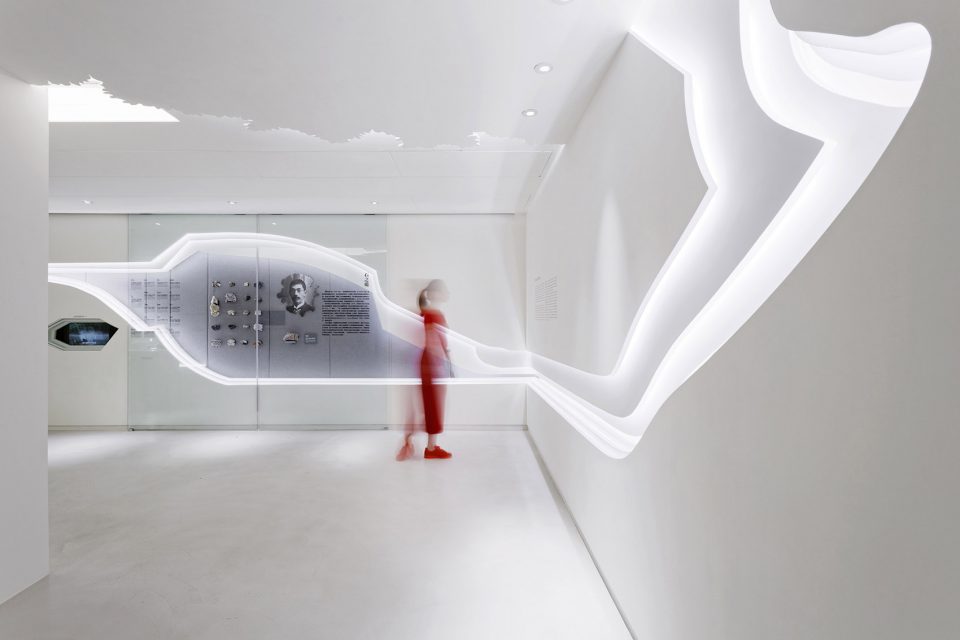
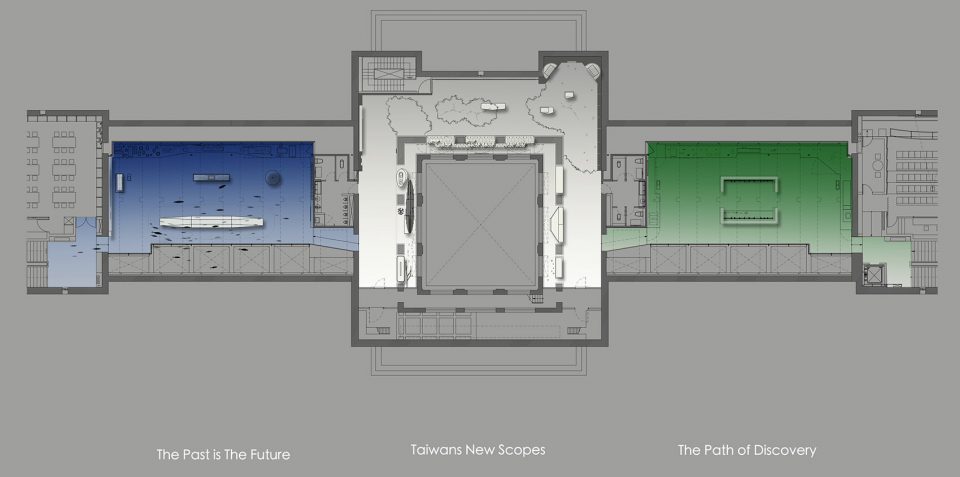
该永久展区坐落于这栋殖民地风格建筑的最顶层,由两侧的两个阁楼展区和位于穹顶之下的中央展区三个部分组成。各展区均通过视觉与听觉的双重展示为来访者呈现各不相同的展览主题。
Located on the entire top floor of a historical colonial-style building from the Japanese era, the exhibition is divided in three spaces, two lofts with entrances on both sides and a central space surrounding the dome of the building. Each exhibition space unveils a distinct theme, both visually and in soundscape.
▼展区平面图,plan
东侧,“探索之路”
East entrance, The Path of Discovery
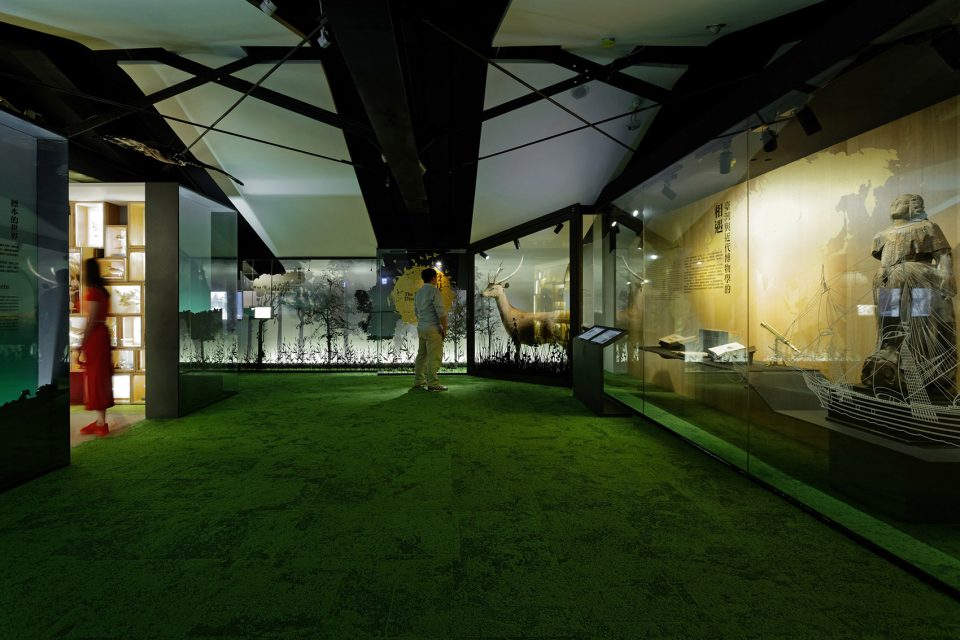
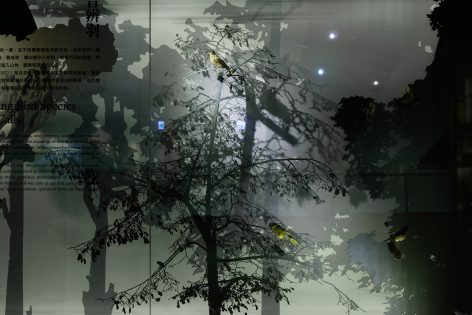
东入口的“探索之路”是展区的起始点,从这里,参观者将跟随自然学家的早期探索,徜徉在台湾原始森林之中。伴随着虫鸟的低鸣声,参观者可以进一步了解到台湾的原生物种,然而在它们之中有些已经灭绝了。位于中央的内屋展区为参观者展示了台湾本土的生物多样性。这一展区向所有参观者呈现了最珍贵的台湾自然生态资源。
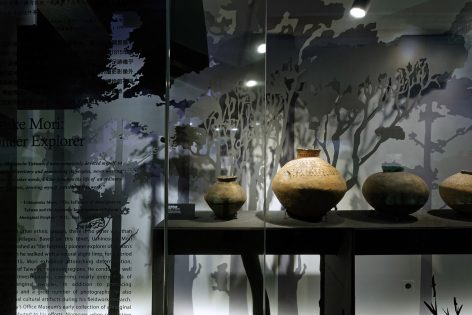
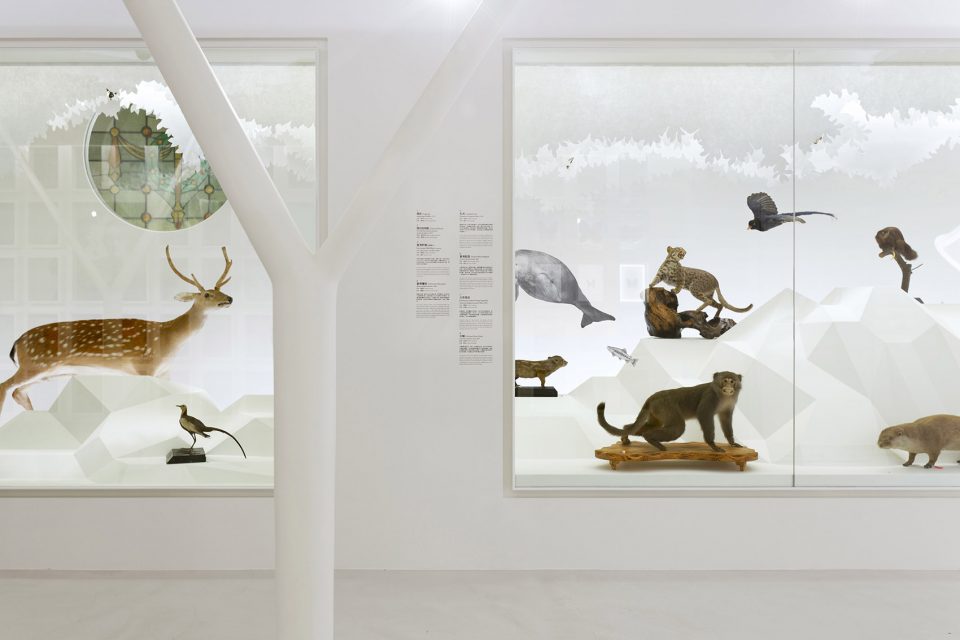
This first space leads the audience to experience the atmosphere in which the early naturalists explored the Taiwanese primitive mountain forest for the first time. A deep green low-key ambiance resounding with an insect and bird chorus, reveals aboriginal treasures and representative animal species, some of which are now extinct. In its center, a cabinet of curiosities displays the wonder of Taiwanese biodiversity that the first scientists started to inventory and share.
▼展区沉浸在绿色森林的氛围里,the mountain forest atmosphere
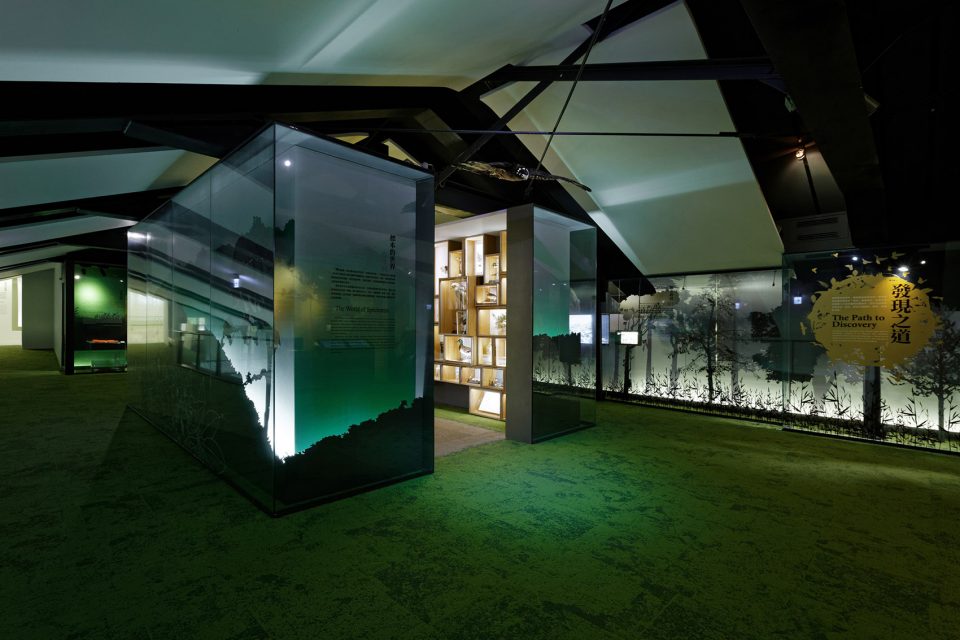
▼展区中央展示了生物多样性,a cabinet of curiosities displays the wonder of Taiwanese biodiversity
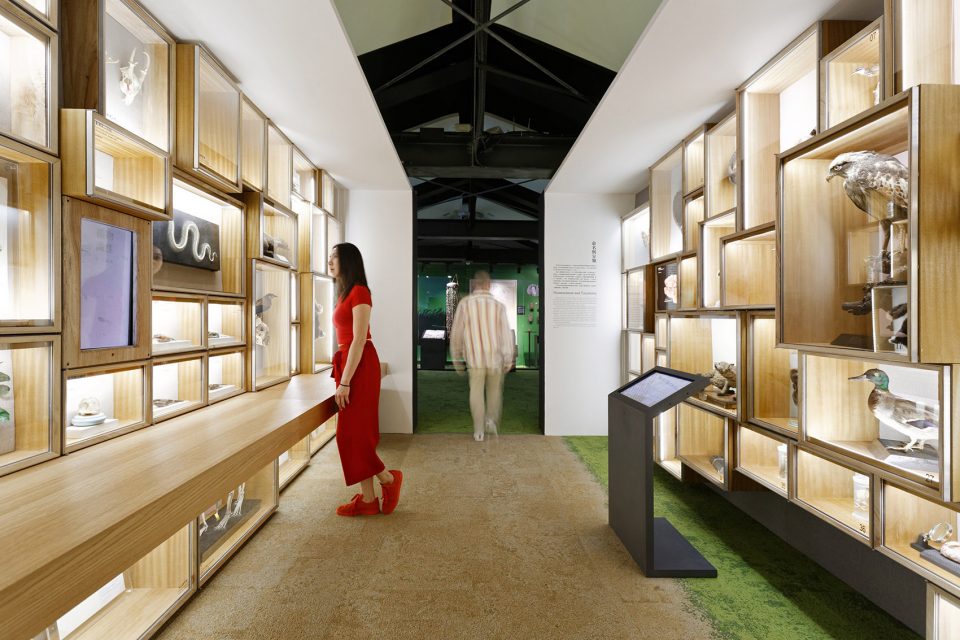
▼展示细节,detail of the exhibition
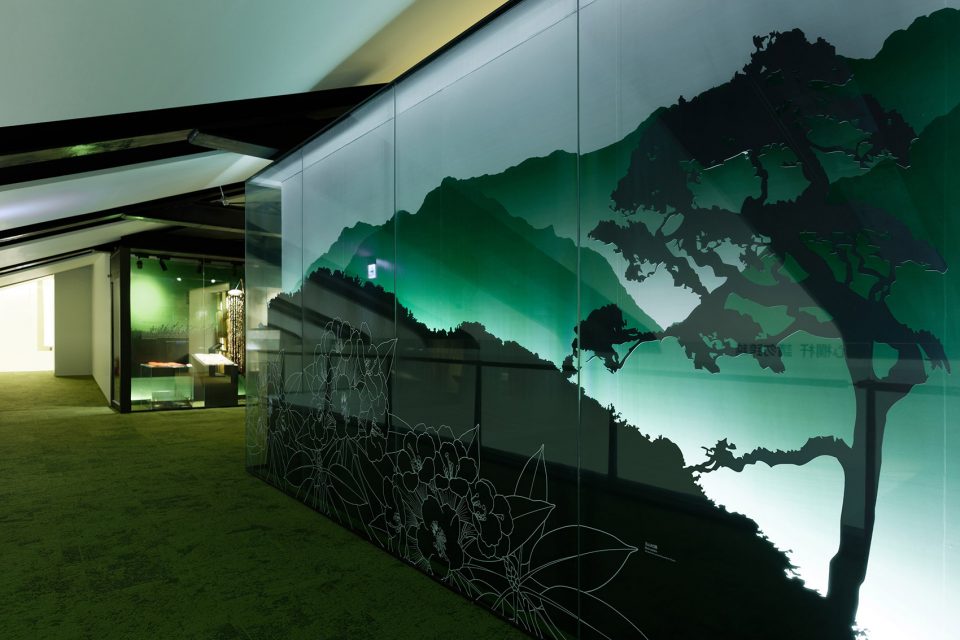
中央,“台湾新视野”
Central room, Taiwan’s New Scopes.
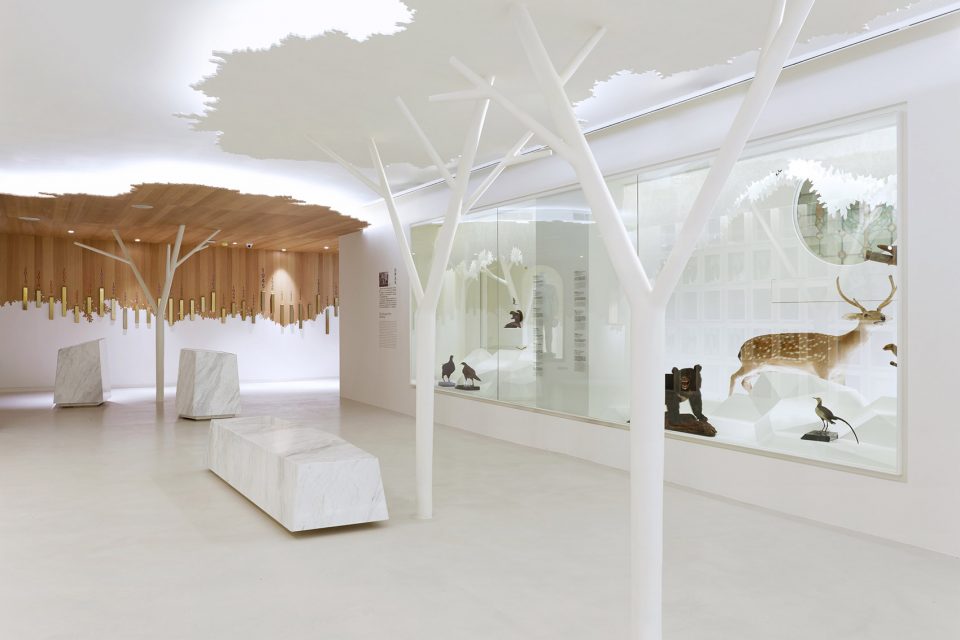
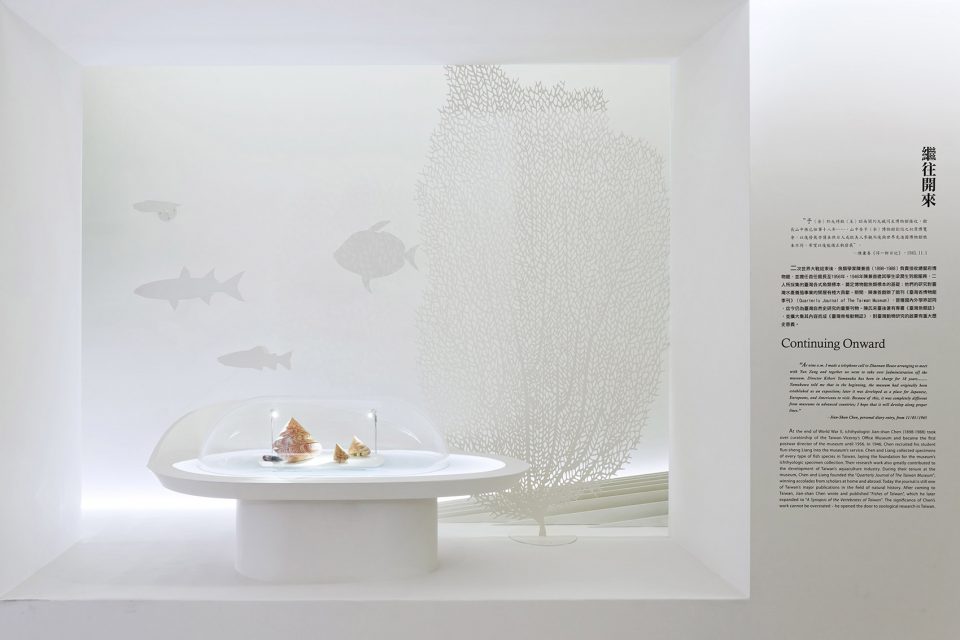
位于中央的“台湾新视野”展示了历史博物馆有史以来的最大发现。该展区以抽象的自然元素和形象为画笔,描绘了美丽自然,向展区内的每一件标本致敬。这其中的每一个展台内部都由自然研究学者们布置,展示他们的研究成果。在白色调氛围,暖风、音乐和树影下,有关于这栋建筑几十年间的历史变迁都在一面厚重的墙壁上铺陈开来。
This white space, along a corridor, displays the major findings through the history of the museum. Playing with the abstraction of natural patterns and forms, the scenery is a tribute to all these specimens extracted from nature in the service of collective knowledge, in addition to their genuine beauty. Each of the showcases is dedicated to one of the researchers who contributed to the history of the collections, displaying their major findings. In this whiteness and an atmosphere of warm wind music and under the patterns of arboreal shadows, a wall reveals in its thickness a number of images and stories about the building itself through the decades.
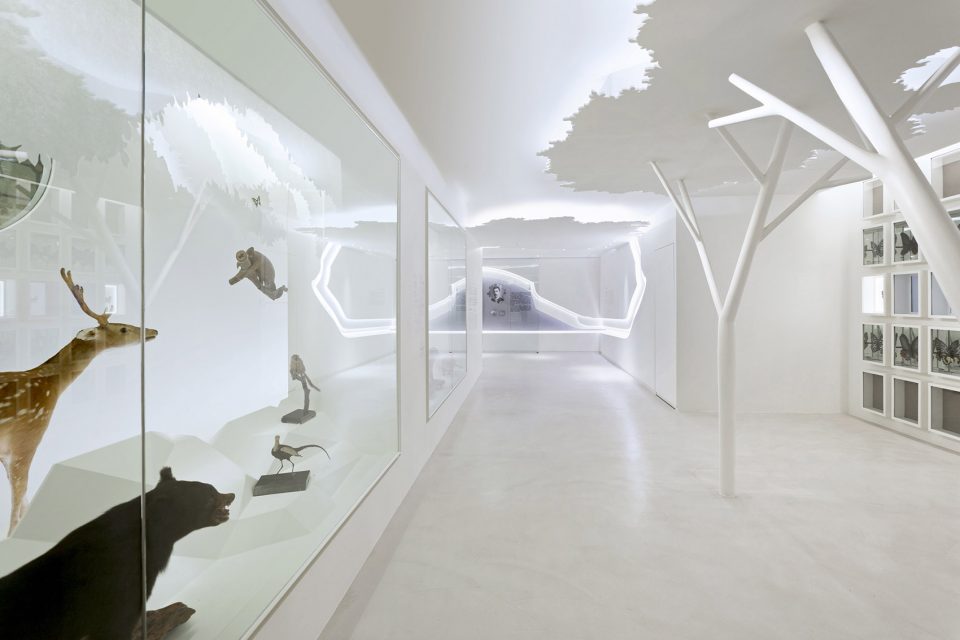
▼用自然抽象元素布展,playing with the abstraction of natural patterns and forms
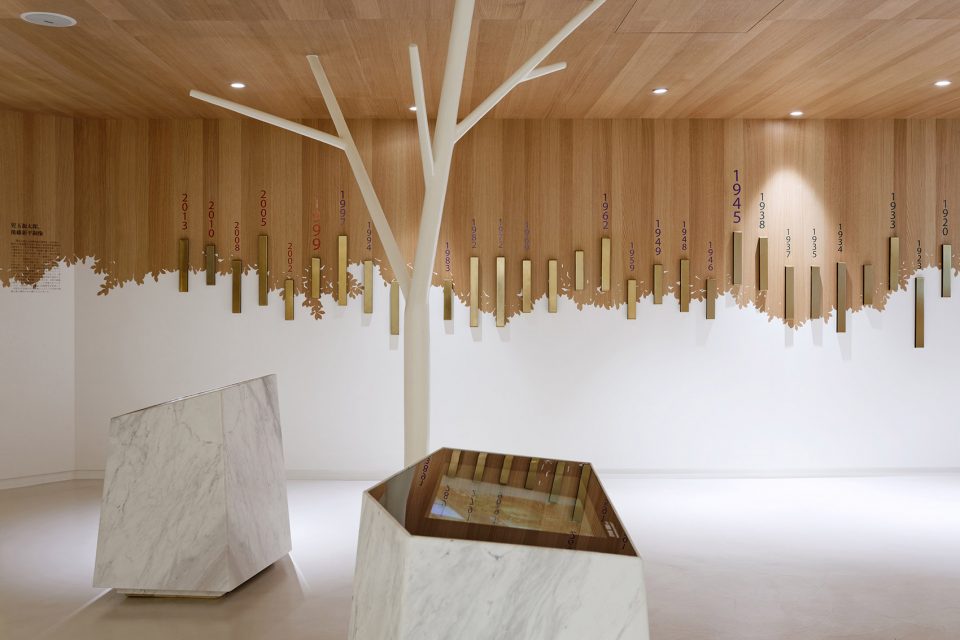
▼有关于这栋建筑几十年间的历史变迁在墙壁上铺陈开来,a wall reveals in its thickness a number of images and stories about the building itself through the decades
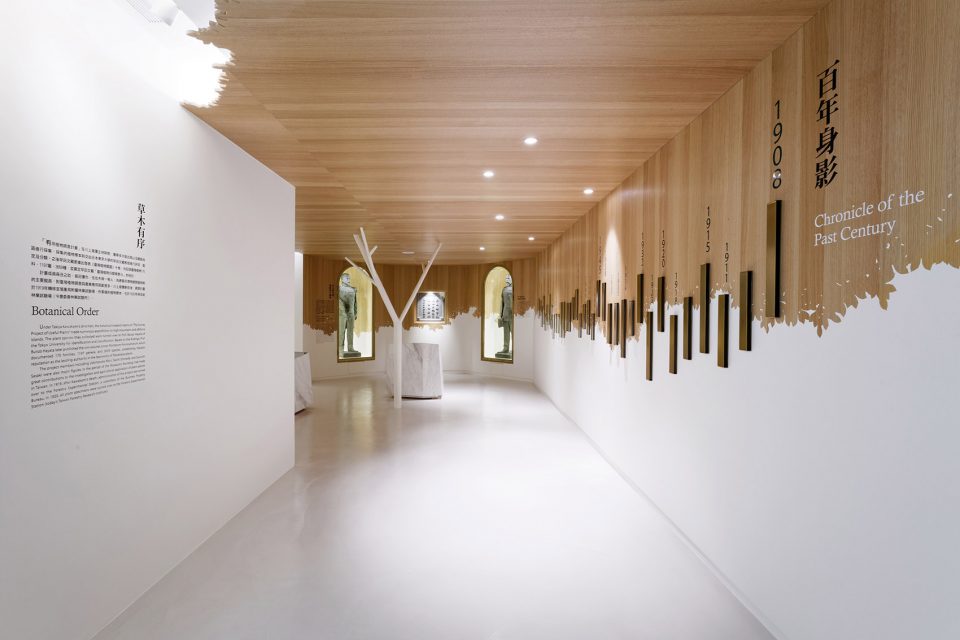
▼充满趣味的展示细节,vivid detail of the exhibition
西侧,“过去即是未来”
West entrance, The Past is the Future.
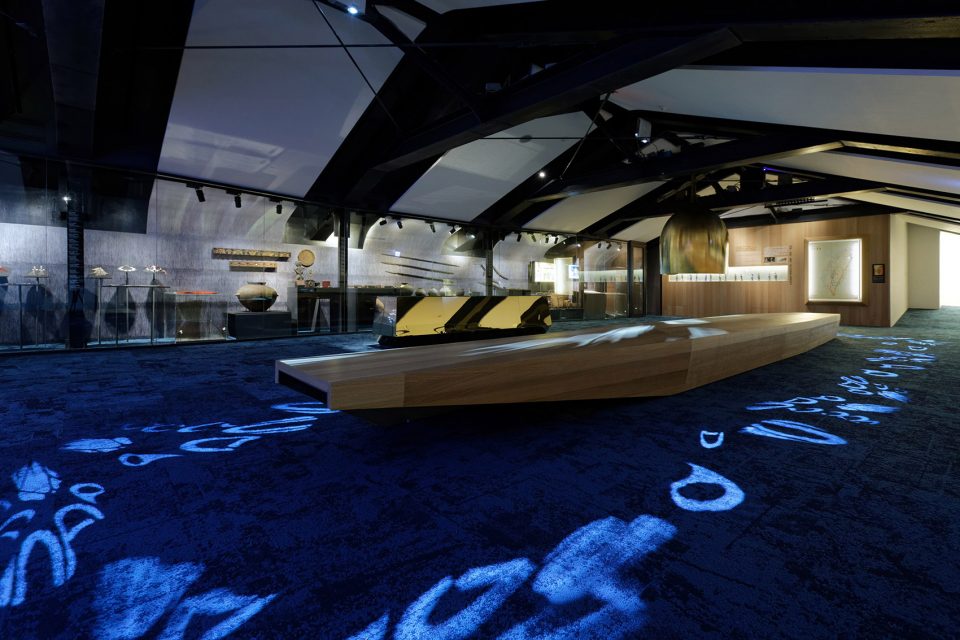
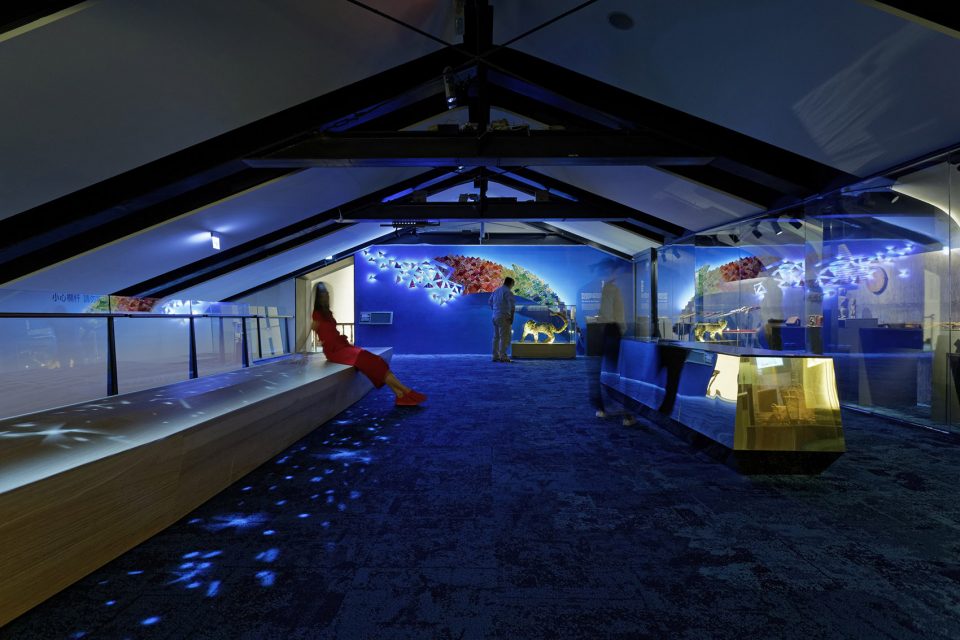
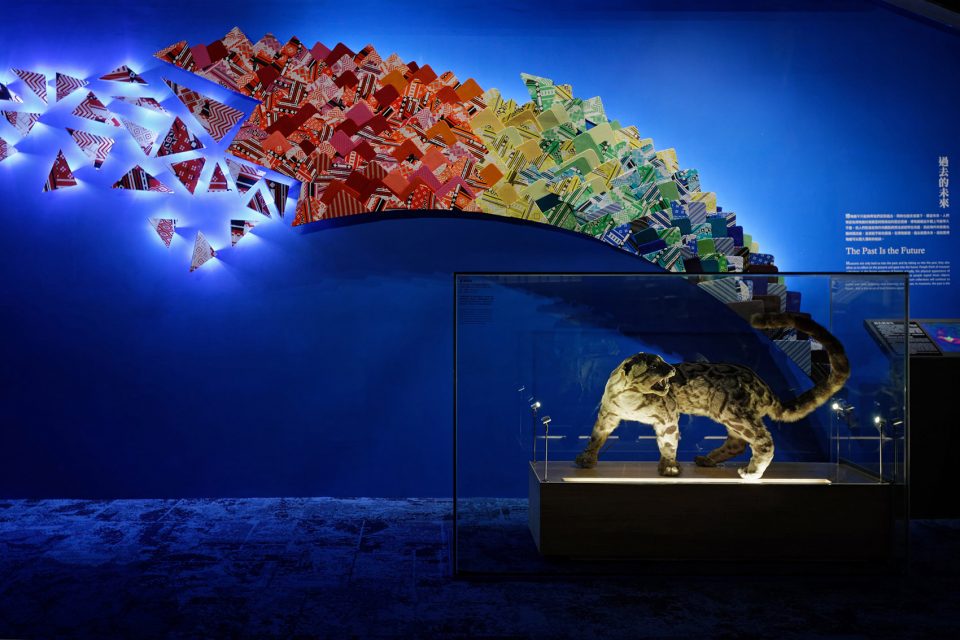
位于西侧的展区将参观者引入深蓝色的海洋环境里。在这里,原住民的遗存碎片和稀有动物样本,与当代艺术作品相映成趣。以现代化手段呈现的音乐与多媒体艺术让参观者得以在博物馆所打造的体验空间里,感受自然留给我们这个时代的珍贵遗产,也开启了我们感知和探索新世界的大门。这一展区告诉我们,唯有了解文化根源,才能更好的探知未来世界。
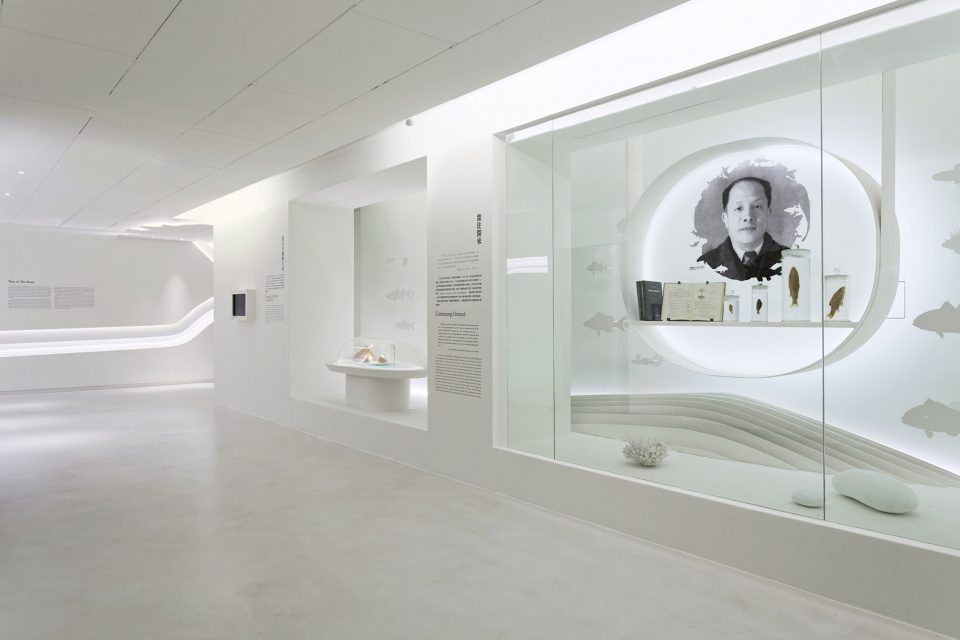
The last space leads the audience into a dark blue ocean of shadows where the fragility of aboriginal pieces and rare animal specimens interact with contemporary pieces of art. The electronic soundscape, the contemporary weaves and the animated projections of multimedia art enable the visitor to view the knowledge incarnated by the museum at the crossroads between the preservation of a heritage dedicated to the current generations and the scientific research which opens new understandings of the world. This space reminds us that knowledge of cultural roots is the best inspiration to invent the world of tomorrow.
▼如蓝色海洋般的展区,the space of a dark blue ocean of shadows
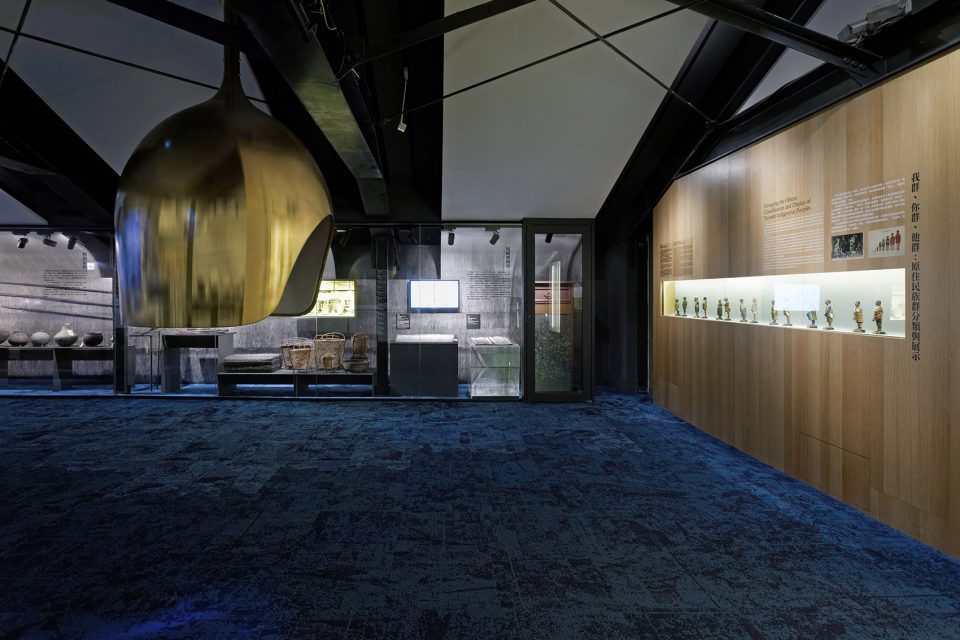
▼结合展品与当代艺术,the exhibits interact with the modern art
Client National Taiwan Museum (Taipei, Taiwan)
Location https://goo.gl/maps/2DCeWPQV97L2
Area 637 m²
Budget approx. 1.200.000 US$
Public opening November 2017
Design Studio TING (惠栢設計) Hueiting Chang + Christophe Gaubert
Website www.crea-ting.com Space design team Yinling Yeh, Wei-sheng Chang, Chrystel Charrat, Shuchong Hu, Yi-Hsiu Yang
Graphic design team Shih-yu Tuan, Chan Chang
Editorial team Yiyu Chuang, Ying-Hau Chen
Multimedia team Documentary: Julien Lu, Jing-Fang Liu, Wei Chen / 3D animation: Zong-Yu Hsieh / Interactive media art: Po-Chih Chang / Interactive media content : Shi Wen-Cheng, Tsai Cheng-Hau, Du Shiau-Mei
Lighting design Originator Lighting Design – NS Huang, Erin Tseng
Sound design Wen Shu
Art design New Media Art: Jun-Jieh Wang / Weaving Art: Yuma Taru
Insect models Ecofauna – Lorenzo Possenti, Chih-An Liao
Construction coordination Che-kang Chang, Sharyn Shih
Scientific consultants Ethnology: Dr. Bien Chiang, Dr. Nanjun Yang(✝), Dr. Yayoi Mitsuda / Entomology: Dr. Yaoyi Zhu(✝), Dr. Shiuh-Feng Shiau / Botany: Dr. Chang-Fu Hsieh / Mineralogy: Dr. Bing-Sheng Yu / Archeology: Dr. Hung-lin Chiu / Zoology: Dr. Wen-Hau Chou, Dr. Si-Min Lin, Bo-Ren Jiang / Ichthyology: Dr. Kwang-Tsao Shao / Malacology: Kin-Yang Lai / History: Chuan-Chi Gau
Legal consultant Vast Strides International Law Firm
Photography Christophe Gaubert
More: 惠栢設計 / Studio TING,更多请至:Studio TING on gooood

主动线是从东侧展厅进入吗
喜欢
有匠心的博物馆!
这项目做的挺到位
小编的标题是国立美术馆,正文是国立博物馆。一个在台北,一个在台中。应该搞错了吧?
已更改,谢谢!请持续关注我们!