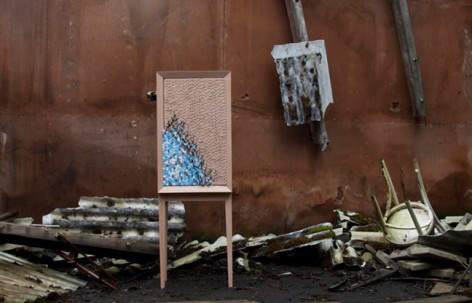
非常感谢Jenny Ekdahl将项目介绍和项目图片授权gooood发行。更多请至:Jenny Ekdahl on gooood
Appreciation towards Jenny Ekdahl for providing the following description:
今年25岁的设计师Jenny Ekdahl从瑞典隆德大学的工业设计系毕业后,提出了这个灵感来自于自然力量的作品:亲爱的灾难。
自然灾害带来破坏,使人类痛苦。这种现象神秘,美丽,可怕,让人恨又感到不可思议。Jenny Ekdahl希望通过作品表达出这种对自然灾害的矛盾心理:欣赏自然的力量,在灾害后要恢复自己的心理创伤。
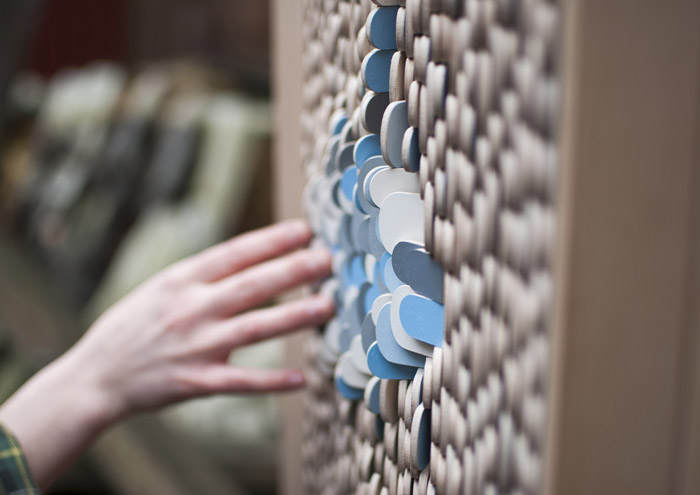
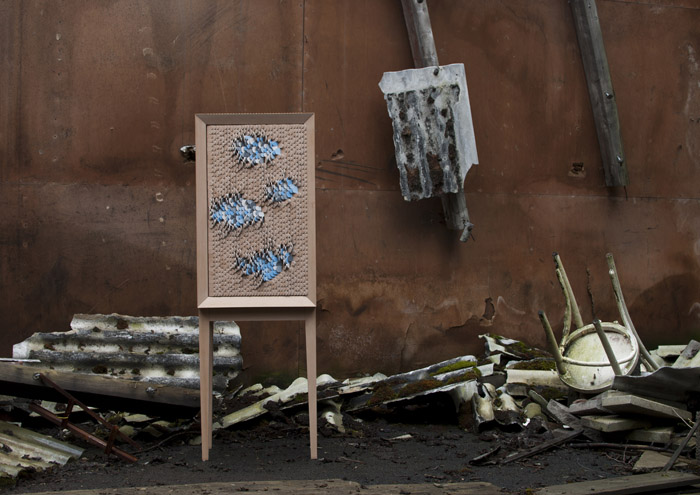
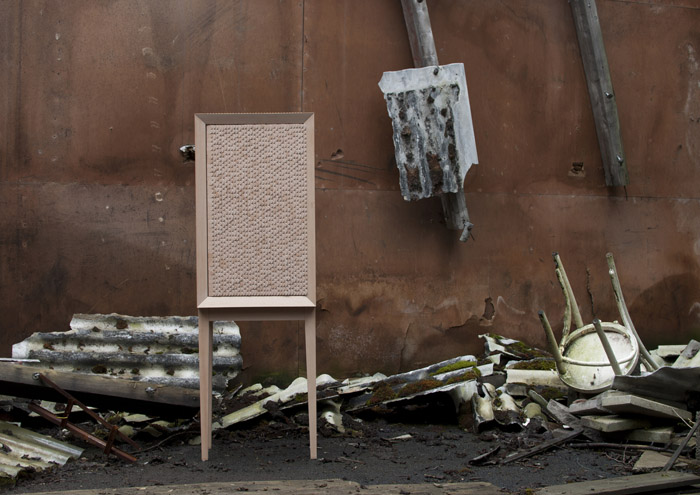
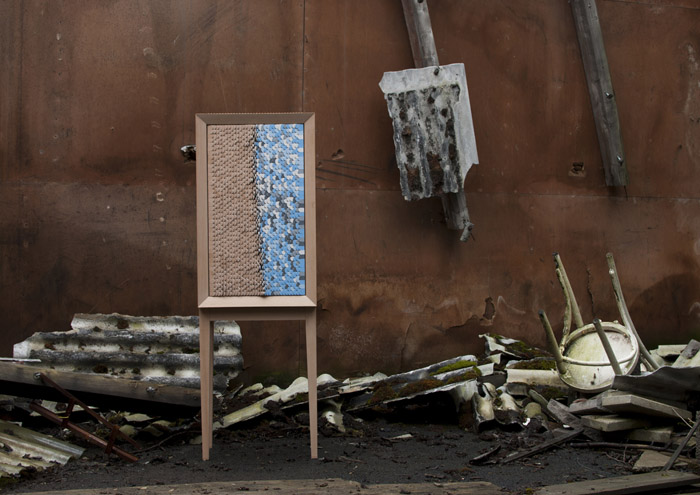
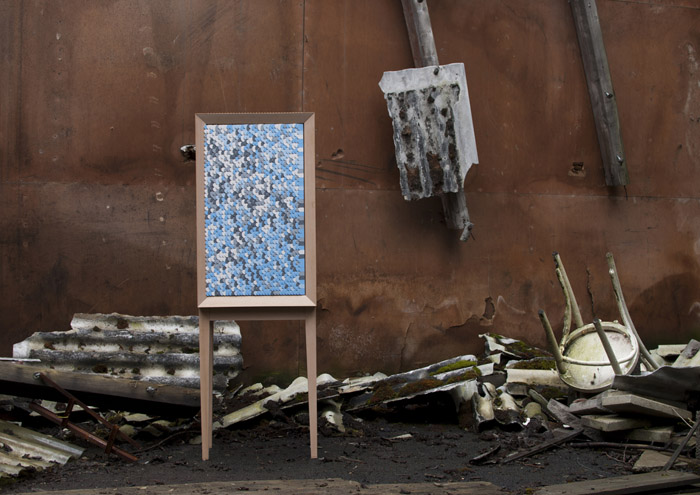
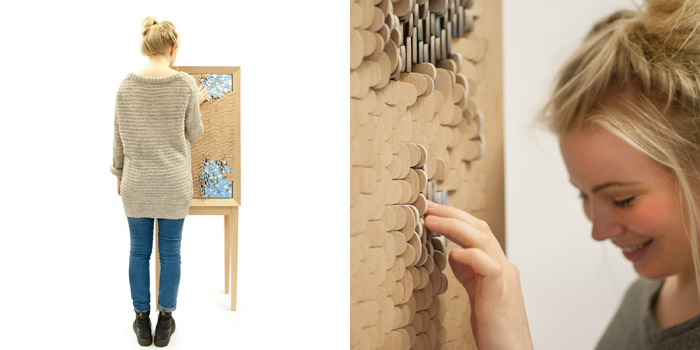
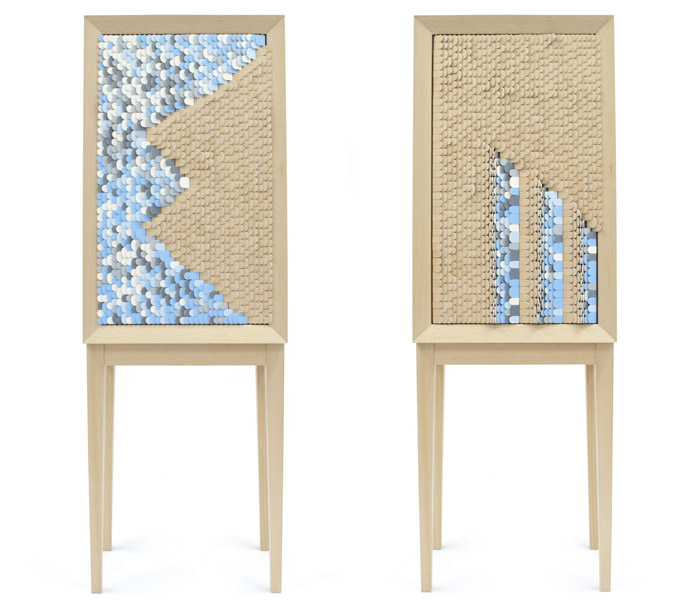
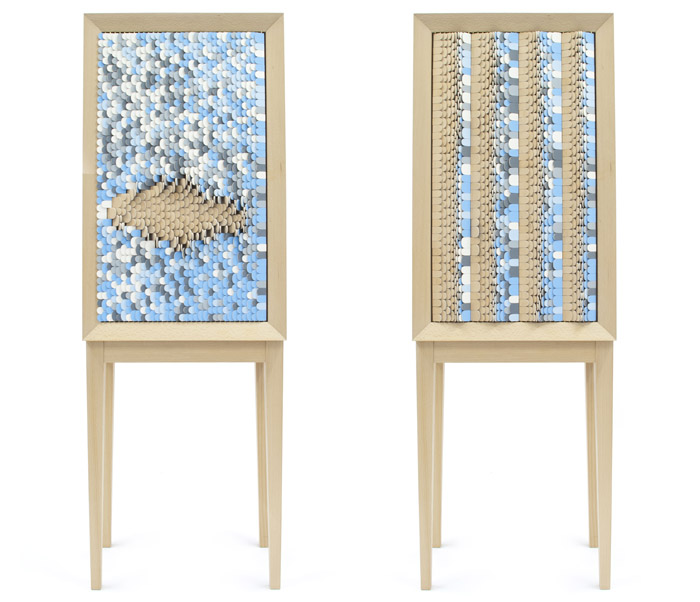
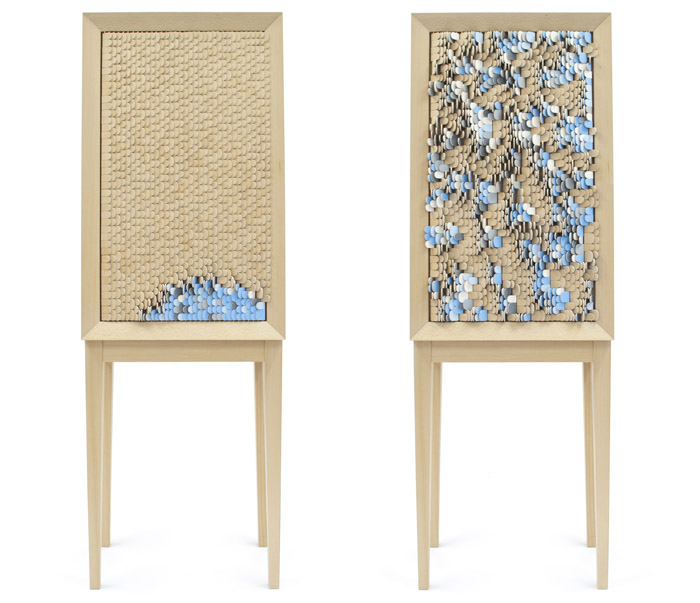
人类对有形的复杂趣味互动纹理具有好奇心。因此这个作品有一个表面像是可以翻动的鳞片。人们通过触摸来感受一个关于悲伤和恐惧的故事,并在事件后克服自己的恐惧。人们可以个性化的使用这个家具,同时经过触摸来缓和自己的心理。
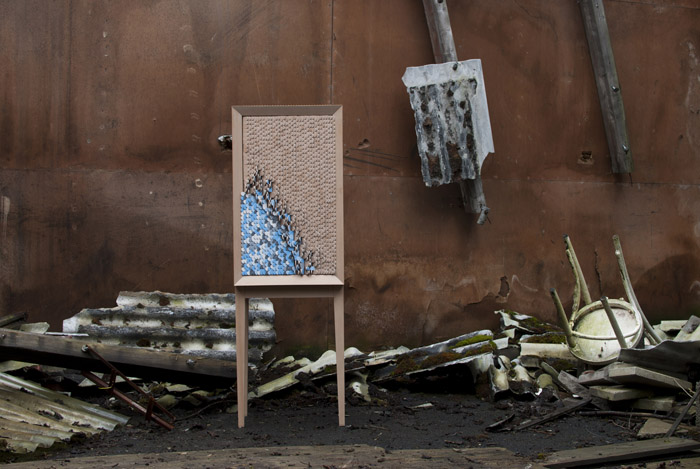
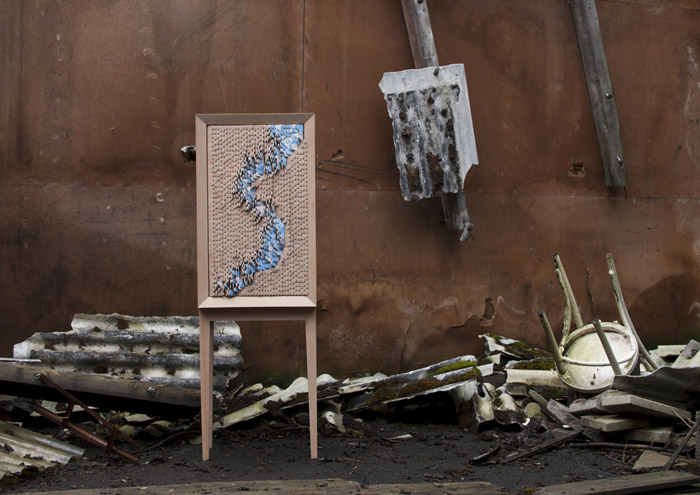
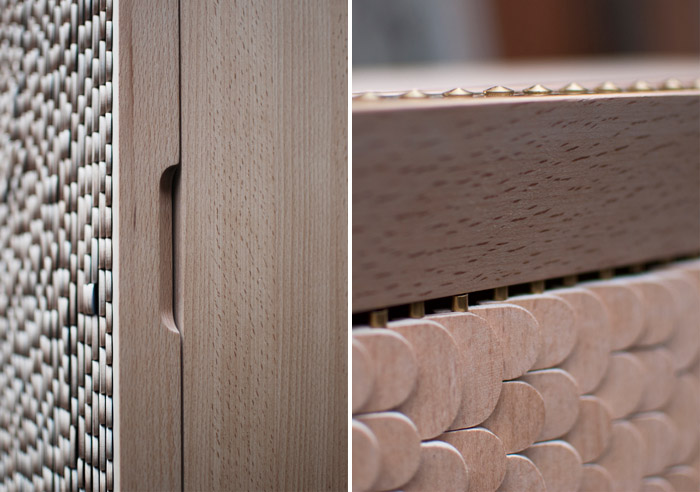
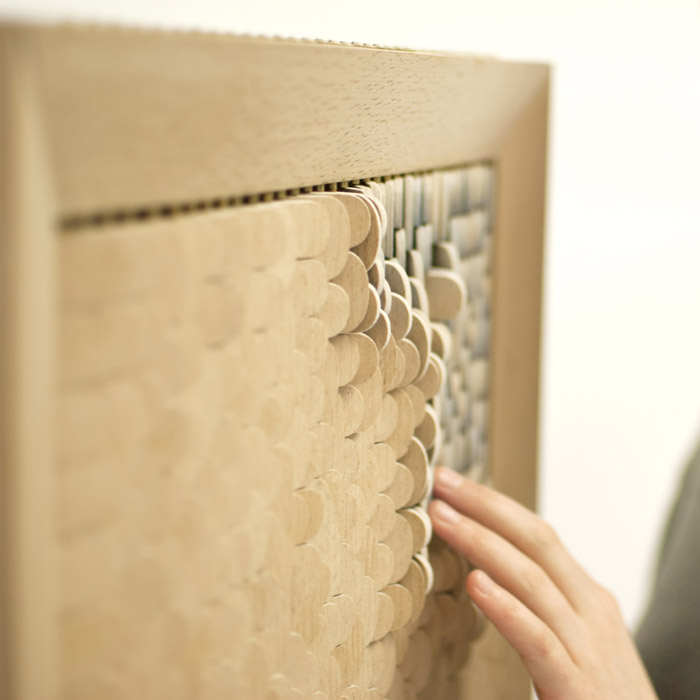
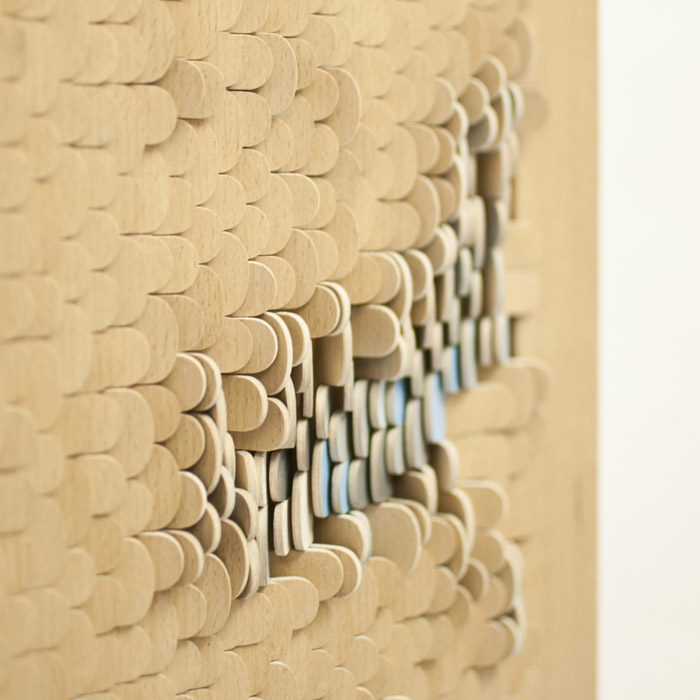
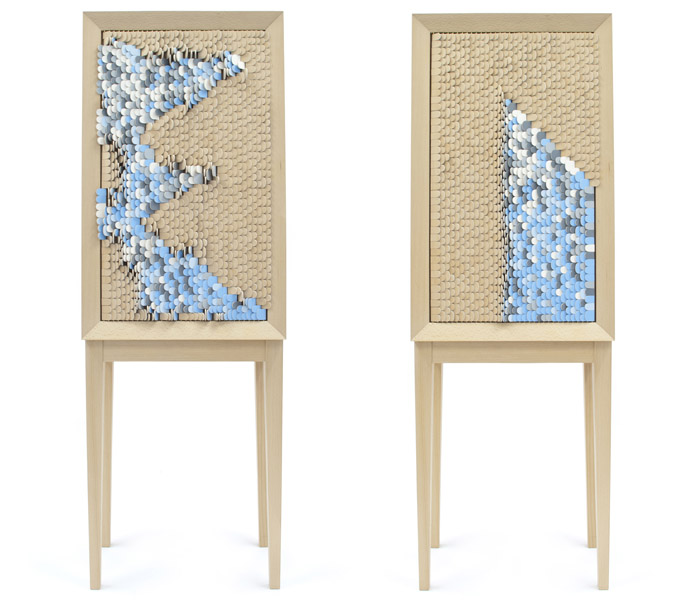
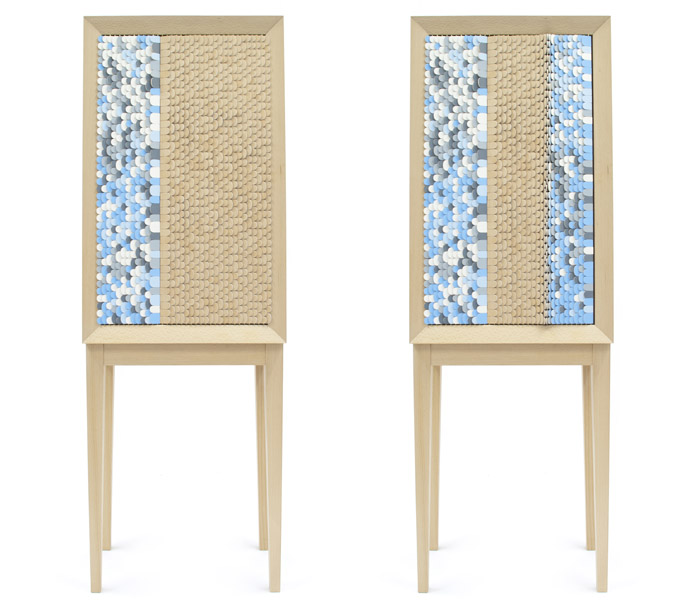
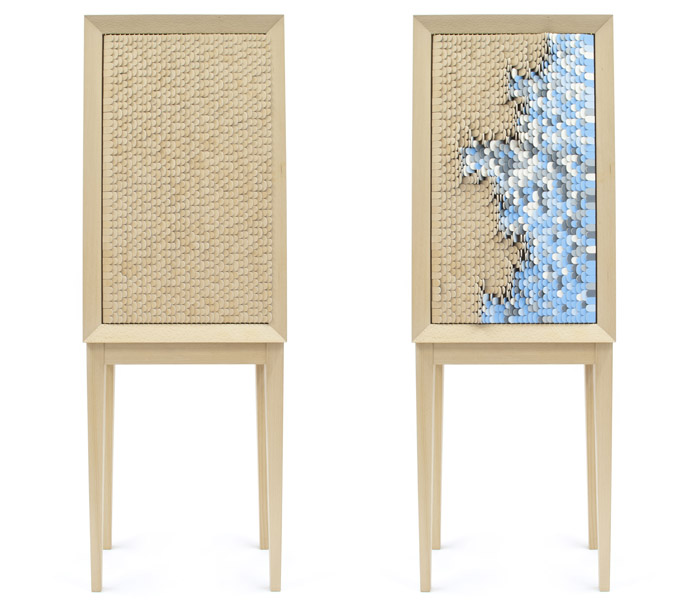
由山毛榉木块组成的鳞片一面是木材的原色,一面是蓝色或白色或灰色。鳞片由钢琴丝弦串起,一共使用了4500多个小零件。上色的一面代表着水,水也是自然灾害的一个状态。人们可以翻转表面形成水浪的效果,木材原色的一面也可以看成是大地。总之设计师尽可能的让使用者能在这里发挥自己的无尽想象力。
灾害结束之后生活应当怎样开始?此外,Jenny Ekdahl还有以下疑问和探求:消费化时代的今天,我们是否推动了自然灾害的发生?怎么才能做出创新,富有诗意的积极有用的作品?富有情感和诗意的“亲爱的灾害”是设计师探求路上一个阶段总结。
Dear disaster : inspired by natural forces
Graduation project by Jenny Ekdahl (25 yrs), presented in March 2012 at the Lund school of industrial design, Sweden. Currently on display in the exhibition Sydform that runs until September 2012 in Sweden and in Denmark.
A natural disaster is an event that we associate with destruction, distress and sadness. But a natural disaster is also a phenomenon that fascinates, that is beautiful and at the same time terrifying. This contradicting love hate relationship with nature was the starting point for my graduation work.
I wanted to create an object that could both illustrate my appreciation of natural forces as well as the psychological process of recovery after a natural disaster.
By describing natural disasters with graphs, diagrams and pictures they are said to make the events easier to embrace. I wanted to use similar ways of interpreting natural events in my design and use structures that we associate with safety instead of fear.
As part of my graduation work I therefore investigated what shapes, textures and patterns the human being automatically is intrigued by such as rhythm, complexity, playfulness and the possibility to leave personal imprints on an object.
The structure of the cabinet is an experiment with overcoming fear by touching. The interaction with the structure on the cabinet is a way for the user to tell her story, a conversation about sorrow and fear but also about finding meaning and regaining trust in nature after an incomprehensible event. The function of the structure lies in mentally pleasing the user by showing her personality, feelings and personal marks, and it works as a tactile psychological help by hiding at the same time as it might highlight the event for the user depending on what she decides to do with it.
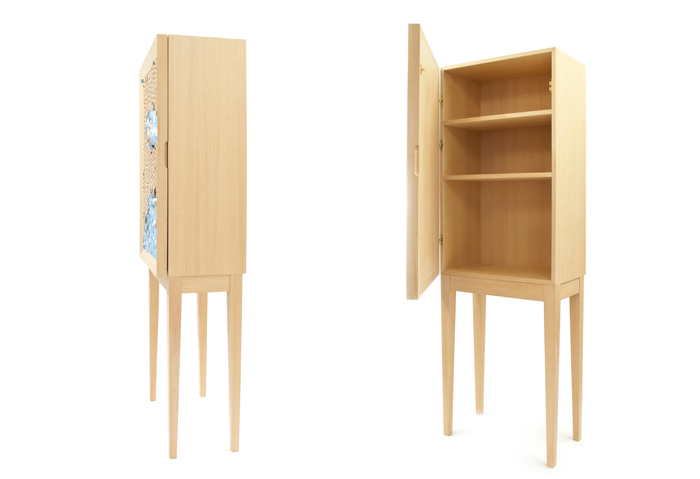
The cabinet is representing water as well as the absence of water, a contrast that also defines a natural disaster. One side of each wooden scale is painted blue, white or grey, while the other side has been left plain, so that they can be flipped to create patterns based on water and waves. When mud is cracking of drought it produces a similar three-way pattern that water bubbles has, and therefore I chose to use this pattern in my design. The cabinet is keeping small keepsakes from the past safe behind a closed door, and the high legs are preventing the water from reaching them.
Here’s some more information from the Jenny Ekdahl:
Construction
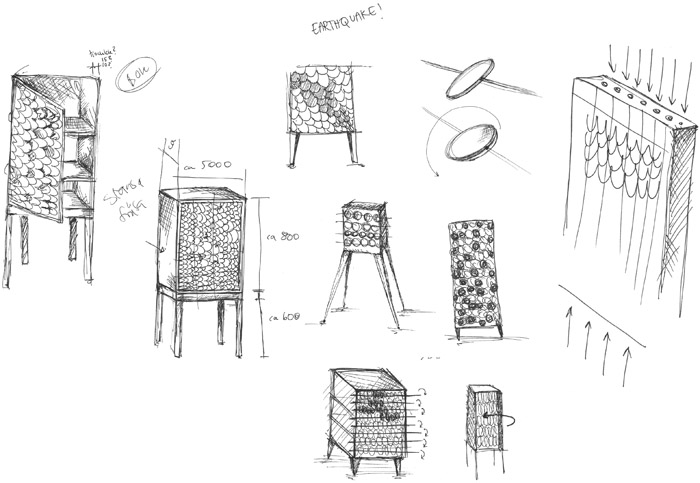
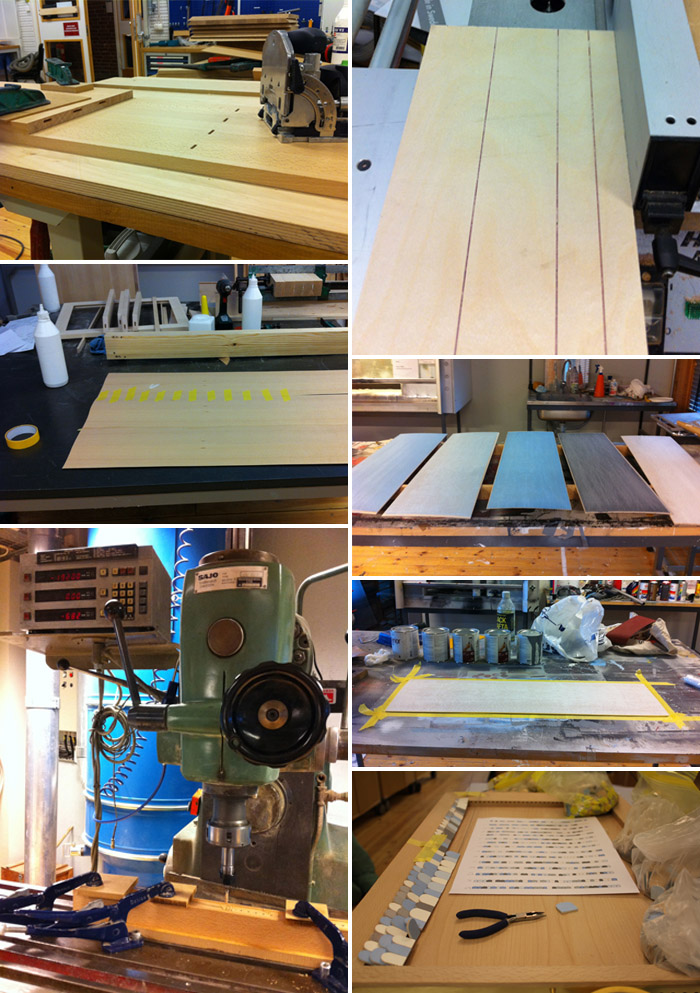
The cabinet is a one-off object made of beech wood with a moving structure on the door consisting of small, wooden scales. The scales were water jet cut from a veneered plywood sheet that I constructed. They are threaded on piano wire with small brass washers between every scale, and fastened and tensioned inside the wooden frame. I both designed and made the cabinet that all together consists of more than 4500 parts.
More detailed project background:
Natural disasters work as a visual reminder of how life suddenly can end, but they are also reminders of how life once begun. By discussing my fascination to an event that awakes our search for meaning I came to question my own approach towards design; – Are we contributing to the disasters by our mass production and consumption of today? – How can I then justify and motivate my will to design new, poetic objects with no obvious function?
Based on these questions I investigated my design philosophy and aims; the communication of stories and emotions by objects, in order to find better arguments for why this design is as meaningful and important today as technical innovation. My interpretations of natural disasters are used as a metaphor to describe the importance of emotional and poetic experiences in design for the future.
MORE: Jenny Ekdahl,更多请至:Jenny Ekdahl on gooood






有意思!
so nice
有一些鸡皮疙瘩悄悄冒了出来
原来是这样
美翻了,我是密集狂热者
能买到就好啦
能体现产品与人的高度互动,超赞[开心]
哇哦~蛮赞的!谁去给汶川弄个巨大化的放广场上?
密集恐惧症 的表示很漂亮,但是很恐惧。。。[口哨]
不错哦,可以随心变化想要的,
攒一个!!
有意思,但是密集恐惧症的人还是不要看的好[开心]
好玩!