非常感谢 McGregor Coxall 予gooood分享以下内容 。 更多请至:McGregor Coxall on gooood
Appreciation towards McGregor Coxall for providing the following description:
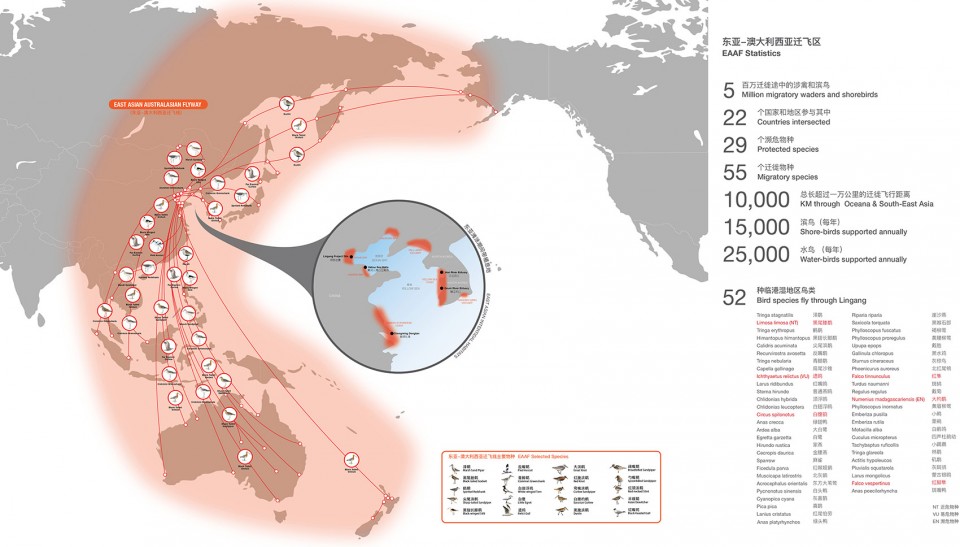
每年,5000多万只候鸟从南极地区沿着东亚-澳大利亚候鸟迁徙航道(EAAF)返回地球北端寻找食物和栖息地。作为全球八大贯穿南北半球的迁徙航道之一,EAAF上有包括黑尾塍鹬在内的全球五分之一的濒危水鸟在此飞行。 在沿海地区城市蓬勃建设发展的大环境下,鸟类栖息地与觅食范围逐渐消失,鸟类数量也在急剧下降。东亚-澳大利亚候鸟迁徙走廊现今正面临着前所未有的巨大挑战。
Each year more than 50 Million birds make the return journey from the Antarctic reaches to the northern tip of the earth along the East Asian-Australian Flyway (EAAF) seeking food and shelter.1 of 8 global north-south fly ways, the East Asian-Australian corridor is now the world’s most threatened due to loss of bird foraging habitat by coastal urbanisation. 1 in 5 globally threatened water birds including the Black-Tailed Godwit fly the EAAF but they are suffering rapid declines in population.
▼ 东亚 – 澳大利亚候鸟迁飞区,EAAF Statistics
为了增加中国黄海海滨核心鸟类栖息地的数量,亚洲发展银行携手天津港,在临港地区的一块降解回填地上为拟建的湿地鸟类保护区举行了一场国际设计大赛。McGregor Coxall提出的世界上首个“候鸟机场”的设计在此次大赛中一举夺魁。
In a bid to increase critical bird habitat on the shores of the Yellow Sea in China, the Asian Development Bank encouraged the Port of Tianjin to embark upon an international design competition for a wetland bird sanctuary on a degraded land fill site in the Lingang area. McGregor Coxall have been awarded first prize in the competition with a design that proposes the world’s first migratory ‘Bird Airport’.
▼ 位于降解回填地上的湿地鸟类保护区,A wetland bird sanctuary on a degraded land fill site
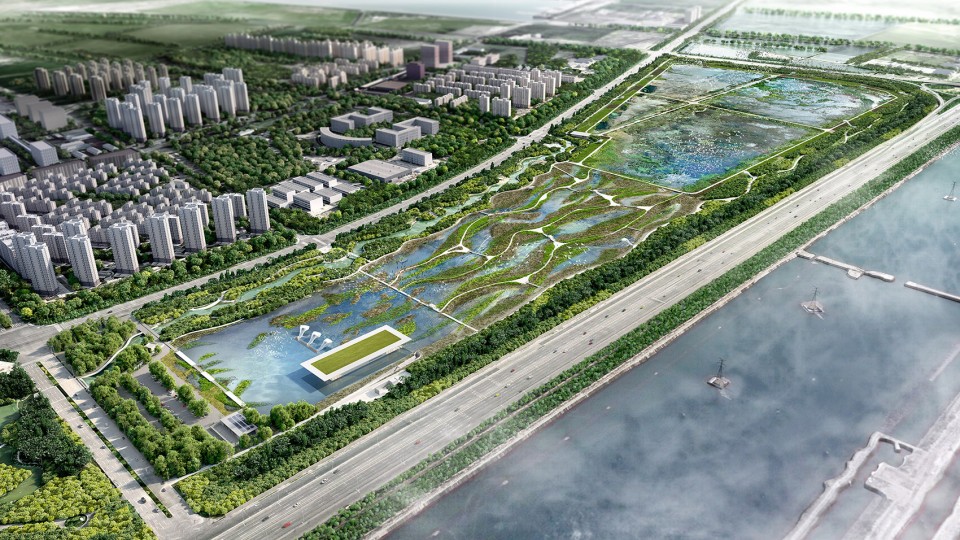
鉴于这块湿地对于中国、澳大利亚,乃至全球生态系统的重要意义,项目总体规划提出建设一块占地60公顷的湿地公园和鸟类保护区。由于部分鸟类不间断飞行超过11,000公里,并长达10天不进食饮水,候鸟机场将是东亚-澳大利亚候鸟迁徙航道上鸟类进行补给和繁衍的至关重要的一站。作为天津城市新建绿地公园的一部分,该项目将落实包括人工湿地、绿地公园及城市森林等绿色基础设施。 可再生能源被用于将净化过的废水和收集到的雨水引流向整个湿地。公共设施则包括湿地小径、环湖步道、自行车道和森林漫步道等,在此形成了一张贯通7公里的自然游憩观景路线网。
The masterplan recognises the importance of the site both to China, Australia and the earth’s ecosystems by proposing a 60 hectare wetland park and bird sanctuary. With some birds flying non-stop for more than 11,000km and up to 10 days without food or water, the airport will be a crucial re-fueling and breeding stop on the EAAF.
Part of a green necklace of new parkland for the city of Tianjin, the project will deliver green infrastructure including constructed wetlands, parkland and urban forest. Renewable energy will be used to move recycled waste water and harvested rain water through the wetlands. Public facilities include wetland trails, a lake loop walk, cycle circuit and forest walk making up a 7km recreational nature trail network.
▼ 一张贯通7公里的自然游憩观景路线网,A 7km recreational nature trail network
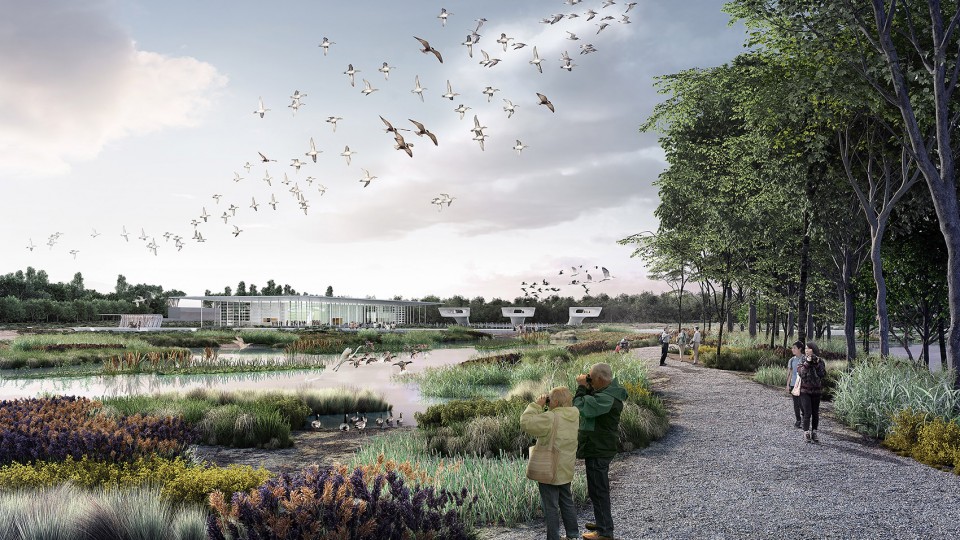
“地球上的鸟类迁徙航线是一项自然奇观。拟建中的候鸟机场将成为具有全球性意义的濒危候鸟栖息地,同时也将为天津市提供新的绿肺系统。” – Adrian McGregor / 公司创始人兼CEO
“The earths bird fly ways are a wonder of the natural world. The proposed Bird Airport will be a globally significant sanctuary for endangered migratory bird species whilst providing new green lungs for the city of Tianjin.” – Adrian McGregor / Founder and CEO
“候鸟机场将采用新一代水体设计,为未来其它泛北京区域的项目打造了一个具有前瞻性的环境构想。” – Jack Qian (钱昱) / 上海工作室总监
“The Bird Airport will utilize next generation water design helping to shape a progressive environmental vision for future projects in the greater Beijing region.” – Jack Qian / Shanghai Studio Leader
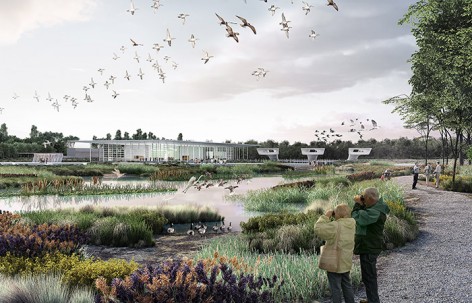
▼ 千雀阁,Bird Hides
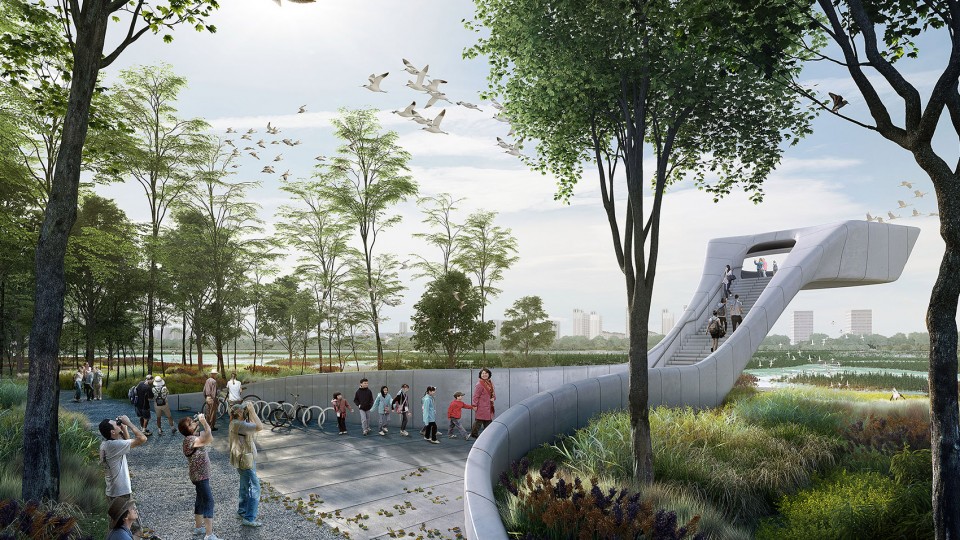
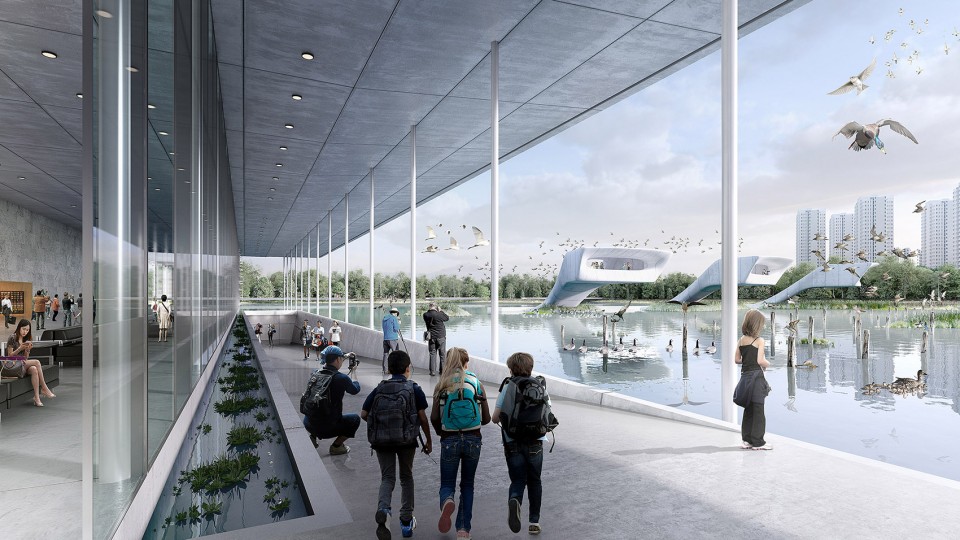
该项目将进一步巩固中国作为国际候鸟研究热点国家的地位,并率先成为全国海绵城市试点项目。在这里将建设一个名为水心阁(Water Pavilion)的高科技游客教育和科研中心,以满足每年预计50万人前来参观的需求。该中心将使用摄像机连接14处鸟类栖息木居,用来观察鸟类的生活情况。湿地被20公顷的林木环抱,以保护鸟类免遭周边城市开发的影响。
项目预计将于2017年下半年启动,2018年完工。
The project will amplify China’s growing role as a hot spot for international migratory bird research and function as a pilot project in the national Sponge City program. Catering for an anticipated visitation of 500,000 people per year, a high-tech visitor education and research centre called the Water Pavilion is proposed. The centre will be digitally connected to cameras in 14 bird hides for monitoring bird life. The wetlands are surrounded by a 20-hectare fringing forest to protect the birds from intrusion by nearby urban development.
The project is expected to begin construction in late 2017and be completed by 2018.
▼ 水心阁高科技游客教育和科研中心,Water Pavilion – a high-tech visitor education and research centre
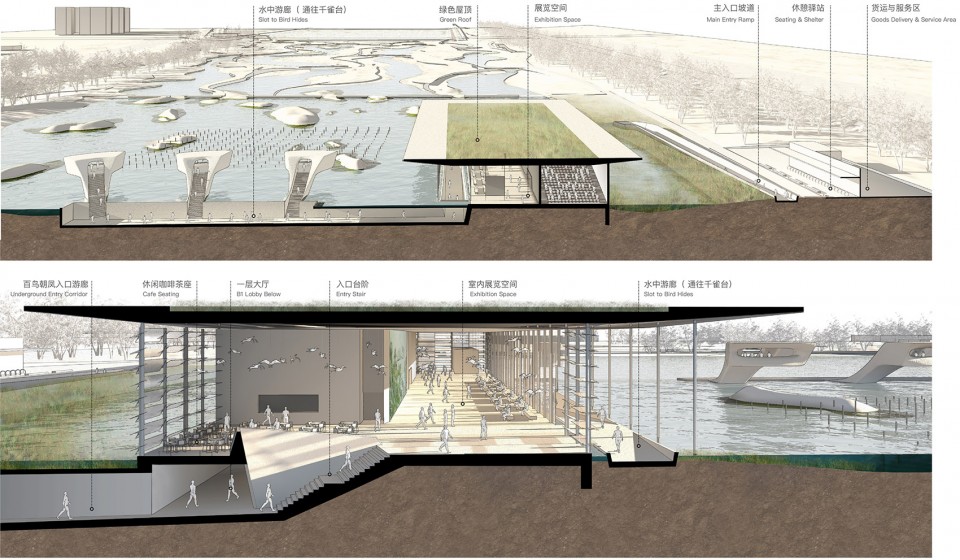
▼ 水心阁剖面,Section of the Water Pavilion
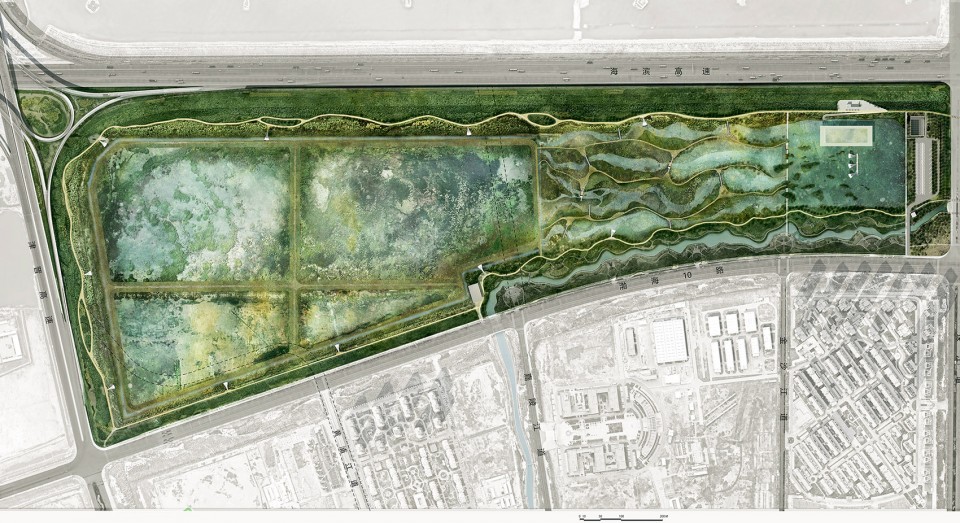
▼ 总平面图,Master Plan
MORE: McGregor Coxall ,更多请至:McGregor Coxall on gooood







我觉得“候鸟驿站”可能会更好点吧
概念设计无论实施与否都很重要。
感觉设计的出发点还是从人的角度。
真正能满足鸟类栖息的也就是最右侧的区域,但是也缺少林带隔离和涉禽栖息的林地
效果图做的真牛·····
如果连这样的概念都没人提请问景观行业还有生存下去的可能吗?
候鸟栖息地硬说成候鸟机场,这个名字本身就有问题,不了解的人还以为是真的机场,真机场驱鸟还来不及,有鸟飞机都要失事了。
整个方案中央没有利于鸟类筑巢的乔木或者人工构筑物,整个方案也没有对基地现状和鸟类生活习性的分析图纸。假设真的建出来了,那么鸟类最多的必定是在周围的树林和建筑屋檐下,一旦飞到车行道上对城市功能造成过多干扰就会形成鸟害。
该竞赛主要是针对鸻鹬类做的,鸻鹬类的栖息特征是开阔较少植被覆盖的沼泽和裸露滩地。人工鸟巢、乔木等鸟类保育措施主要针对林鸟,其实不适用于该场地。此外,涉禽水鸟等其实相当“害羞”和敏感,一般周边需要至少20米的视域清理范围/植被隔离带才能保证保育区内有较大数量的鸟类来访,所以不太会出现大量水鸟进入人类活跃范围冲突的情况。但是场地中未来规划的高架、以及现有高速的噪音的确不利于鸟类公园的营造。
感觉还是概念占多数
我觉得这个理想太丰满了
我觉得应该把人类的干预降到最低,尽量减少露天人的活动,观鸟台也应尽量隐藏
+1
嗯,观鸟平台应尽量降低,减少小鸟恐惧感!
彩平不错哟,第三张效果图中的人有的“短衣短裤”有的“厚厚棉衣”,就当穿帮乐呵乐呵,,,,,,,
从平面上看千雀阁周边都是水体,没有植物,而效果图周边植被丰富;作假?
没有问题,平面效果图都很好啊!兄弟你看清楚平面有几个千雀阁
呃~既然是候鸟机场,我的理解是主要为候鸟迁徙、繁殖、生活提供完好的生态场地,但从这个设计目的看,貌似是为人类提供观鸟、游赏的场地。。。。
应该从整体运营的角度来看这个问题,项目的自盈利才能保证湿地得到长久充足的经费来维护和发展
施工的时候不会破坏湿地吗?
希望真的能建出来,并起到作用