来自 西线工作室 对gooood的分享。 更多关于他们: West-line studio on gooood。
Appreciation towards West-line studio for providing the following description:
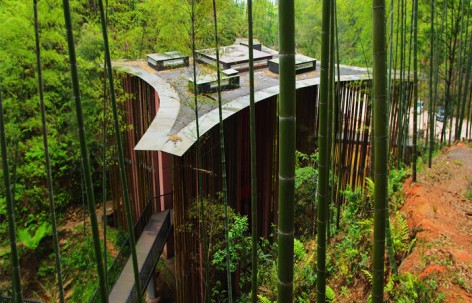
赤水竹海国家森林公园位于中国西南部的贵州省赤水市,赤桐公路旁。该公园以浩瀚的“竹海”风光为主,占地面积10666公顷。
The Zhuhai National Park (赤水竹海国家森林公园) is located in the region of Chishui, in Guizhou province, in South-West China. The 10,000 hectares park is characterized by the unique presence of the so-called Bamboo Sea (竹海).
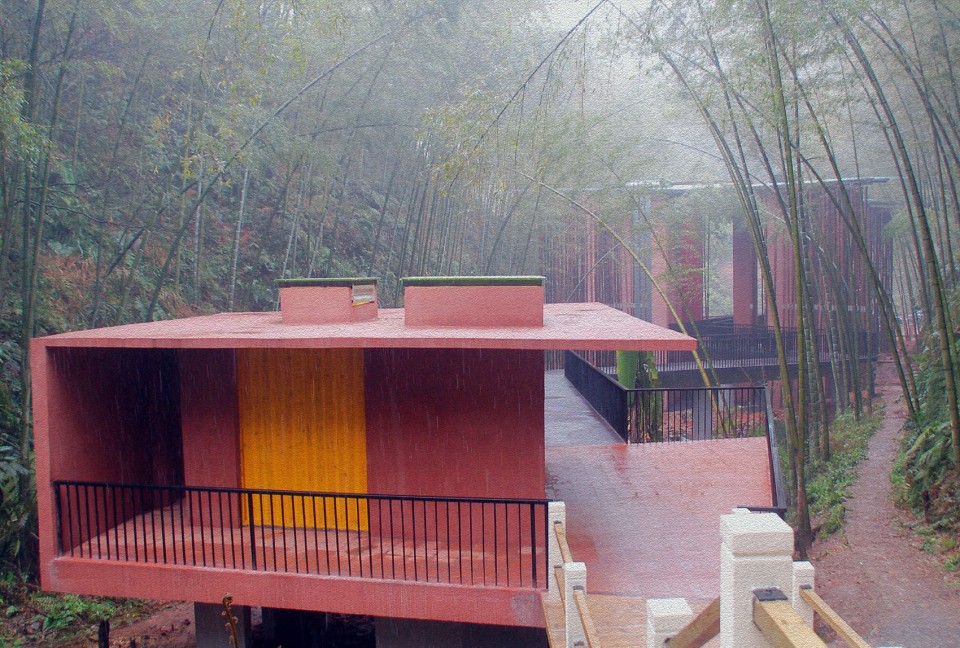
▼建筑外观,External View
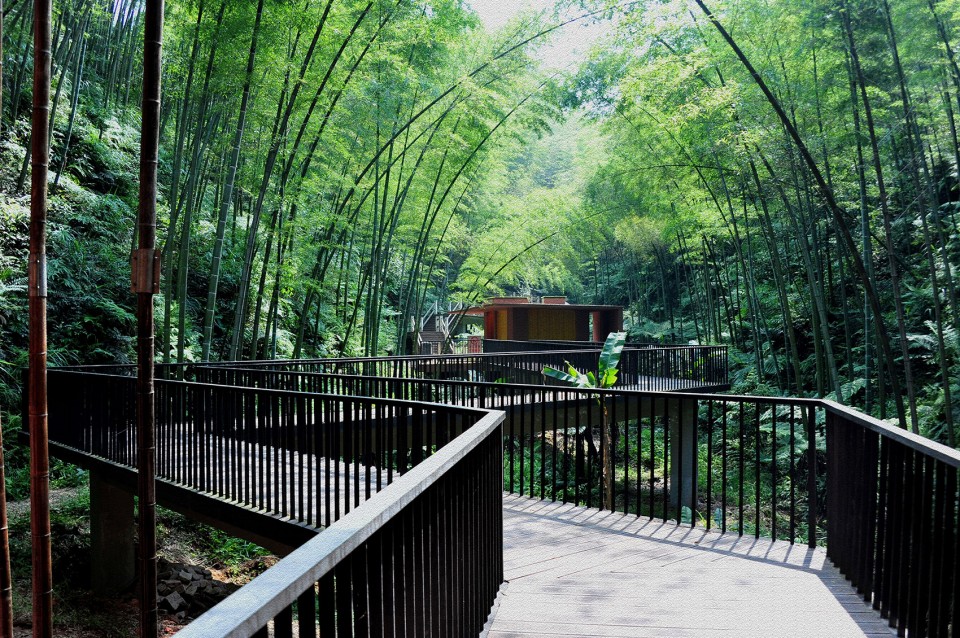
入口建筑被西线工作室设计成一组类似于竹海的密集的线条集,由此巧妙地藏在竹海中,同时并通过对外部气候条件(阳光,雾,风雨和雪等)的蓄意控制,产生出不确定性与变幻性共存的状态;入口建筑正是以这种若隐若现的方式,制造出一种具有特殊质感的公园入口。
The park gateway has been designed by West-line studio architects as a dense assembly of vertical lines. The gate is hidden in the Bamboo Sea and interacts with the particular weather conditions of the area (sun, thick fog, rain, wind and snow) which make the architecture unstable and flexible. The gate aims to ‘activate’ the bamboo being at the same time hidden into the forest but also creating an iconic entrance for the park.
▼若隐若现巧妙地藏在竹海中,hidden into the forest
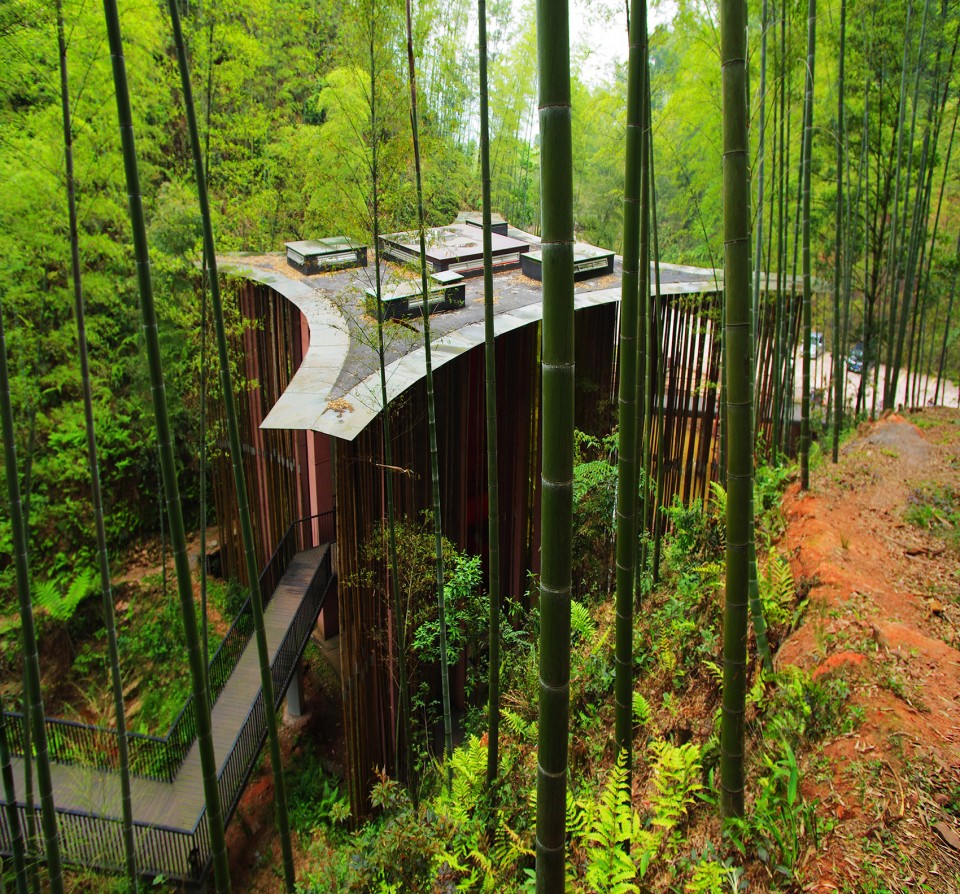
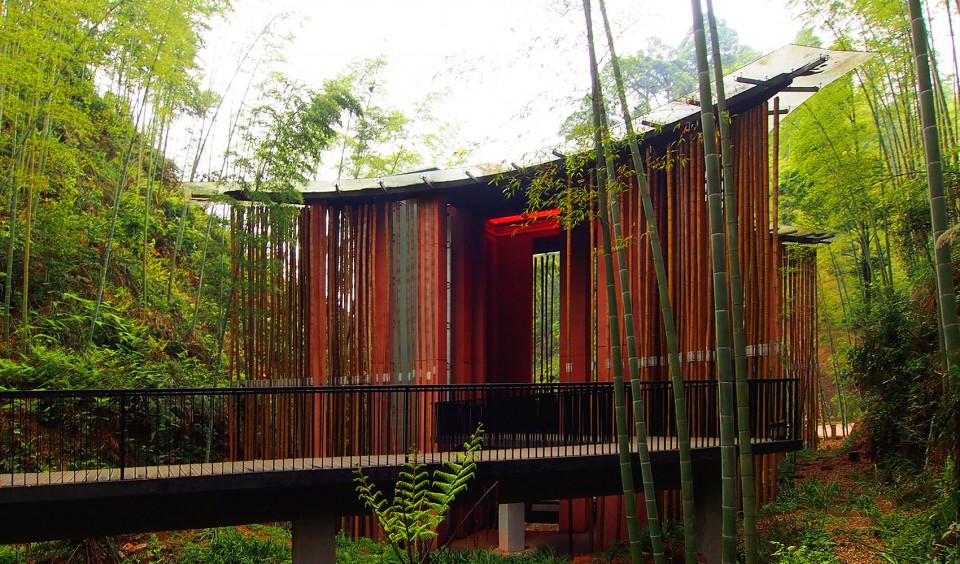
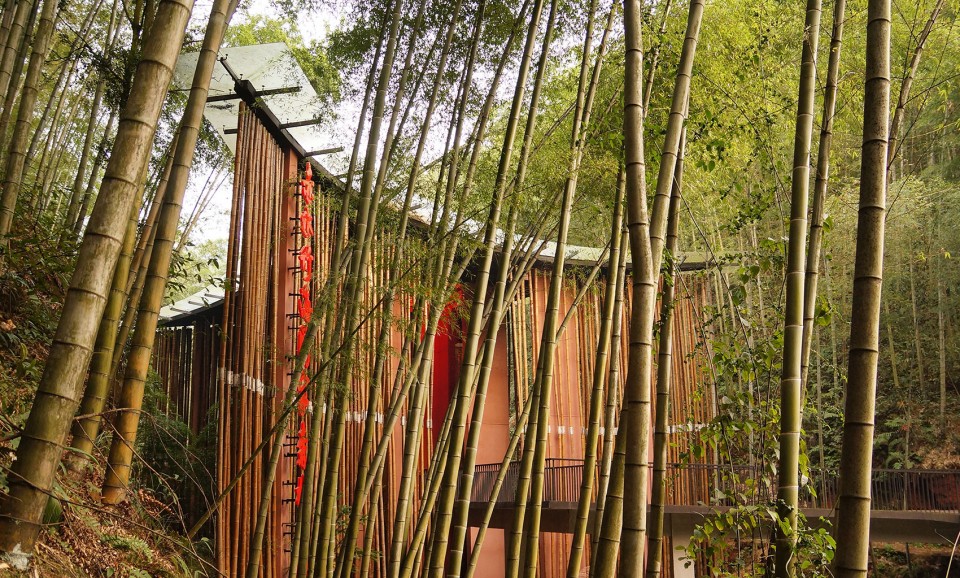
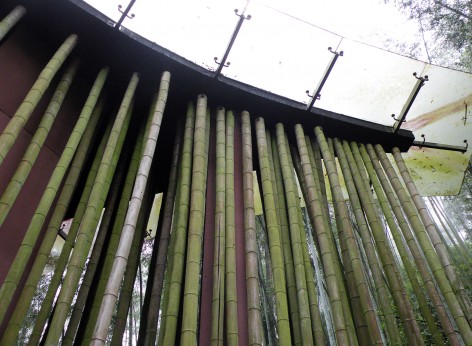
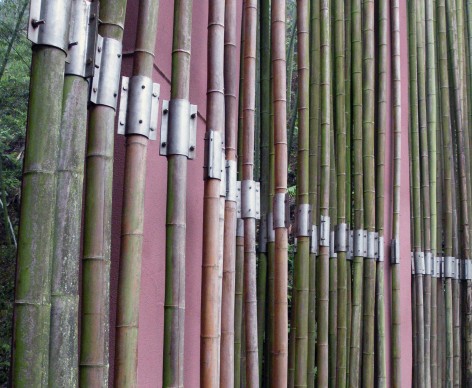
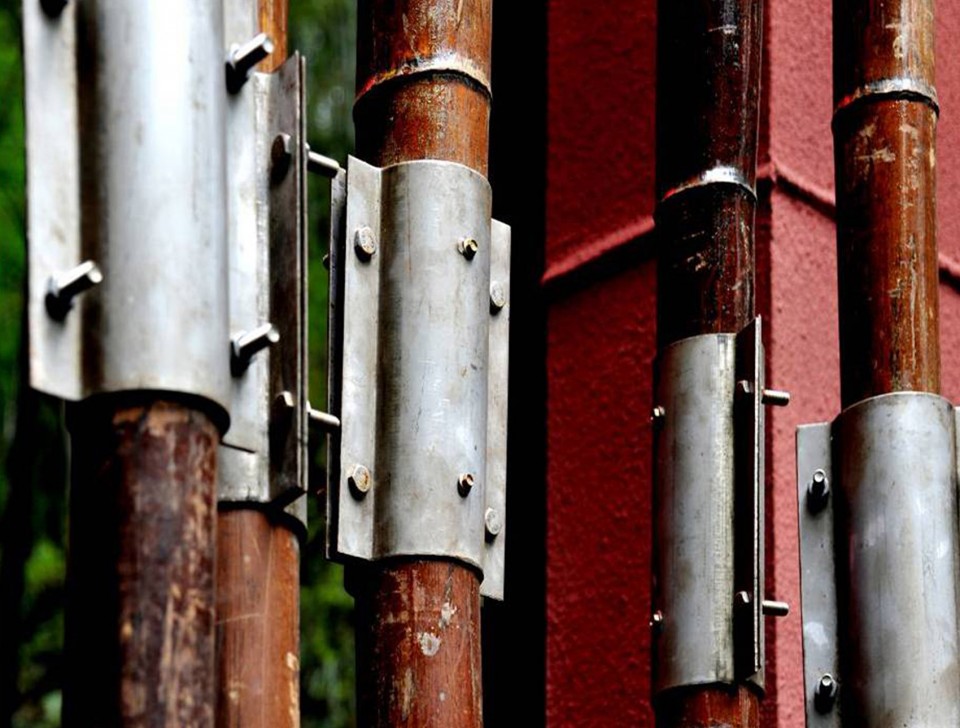
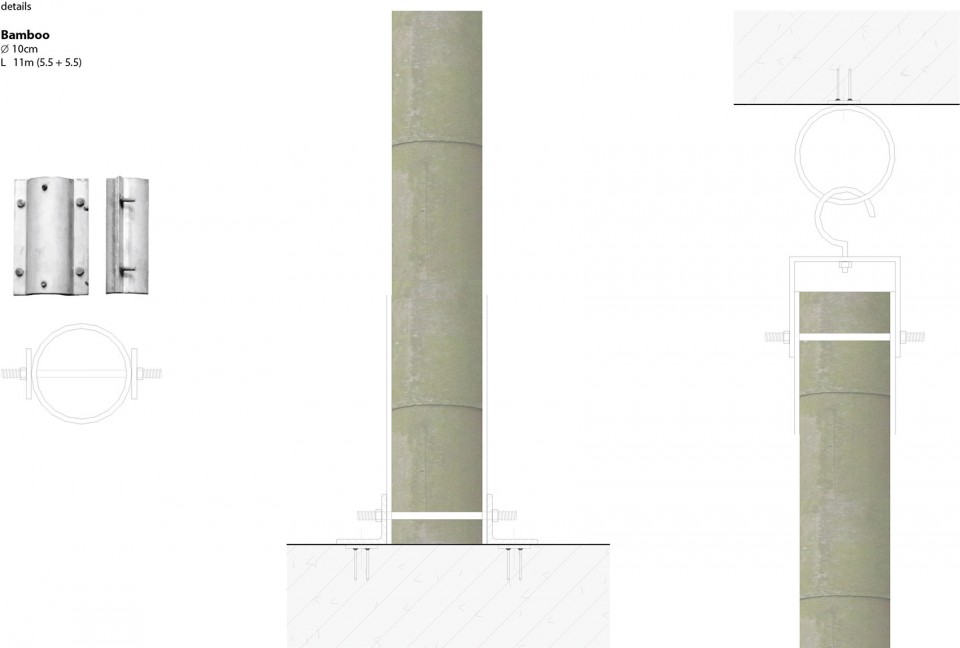
建筑以钢筋混凝土空腔作为支撑体系,顶板以挂钩的方式将一群截面直径在10CM左右、长约11M的竹竿群悬挂其下,虽然顶板+天面玻璃对竹筒群的避雨有一定作用,但竹海湿度大,温差大,竹杆在这样的条件下,耐候性是必须重点考虑的因素,同时由于竹体内的油系糖水混合物,各类微生物寄生体需用“蒸”的方式排出,否则很容易导致竹腐烂;但当地设备只能蒸煮长度在6m内的竹竿,于是11m的吊挂高度转化为上下两截各近5.5m高的竹,二者以手工打造的环形金属件垂直连接。
The support system is made of concrete with bamboo (10cm diameter – 11m length) hung on the roof. Even with the presence of the glass roof, which protects the bamboo from rain, architects had to deal with problems of high humidity and fluctuations in temperature, which characterize the area of Chishui. Because of the presence of oil inside, a mixture of water and sugar, the bamboo has been steam-treated to take out the oil and avoid decay. Since the local equipment only allows the bamboo to be steamed to a maximum length of 6m, it must be divided in two parts, 5.5m each.
▼直径在10CM左右、长约11M的竹竿群,bamboo (10cm diameter – 11m length) hung on the roof
在建筑下部刻意形成一池水面,并巧用清晨、黄昏、雨天、冬日等时间段水面上下的温差,达成云雾缭绕的现象;当云雾弥漫与光色交相辉映之际,建筑与周边的自然之竹诗性地融合成一体……;总之,该建筑系充分理解竹海空间特征并有效地操控自然气候因子的结果。
A water pond, built under the gate, helps create fog due to the differing temperatures, especially in the early morning and sunset or during winter and rainy days. When sun and fog happen at the same time the gate looks completely embedded into the Bamboo Sea. The architecture is based on a full understanding of the character of the Bamboo Sea and aims to play with weather elements.
▼云雾缭绕的现象,helps create fog due to the differing temperatures,
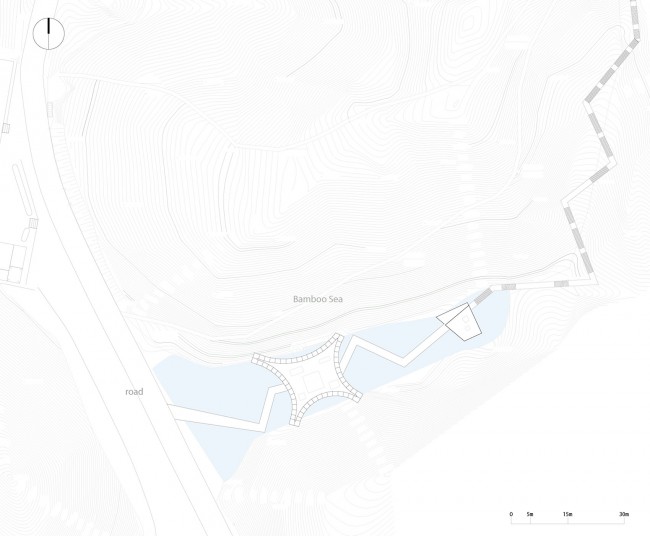
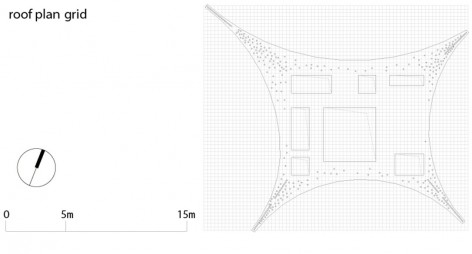
▼总平面,Master Plan
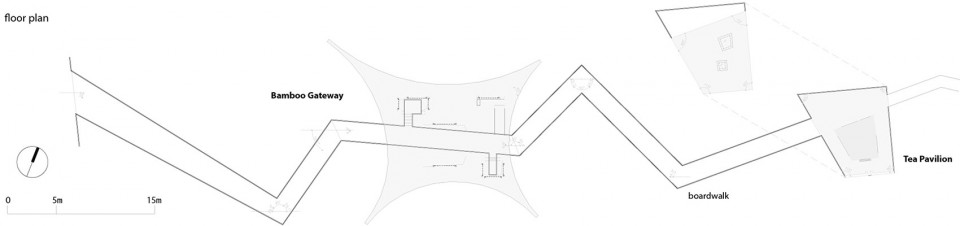
▼平面图,Floor Plan
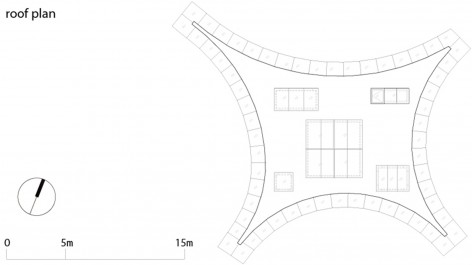
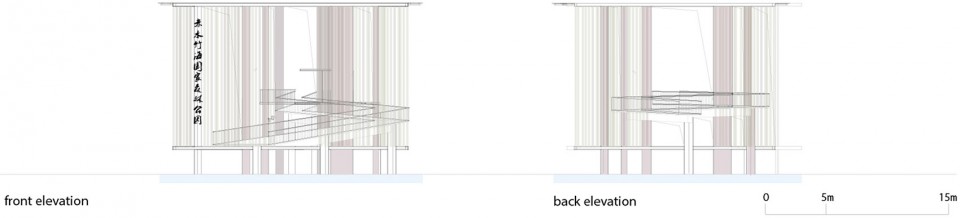
▼立面图,Elevation

▼建筑细节,Detail Drawings
项目地点:赤水-贵州-中国
设计师:西线工作室
项目功能:入口空间,休憩空间
项目年份:2008年9月
建筑面积:513.5平方米
景观面积:6125平方米
主持设计师:魏浩波,谢劲松
平面设计:Martina Muratori(马英)
摄影师:谢劲松,Martina Muratori (马英),魏浩波
版权: 西线工作室 West-line studio
Location: Chishui – Guizhou – China
program: National Park Entrance + Tea Pavilion
completion: September 2008
building area: 513.5 sqm
lanscape area: 6125 sqm
architects: Haobo Wei, Jingsong Xie
graphic : Martina Muratori
photos: Jingsong Xie, Martina Muratori, Haobo Wei
Copyright for all images: West-line studio
More: 西线工作室,更多关于他们: West-line studio on gooood。


竖线条确实让建筑与周围的环境融合的很好。这种红色和周围的绿色搭配到一起并没有突兀或违和感,反倒营造出贵州的风土人情的意境,感觉让人能瞬间回到古老的贵州名俗中去。步道蜿蜒曲折,也符合中国传统造园手法。整体建筑以内凹的菱形展现,以菱形的凹部为入口,让人眼前一亮。只是屋顶处理的略为粗糙
这个东西,总是感觉哪里见过,几个手法真的用烂了,问题是还用不好。你竹子立在外面想虚化整个建筑体量,然后里面弄个红的??还是这么实的建筑体量??搞不懂建筑师脑子里怎么想的
真是忍不住上线来喷你,说人家手法用烂了,什么手法哪里烂不讲,就来一句用不好,说的自己见的多的样子又不知道哪里见过,真是他妈的半瓶水喜欢乱说话。里面的建筑实体坚实至少保证稳固和挡雨,也强化一个入口的标志性,然后用竹子虚化一下不那么突兀不就行了?本来内外就是相辅相成的东西你分开来说,还不知道设计师在想什么,他妈的你自己知道自己在想什么鬼么?至于配色这种纯度那么低的红色和自然结合难道不好?那你倒是提个颜色出来,你是要弄个和竹子一样的颜色,还是要用镜面?还是要用不锈钢?还是要玻璃块配木头?不摆逻辑不解决问题不说个道理,两行字里面都是歪风邪气,真jb搞笑
不搭
感觉这扣件好娄 毫无设计感
算是一个比较硬的,下不下牌桌就看自己了。
建筑的形式外面用了很多重复的圆柱竖线,和周围的竹子林很融合,长廊的扶手也是比较高的密集的竖线,全部都是竖线…建筑的红色旧旧的,和竹林绿色映在一起很好看,竹子可以作为建筑的一部分存在,建筑也是景的一部分。
还想看它走进去感觉怎么样呢?咋就没照片了。。。。