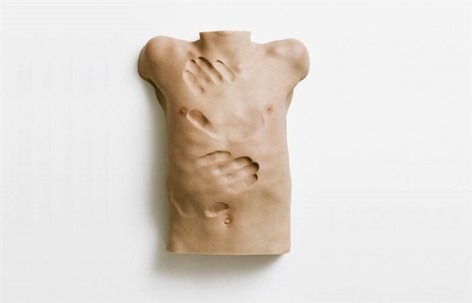
非常感谢Anders Krisár将项目介绍和项目图片授权gooood发行。更多请至: Anders Krisár on gooood
Appreciation towards Anders Krisár for providing the following description:
Anders Krisár是一位自学成才,最初偏离主流艺术世界在多方面有所涉猎的视觉艺术家。尽管随后的发展得到欧美艺术界的认可,但他依然故我宛如局外人。他的雕塑和摄影作品十分自我甚至有些病态,然而其却具有瞬间感染力,让人意识到艺术家的精湛与熟练,以及作品代表“人”的对社会的诉求。
有评论认为这些骚动挑衅的病态忧郁作品,定义了人类的心与身模棱两可的边界,引发了一个问题“我是谁?”
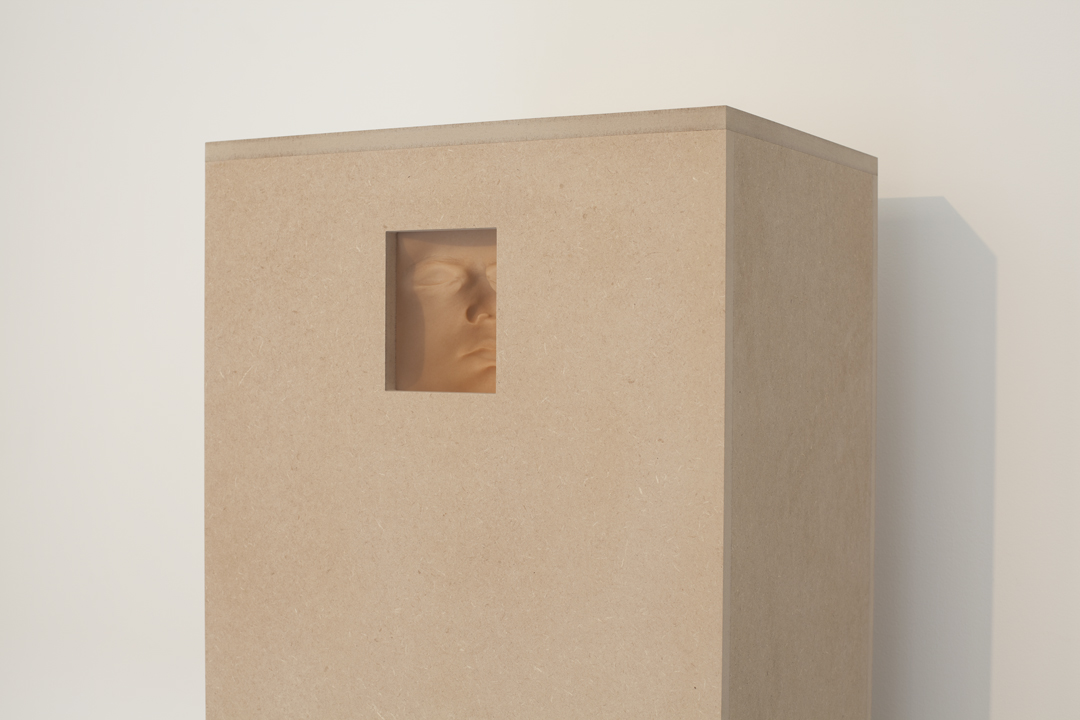
哲学家弗洛伊德认为,人的身份化最初来源于和家人错综复杂的关系。来自斯德哥尔摩的艺术家Anders Krisár用复杂的技术在自己的作品中表现了这种纠葛。最近他的个展“Spacings”中的四件作品也有这样的表达。一个纤维板箱子开着一个矩形的洞口。里面有张苍白的,年轻的,面无表情闭眼的脸。这张宛如死亡面具的脸对于观众交互时引起各种关于时间,内与外,生与死,自我与其他的思绪。
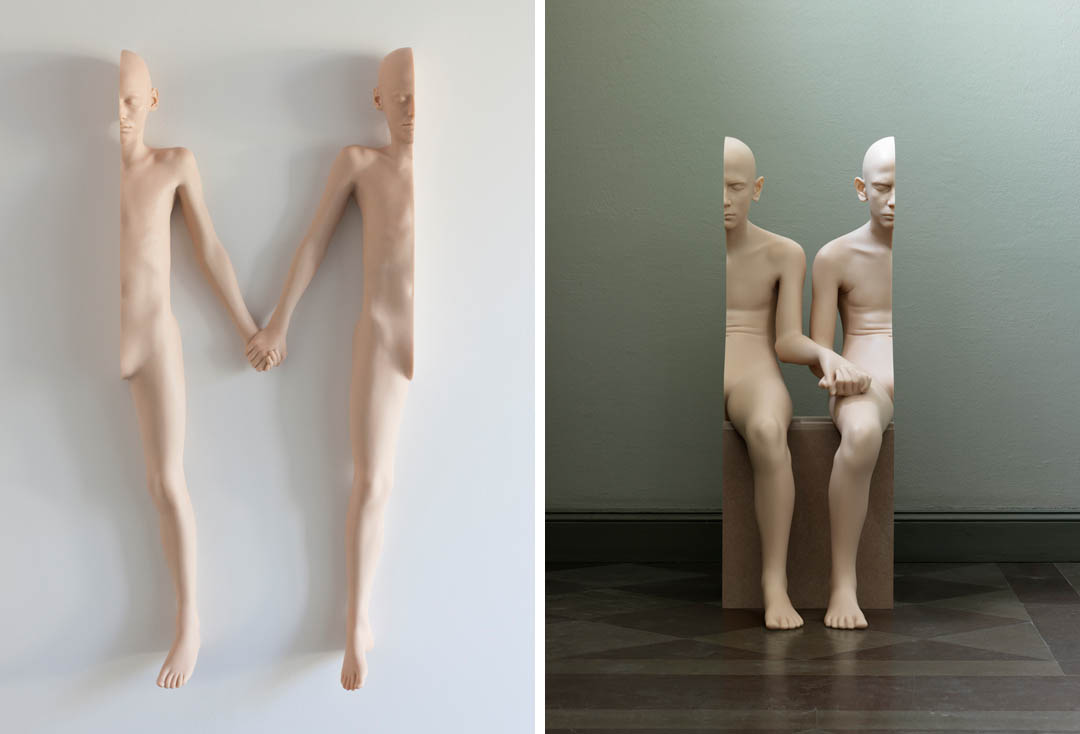
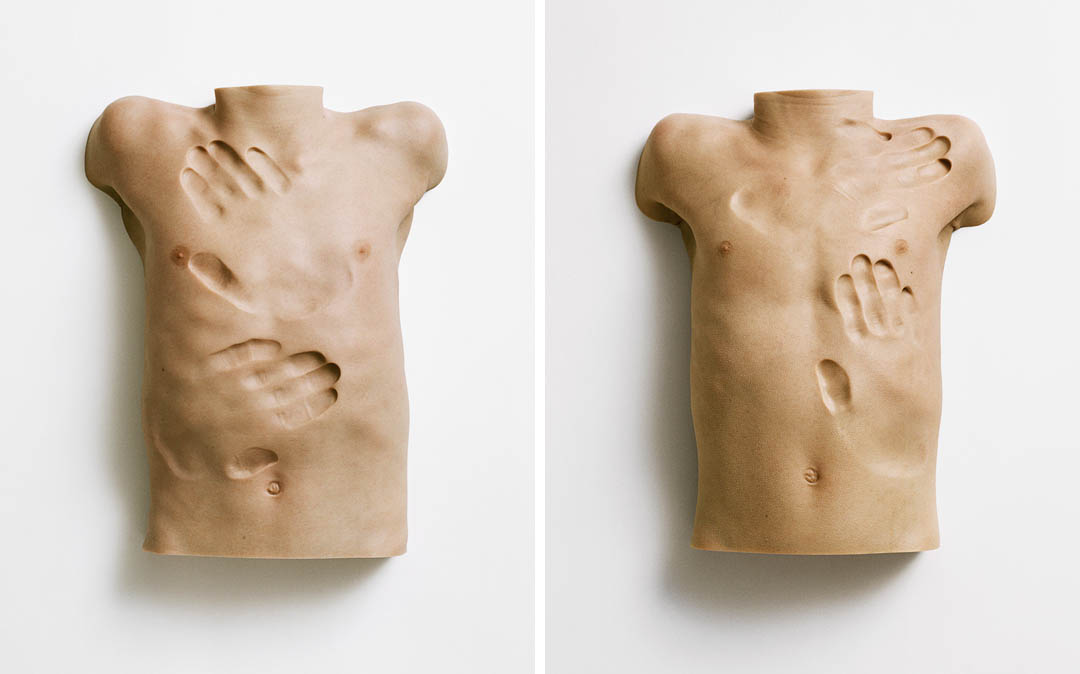
一个男孩身体被剖成两半分别挂了起来(在这个过程中,男孩的性消失了),两半被精准的对应,各侧伸出手握在一起,具有令人不安的现实主义。这件作品反映了困扰艺术家的暴力经历—他的父亲精神分裂,他的母亲双重人格。
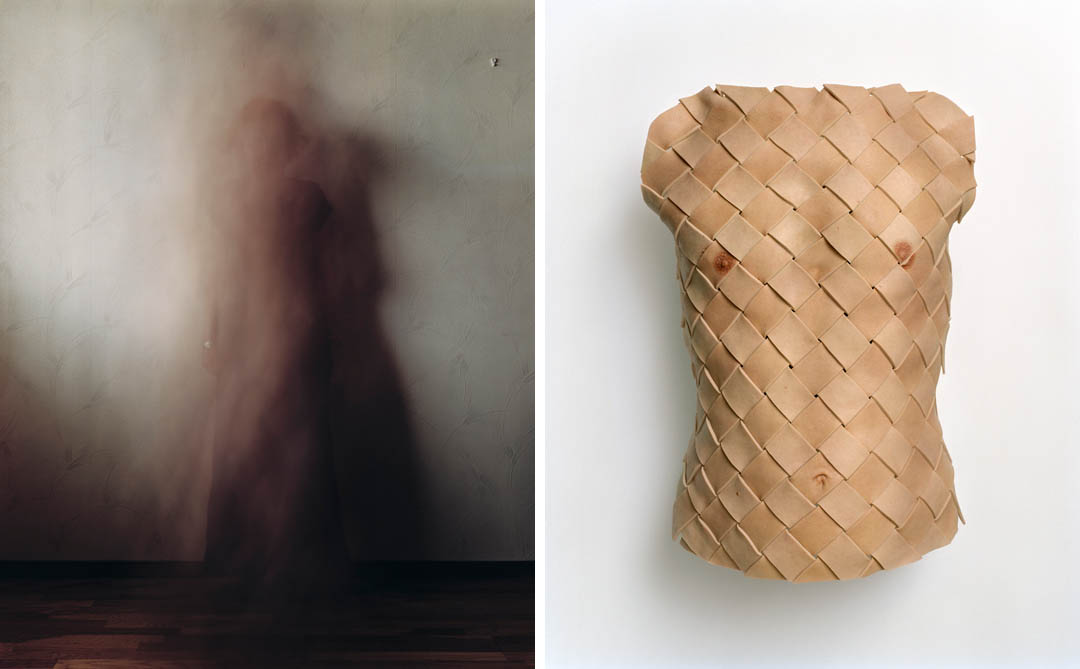
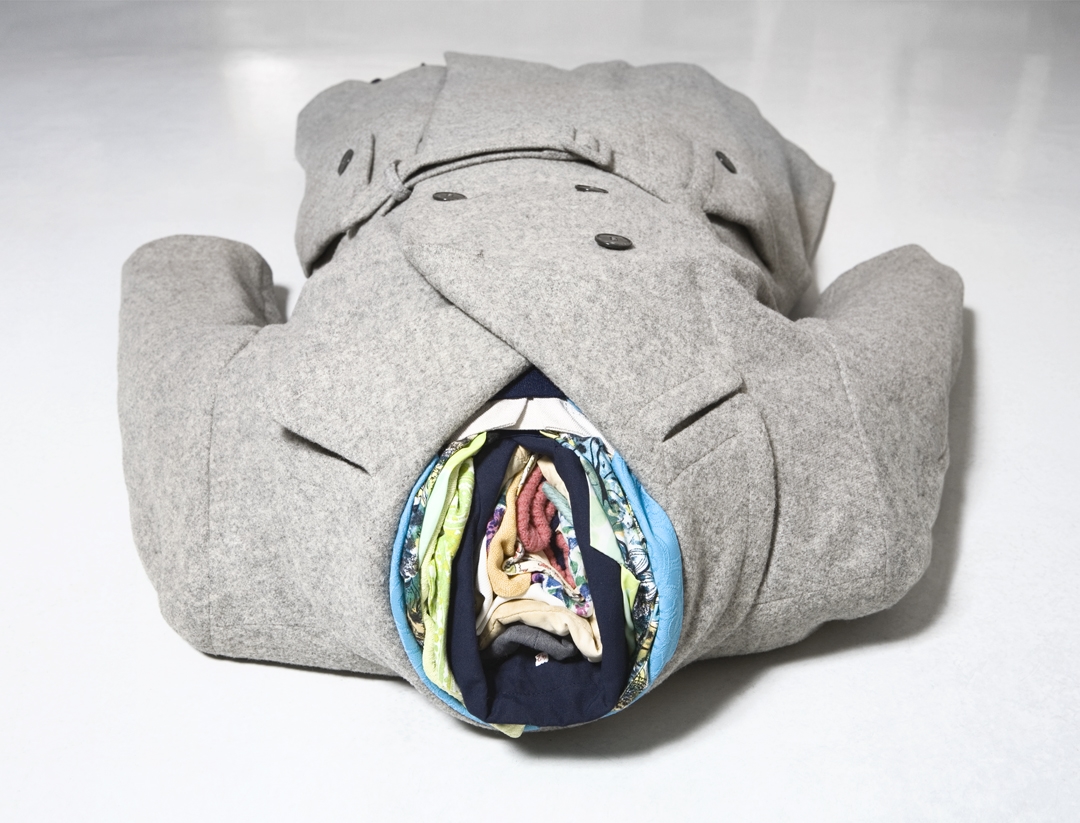
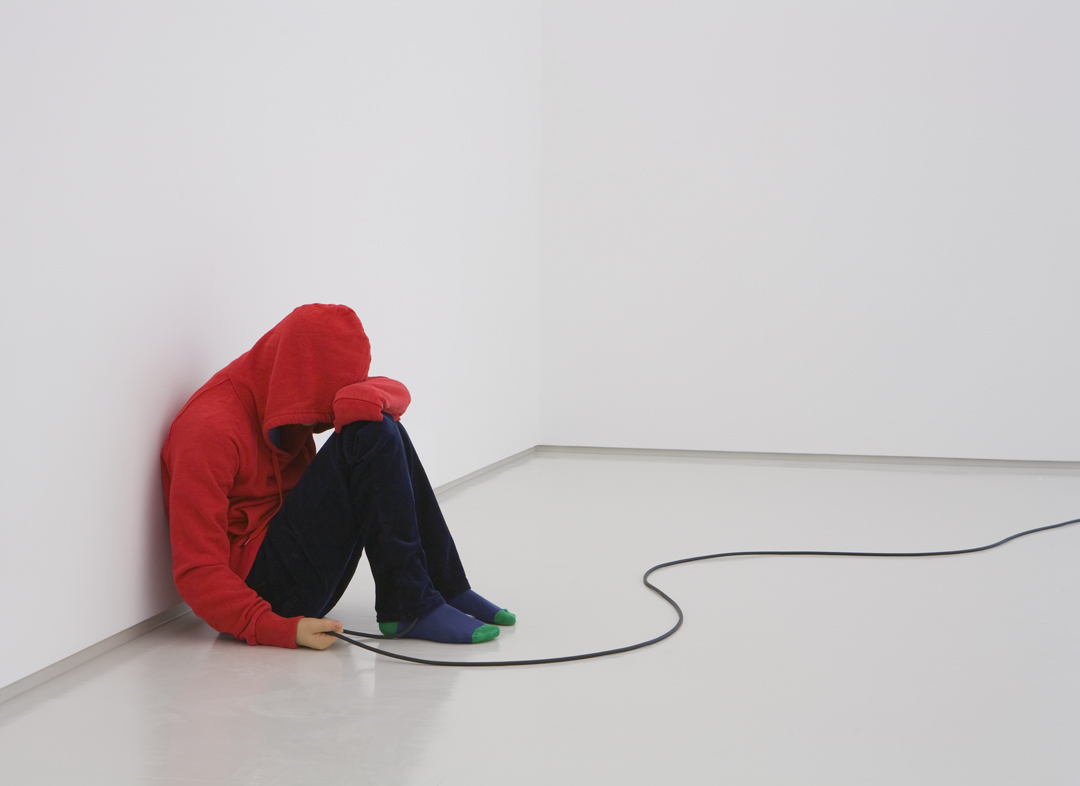
还有穿着红色套头衫,靠着墙壁握紧拳头,如同僵死般逼真的人体。此外艺术家也将他妻子的灰色外套用其它服装填充满,形成妻子的身形,这个作品放置在地板上隐喻身体与身份的缺失关系。
Anders Krisár用其作品表达了个人与集体之间的关系具有永恒的羁绊。
Anders Krisár initially deviated from the mainstream art world and found his coordinates in the multiple, diverging worlds of graffiti, music composition, advertising, and tournament chess. Largely an autodidact, Krisár decided to become a visual artist only in his late twenties. Despite the near-instantaneous recognition he garnered with galleries in Europe and the United States, his position in this self-enclosed world remains that of an outsider. Krisár’s output — primarily in sculpture and photography — may be seen as hermetic or even morbid, playing as it does with casting, molds, and deformation. Yet the artist’s skillful and poetic deployment of a deeply felt intuition has, in a short period of time, given rise to a body of work that reveals the physical, experiential, and societal yearnings and limitations of man, making it altogether human.
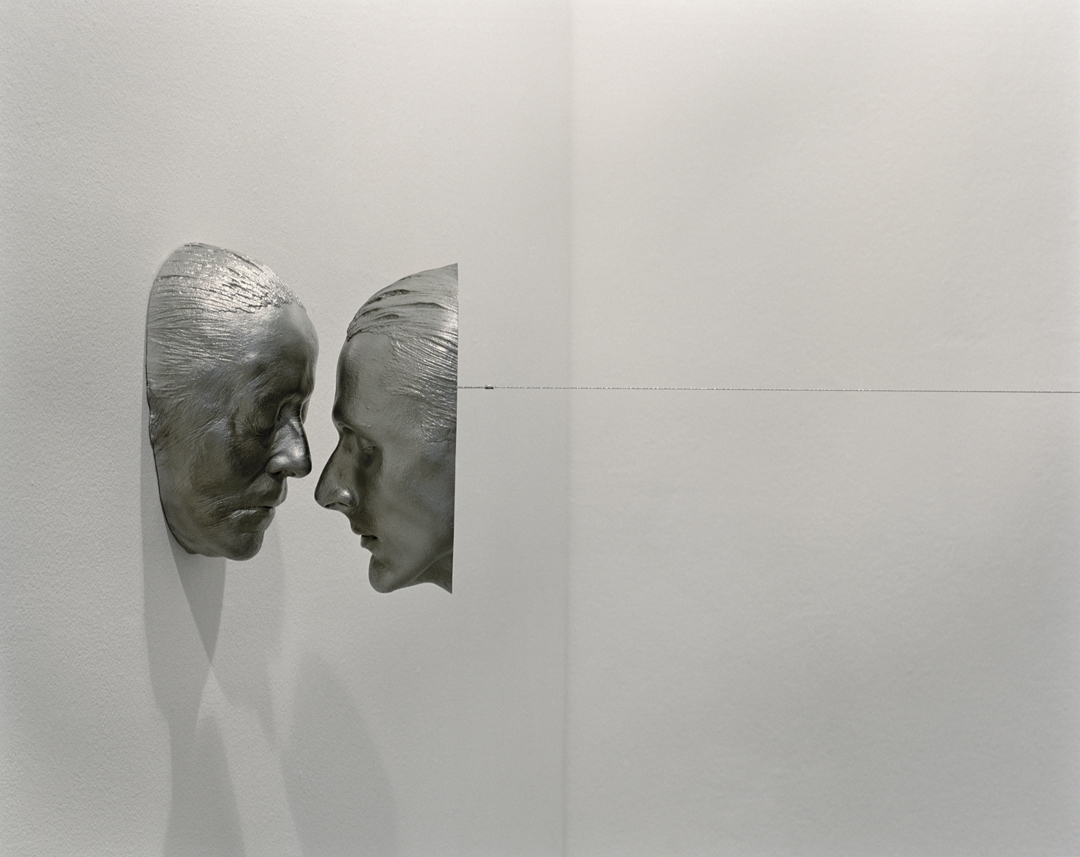
STOCKHOLM Frequently labeled morbid, macabre or melancholic, Anders Kris’s sculptures perturb and provoke in their equivocal evocation of the physical and psychic boundaries that both define humans and separate us from one another. The severed heads, detached extremities, limbless torsos, bisected bodies, and garments imbued with corporeal presences are personal musings on that universal query: “Who am I?”
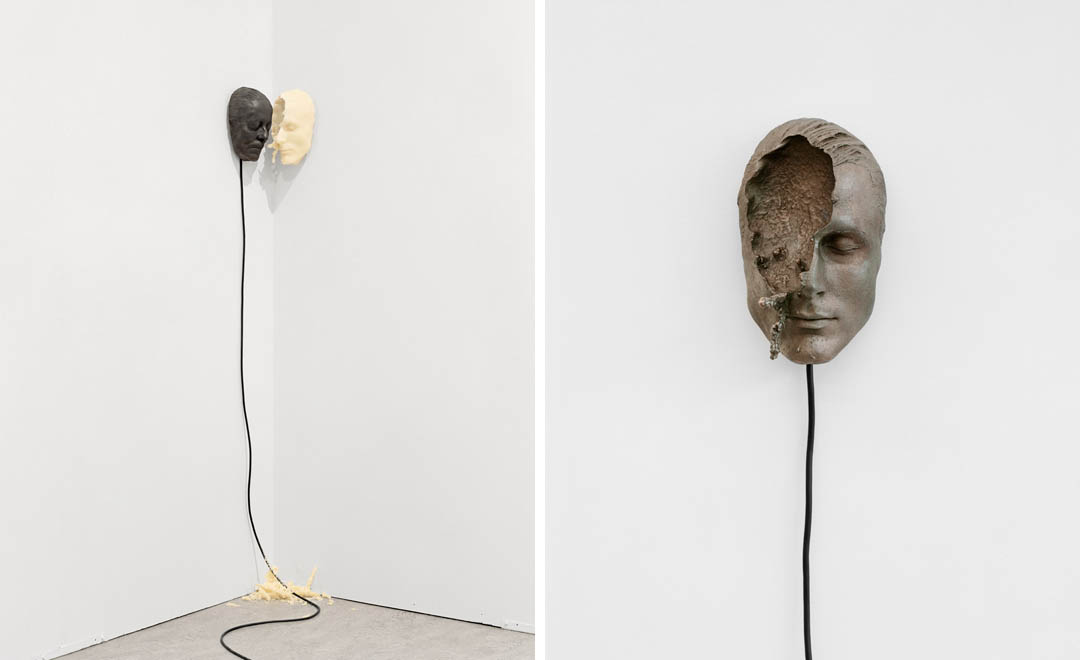
As Freud argued, an individual’s identity emanates from and is entangled with those of his or her family. Stockholm-based Krisár (b.1973), who constructs his creations using complex casting techniques often of his own invention, treats kinship as a steadfast bulwark in his work. The four pieces in his recent solo show “Spacings” were no exception. Janus (2012) features a polyester-resin imprint, painted in light flesh tones, of the expressionless, closed-eyed face of his wife’s adolescent nephew. Suspended in a nearly 5-foot-tall fiberboard box with a rectangu- lar opening and pale skin-colored interior walls, the lifelike cast resembled a death mask seen from its underside.
Peering through the aperture, the viewer aligned his or her visage with that of the teen, evoking the notion of Janus, the two-faced Roman god of beginnings or transitions and, thus, of time itself. While Janus instantiated the dualities of inside/outside, life/death, self/other, it also suggested the Janus-like status of adolescence, that fleeting stage between infancy and adulthood.
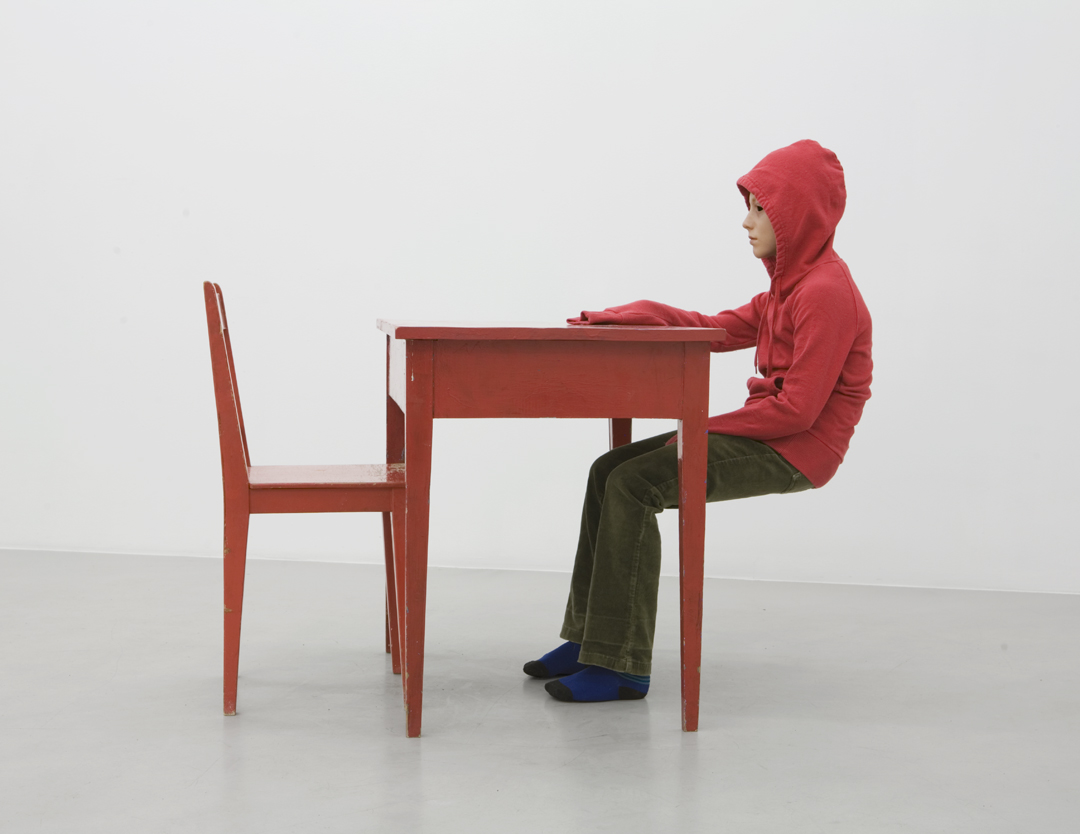
Whereas Janus was conceived around a void, its pendant, an untitled work from 2011-12, took the materiality of the body as its subject. With polyester resin and polyurethane, Krisár produced a life-size, full-body cast of the same boy, slicing it down the middle with surgical precision. (In the process, the youth’s sex disappeared.) After painting the surface to approximate the subject’s skin, the artist reversed the two halves and seated them side by side with hands clasped, like clones. The sculpture’s disquieting realism echoes the work of Ron Mueck, albeit without the minute surface detail. Splitting, mirroring and twinning are frequent themes in psychoanalysis. This piece literalizes the often-violent mental fractures that individuals can endure, a reality that haunts the artist, whose father is schizophrenic and whose mother is bipolar.
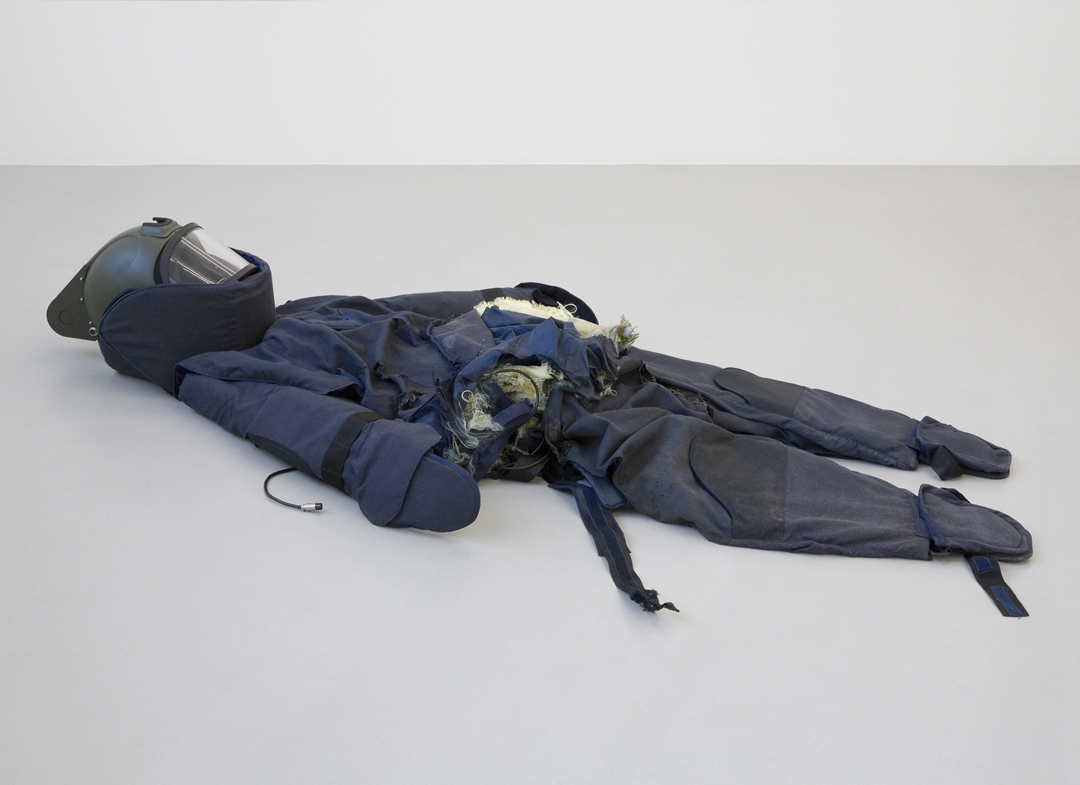
Another untitled work (2012) consists of a unique, full- scale cast in painted polyester resin and polyurethane of the extended forearms of Krisár’s mother. They are shrouded in red sweater sleeves and mounted on the wall. With downturned clenched fists, these appendages display uncanny verisimilitude, as if amputated from a corpse in rigor mortis, à la Robert Gober. Similarly, in Ms. Universe (2012), Krisár had a local tailor fashion a gray woolen suit for his wife, which he then treated with transparent polyester resin to maintain her shape, draping the form in additional clothing, with her undergarments as the exterior layer. The inert shell lay cadaverlike on the floor, its garb (a kind of metaphoric skin) the unique clue to the identity of the absent body.
Offering few categorical answers to the primeval, existen- tial questions that underlie individual and collective human life, Krisár nonetheless convincingly demonstrated their enduring relevance to artistic expression.
MORE: Anders Krisár,更多请至: Anders Krisár on gooood



关乎人性,深刻
残忍 暴力 揪心 害怕 痛