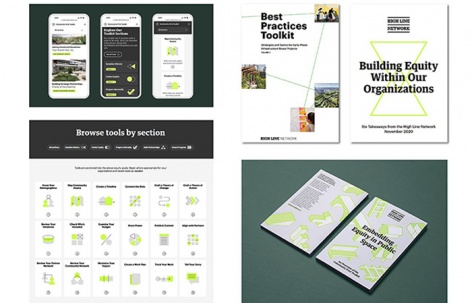
“社区优先工具包不仅是一本关于基础设施再利用中社区参与的‘最佳实践’指南,更提供了一系列关键工具,帮助理解场地的种族化历史、探讨系统性变革、确保包容性与权力共享、建立合作关系,并追踪公平成果,从而实现一个公平正义的公共空间设计过程。”
—— 2024年评审团“Beyond a “best practices” guide for community engagement in infrastructure re-use, the Community First Toolkit offers a series of tools critical to understanding racialized site histories, discussing systemic change, ensuring inclusion and shared power, building partnerships, and tracking equitable outcomes for a just public space design process.”
– 2024 Awards Jury
来自 ASLA 对gooood的分享。
The Community First Toolkit: A Framework for Equitable Public Spaces|Grayscale Collaborative + Urban Institute
项目陈述
Project Statement
在北美,多个社区几十年来一直面临着不均衡的发展。社区优先工具包(Community First Toolkit, 简称 CFT)为公共领域的倡导者提供了一个富有远见且可适应的框架,帮助他们直接应对基础设施领域的种族不平等问题,并在设计过程的各个阶段嵌入公平原则。
这一免费的在线资源以景观为媒介,最大化地实现社区福祉。CFT 提供的18项工具,帮助设计者在四个影响领域中积极应对公平议题:市民与文化生活、经济发展、健康福祉与韧性建设、组织成长。
自2020年以来,CFT 已在32座城市的54个项目中得到应用。通过持续的参与与合作,CFT 也不断拓展传播形式,包括学习课程体系与点对点的交流网络。
Communities across North America have faced uneven development for decades. The Community First Toolkit (CFT) provides a visionary, adaptable framework for public realm advocates to directly tackle infrastructural racism and embed equity at all stages of the design process.
This free, online resource centers landscape as a vehicle to maximize community benefits. The 18 tools prepare designers to respond to equity issues in 4 impact areas: civic & cultural life; economic development; health, wellness & resilience; organizational growth.
Since 2020, the CFT has been deployed in 54 projects across 32 cities. Through engagement, the CFT continues to expand into new communication formats, including a Learning Curriculum and Peer-to-Peer Network.
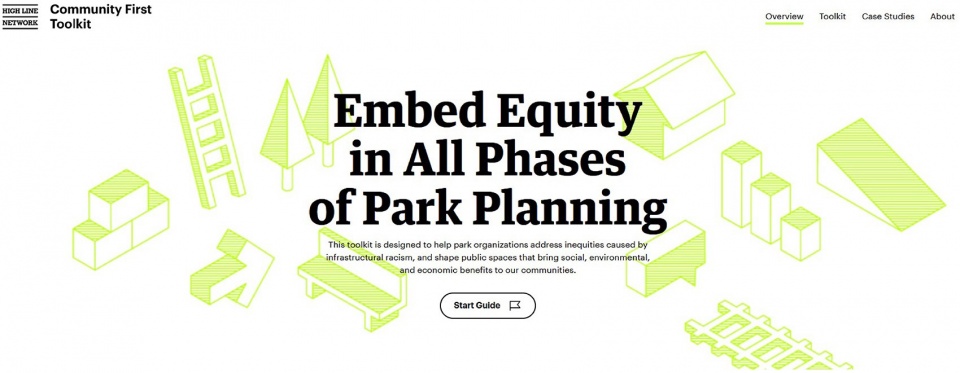
▲在景观中嵌入公平:社区优先工具包提供了一个框架,可以直接解决基础设施种族主义问题,并在设计过程的各个阶段嵌入公平,Embed Equity into Landscapes: The Community First Toolkit provides a framework to directly tackle infrastructural racism and embed equity at all stages of the design process. © High Line Network
项目说明
Project Narrative
景观处于当今多个关键议题的交汇点:其一,是优质公共空间获取的差异性,这种不平等往往与种族、阶级和族裔有关;其二,是由于产业转型和投资模式变化而被弃用、断裂或闲置的基础设施;其三,是人们对具有环境韧性并促进社会联系的空间日益增长的需求。社区优先工具包(Community First Toolkit,简称 CFT)正是为此而开发,它由High Line Network(纽约高线公园的运营方Friends of the High Line发起的一个注重公平的景观组织网络)推动实施。
纽约的高线公园被广泛视为景观设计的标志性作品,同时也是“绿色绅士化”(green gentrification)的象征。CFT借鉴了这一经验,提出了核心理念:公园与公共空间不仅仅是公平与可及性问题的附属产物,它们本身就可以成为实现公平社区发展的推动力量。该工具包详细阐释了公共领域项目为何、为谁以及如何能够修复以往开发中的负面影响,并为更多人,尤其是曾经被忽视和伤害的群体,带来积极成果。
CFT的发展与持续完善离不开广泛的公众参与和跨学科协作。众多实践者与设计专家共同识别了其影响领域,并在哈佛大学设计研究生院举办的展览与课程中得到进一步拓展。工具包的结构与内容也在为期两年的试点过程中不断打磨,合作对象为美国各地的公园非营利组织,确保其可在不同的地理与历史背景、项目规模与组织能力中灵活应用。
工具包内容分为五个板块——“审视历史”、“聚焦公平”、“内部准备”、“建立合作”、“确保进展”——涵盖了组织内部机制与公众参与活动两个层面。由此带来的影响广泛而深远:在达拉斯,Trinity Park Conservancy基于工具包建立了预算与项目设置中的公平评估体系;在费城,Rail Park建立了一个涵盖周边十余个社区历史的档案库;而在里士满,BridgePark项目则全面重组了其内部优先事项与外部项目,以支持当地黑人与棕人社区的地方守护(place-keeping)努力。
所有CFT工具均可在官方网站免费下载,网站还提供案例研究和学习课程指南,便于公共空间倡导者在各自社区中灵活运用。CFT曾在多本顶级设计出版物与会议中亮相,包括《Architect Magazine》《Harvard Magazine》、市长城市设计研究所(Mayors’ Institute on City Design)、2022年美国景观建筑师协会(ASLA)年会以及全球文化区网络(GCDN)等。通过项目团队与合作组织的共同努力,CFT构建起一个点对点的传播与学习网络,受众范围已远超最初聚焦的公园运营非营利组织,扩展至所有影响景观设计、管理与激活的利益相关方,包括居民、政府官员等。
目前,High Line Network已囊括美国、加拿大和墨西哥的数十个景观项目。CFT的数字传播力也持续增长,仅去年网站独立访问用户便超过3500人。最终,这一工具包传达的是一种行动框架,而真正推动其发展的,是那些致力于重新想象景观角色、构建联结且健康社区的所有人。
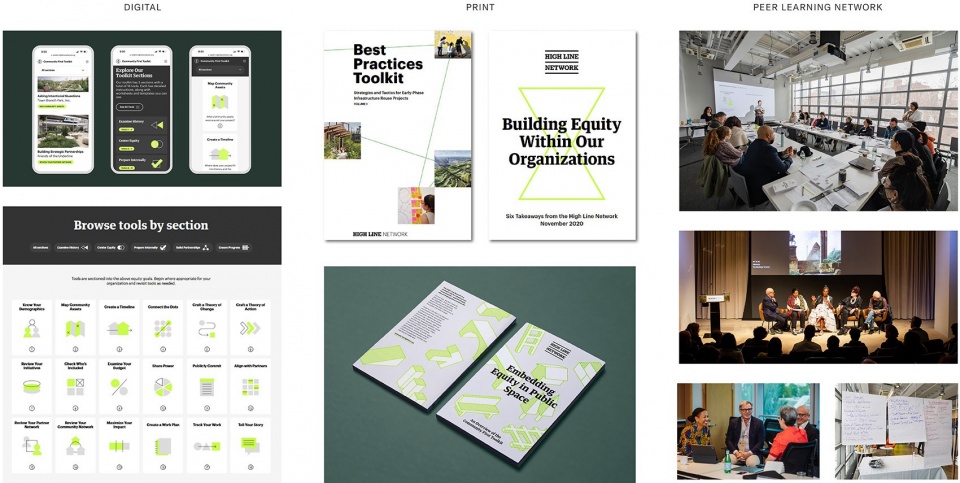
▲多样化传播形式以最大化可达性:该工具包提供了数字版与线下版本,并通过同行分享会,让景观倡导者共同探讨其使用方法,Multiple Dissemination Formats to Maximize Access: Digital and in-person versions are publicly available. Through peer-to-peer convenings, landscape advocates uplift ideas on how to use the Toolkit. © Decimal Studios; Liz Ligon; OCHOMASDIEZ; High Line Network
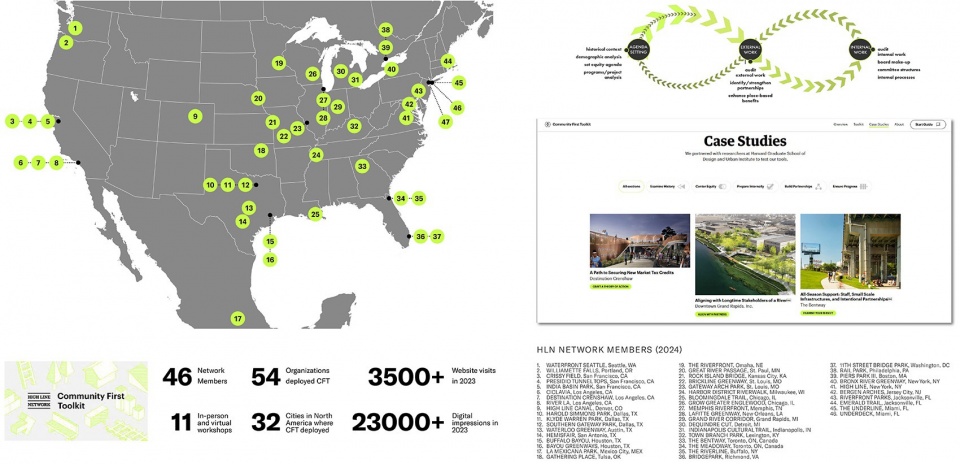
▲在北美产生广泛影响:数十个组织和倡导者运用该工具包在社区中推进基于公园的公平实践,Broad-ranging Impacts Across North America: Dozens of organizations and advocates have deployed the Toolkit to advance park-based equity in their communities. © High Line Network, Grayscale Collaborative
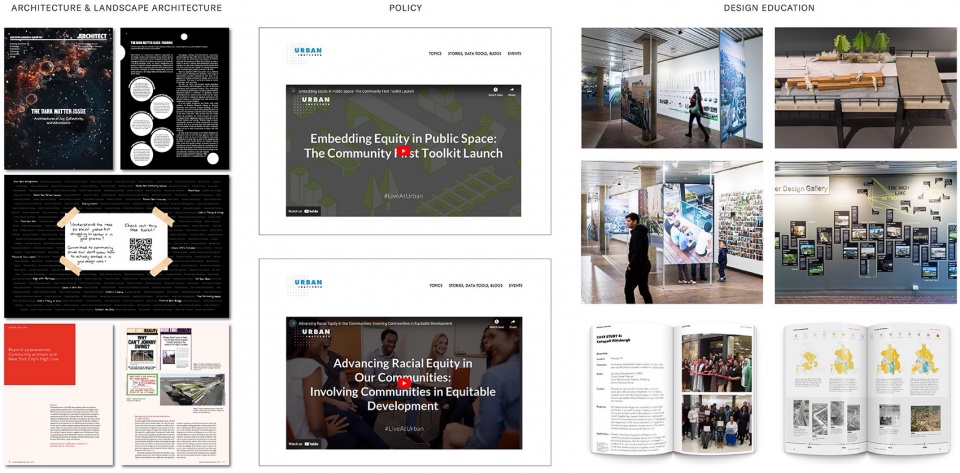
▲跨学科合作:该工具包已在设计、政策与教育等多个领域开发与传播,显示其在不同专业背景下的适用性,Cross-Disciplinary Partnerships: The Toolkit has been developed and shared across design, policy, and educational spaces, highlighting its relevance in multiple fields. © Justin Knight; Brett Merriam; Don O’Keefe; Architect Magazine; Journal of Landscape Architecture, Grayscale Collaborative
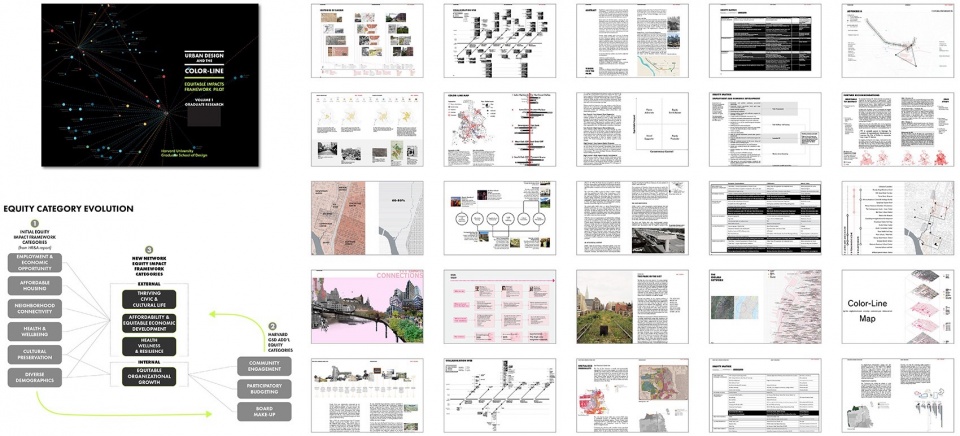
▲通过合作优化工具包:在为期两年的试点项目中,研究生设计学生与全美各地的公园组织合作,深入研究公平议题,Refining the Toolkit through Partnerships: Through a 2-year pilot, graduate design students partnered with parks organizations across the United States to conduct equity deep dives. © Laura Greenberg; Vrinda Kanvinde; Brett Merriam; Don O’Keefe; Emily Klein; Jose Esparza; Sarah Zou; Jack Chen, Grayscale Collaborative
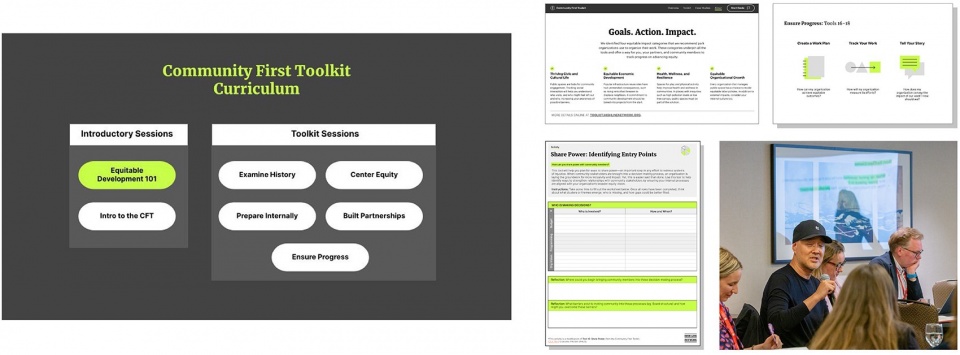
▲通过学习课程扩大可及性:该课程涵盖18种工具及相关案例研究,每个模块都包含小组讨论环节,以交流如何使用工具包,Expanding Access through a Learning Curriculum: The Learning Curriculum covers all 18 tools, including case studies. Each module includes a group discussion to share ideas on deploying the Toolkit. © Noushin Bahr, image courtesy of Global Cultural Districts Network (GCDN)
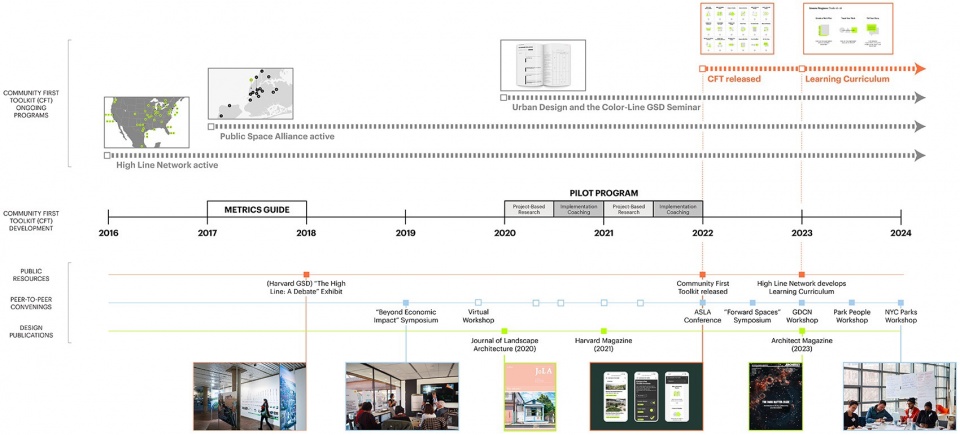
▲扩大参与以拓展影响力:该工具包是在多年与公园组织和设计领导者的合作与参与中不断发展而成,并仍在持续演进中,Expanding Engagement to Expand Outreach: The Toolkit has developed through years of engagement and partnership with parks organizations and design leaders. It continues to evolve today. © Justin Knight; Yona Chung; Decimal Studios; Liz Ligon; Anne Lin; High Line Network, Grayscale Collaborative
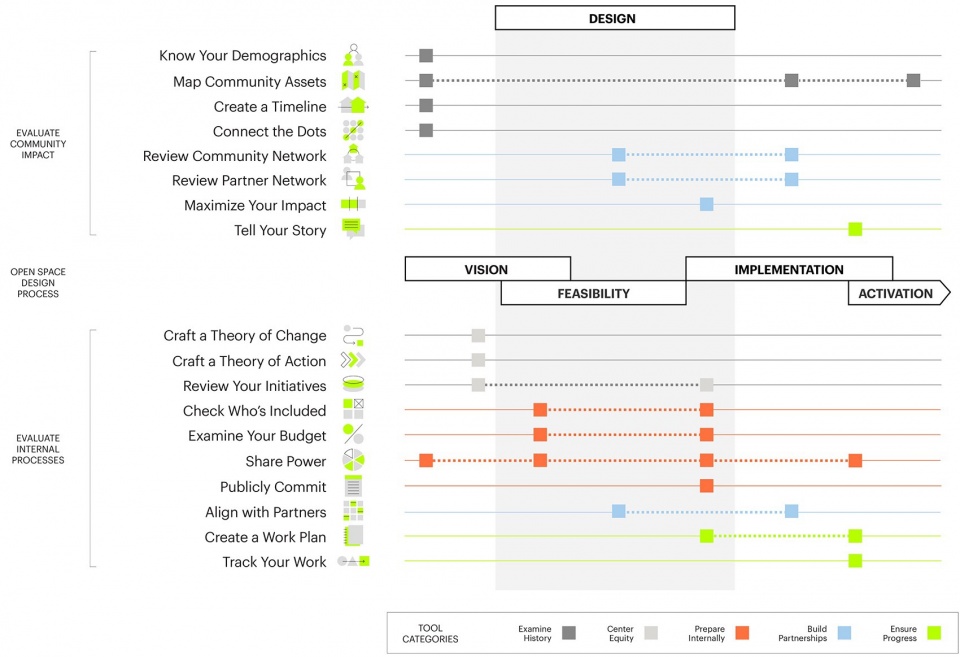
▲在典型设计流程中叠加公平维度:这18种工具可适用于设计流程的各个阶段,从构想到实施,Layering Equity onto Typical Design Processes: The 18 tools can be deployed in projects at all stages of the design process, from vision to activation. © Grayscale Collaborative
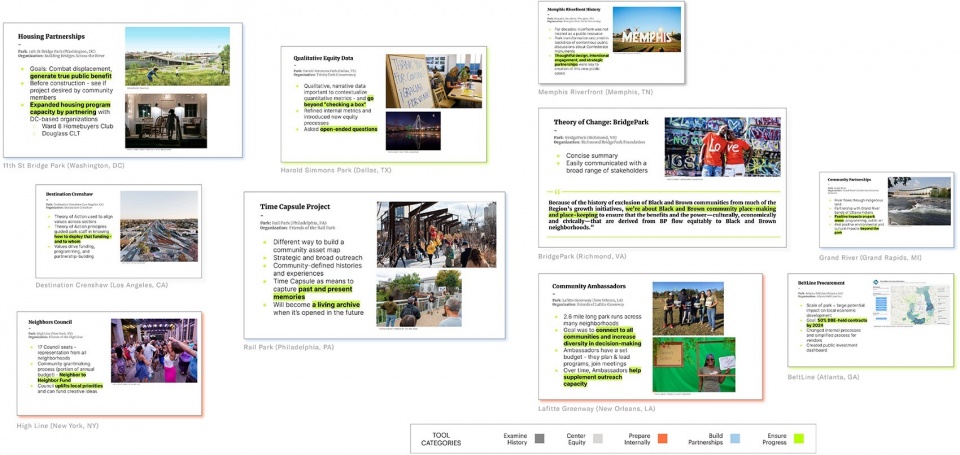
▲将工具付诸实践:项目可以根据自身需求应用各类别工具(审视历史、以公平为中心、内部准备、建立合作、确保进展),Putting the Tools into Action: Projects can apply tool categories (Examine History, Center Equity, Prepare Internally, Build Partnerships, Ensure Progress) to meet their needs. © Friends of the Rail Park, Memphis River Parks Partnership, BridgePark Foundation, Destination Crenshaw, Friends of Lafitte Greenway, Liz Ligon/Friends of the High Line, OMA+OLIN, Becky Harlan/11th St Bridge Park, Atlanta BeltLine Inc, Trinity Park Conservancy
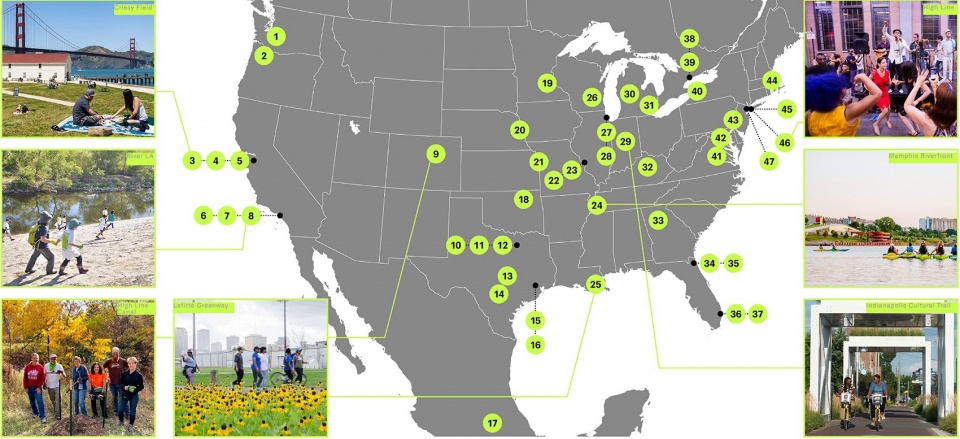
▲打造连通、健康的社区:工具包的核心是人。它为所有希望建设连通、健康社区的人们提供了行动框架,Creating Connected, Healthy Communities: Ultimately, the Toolkit is powered by people. It provides a framework for action for all those invested in creating connected, healthy communities. © Hunter King, Liz Ligon, Indianapolis Cultural Trail, Memphis River Parks Partnership, Golden Gate National Parks Conservancy, Friends of the LA River, High Line Canal Conservancy
Project Narrative
Landscapes sit at the intersection of some of today’s most critical issues: 1) uneven access to quality public spaces, often along lines of race, class, and ethnicity; 2) underutilized, disconnected, or abandoned infrastructures from shifting industries and investment patterns; and 3) ever-increasing needs for spaces that support environmental resilience and social connection. The Community First Toolkit (CFT) was developed for the High Line Network, a program of Friends of the High Line that convenes equity-focused landscape organizations.
The New York High Line is widely regarded as both an icon of landscape design and a symbol of “green gentrification.” Building on lessons learned, the CFT’s core message is that parks and public spaces are not incidental to broader issues of equity and access – they can be drivers of equitable community development. The Toolkit breaks down why, for whom, and how public realm projects can mitigate the negative impacts of past developments while ensuring positive outcomes for as many people as possible, particularly for those previously harmed.
Engagement and multi-disciplinary collaborations have been key to the development and continued evolution of the CFT. Practitioners and design experts helped identify the Toolkit’s impact areas, including with an exhibition and project-based course at the Harvard Graduate School of Design. The CFT format was refined through a two-year pilot with park nonprofits around the US, ensuring adaptability across different geographic and historic contexts, project scales, and organizational capacities.
The tools are broken into 5 sections – Examine History, Center Equity, Prepare Internally, Build Partnerships, Ensure Progress – covering both internal practices and public-facing programs. As a result, the impacts have been broad-ranging. Different projects have applied the tools to fit their specific needs: in Dallas, the Trinity Park Conservancy created park-based equity metrics for budgeting and programming; Philadelphia’s Rail Park developed an archive of community histories representing the 10+ surrounding neighborhoods; the Richmond BridgePark comprehensively restructured internal priorities and external programs to support place-keeping efforts by Black and Brown communities.
All CFT tools are available for download on the website, which also features case studies and Learning Curriculum guides that allow open space advocates to use the Toolkit in their own communities. The CFT has been featured in leading design publications and convenings, including Architect Magazine, Harvard Magazine, the Mayors’ Institute on City Design, the ASLA 2022 conference, and the Global Cultural Districts Network. Altogether, outreach by the CFT team and its partner organizations has created a peer-to-peer dissemination and learning network. The CFT audience has expanded well beyond its initial focus on nonprofits who oversee park operations to include the full range of stakeholders who affect the design, management, and activation of landscapes, including residents, public sector officials, and more.
The High Line Network now includes dozens of landscape projects across the US, Canada, and Mexico. The digital reach of the CFT continues to grow, with 3500+ unique site visitors in the last year alone. Ultimately, the Toolkit communicates a framework for action, but it is powered by all the people dedicated to reimagining the role of landscapes in creating connected, healthy communities.
Project Credits
Asima Jansveld, Managing Director – High Line Network
Ana Traverso-Krejcarek, Senior Manager – High Line Network (Former)
Stephen Gray, Principal – Grayscale Collaborative, Associate Professor and Program Director of Urban Design – Harvard Graduate School of Design
Anne Ning Lin, Director of Planning & Narrative Strategy – Grayscale Collaborative
Caroline Filice Smith, PhD Candidate – Harvard Graduate School of Design
Laura Greenberg, Urban Designer and Researcher
Mary Bogle, Principal Research Associate – Urban Institute
Peter Tatian, Senior Fellow – Urban Institute
Sonia Torres Rodriguez, Research Analyst – Urban Institute
Donovan Harvey, Research Analyst – Urban Institute
Mychal Cohen, Researcher – Urban Institute (Former)
Olivia Arena, Researcher – Urban Institute (Former)
Jorge Morales-Burnett, Research Assistant – Urban Institute (Former)
Guillermo Brotons, Gabrielle Harlid, Allie Heesh, Joshua Levi, Francisco Pelaez, Website designer – Decimal Studios
Jack Chen, Jose Esparza, Laura Greenberg, Margaret Haltom, Rajan Hoyle, Vrinda Kanvinde, Emily Klein, Anne Lin, Jasmine Martin, Brett Merriam, Ruth Blair Moyers, Don O’Keefe, Ciara Stein, Michele Turrini, Sam Valentine, Sarah Zou, Jiae Azad, Rogelio Cadena, Dylan Culp, Asher Kaplan, Alison Maurer, Gena Morgis, Wanjiku Ngare, Miguel Perez Luna, Austin Pritzkat, Shannon Slade, (2020-2021) Project-Based Student Researchers, “Urban Design and the Color-Line” – Harvard Graduate School of Design
Vaughn Perry, Building Bridges Across the River
Nonet Sykes, Atlanta BeltLine, Inc.
Ted Elmore, Dontrese Brown, Shekinah Mitchell, James Warren, Richmond BridgePark Foundation
Anne Olson, Karen Farber, Buffalo Bayou Partnership
Patrice Gillespie-Smith, Grace Perdomo, Friends of The Underline
Rebecca Cordes Chan, Ava Schwemler, Friends of the Rail Park
Katherine Toy, Sue Gardner, Denise McKinney, Jessica Chen, Mackenzie Seagraves, Golden Gate National Parks Conservancy
Mary DeLaittre, Great River Passage Conservancy
Amanda Edwards, Lisa Kasianowitz, Nicole Romano, Houston Parks Board
Mauricio Garcia, High Line
Harriet Crittenden-LaMair, Suzannah Fry Jones, High Line Canal Conservancy
Kären Farber, Carrie Tracy, Luis García, Indianapolis Cultural Trail Inc.
Walter Elcock, Elissa Hoagland-Izmailyan, Jeamy Molina, Trinity Park Conservancy
Allison Lankford, Eileen Phillips, Town Branch Park
Erica Saenz, Melissa Ayala, Waterloo Greenway Conservancy


大设计
DK
信息化建设