“众多备受尊敬的人士都在探讨这项专业以及它正在发生的改变。学生们尤其需要了解这一点。”
–评奖委员会“A number of highly respected people are talking about the profession and how it’s changing. This is especially important for students to understand.”
— 2017 Awards Jury
来自ASLA对gooood的分享。
Digital Library of Landscape Architecture History by SCAPE
Appreciation towards ASLA for providing the following description:
项目概述
PROJECT STATEMENT
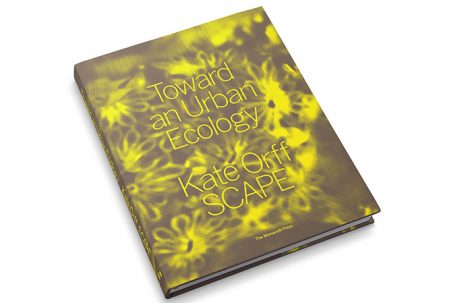
《走向城市生态学》是一部专题著作,也是一本手册、一则宣言,它将城市景观设计视为一种行动主义的形式,并倡导研究、实践和社区参与的一体化,由此产生了新型的城市生态学。本书透过著名景观设计公司SCAPE的作品,借助项目介绍、合作者及特邀作者的文章阐述了一系列具有参与性的、立足于科学的实践策略。它揭示了设计如何融入自然的运行、循环以及塑造未来城市的系统,并重点关注了构成这些景观的人类和群体。
Part monograph, part manual, part manifesto, Toward an Urban Ecology reconceives urban landscape design as a form of activism, advocating for a synthesis of research, practice, and community engagement that is generative of a new form of urban ecology. The book depicts a range of participatory and science-based strategies through the lens of SCAPE’s work, featuring projects, collaborators, and invited essays. The book reveals how design can engage embedded natural processes, cycles, and systems that shape the cities of tomorrow, and focuses on the people and coalitions that form these landscapes.
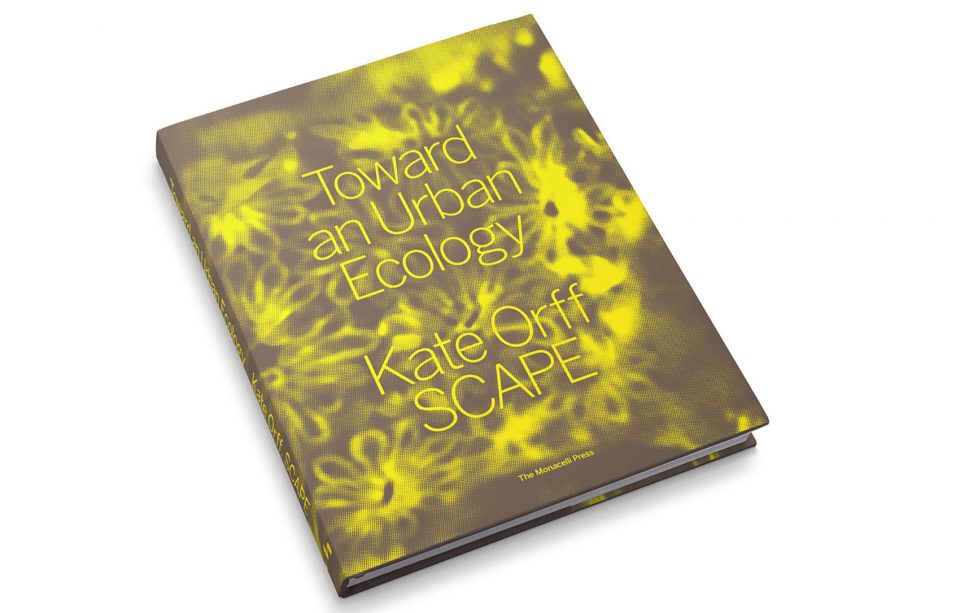
▲《走向城市生态学》封面。Toward an Urban Ecology, Book Cover
项目说明
PROJECT NARRATIVE
景观设计实践需要做出哪些改变,以应对气候变化的不确定性,同时满足培养社会凝聚力的需求?设计师如何才能创造社会性的事物,而不仅仅是简单地完成某个项目?《走向城市生态学》融合了设计、研究、艺术和环境知识等多个领域,将城市景观设计视为一种行动主义的形式,并针对下个世纪严峻的气候变化和社会分裂等问题提供了行动指南。这本为未来城市设计师制定的“指导手册”旨在通过研究基础设施系统、社区团体以及政府机构的运作来培养公民的参与意识,同时呼吁各方积极参与基础设施和景观的建设,最终为世界带来改变。
SCAPE是一家基于纽约的景观设计和城市设计公司,不仅以公共空间的干预手法而闻名,在建筑环境、公共领域以及社会公正方面亦有深远的见解和富有价值的评判。《走向城市生态学》对SCAPE创新且多样化的实践进行了深入观察,详细地展示了项目从构思到建造的过程、研究中涉及的问题类型,以及在实践中出现的各种难题的解决办法。这本书同时具备了宣言性和实践意义:它以广泛而深刻的角度对城市生态学进行了解读,旨在透过具体且实用的方法和技术来激励下一代景观设计从业者的实践。作为新型实践模式的领跑者,SCAPE将研究与实验项目以及建筑景观相结合,并致力于汇聚设计师、科学家、决策者和社区等多方力量来实现变革。
Kate Orff的文章构成了本书的主体内容。书中还包含大量对科学家、水产养殖专家、社会基础设施倡导者和公民科学家的采访,以及Brian Davis、Jane Hutton、Thaisa Way和Emily Eliza Scott等人的文章,充分反映出SCAPE公司整体的创新能力。在这些极具智慧和社会价值的内容中还穿插着一些沉浸式互动项目的设计描述,在本书外向且富有包容性的陈述方法中显得别具特色。
本书的序言将景观设计工作的主体描述为一种立场、一种态度,以及一种思考和为人处世的方式。全书的内容框架建立在复兴(Revive)、 共栖(Cohabit)、融合(Engage)与尺度(Scale)四个主题之上。这些章节提供了前瞻性的思考和能够激发变革的设计挑衅,以系统的生态学思维和行为方式来武装读者。
复兴(Revive)章节探讨了一种设计伦理:将自然和文化系统置于构建生态意识的共同目的之上。该章节介绍了能够储水的公共空间和能够回收水源的城市,并揭示了它们与河流以及构成它们本身的水域之间的关系。 共栖(Cohabit)章节中的项目将设计思维延伸到人类物种之外,探讨了如何为动物乃至更多的生物种群创造生存空间。融合(Engage)章节阐释了设计过程如何与社区的构建相结合,从而使项目真正地融入社会生活。尺度(Scale)章节展示了景观实践从小型的生态实验转变为宏观规划的潜质。
本书为我们展示的城市不再是静态的绿色田园背景,它关乎着人类、政治、土地与树木,是一个积极而活跃的社会生态学舞台。
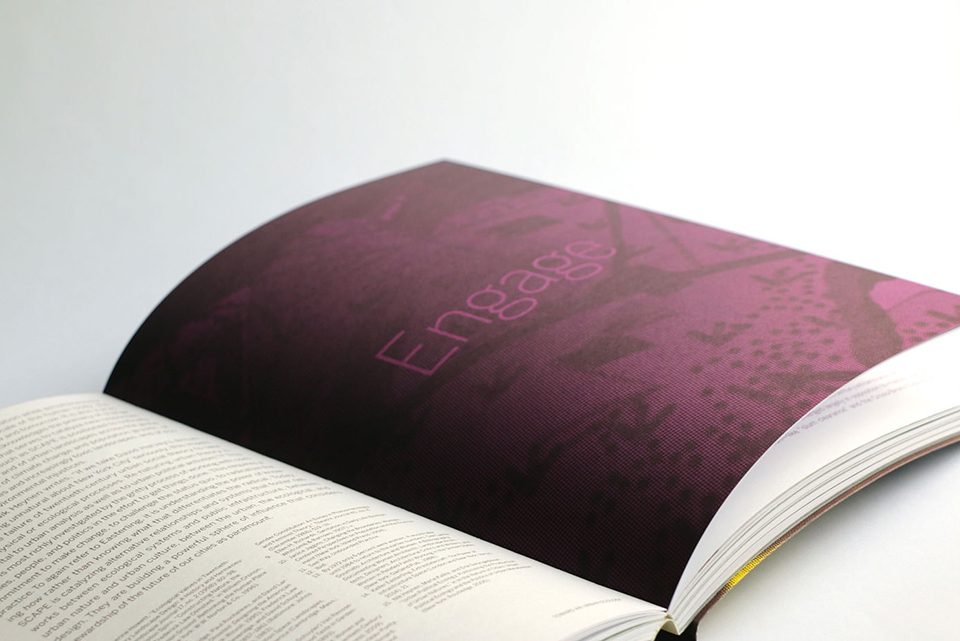
▲全书的内容框架建立在复兴、 共栖、融合与尺度四个主题之上。这些章节提供了前瞻性的思考和能够激发变革的设计挑衅,以系统的生态学思维和行为方式来武装读者。The themes of Revive, Cohabit, Engage, and Scale serve as the framework for the book. These chapters provide design provocations that can catalyze change and arm the reader with a way of thinking and acting ecologically across systems.
▲《走向城市生态学》是一部专题著作,也是一本手册、一则宣言,它将城市景观设计视为一种行动主义的形式。Part Monograph, part manual, part manifesto, the book combines design, research, art, and environmental knowledge to advance landscape architecture as a form of activism.
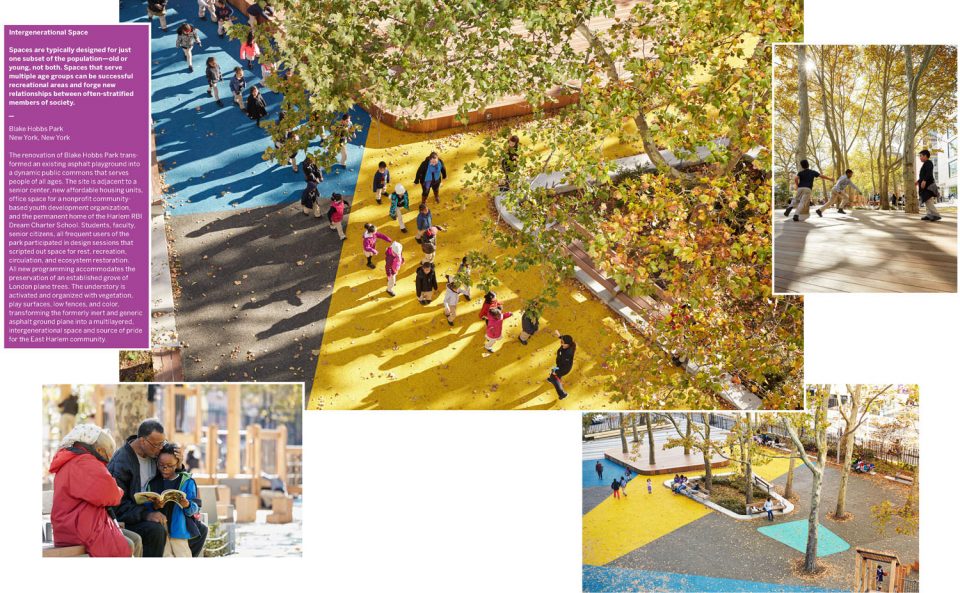
▲代际空间:将最常使用Blake Hobbs公园的学生、学校和老年市民群体汇集到名为“Play-Za”的互动区域当中,为不同年龄段的使用者提供了更加实用和灵活的城市空间。Intergenerational Space: Participatory design sessions that included students, faculty, and senior citizens, all frequent uses of Blake Hobbs Park, resulted in a “Play-Za’ that provides much-needed flexible urban space that can serve people of all ages.
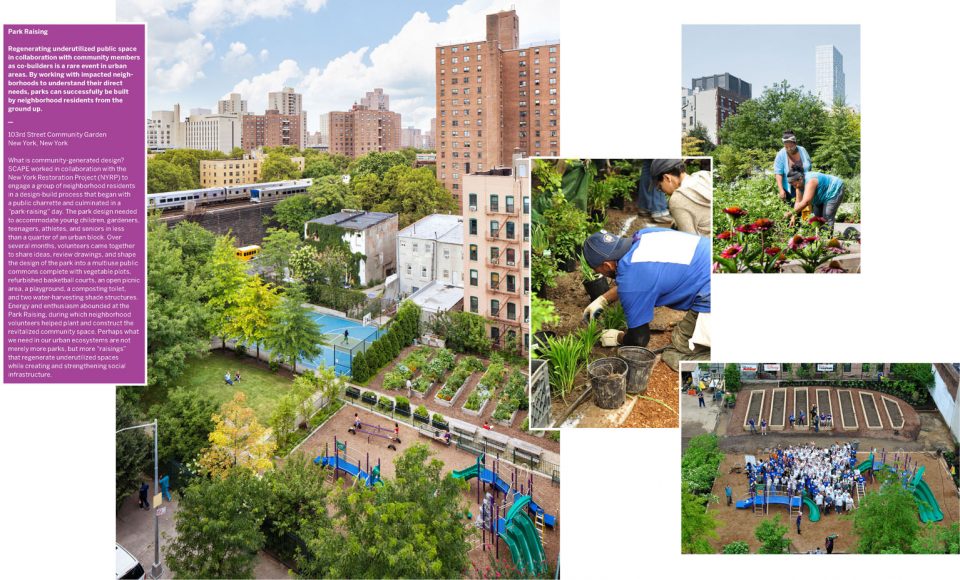
▲公园养成:在“公园养成日”里,街坊邻居们会携手建立起一个公园空间,比如103号大街社区花园,不仅使利用不足的空间重获新生,更加强了公共基础设施的建设。Park Raising: Beginning with a public charrette and culminating in a “park-raising” day, parks like 103rd Street Community Garden can successfully be built by neighborhood residents from the group up, regenerating underutilized spaces while creating and strengthening social infrastructure.
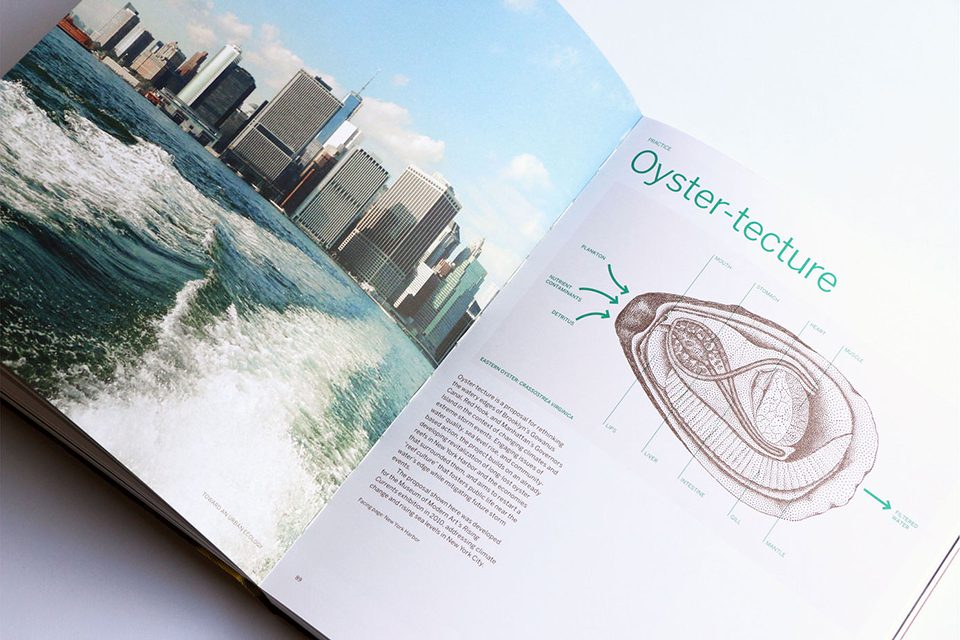
▲Oyster-tecture是为2010年MOMA举办的展览“Rising Currents”而设计的提案,旨在重建纽约人与港口的联系,促进清洁水的循环以及安全海岸的建设。Oyster-tecture was a proposal for MOMA’s Rising Currents exhibition in 2010, for re-establishing the relationship between New Yorkers and their harbor and setting into motion a regenerative cycle of cleaner water, engaged citizenry, and safer shores.
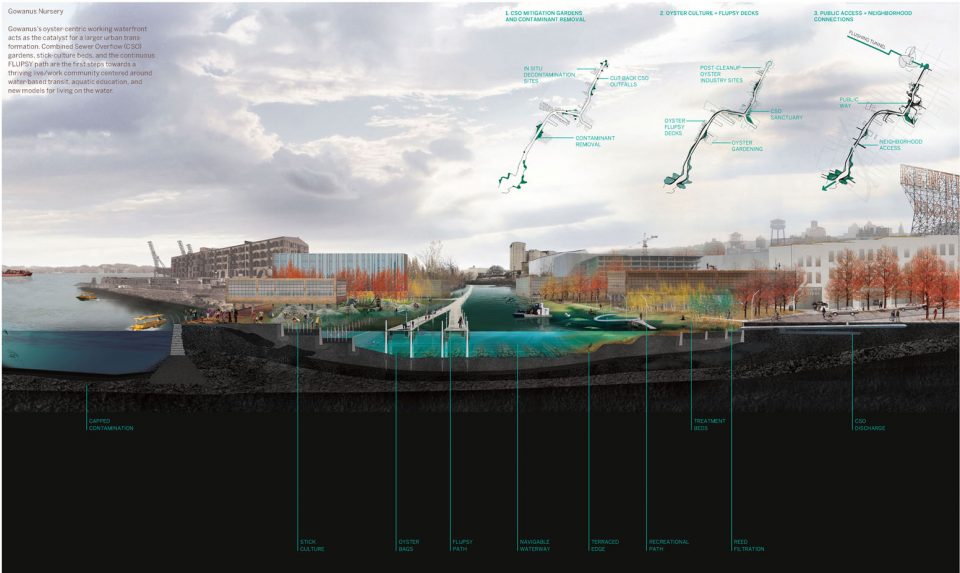
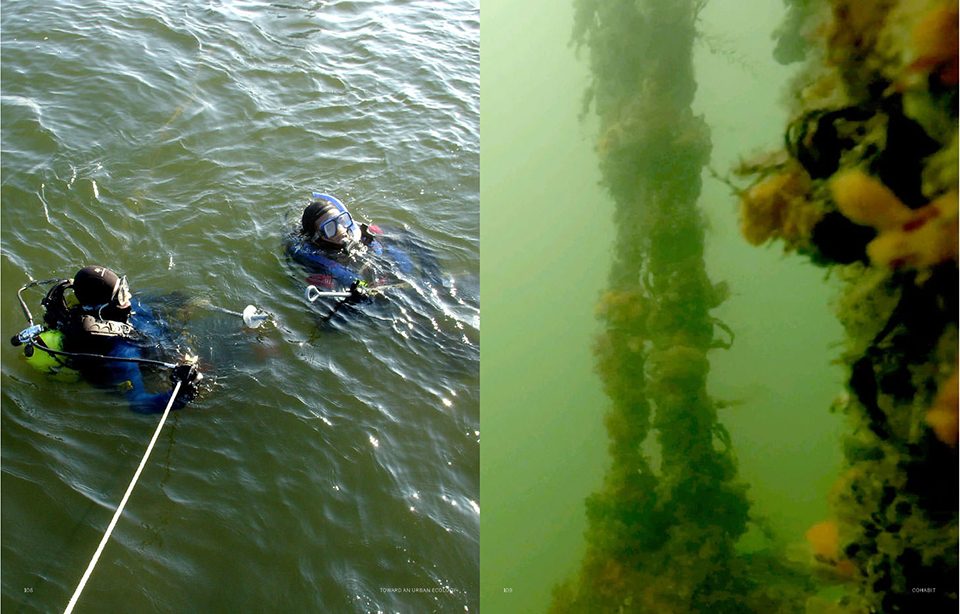
▲SCAPE针对纽约水域所做项目的初期概念,将“共栖”作为城市设计的策略。Gowanus社区以牡蛎捕捞为核心的沿海产业促进了其向发达水上社区的转变。Representing SCAPE’S early conceptual work around NYC water bodies and using Cohabit as an urban strategy for design. Gowanus’s oyster-centric working waterfront acts as the catalyst of a larger urban transformation towards a thriving live/work community on the water.
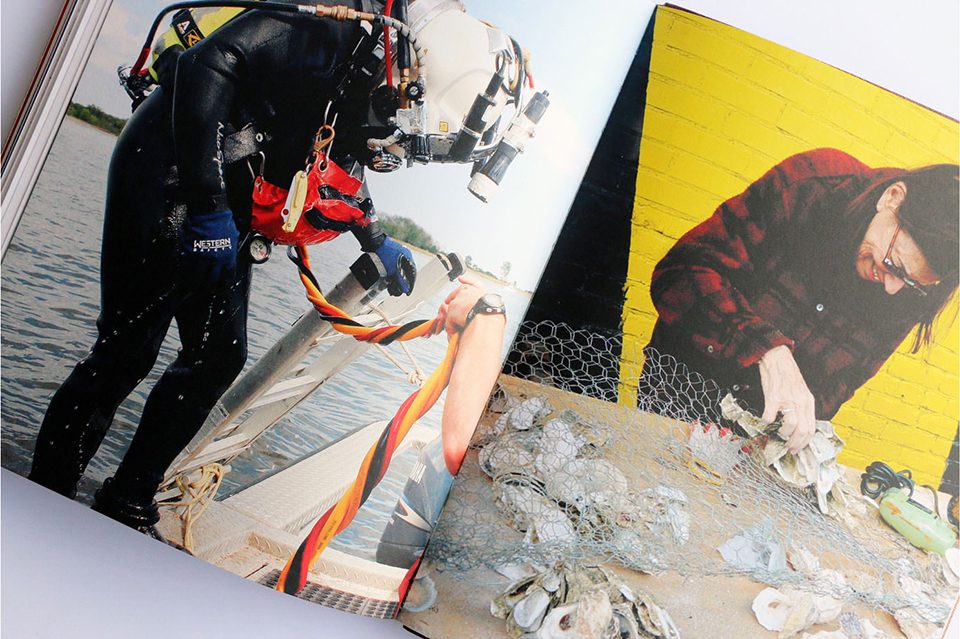
▲SCAPE团队的受众与合作对象群体十分广泛,包括邻居、牡蛎捕捞员、教育工作者、社区倡导者和海岸线居民等,为的是共同监测、实验和参与各种规模的海滨栖息地的设计。The SCAPE team works with an engaged stakeholder audience: neighbors, clammers, educators, community advocates, and shoreline users to monitor, experiment, and participate in habitat design across all scales and waterfront projects.
▲该项目开发了一系列独特的教学工具,包括平面图、海岸游览、研讨会议和模型构建等,消除了潜在的“邻避效应”,建立起居民对于沿海和社会弹性的集体愿景。A unique range of pedagogical tools developed – including graphics, shore tours, charrette sessions, and models – move past potential reactive “not-in-my-back-yard” conversations and toward establishing a collective future vision of coastal and social resiliency.
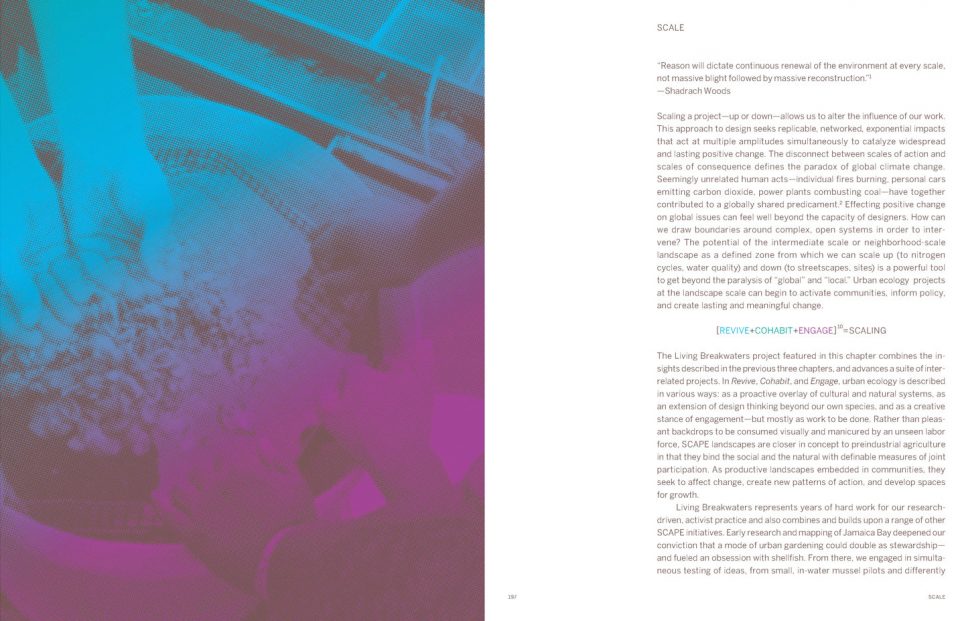
▲SCAPE通过对项目尺度的调整来改变其影响力的大小。尺度(Scale)章节中论述的这一方法结合了本书前三章的内容,旨在促成广泛、持久且积极的改变。Scaling a project – up or down – allows SCAPE to alter the influence of our work. This approach of Scale integrates the methodologies in the previous three chapters to catalyze widespread and lasting positive change.
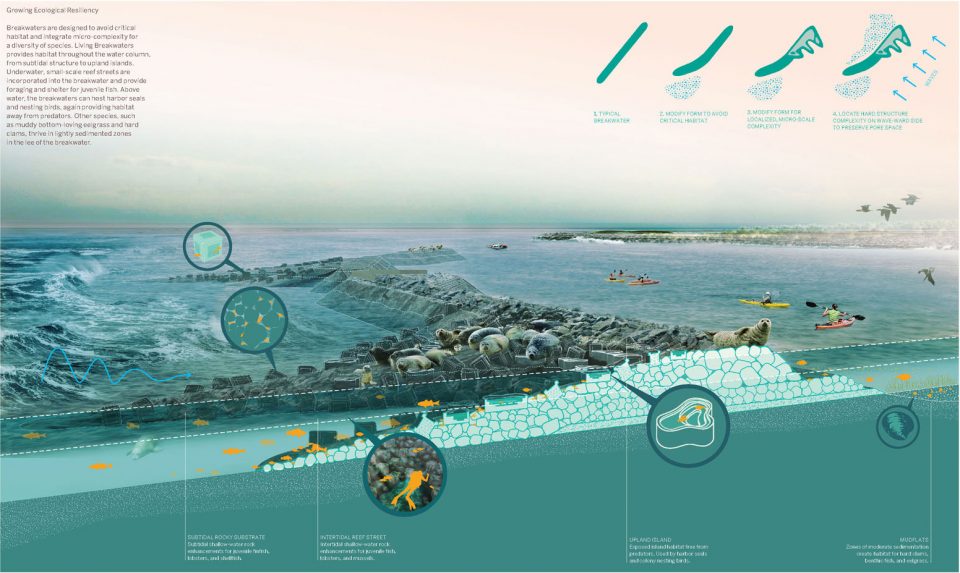
▲Living Breakwaters项目将复兴、 共栖、融合与尺度策略相结合,使水上基础设施与岸上教育及延伸相互连接,以促进斯塔顿岛的复兴,同时为该地区其他沿海社区提供潜在的可复制原型。Living Breakwaters combines the strategies Revive, Cohabit, Engage and Scale, linking in-water infrastructure with on-shore education and outreach to support a more resilient Tottenville, Staten Island, while serving as a potentially replicable prototype for other coastal communities in the region.
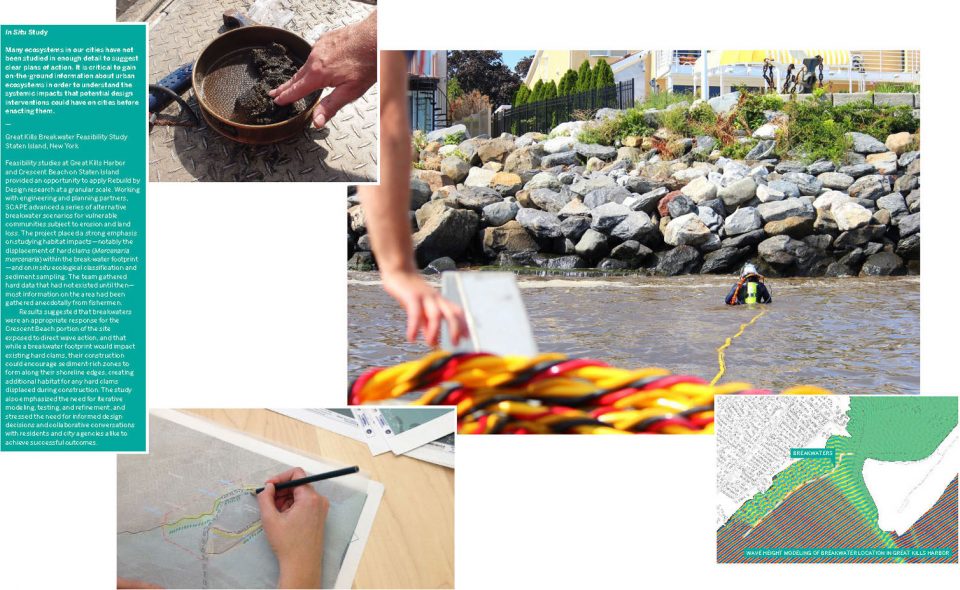
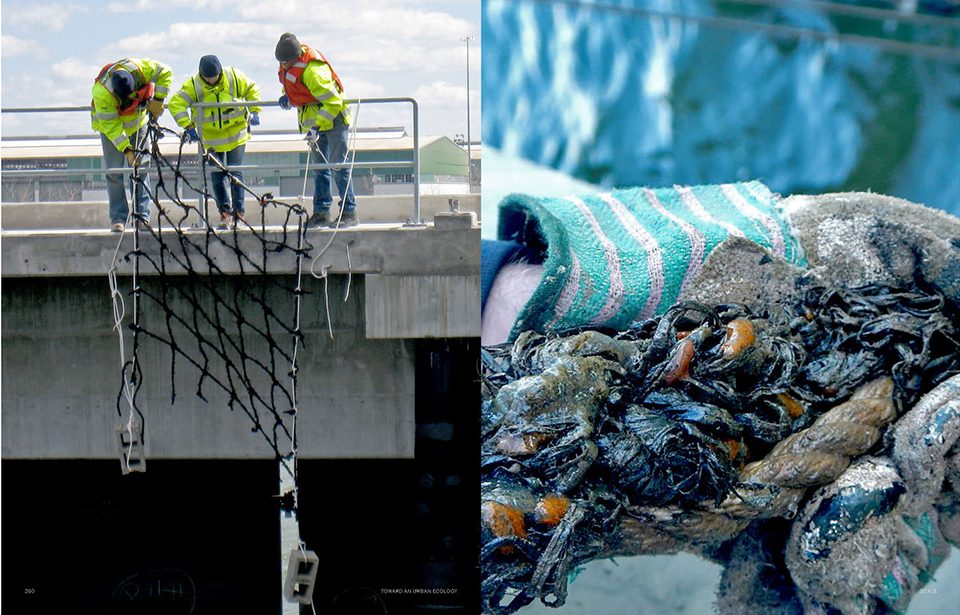
▲在制定潜在的设计干预措施之前,实地信息可以为行动路径提供确切的建议。SCAPE在斯塔顿岛的试点研究为缺乏硬性数据的栖息地的实验提供了扩展尺度的可能。On-the-ground information can suggest clear paths of action before enacting potential design interventions. SCAPE’s pilot-level studies on Staten Island provided an opportunity to apply larger scale ideas to test habitat impacts in an area with no previously existing hard data.
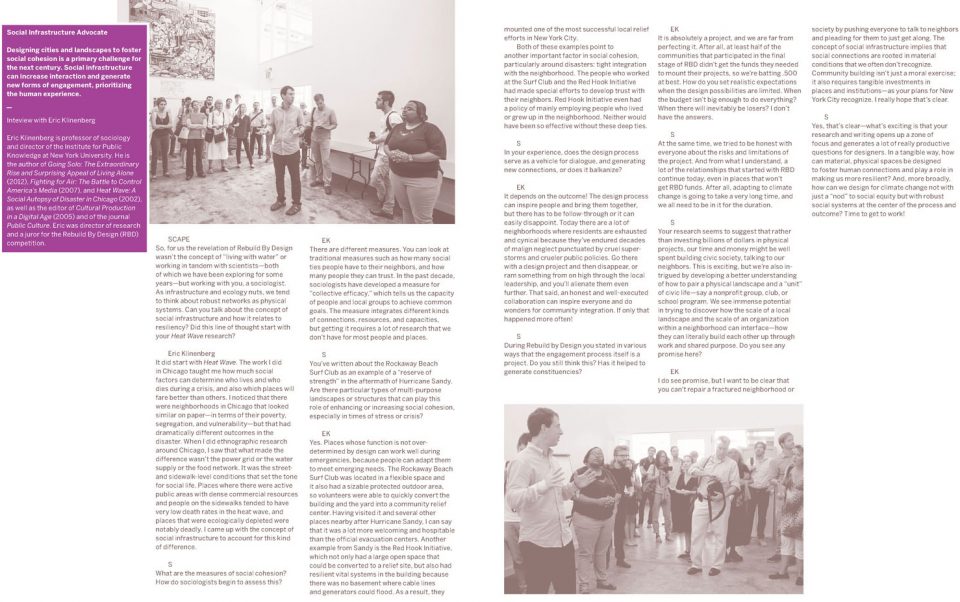
▲本书包含了对科学家、水产养殖专家、社会基础设施倡导者和公民科学家的采访,强调了SCAPE在跨学科合作方面的决心。The interviews and essays throughout the book feature diverse voices – scientists, aquaculture experts, practioners, politicians, scholars, social infrastructure advocates – reinforcing SCAPE’s commitment to interdisciplinary collaboration as the template for change.
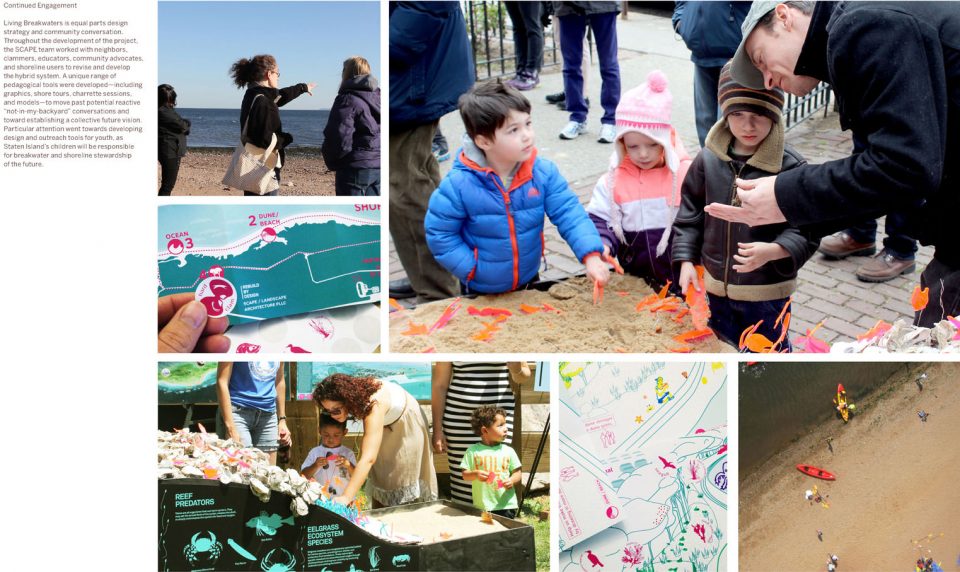
▲通过众多像Living Livingwaters这样与社区使用者合作完成的项目,长期的参与将成为“尺度”章节中所论述的、一种能够确保未来管理和弹性发展的战略。Through projects like Living Breakwaters which work with community users throughout the design process, continued engagement can be a form of Scale – a strategy to ensure stewardship and resiliency for the future.
PROJECT NARRATIVE
How is landscape architectural practice changing to meet the uncertainty of climate dynamics, and the need to foster social cohesion? How can designers build not just projects but publics? Combining design, research, art, and environmental knowledge in order to advance landscape architecture as a form of activism, Toward an Urban Ecology is a guidebook for next century practice to tackle the wicked problems of climate change and social fragmentation. This “manufestograph” for the next wave of urban designers cultivates an ethos of civic participation by engaging with infrastructural systems, community groups, and government to empower all parties to help change the world through engagement with infrastructure and landscape.
A landscape architecture and urban design studio based in New York, SCAPE is celebrated not only for its interventions in public spaces but also for the far-reaching and meaningful debates it engenders about the built environment, public sphere, and social and environmental justice. Toward an Urban Ecology is a look inside the firm’s creative and varied practice, showing in detail how projects are conceived and constructed, what kinds of research questions are asked, and how the practice has engaged in a constellation of sites and issues. The book is both a manifesto and a tool kit: designed to communicate a broad and deep vision of urban ecology as a form of activism alongside specific and grounded tools and techniques aimed to provoke the next generation of landscape practitioners. SCAPE is at the forefront of a new mode of practice, integrating research with pilot projects and built landscapes and combining the efforts of designers, scientists, policy-makers, and communities to effect change.
Essays by Kate Orff anchor the book chapters. Interviews with scientists, aquaculture experts, social infrastructure advocates, and citizen scientists are sequenced alongside essays by Brian Davis, Jane Hutton, Thaisa Way, and Emily Eliza Scott in a way that mirrors the intense creative process of the office. Interspersed into this intellectual and social context are descriptions of the immersive, regenerative, and engaging design projects that continue to emerge from this outward focused and inclusive methodology.
The Introduction to the book grounds the body of work as a stance, an attitude, a way of thinking and operating in the world. The themes of Revive, Cohabit, Engage, and Scale serve as the framework for the book. These chapters provide forward-thinking and celebratory design provocations that can catalyze change and arm the reader with a way of thinking and acting ecologically across systems.
The Chapter titled Revive explores a design ethic that overlays natural and cultural systems toward the common purpose of generating eco-awareness. It features public spaces that hold water, and downtowns that can reclaim and reveal their relationships to rivers and bodies of waters that sparked their formation. Cohabit features projects that extend design thinking beyond our own species and that enliven the public realm to make space for animals and more diverse biology. Engage illustrates how design processes can hybridize community organizing techniques to nest project making within social life. Scale demonstrates the integration and scalability of the ideas and shows the potential for landscape practice to radically span scales from micro-pilots and ecological experiments to macro scales of planning and analysis.
The book posits an urban nature not as a static, green pastoral background but an active socio-ecological canvas that involves people and politics, mud and mug wort.









这篇的公司搞错了,这是纽约的那家,不是意大利的
666
有卖的吗书