MAD no doubt is one of the most recognized architectural practices in China and worldwide. Every year,
MAD receives countless job and internship applications. To be able to work at MAD will definitely enrich
your career as even though the people working here might have been lucky, but are undeniably
outstanding. What could possibly be on the minds of the MAD interns?
MAD无疑是中国最受瞩目的建筑师事务所,同时在世界范围内也受到极高的关注。MAD每年都收到来自全世界不计其数的工作申请和实习申请。能够进入MAD学习和工作一段时间,职业生涯无疑会变得精彩丰富,在这里的人们,也许是幸运的,但肯定是优秀的。在MAD工作的实习生们,他们脑子里天马星空的想法是什么样的? Name: Shuo Zhang
Educational Institution: University of Nottingham, UK
Year: 4th year
Nationality: Chinese
Email: joking5451@googlemail.com
Who is your favourite architect? Why?
Personally I like Daniel Libeskind’s works, I think good architects’ works always have akind of ‘sprit’: They defined their architecture by their projective feeling and theirthinking of nowadays society, touched people by their own architectural language.Libeskind’s philosophy of deconstruction is really impressive to me, I’ve heard one story ofhis Jewish Museum in Berlin: When there was not any exhibition in the museum, there werealready 300,000 visitors went to see it, some visitors even cried at the narrow, depressingcorridor in it because this architecture recalled them the sorrowful history of Jewishpeople in World War Two. His design can make me feel a ‘sprit’ I mentioned, a ‘sprit’ ofhumanity.
What is the major characteristic of your current school’s education?
‘Sustainable Architecture’ is the strength in my school, we had done a lot of achievement inrespond to the ‘zero carbon emission’. Meanwhile, my school is an open architecture school,each kind of design philosophy and concept could always find its own developing space.
What have you gained during the MAD internship?
In M.A.D I could not only participate the great projects, but work with the great team, thisis especially a precious chance for me as working in M.A.D is my first architecture job inmy life. The colleges are all amazing, it is such a great fun to have a walk in Beijing’sHutong and streets with them after lunch.
What are your thoughts and feelings upon Chinese Architecture and the environment?
Any suggestion?
Architecture always reflects and influences people’s lifestyles. In these years we allwitness that the development of Chinese architecture is dramatically metaboly,our minds aretherefore fickleness, hard to find the tranquility. I think Chinese architecture ‘sdevelopment should be slow down, together with people’s life rhythm in China, to feel the’slow life’ in a relaxed mind.What is your dream?I would dream to design my own pub or cafe and build it in a small old town.
What would you do if you were not an architect?
I’ve never thought about that, but I would love to be a Kingdergarden principal if possible.
What is your dream project?
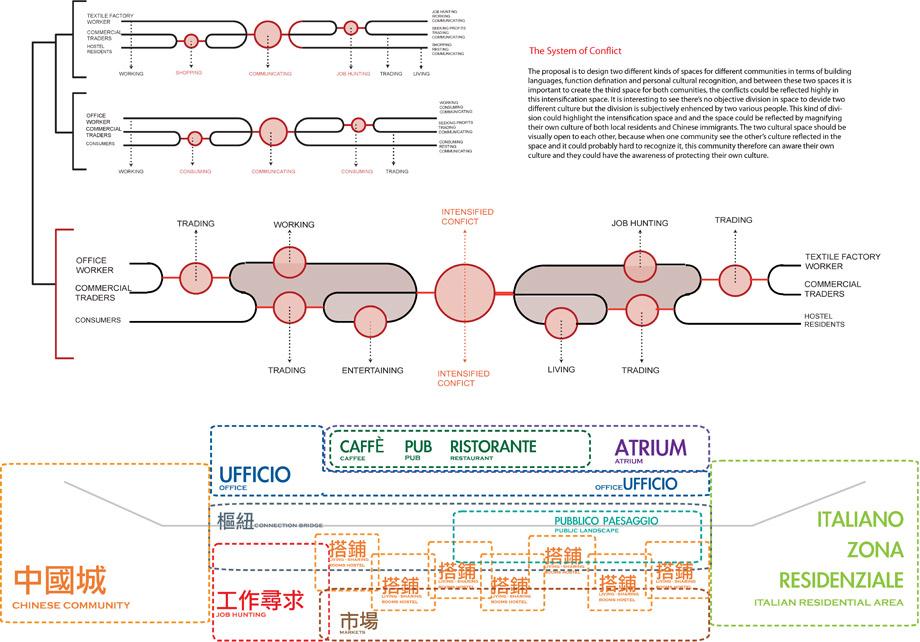
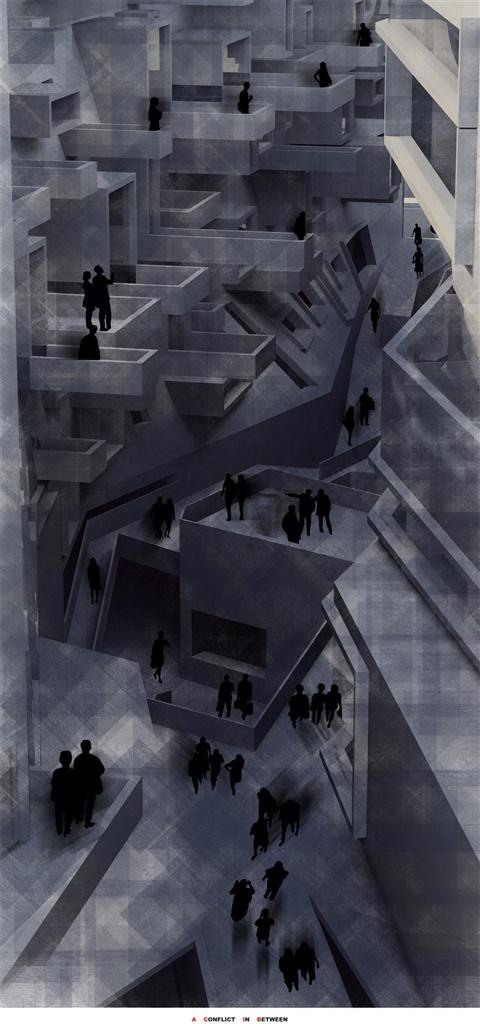
There’s a spatial idea always in my mind, this space could exist in any city, any residentin this city could find his own space in it, even if their looking, levels, income,education and cultural background are different, they still could stay in it. People whohave similar background could communicate each other, but meanwhile they have to feel theexistence of different communities. It is always to good to see the non-violence conflicts,at least it is better than pretending not to see these conflicts
What is your favorite project in your portfolio? Why?
The final project in my last year of Bachelor Degree must be my favourite project.This Project lasted from January to June in 2011, the process was very tough, I even wantedto give up at the last stage of designing, but after I finished it I felt a sense ofachievement. It is a integrated architecture design, there’s no restricted requirement inthis project, the only thing is to follow the unit’s concept – how architecture itselfinfluences the Urban Ecology. In the designing process I felt architecture design is nolonger a respond to the feeling, it could also influences the users, urban structure andeven the city culture. I named ‘A conflict in Between’ to this project, a project to reflectthe conflict between the immigrants and native residents in terms of life, culture andsense. Therefore the ‘conflict’ and ‘between’ became the key concepts in the designingprocess, and all the conflict analysis is based on both projective and objective senses. Itis the first time that I have an integrated idea for architectural design, and I could feelthe architecture in a rational way. For sure in the process of finding my architecture language for this project, I suffered a time that constantly rejected myself, even nowthere’s still not an answer for that, but I think the process itself is wonderful that makesme enjoy it.
姓名:张硕
学校:英国诺丁汉大学
年级:大学四年级
国籍:中国
电子邮箱: joking5451@googlemail.com
最喜欢的建筑师是谁?为什么?
个人很喜欢丹尼尔•李博斯金的作品, 我觉得好的建筑师所设计出来的建筑都会具有一种"精神":他们将自己的自身感情与对这个社会的反思赋予建筑,用自己的建筑语言来感动身处于他所设计的建筑之中的人。李博斯金和他的解构语言给我的印象最为深刻,曾经听说过一个关于他设计的柏林犹太人纪念馆的故事:这座博物馆在内部还未陈列展品时就有三十多万人慕名而去,甚至有人在狭长压抑的走廊中因想起犹太人在20世纪所经历的悲惨历史而失声痛哭。他的建筑能让我感受到一种精神,一种人性的精神。
你所在学校的教育特点?
‘绿色建筑’方面一直是我的学院的强项,但同时,学校的包容性很强,各种设计方式与设计理念都有自己的发展空间。
你在MAD实习最大的收获是什么?
在M.A.D事务所里不仅能够参与到很棒的项目,还能够与很优秀的团队合作,这样的机会对于第一次参加工作的我来说更为珍贵。同事们都很棒,和他们一起在中午休息的时候逛胡同溜大街是最有意思的。
你对中国建筑以及环境有怎样的感触?建议是什么?
建筑一直在反映且影响着人们的生活方式,这些年我们共同见证了中国建筑发展高速的新陈代谢,我们的心态也隨之浮躁,难以淡定。我认为中国的建筑和中国人的生活节奏应该一道慢下来,以放松的心态体会"慢生活"带给人们的”快感"。
你的梦想是什么?
我梦想着能够设计属于自己的酒吧或者咖啡厅,将它建在小古镇里面。
你如果不当建筑师会选择什么职业?
我没想过,也许会成为幼儿园园长
你梦想中的项目是什么样的?
我意念中一直有这样一个空间构想,它存在于任何一座城市中,任何居住于这个城市的居民都可以在此找到自己的空间,纵使外貌,社会阶层,收入,教育程度,文化背景等使他们看起来不同,他们也都愿意滞留于那里,具有相同背景的人们可以互相交流,但却又可以感受到与自己背景不同的群体的存在。发生非暴力冲突是最好的一个现象,至少我们不会像现在这样假装无视冲突的存在。
在自己的作品集中,你最喜欢的作品是什么?为什么?
一定是我在本科阶段的毕业设计。这个设计从2011年1月开始到6月份结束,整个过程非常坎坷,我甚至在最后的设计阶段都有过放弃的念头,但是当我完成它的时候又很有成就感。它是一套完整的设计,设计本身没有严格的要求,但是要切呼主题 - 建筑本身对城市生态的影响。在设计过程中从一开始的基地分析到功能的选择,空间的表现以及最后对采光,通风,结构和细部的考虑都让我感到建筑设计不单单只是一种感官上的感受,它同样对使用者,城市结构乃至城市文化都产生着无形的影响。这个设计的名称叫做’中间冲突’,一个反映外来移民者与本地居民的生活,文化以及观念的冲突。整个设计都在围绕着’冲突’在进行,所有的冲突分析也都是基于对城市的感性认知与理性调查。这个项目让我第一次对建筑设计有了一套完整的想法,让我感受到了建筑的逻辑性,当然在寻找建筑语言的过程当中,我经历了不断否定自己的过程,可能现阶段仍然没有一个令我满意的答案,但我认为这个过程非常美妙,我享受这个过程。
A Conflict In Between
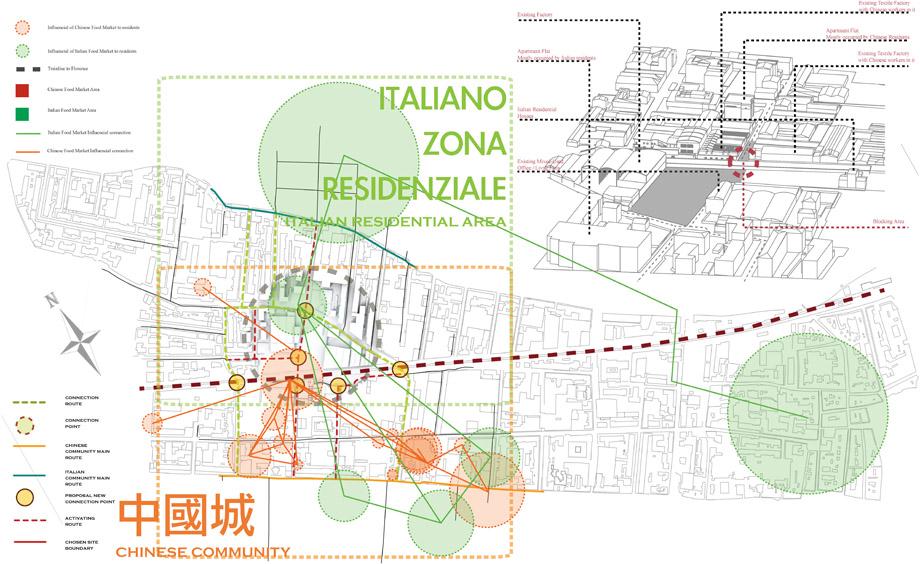
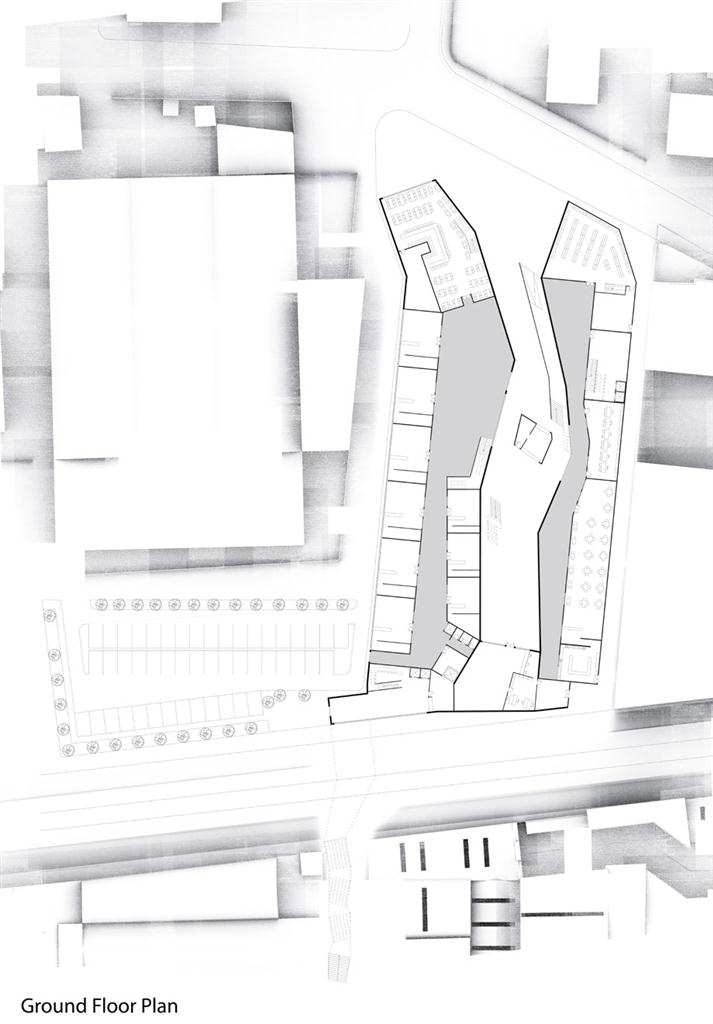
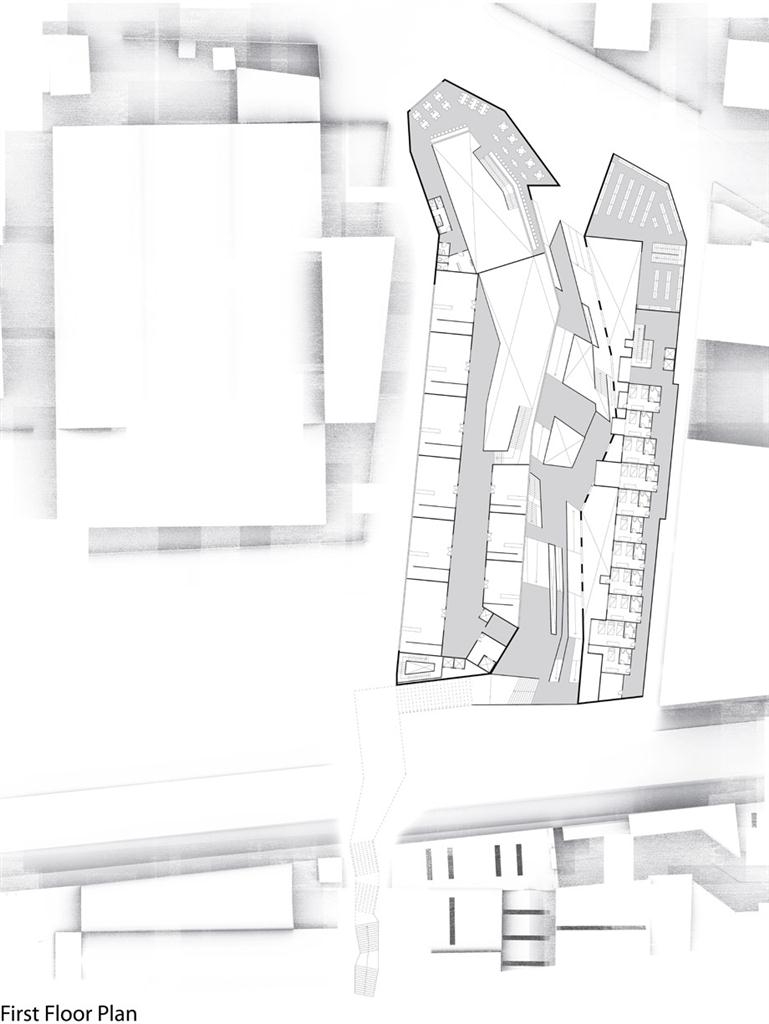
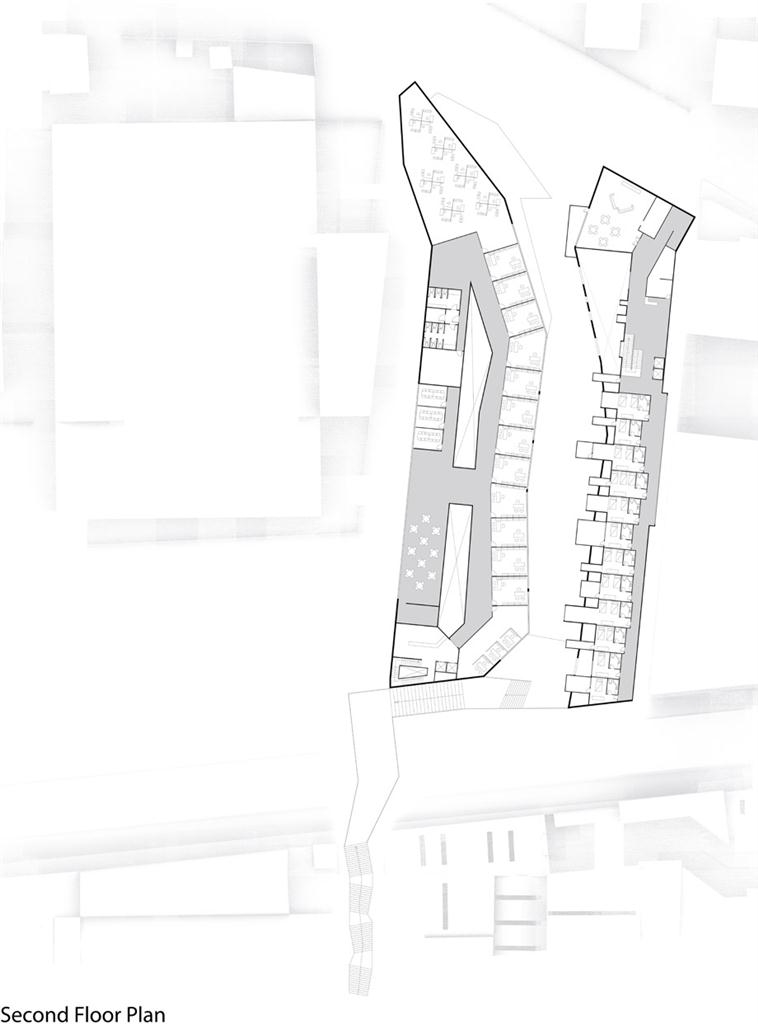
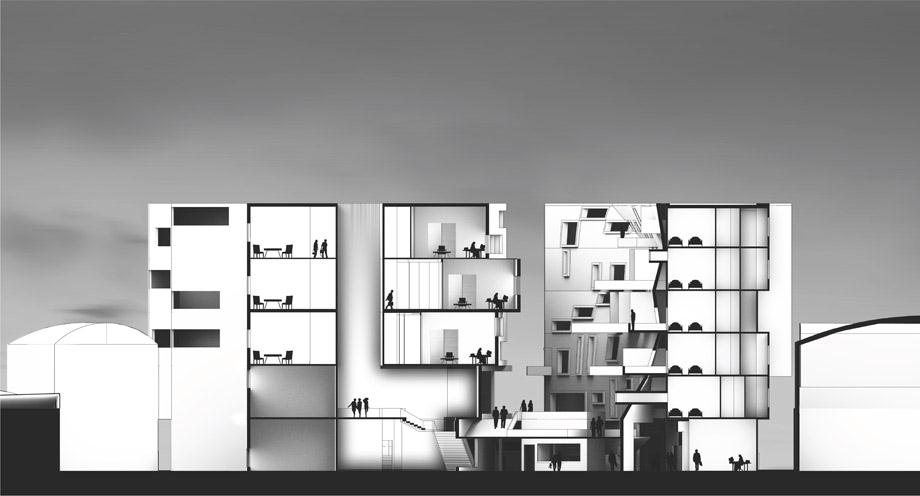
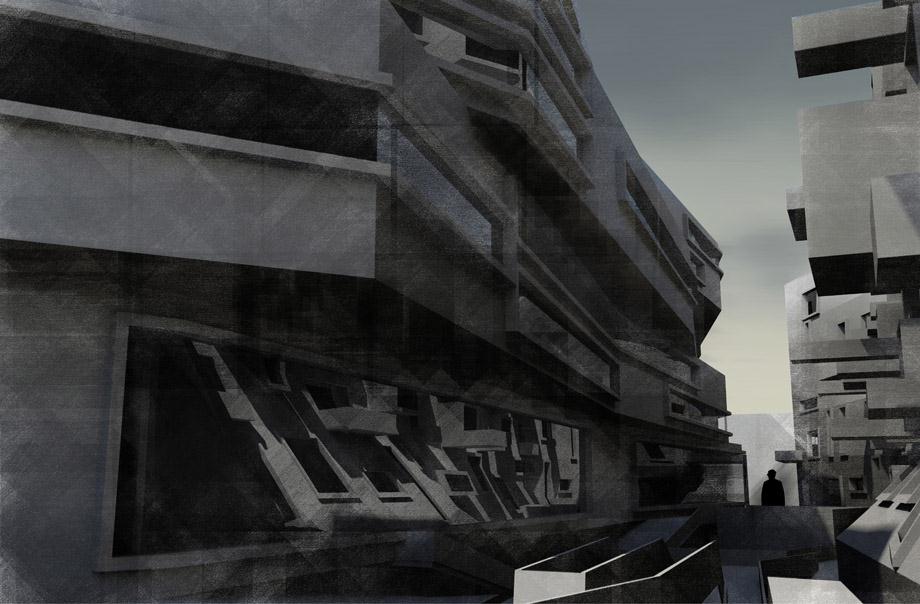
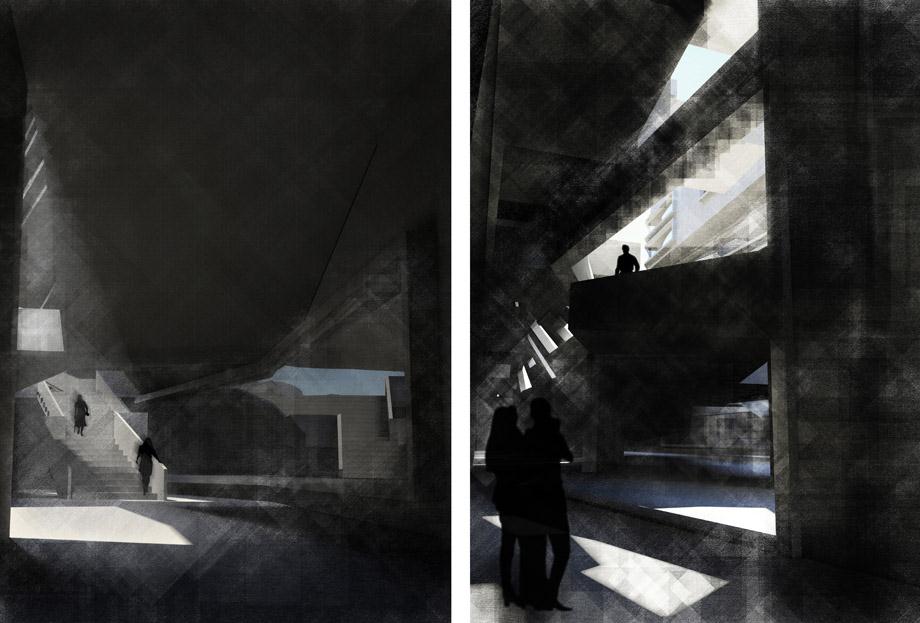
‘A conflict in between’ has the desire to reflect the contrast, or more specifically, the‘conflict’ of various cultures: Co-Habitation and Epicurean in Prato – The city that hasthe largest China Town in Europe. The train track which sits on the north of the China Townof Prato, is more like a boundary between Chinese immigrant community and native Italiancommunity. It is a boundary of two different cultures, two different spatial styles and twodifferent living attitudes.
However because of this boundary, nowadays the city of Prato is seen more like a seperatedcity, the old town has already lost its significance of industry and the people more andmore focus on the issues of Chinese Immigrants. On the other hand, the Marcolotto 0 area isrecognized as the ‘China Town’ but and the area itself prevents the native culture fromthe old town.
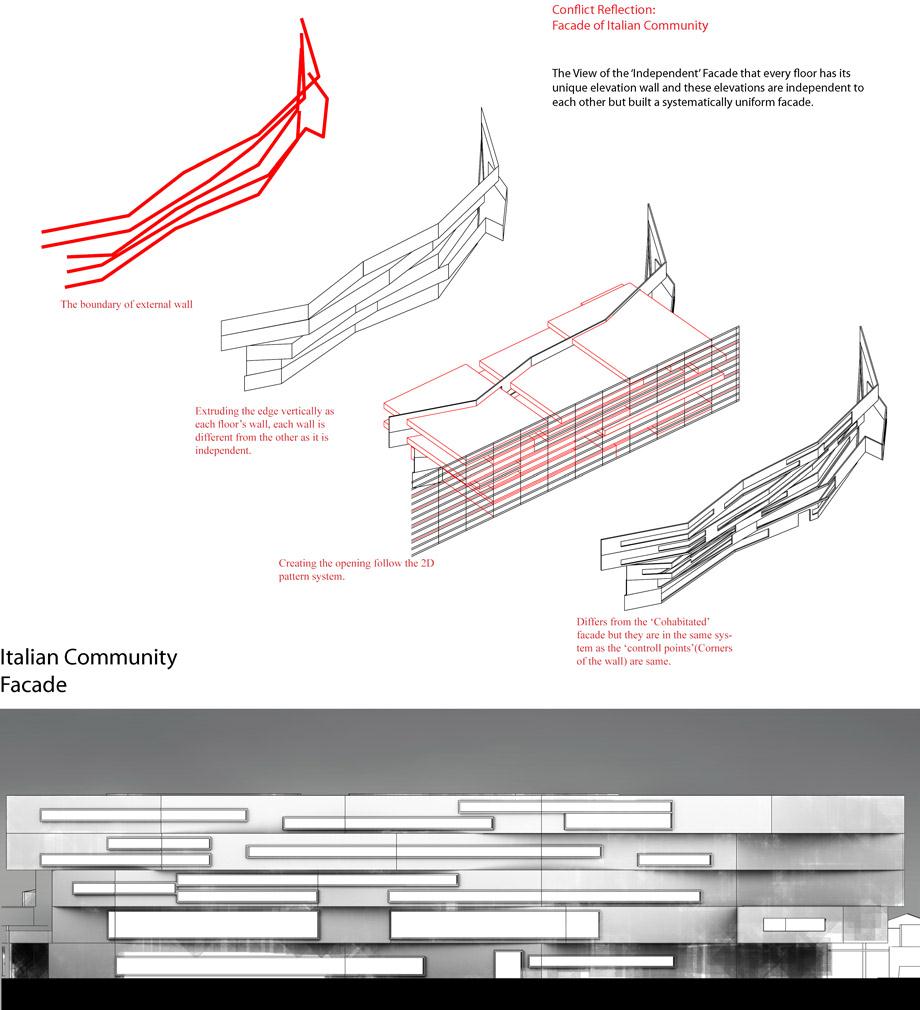
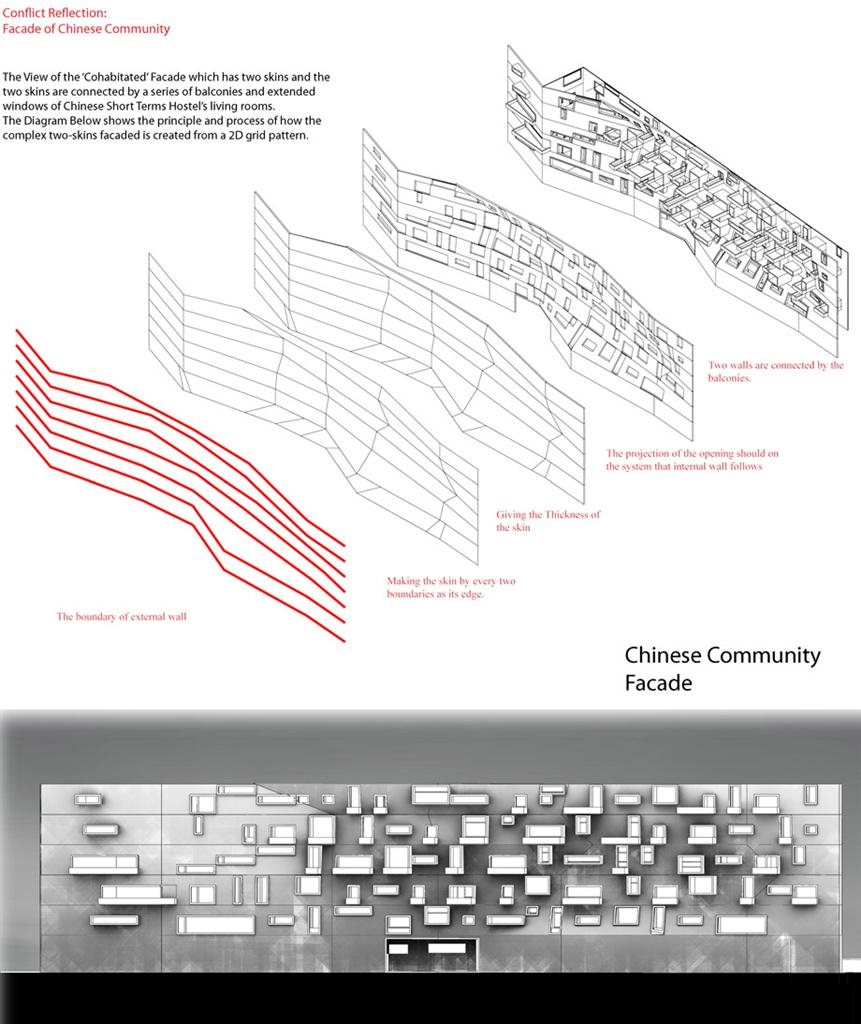
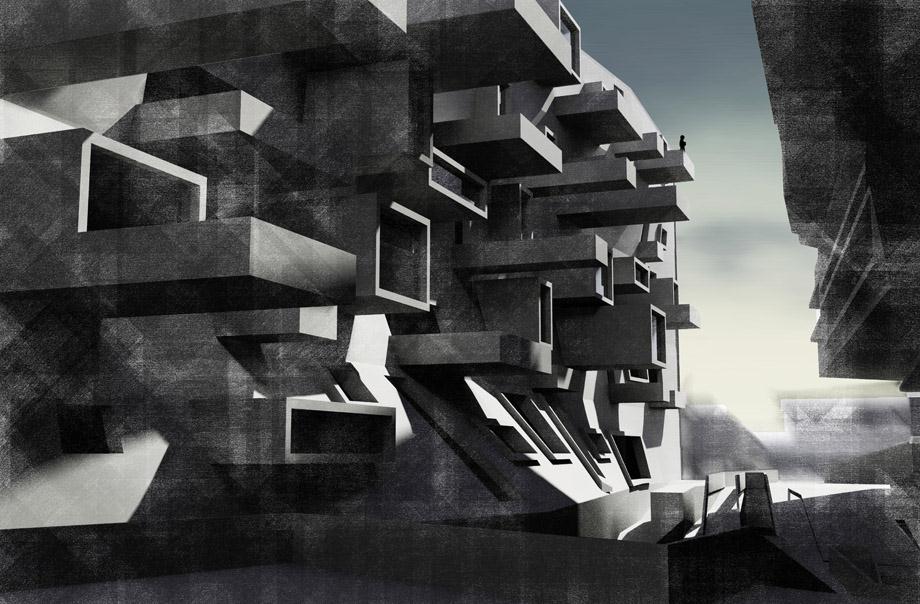
Prato in these days losses its attraction and characteristic and becomes disorganizedbecause of its separation of the comunnities. One important point of ecology in an urbanrange is to combine different kinds of existance in one city, to seek the furtherdevelopment for both two things, even they are totally different. Hence inspired from thecultural ecology, the conflict between two cultures, shouldn’t merely exist in people’smind because this conflict existance could probaby increase seperating of the city, but theconflict should be clearly appeared in the city as the conflict itself is a significientfeature in terms of diversity in Prato. The judgement of cultural recognition should befirstly determined by the fact first, because the various cultures should be fairly treatedin the city, no matter whether it is local or ‘imported’. Therefore the project itselfshould create two facades to represent their independent cultures and an intensified spacein between to reflect this coflict from mind to fact, and to enrich the diversity of Prato.
‘中间冲突’这个项目想要去反应普拉多这座拥有着全欧洲最大的中国城的城市中的一种多元文化的对比,或者更确切的说,一种多元文化的冲突: 栖居文化与享乐主义。
坐落于中国城北部的火车轨道更像是中国外来移民与意大利本地居民群体之间的一道分界线。这条分界线分隔着两个群体之间不同的文化,建筑风格以及生活态度。然而也因为着这条分界线,现在的普拉多好像被划分为两座不同的城市:旧城区的工业产业已经失去了其以前在意大利的影响力,取而代之的是人们更加关注这座城市的中国移民问题。另一方面,人们不仅习惯称marcolotto 0区为‘中国城’,还很难在这片被中国文化浸透的区域中发现意大利本土文化的气息。
现在的普拉多由于被两个群体划分开而失去了往日的光彩,整个城市杂乱无章。在城市生态理论中很重要的一个概念是使城市能够容纳不同的事物,并且能够促进多元化文化的发展,即使这些事物之间完全没有相似处。受这种城市生态文化的理论的启发,普拉多中这两种文化的冲突不应该仅仅存在于人们的意识中而被忽略,因为这种被逃避的冲突很有可能加速着城市的分离,相反冲突,弱被视为是一种城市多样性的体现,应该被清楚客观地呈现出来。文化认同的取判应当以公平的客观事实为标准,对于存在于城市之中的不同文化应该公平对待,无论它是当地文化或是‘进口文化’。因此这个项目创造了两个分别代表着各自文化的立面,以及在两个立面之间能够同时容纳着两种文化的冲突空间,从主观意识到客观事实来反应这种文化上的冲突,来达到充实城市多样性的目的。
1:1 Material Study
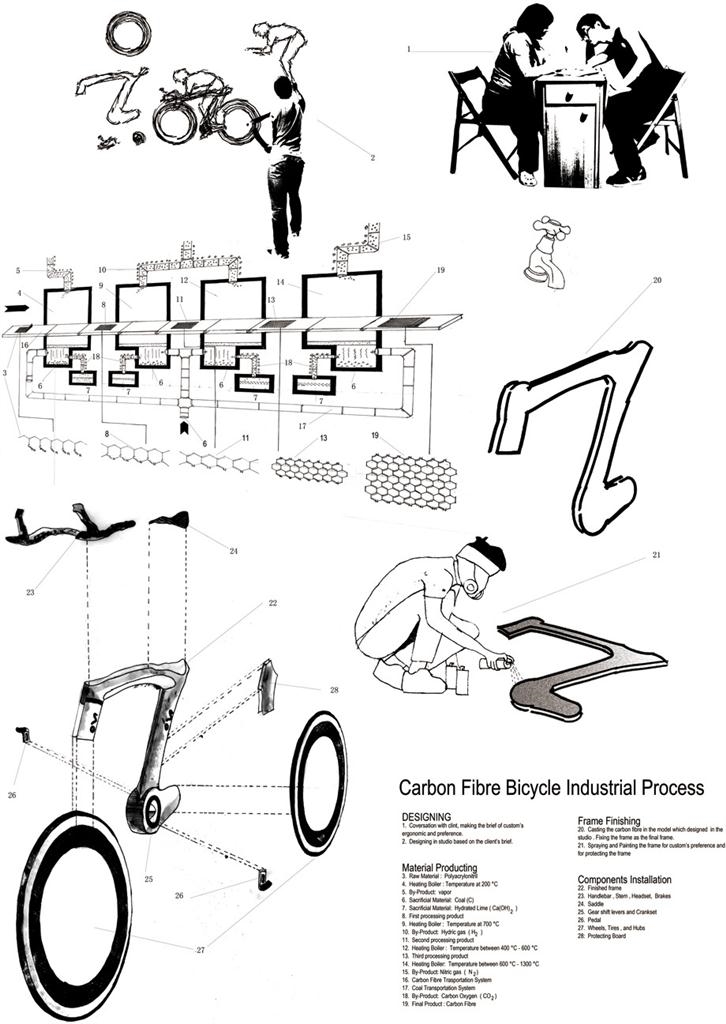
This is my 2nd year’s project. The aim of this project is to explore the more posibilities of materials. The project started with the research of one industrial producing process, then tried to clone this process to another similar material, and finally produced a new material based on the industrial producing process. The process I researched was the bicycle industry, as it was started in Nottingham and became the most distinguished industry in the city. As time passed by, the material of bike’s frame has been developed through steel, stainless steel and aluminum, now the most favourite material for bike frame is carbon
fibre.
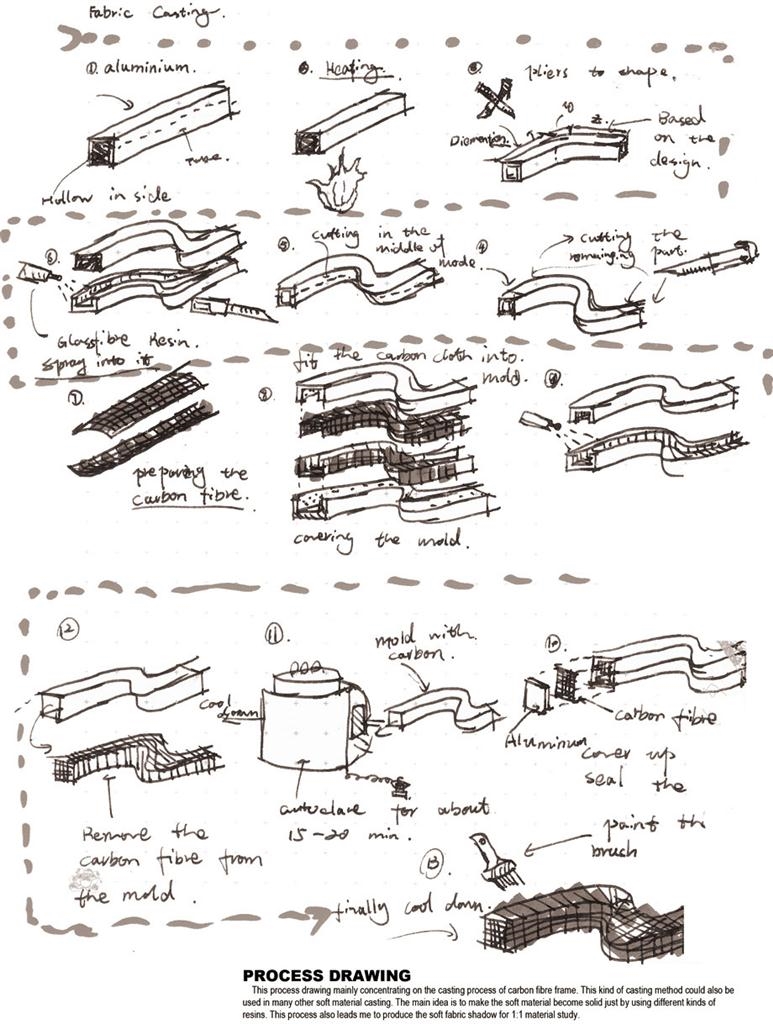
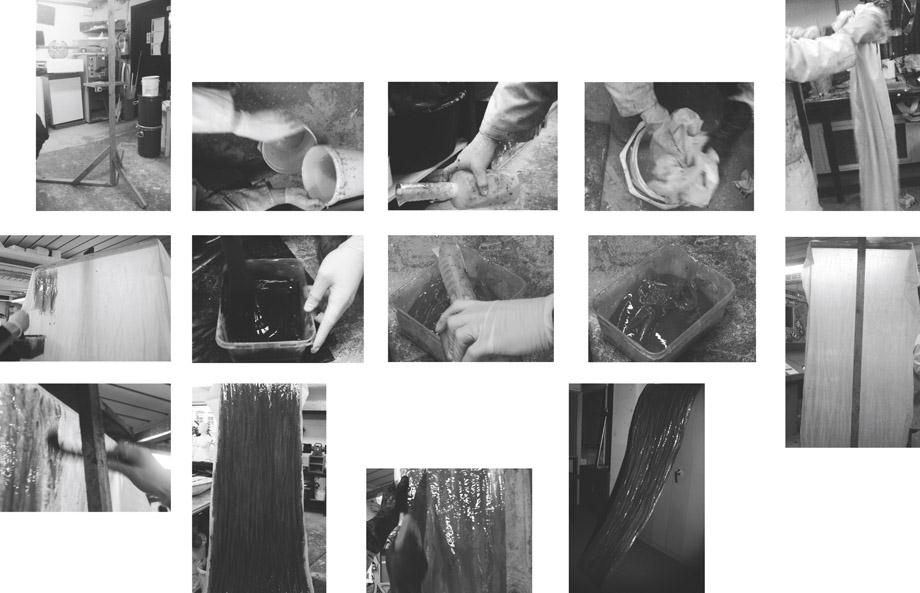
Then the key research of this study is to explore the carbon fibre casting method, and with the soft cotton fabric as the raw material, the polyester resin was then brushed on to the fabric so that the fabric could be solid and hard. The advantage of this new material is its making process is cloned from the carbon fibre casting process, therefore it has carbon fibre’s characters: easy to shape, light and better force resistance.
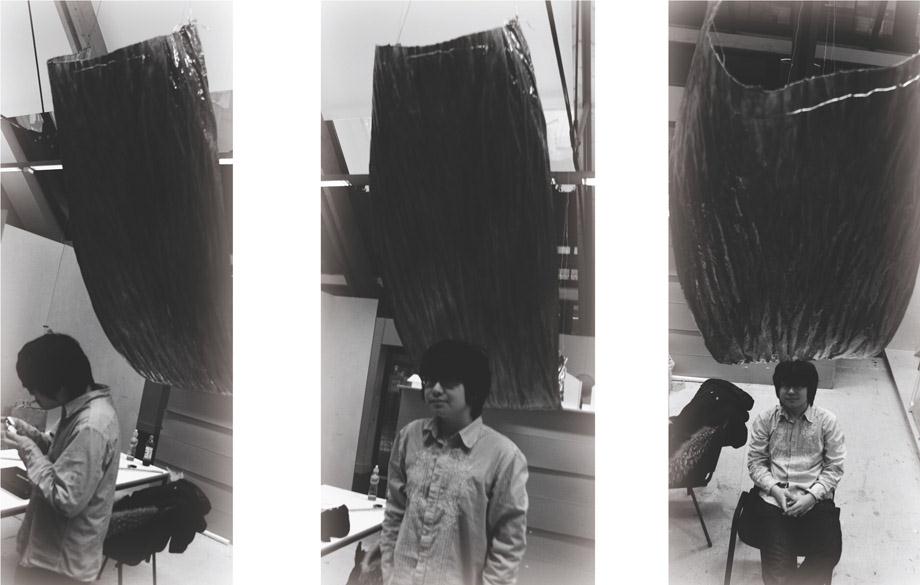
With this material I finally made a shading device for smokers and people who could stay under this material to avoid rain and snow. It was finally produced in school’s workshop and was exhibited in studio. It was supported by the trusses in the studio, hanged by the aluminium strings.
这是我在二年级时候的一个项目。目的是探究材料在建筑运用中的更多可能性。项目开始时我对一种工业的制造工艺进行调查,然后试图将这种制造工艺运用在另外一种相似的材料上,最后运用这种新材料制作出一个1:1的装置。我首先对自行车的制造工艺进行研究,因为自行车工业起步于诺丁汉并且成为这座城市中最引以为傲的成就之一,时过境迁,自行车基架适用的材料已经从最初的钢,不锈钢以及铝,到现在最流行的碳纤。
项目的重心随着调查的深入而转为对碳纤材料制作过程的学习,并且我选择了柔软的棉布作为装置的原材料,然后再用树脂涂抹在棉布上使其变硬。这种材料的优点在于它借鉴了碳纤浇铸的工艺,因此它也会具有类似碳纤一样的特点:容易塑形,轻巧以及坚固。我在最后运用这个材料为吸烟者以及躲雨者制作了一个阴棚设备。它最终被制成并且展示在建筑学院的Studio里,我用铝丝将它悬挂在Studio的桁架上。
Children Day Nursary Extension Design
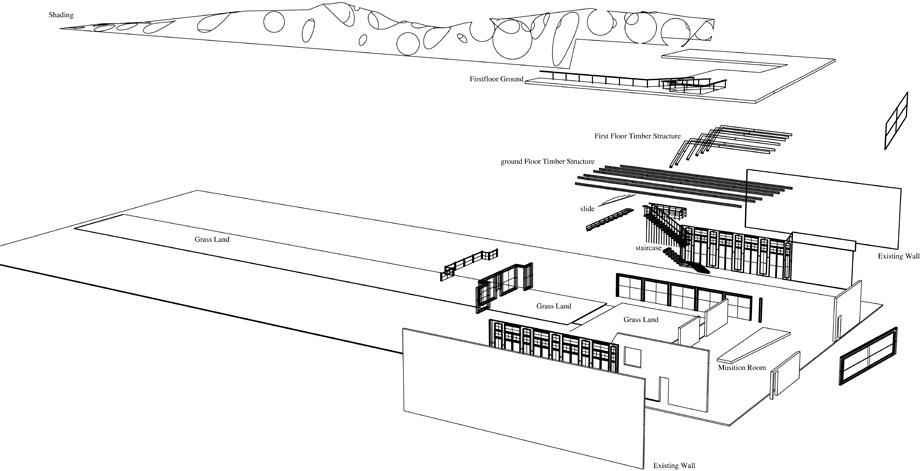
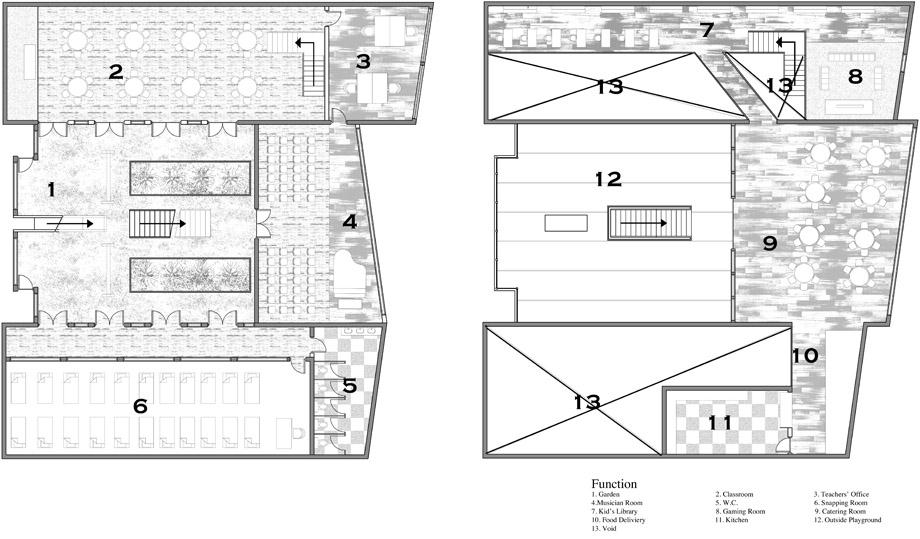
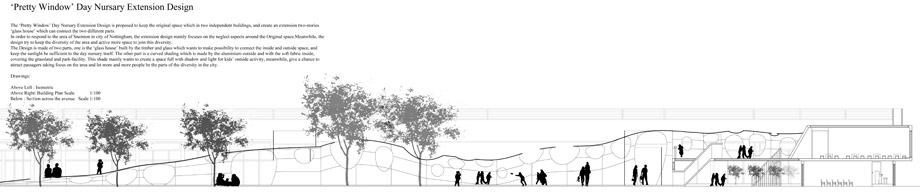
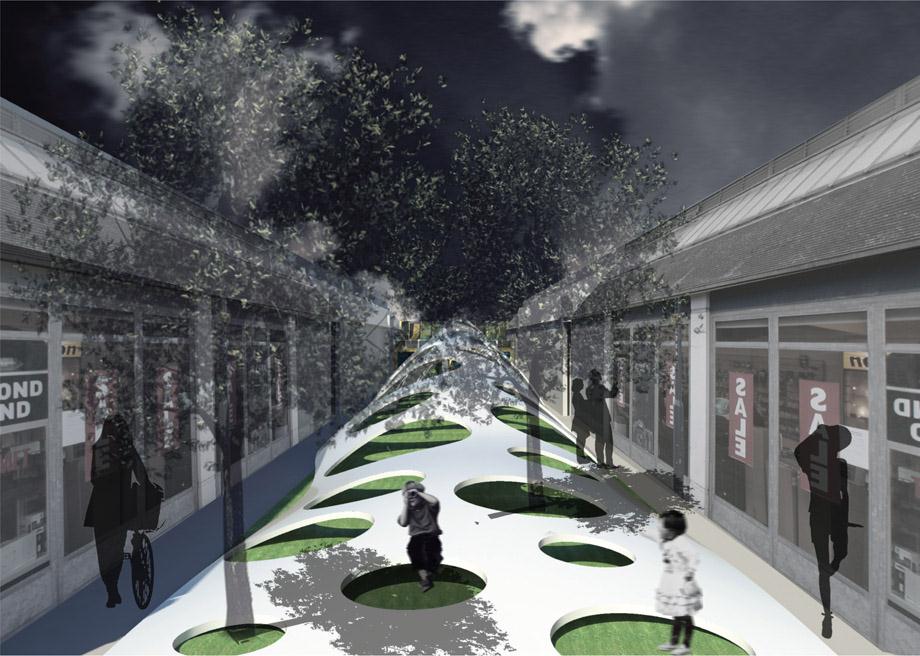
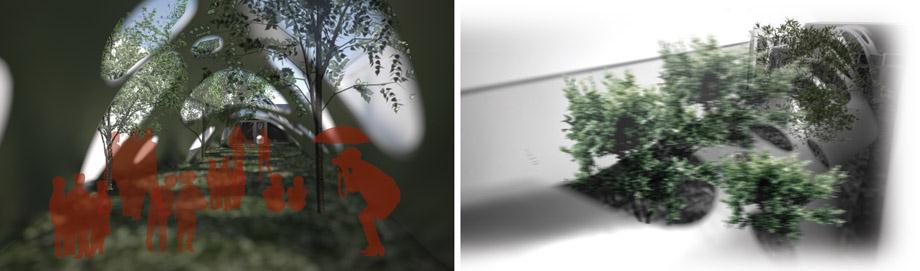
In Respond to the problem of lacking of natural green in Sneiton, I then designed the extension part of a children day nursary. The ‘Pretty Window’ Day Nursary Extension
Design is proposed to keep the original space which are two independent buildings, and create an extension two-stories glass house’ which can connect the two different parts. The extension design mainly focuses on the neglect aspects around the Original space. Meanwhile, the design try to keep the diversity of the area and active more space to join this diversity.
The other aim of this project was to practice another presentation way for architecture design – The animation. The traditional way of representing the architecture space is based on the 2D and 3D drawings. The improvement is to develop the space to 4D, with the time changing, more features like sound and movement of the space could be represented in the animation.
点击上方视频(VIDEO)进行观看 ▲
绿化面积不足一直是Sneiton长期存在的问题,针对这一现象,我选择了当地一所幼儿园,想通过设计改建达到让孩子们亲近自然的目的。这片名为’pretty window’的幼儿园在保持原有两座独立建筑的基础上,通过设计扩展形成了一座独特的两层建筑,并且连接着两个不同的区域;整个设计改建的着眼点在于如何充分利用原始地貌以及如何保持区域的多样性并使其得到最大化的利用。
当然,我还想通过这个项目折射出建筑设计的另一种表现形式-动画效果。随着时代科技的进步,基于传统的建筑空间表现形式多为二维和三维动画,我选择使用四维动画来作为建筑的一种表现形式,并希望这种表现形式能够通过声音,空间的移动等更多动画因素展现建筑的魅力。

MORE:
Name: Shuo Zhang 张硕
Email: joking5451@googlemail.com

很 李博斯金