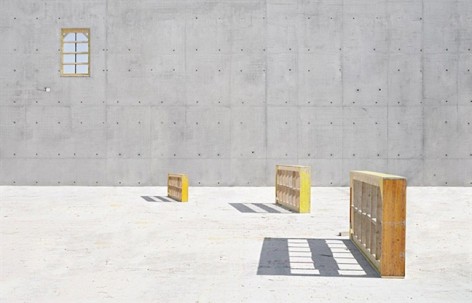
非常感谢Matthieu Gafsou将项目介绍和项目图片授权gooood发行。更多请至:Matthieu Gafsou on gooood
Appreciation towards Matthieu Gafsou for providing the following description:
Matthieu Gafsou生活居住在瑞士的洛桑,他是一名成功举办过世界级展览的摄影师,同时也是洛桑艺术与设计大学的老师。
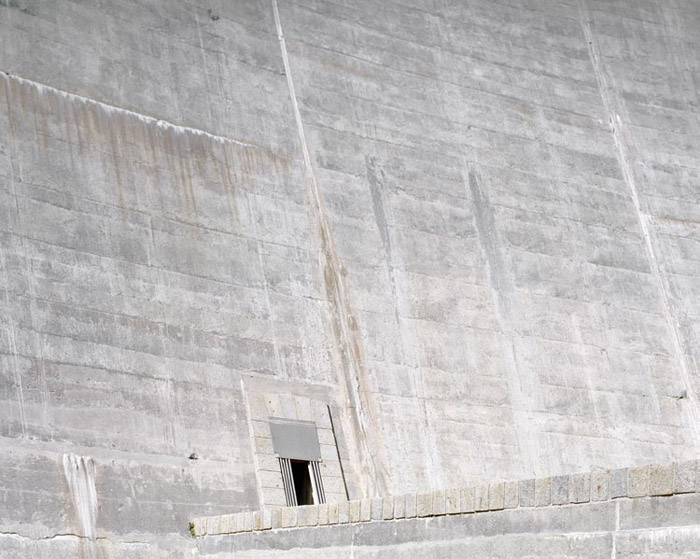
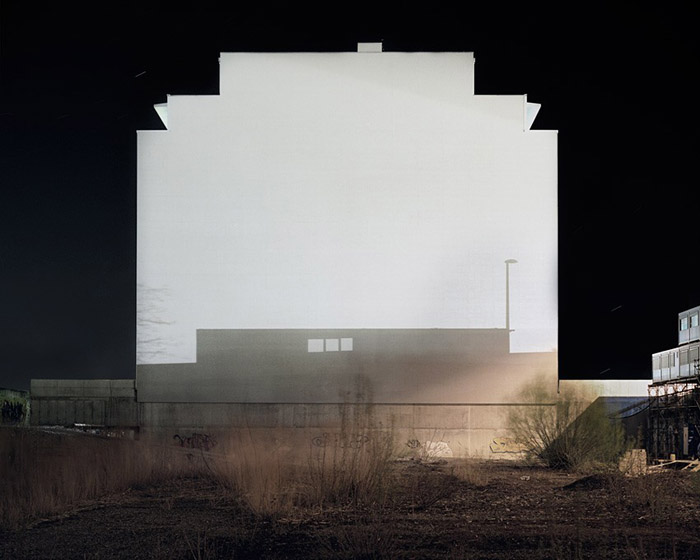
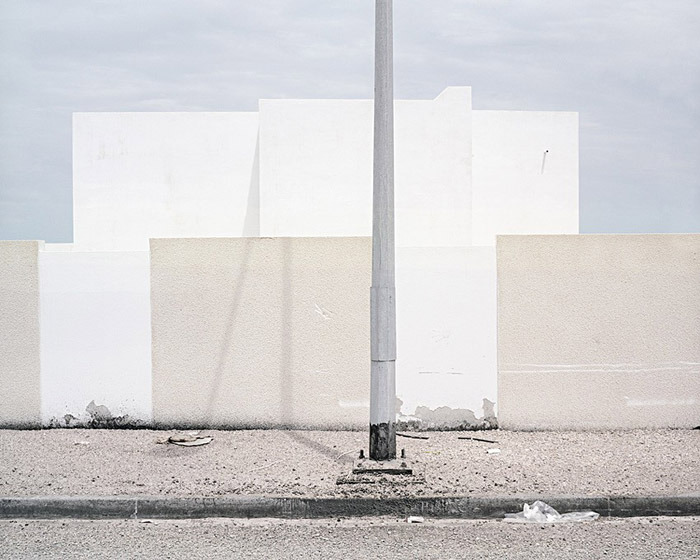
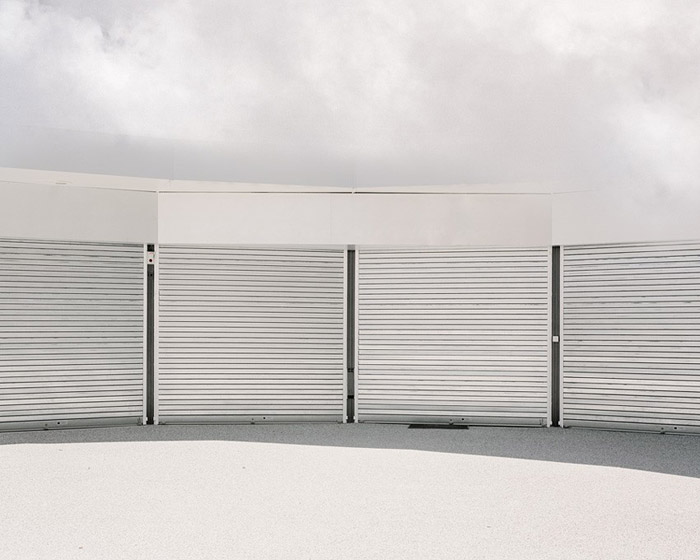
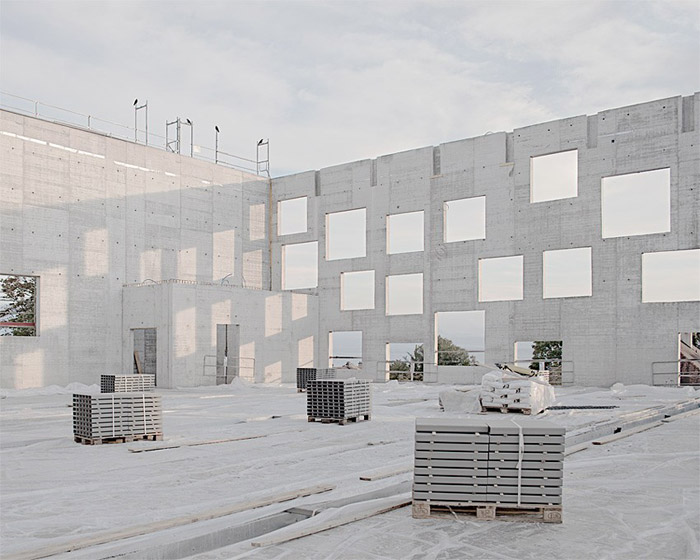
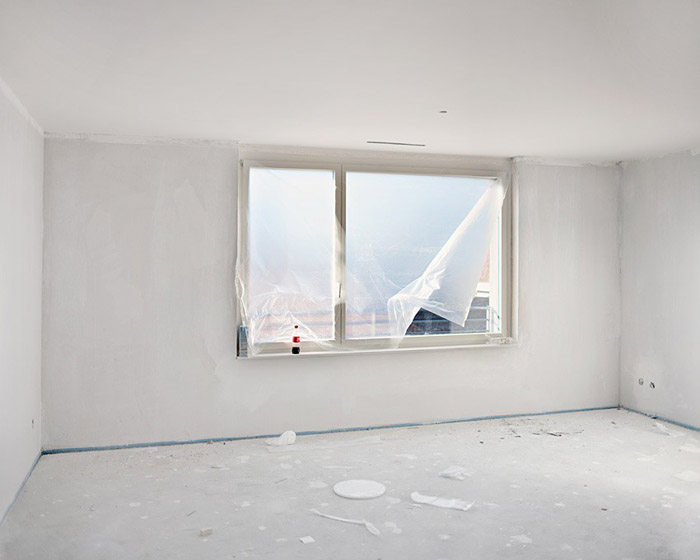
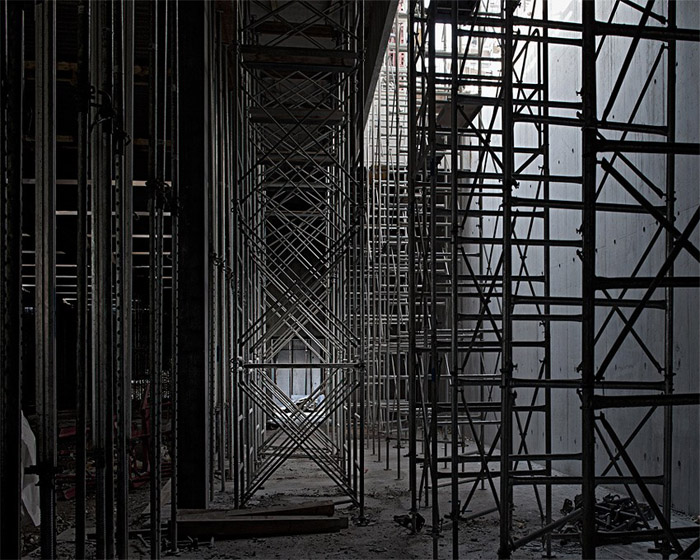
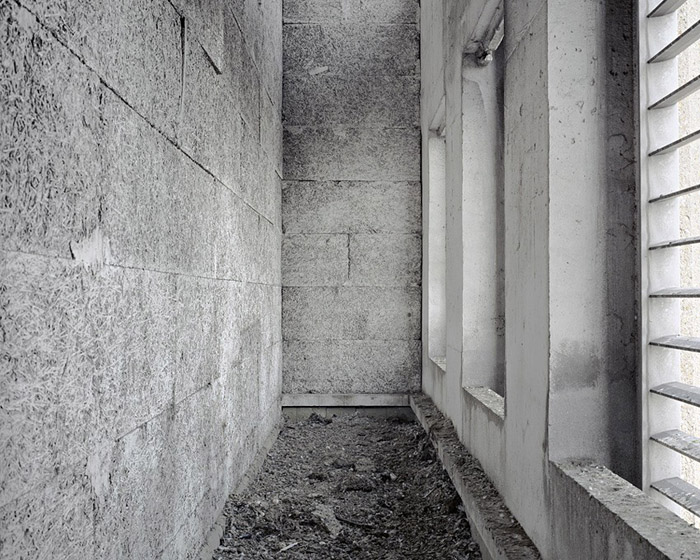
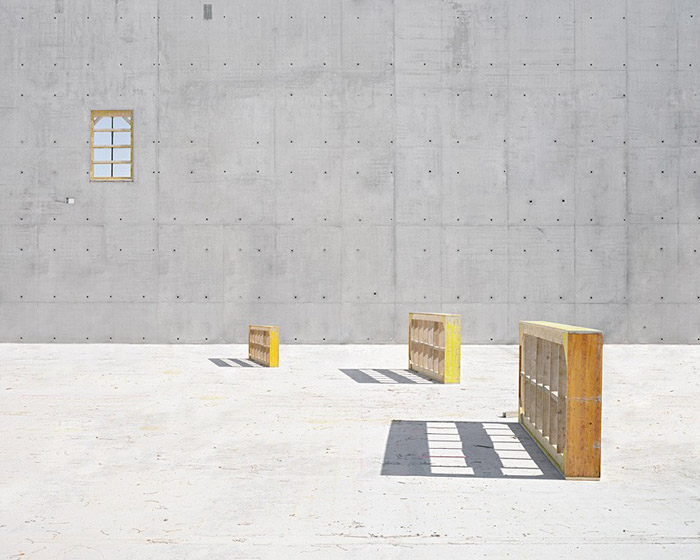
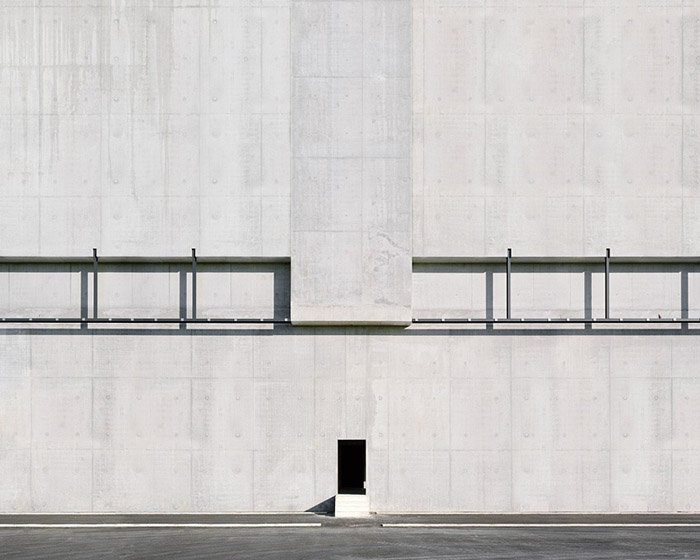
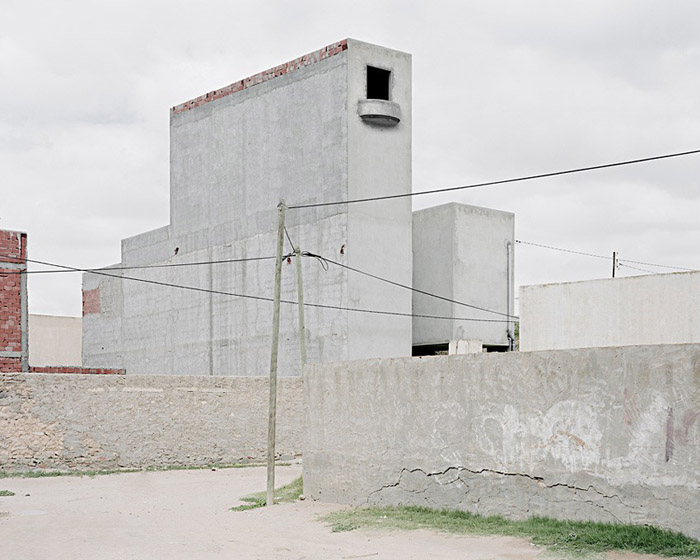
这是他的作品:Ordinaires。和名字相反,这些有着幽灵城市气质或者散发强烈监狱感的建筑们被极不日常的手段表达。如诗般的压抑美感让画面亦真亦幻,充满不安性。这样深沉做派的不稳定性静态图像被摄影师用高超的技艺表达,并引发了人们的现实质疑感。
Here’s some more information from the Matthieu Gafsou’s website:
Matthieu Gafsou lives and works in Lausanne, Switzerland. After university education (master’s degree in history and film aesthetics, philosophy and literature), he studied photography at the School of Applied Arts in Vevey (2006-2008). Since 2006 he participated in numerous group and solo exhibitions in Europe and the United States. He received in the 2009 the famous “Prix de la fondation HSBC pour la photographie” and was selected in 2010 in the exhibition reGeneration2, organized by the Musée de l’Elysée (Switzerland), which presents photographers of tomorrow’s coming from the whole world. He has published Surfaces, Actes Sud, in 2009. Since 2012 he teaches at the University of Art and Design Lausanne (ECAL).
By Stanley Wolukau-Wanambwa
Where was the body of work Terres Compromises made, during what period of time, and what initially drove you to make the work?
The work was made in Israel, Palestine and a very little bit in Jordan, during October and November 2010. My first idea was simple: we always hear about Israeli settlements but we cannot figure a picture of these places. While there I realised that I couldn’t separate the legal Israeli lands from the illegal ones (according to the NATO borders) because of their similarities, and that’s why many pictures are made in Israel.
One of the principal themes in the work seems to be a contrast or anachronism expressed architecturally, between standards of living, leisure activities and religious observance. You photograph leisure and luxuriant space as it contrasts with more dilapidated congested residential space, and this is all occasionally framed against symbols of violence, objects symbolic of militarisation and of religion.
Does this seem fair? What led you to approach the project and the area in this way?
I have the belief that it would have been a mistake to follow an objective method, especially in territories where the absurd is the norm. So I decided to follow my experience and to build a kind of discourse about these lands. I undertook the work subjectively. As you say, there is a tension between leisure, religious observance and militarisation. Those contradictory aspects of Israel (which is the main subject of this work) are essential to me: this country seems to have no specific identity (due especially to the incredible diversity of people living there) and to be shaken between irreconciliable poles. I don’t know if I am being fair, but I think that showing things like this can engage thinking. In these lands, I felt as in a bumper car: pushed from one edge to another. Israel is in a war but you can visit the country as a tourist, as if there weren’t any problem. One day you are interrogated by soldiers because you are taking pictures in the wrong place, and the day after you are with people from everywhere in the world visiting Masada Ruins…
You feature images of new and old military formations, of castles and decommissioned tanks, often in sequences that point to a sense of a historical relationship between the two – to what extent are you interrogating or alludingto history, and if you are then what might your purpose be?
The answer is simple: there is for me an incredible paradox. You can see in Israel and Palestine the ruins of the first human civilisation, but then as you travel you discover that these coutires seems to have no history (or a very brief one). As concerns “visiting” settlements, I was really surprised by the fact that people aren’t living there for political reasons but for economical ones – as I was asking about the territorial problems they were often just eluding the question, as if there was nothing to talk about. On the other hand, you see guns everywhere, they are part of the daily life. The army, Tsahal, is a very important part of Israeli culture. Everyone (men and women) has to serve the country. Contemporary history is there more living than in Europe or the USA but the paradox is that people are trying to flee from this reality, living in a world of entertainment and leisure.
Alongside leisure I think that tourism and the symbol of the outpost also feature in this body of work, and I wonder whether you are making reference to the manner in which those of us who do not live in the Middle East tend to ‘visit’ its conflicts from afar, from a position of security and relative comfort. This notion is also to my mind integrally bound up with a central problematic of photojournalism where it concerns conflict, as well as documentary photographic practise: that the camera produces an image through which we can enter into a transient relationship with the situation described…
That’s why I made picture of tourists looking a little bit altered. It’s a way of doing a self-portrait without doing it. The fact is that I am there just as a stranger who doesn’t really understand the culture he’s discovering, because he’ll never be a part of it. That’s why I try to leave meaning(s) as open as possible, even if i know that my personal views (and feelings) interfere with this intention.
On the other hand, like Voltaire’s Ingénu, I have perhaps this naïeve ability to point to facts that are meaningful. For me there is a consubstantial aspect to documentary photography – a sense of being of the same cultural material – which is significant particularly when people travel to produce their work. I feel more free and legitimate to be ironic when taking pictures in Switzerland, like in the series La Chaux-de-Fonds or Alpes.
With all these things in mind, why did you decide to title the portfolio “Terres Compromises”, or ‘Compromised Land’?
This pun makes the link between the sacred dimension of the lands and the fact that they are the subject of a perpetual war.
The architecture that predominates in your series is clearly new-build modernist in form, and on occasion you set this up in contrast against more ancient religious and colonial buildings. It may be an unwitting irony, but I notice that perhaps the newest construction in your series may be the Separation Wall that you photograph.
I wonder what informed the mix of sitesthat you photographed, and as you edited the series together how you definedand developed these interplays between condo complexes, synagogues, mosques andmilitary walls?
As an answer to your question I would say that I tried to show the cultural imbroglio of these lands, using architecture as a form of exposition. That’s why you see the Dome of the Rock, the Wailing Wall or the Damascus Gate of Jerusalem being linked with the Har Homa settlement or a condominium in the city of Mitzpe Ramon. I also wanted to produce a complex and open series, so I decided to mix many different aspects, accepting the risk of being sometimes a little bit scattered.
In one of the images in the series you show this unfeasibly green park with bubbling fountains hemmed in on all sides by arid infertile soil, all set beneath rows of immaculate rows of condominiums.
Did these scenes strike you as bizarre, anachronistic, contradictory in any way?
A little bit of all those feelings. I was also struck by the belief that people are sometimes more interested in building an image of their hapiness rather than something real and concrete. This completely planned city – Modi’in – has something frightening to it. Here these words from the poet Rilke fit very well:
“For beauty is nothing but the beginning of terror which we are barely able to endure, and it amazes us so, because it serenely disdains to destroy us.” (Duino Elegies) At one point in the sequence you directly counterpose a more haphazard valley of lodgings with an image of another brilliantly white modernist apartment building. The formal compositions as you photograph the two scenes almost lead one to think of the two sites as conjoined, and then the jarring nature of the contrast strikes, along with a strong sense of the absence of clutter in the affluent area.
While you don’t make any conclusive judgements, are you seeking to describe a set of unequal circumstances in this way?
Yes. Both pictures were shot in the East Jeruslalem zone, which in fact is just a maze of borders. As you noticed, the Israeli settlement is like a bright fortress and the Arab village is less structured (or not at all) and more anarchic. For me this conjunction is a form of speaking without words. You can literally see at a glance if you are in an Arab area or not.
Your images of urban space are largely without human figures except on a couple of rare instances, but even in these as in the others there is an overwhelming sense of emptiness and quiet and calm. When smoke appears on the skyline in your pictures it’s always from afar. In another of your images, in fact, smoke appears from behind the long winding Separation Wall off in the corner of the frame. This brings to mind questions of security, control, distance and so forth.
Would it be fair to say you’re making a political observation in this sense? If so, what is it?
I want some violence or anxiety to pervade the quiet and calm, to contaminate the pictures. Even if the smoke isn’t linked to real violence or war it makes those ideas appear. My point is to reveal the latent anxiety that hovers over Israel and Palestine.
You close the series with what, for many, would be a very controversial image of a white dove emblazoned with the Star of David. What led you to do this, and to what extent do you feel that this adds retrospectively a stronger morecritical edge to the portfolio?
This picture is a scan from an advert I found in an Israeli newspaper. I have just cropped it. I see in this image something provocative and ironic. As you say it can tranform the reading of the other photographs.
Was it difficult to obtain permission to make these images – I’m thinking herein particular of your image of the Wailing Wall?
I never asked for any permission – much too complicated and certainly a waste of time. I was interrogated by soldiers or cops a few times but they cannot do anything, and just try to intimidate you. The photography of the Wailing Wall wasn’t difficult at all to do. I made it from a point of view outside the Wall perimeter so, even if it was Shabbat, it was easy to make it.
Given how contemplative the project is, which is to say how gradually the critical undertones of the images reveal themselves, in what sorts of environments or contexts have you sought to exhibit the work? I feel that because you do not directly link any single image to a ‘news’ event in a typically photojournalistic sense, but nevertheless make comparative observations about this highly politically charged part of the world, the context in which these images are consumed must be especially important to you? (I notice the project hasn’t appeared in your Exhibition Views).
The project (part of it) will be exhibited in a few weeks in an uncommercial gallery dedicated to the support of documentary projects – a very specialised place I have to admit. For me this kind of work is on the border between art and documentation. The issue is that it isn’t really documentation and that it isn’t exactly art, so it’s not that easy to show it. Commercial galleries are interested but they pick up what they can sell, which cancel or attenuates the meaning of the work. On the other hand, when the French-speaking national newspaper in Switzerland reported about this work, it only explained its political aspects. Of course a museum would be a good place, but up to now I’ve only presented the work as a screening show in the Musée de l’Elysée in Lausanne. The book of course would also be a good manner of presenting such a work, but I believe I need to produce something more to have the material for a book.
How does Terres Compromises fit into your broader photographic practice? Your work seems to have been more abstract or lyrical and allusive in other projects, whereas Terres Compromises strikes me as being closer to what we generically call documentary photography. Is that fair? Where do you see theproject in terms of your work?
Terres Compromises is the most documentary work I’ve made. But i think that the link to my other works is this tension between formalism and documentation. I always try to experience the photographic medium in this way; sometimes I’m nearer one pole but what matters is this dialectical tension. Here, I have a very strong subject linked to news so it necessarily tends to the documentary aspect of photography. I also wanted to experiment on this side of the medium, although I believe it fails in terms of documenting. But I hope it is a good way to reflect.
Are you familiar with Paul Graham’s work at all? I’m thinking in particular of A1: The Great North Road, New Europe and American Night? I ask because it strikes me that you are practising a similar conceptual approach to documentary photography: taking a more roundabout less literal and direct route toward describing a set of tensions or cultural and political forces at work in a given historical moment…
The answer is yes! Nearly everything is in your question, so I won’t take long! Like Paul Graham (thanks to him) I believe that the formal aspect of a documentary work is necessary to make something strong. I have to admit that I was very impressed by American Night when I saw it in Paris a few years ago, as I still was studying photography.
Lastly, how have people responded to the work? What are the typical commentsand enquiries that you receive about it? How do you feel about it now onreflection?
I received very contrasting responses. Some of them were laudatory and others really insulting. It’s because of the emotionnal aspect of the Middle East conflict. I was really hurt by some accusations of anti-semitism, but then rationalised these… As this series is maybe less inoffensive than my other ones, reactions are more polarised.
MORE: Matthieu Gafsou,更多请至:Matthieu Gafsou on gooood





Everything could be beautiful, if we forget the dead rules we ever made.
Yes