感谢 Henning Larsen 予gooood分享以下内容。更多关于他们:Henning Larsen on gooood
Appreciation towards Henning Larsen for providing the following description:
欧洲散裂中子源(European Spallation Source)位于瑞典隆德,是未来最强大的散裂中子源加速器所在地,将推动科学和创新领域的材料研究。作为世界著名科学家的全球中心,该设计将园区内部的社区感置于首要位置,旨在创造最高水准的合作和学习环境。
Home to the future most powerful accelerator-based neutron source , the European Spallation Source in Lund, Sweden, will advance material research for science and innovation. An international hub for world renown scientists, the design prioritizes a sense of community within the campus, creating a collaboration and learning environment of the highest caliber.
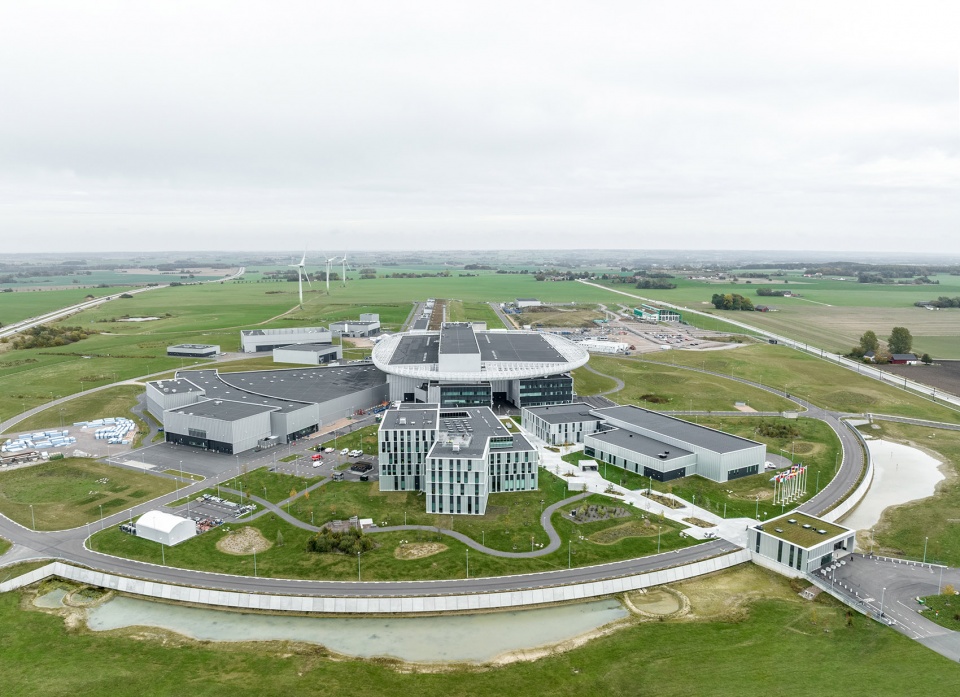
▼鸟瞰,Aerial view © Rasmus Hjortshøj
作为未来世界最先进的中子源,占地12万平方米的欧洲散裂中子源(ESS)将为材料科学、化学、生物学和物理学研究人员提供服务。它的主要目的是产生中子,以供科学家们用以研究材料的原子和分子结构。ESS的仪器所收集到的信息和成果将有助于为全社会最紧迫的问题提供解决方案,包括新材料、能源、医疗保健与环境等各种领域。
The future world’s most advanced neutron source, the 120,000 m2 European Spallation Source (ESS) will be used by researchers from material science, chemistry, biology and physics. Its main purpose is to produce neutrons that scientists can use to study the atomic and molecular structure of materials. The insights gathered with instruments at ESS will help propose solutions to society’s most pressing issues including new materials, energy, health and the environment.
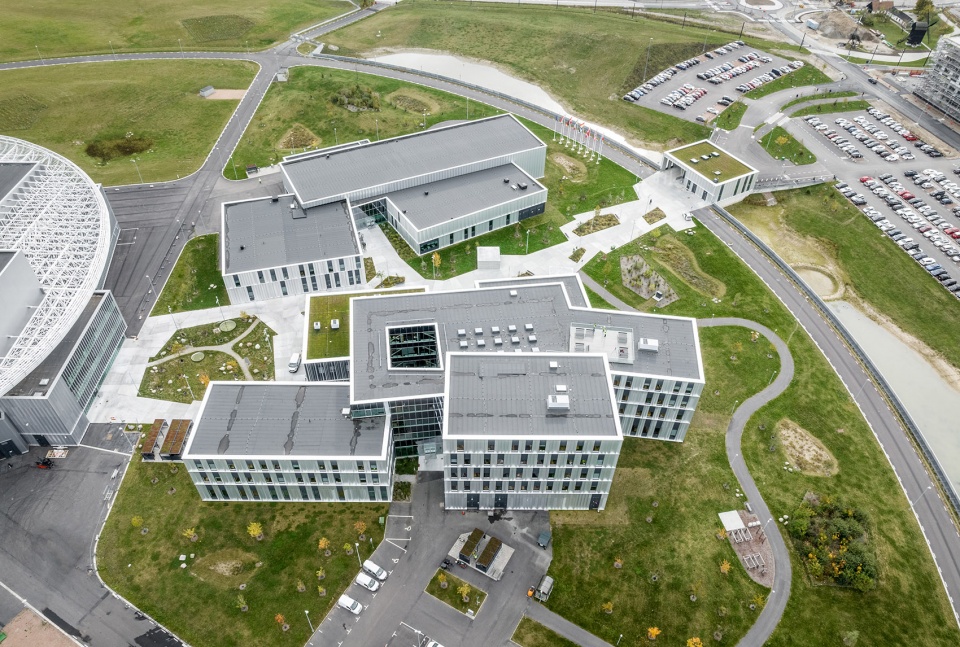
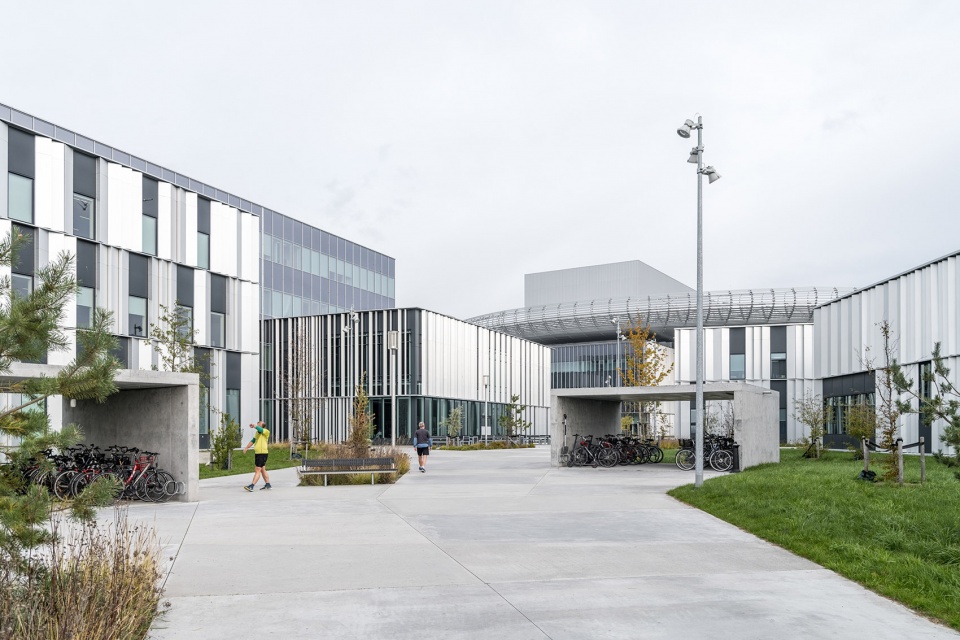
▼园区建筑外观,Exterior view of the buildings in the campus © Rasmus Hjortshøj
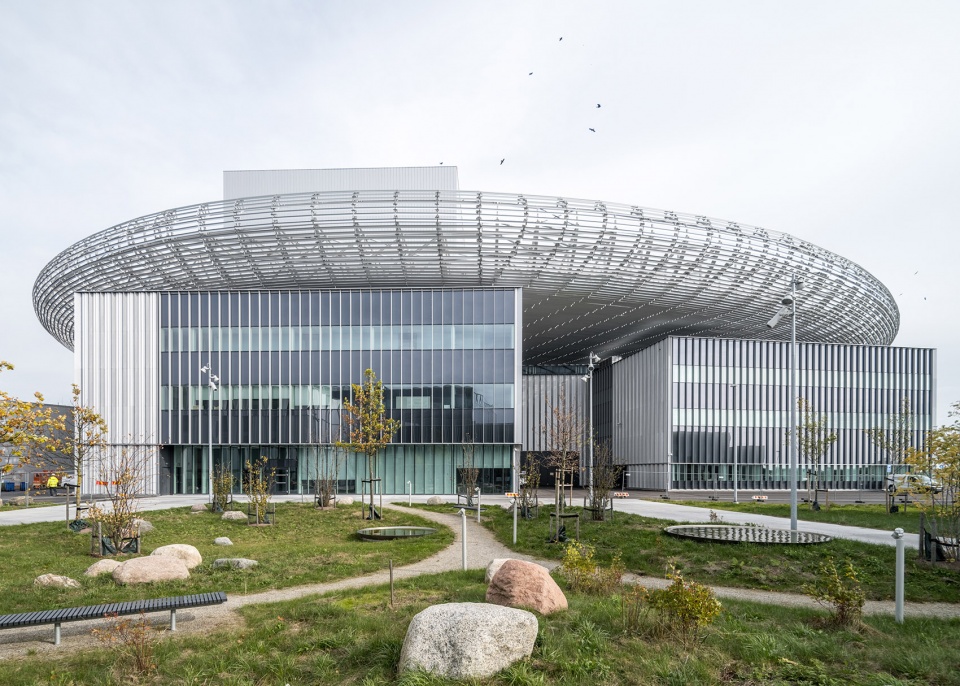
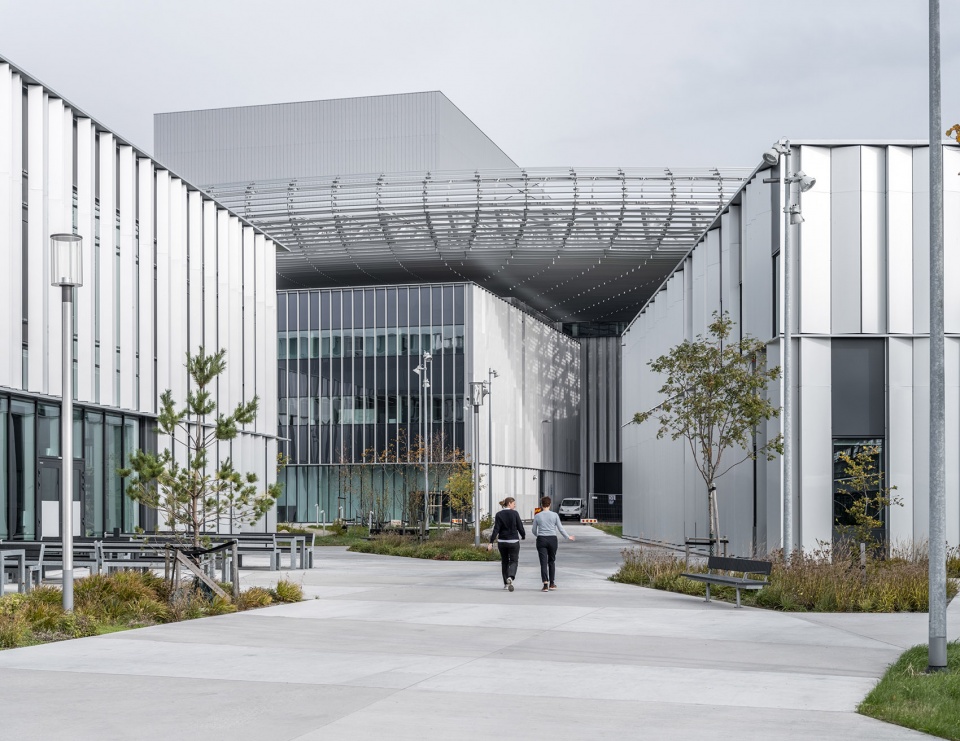
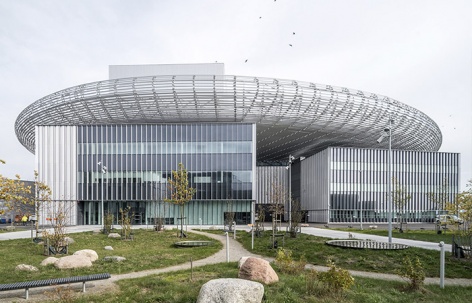
▼建筑近景,Close-up view © Rasmus Hjortshøj
该研究园区获得BREEAM杰出认证,其最重要的设备是一台600米长的质子加速器,它通过“散裂”过程产生中子,并向目标发射高能质子束。当质子撞击目标时会导致原子破裂,继而产生中子簇,将中子射向用于研究材料特性的仪器。
Generating neutrons through a process called spallation, the critical component of the BREEAM Outstanding-certified research campus is a 600m long proton accelerator which fires a high-energy proton beam at a target. When the protons hit the target, they cause the atoms to break apart, producing a shower of neutrons which are directed towards the instruments that allow scientists to study the properties of materials.
▼主要设备空间,Main facility area © Rasmus Hjortshøj
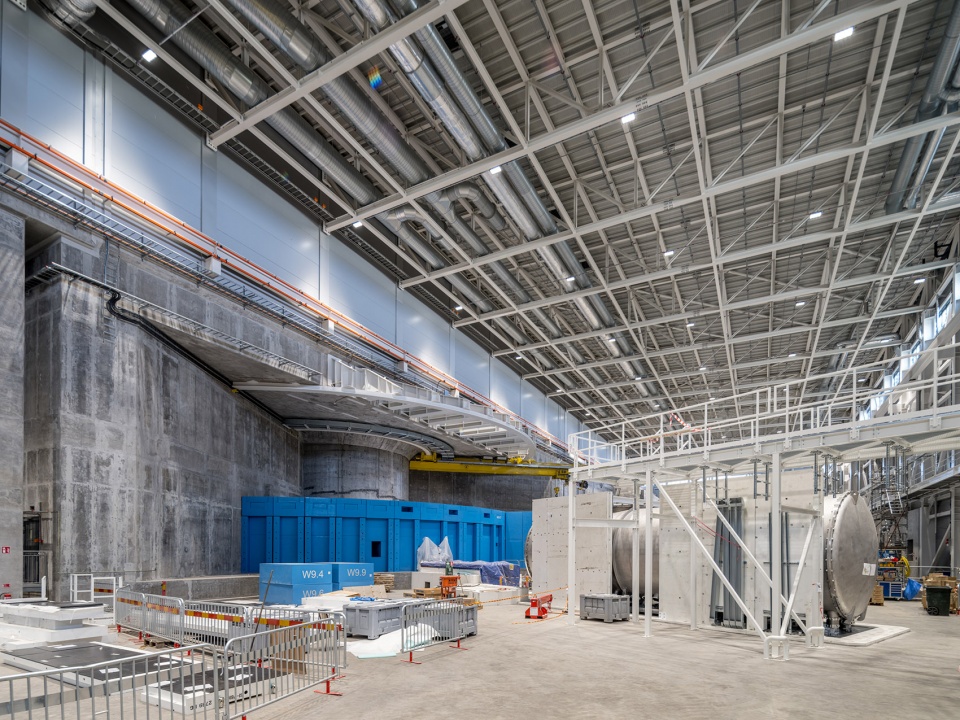
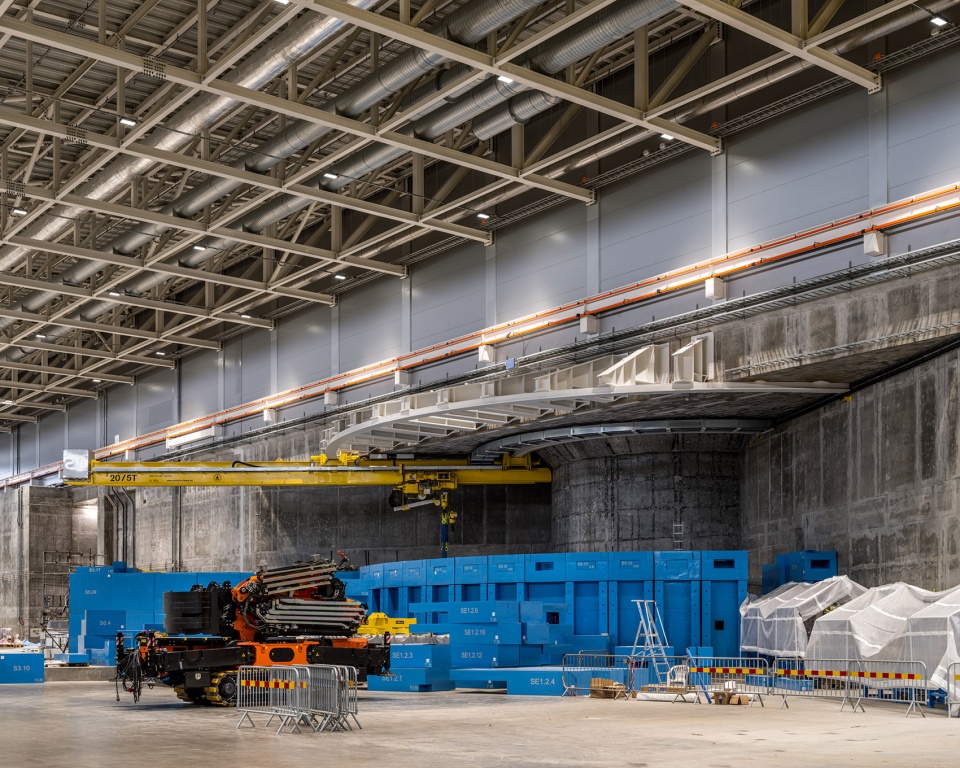
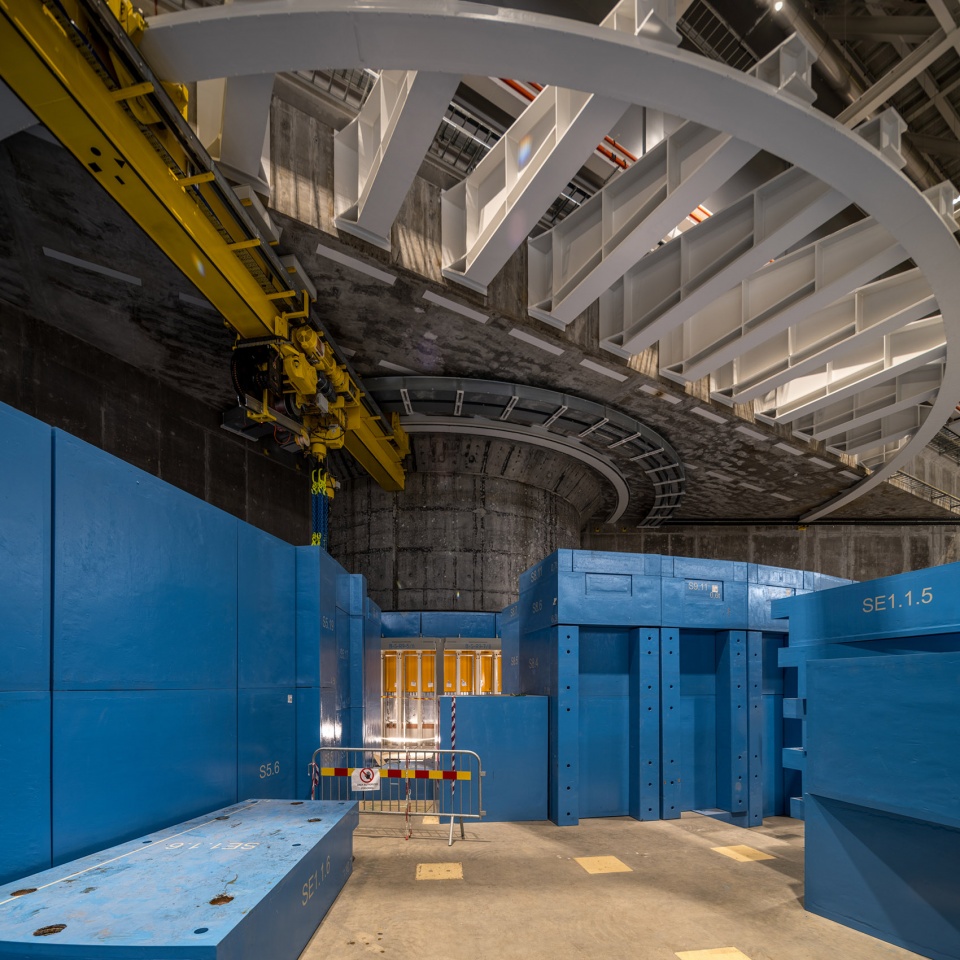
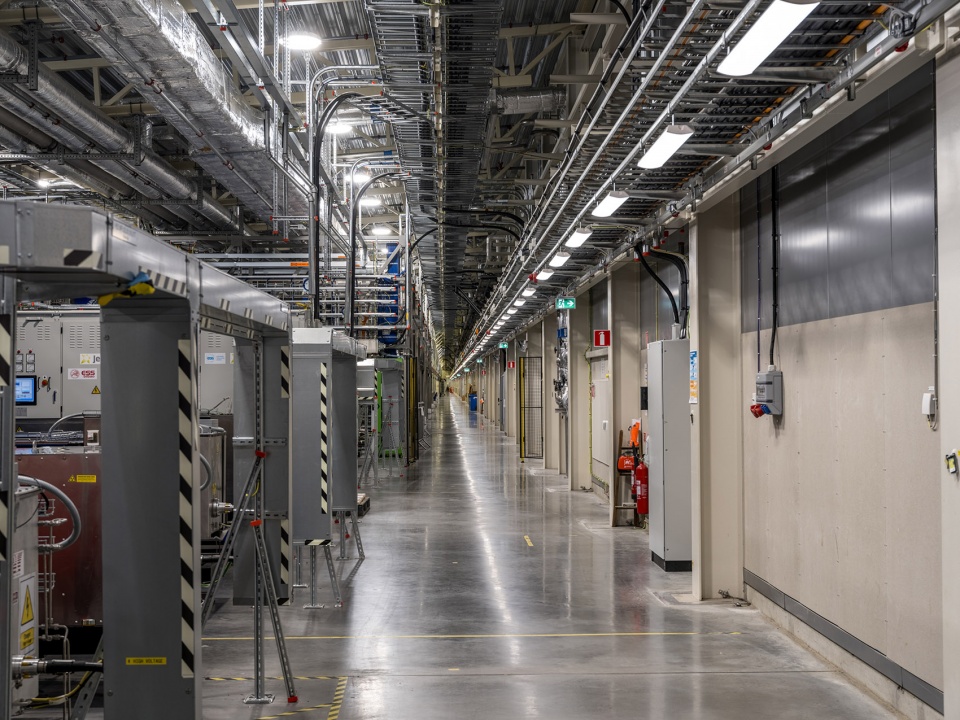
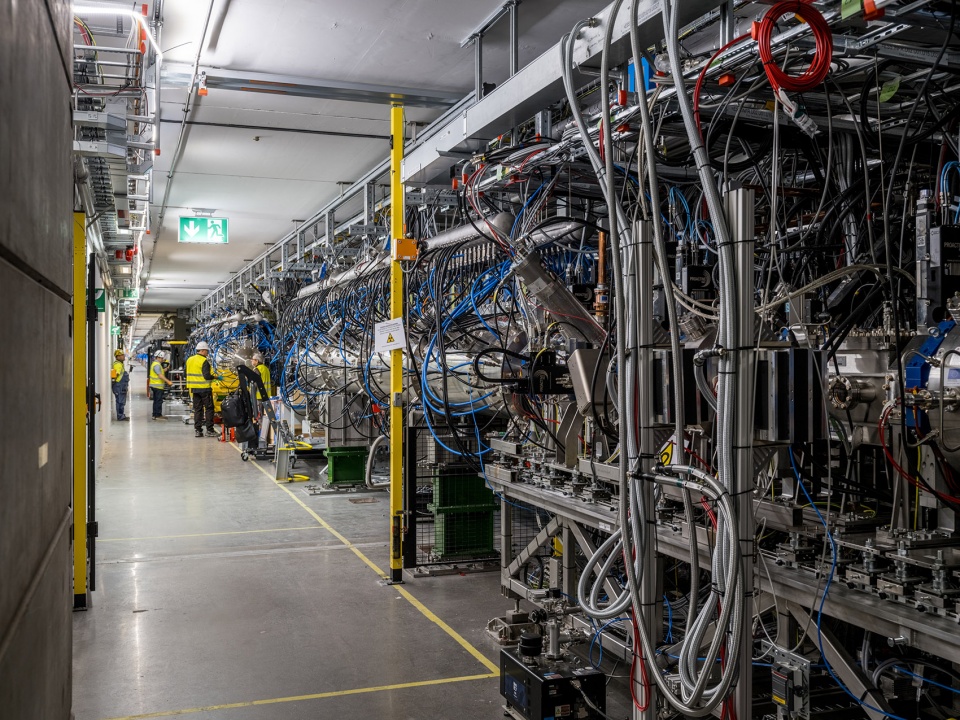
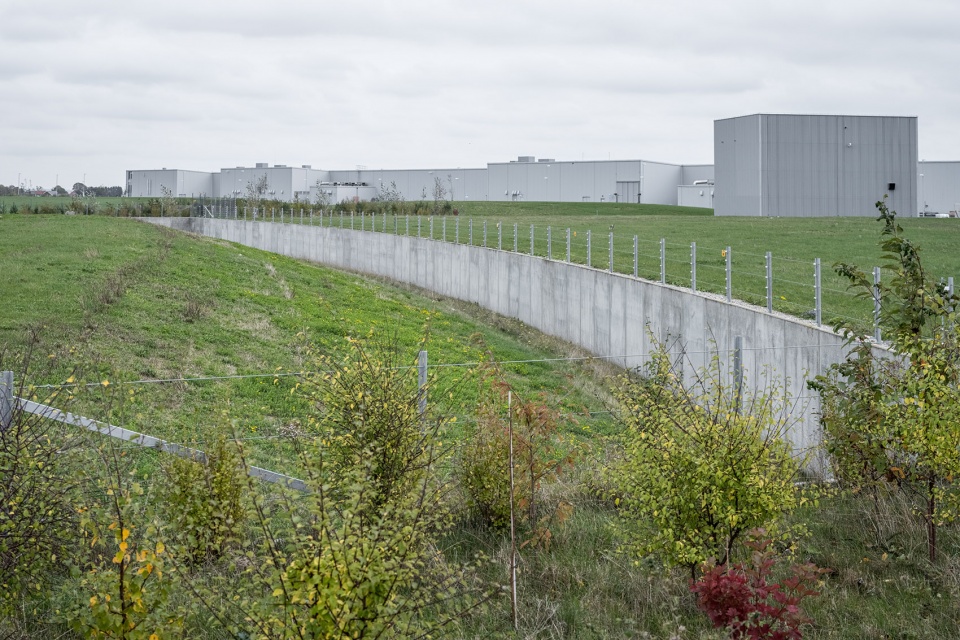
加速器本体位于地下的一条隧道中,与地貌融为一体。被称作“速调管长廊”的建筑掩映在土质护堤之下,位于加速器的上方——从一侧看仅是一座墙体,在另一侧则与具有瑞典本土特征的景观相融,犹如一片连续的草地。
ESS研究设施隐喻了散裂的过程:中子穿过线性的加速器与钨芯碰撞,将电子散射至景观。整个建筑群的布局复制了这一过程,展现了一种灵活的、面向未来的总体规划——景观化的质子加速器、圆形的靶站屋顶以及错落有致的设施建筑巧妙而谨慎地布置在景观当中。
The accelerator itself is below ground, housed in a tunnel which sits within the landscape. Disguised beneath a berm of soil, a building known as the ‘klystron gallery’ sits above the accelerator – only visible as a wall on one side, on the other the building blends into the Swedish landscape, appearing to be a meadow.
The ESS research facility becomes a metaphor for the spallation process: a neutron sped through a linear accelerator – colliding with a tungsten core – scattering electrons into the landscape. The complex as a whole replicates this process through its layout generating a flexible, future proof master plan – a landscaped proton accelerator, a circular target roof and scattered facility buildings intricately and delicately placed in the landscape.
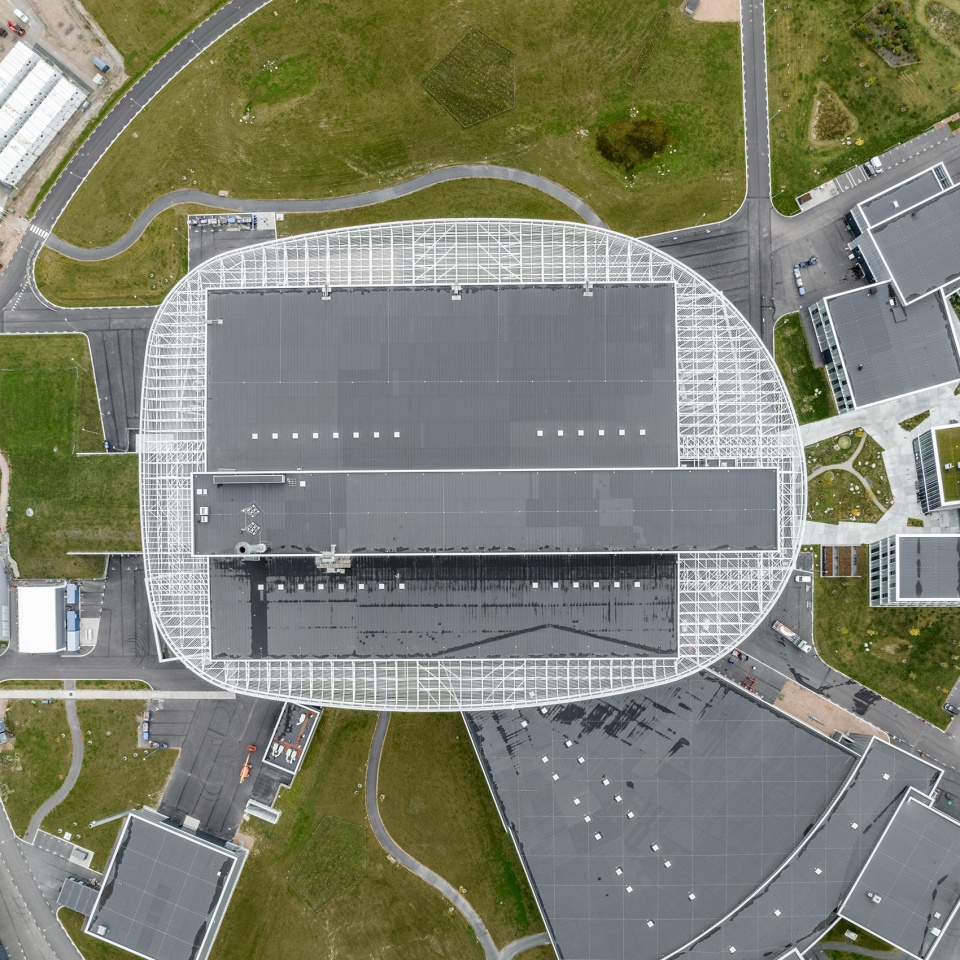
▼主体建筑屋顶,Rooftop of the main building © Rasmus Hjortshøj
▼建筑与景观相融,The buildings blend into the landscape © Rasmus Hjortshøj
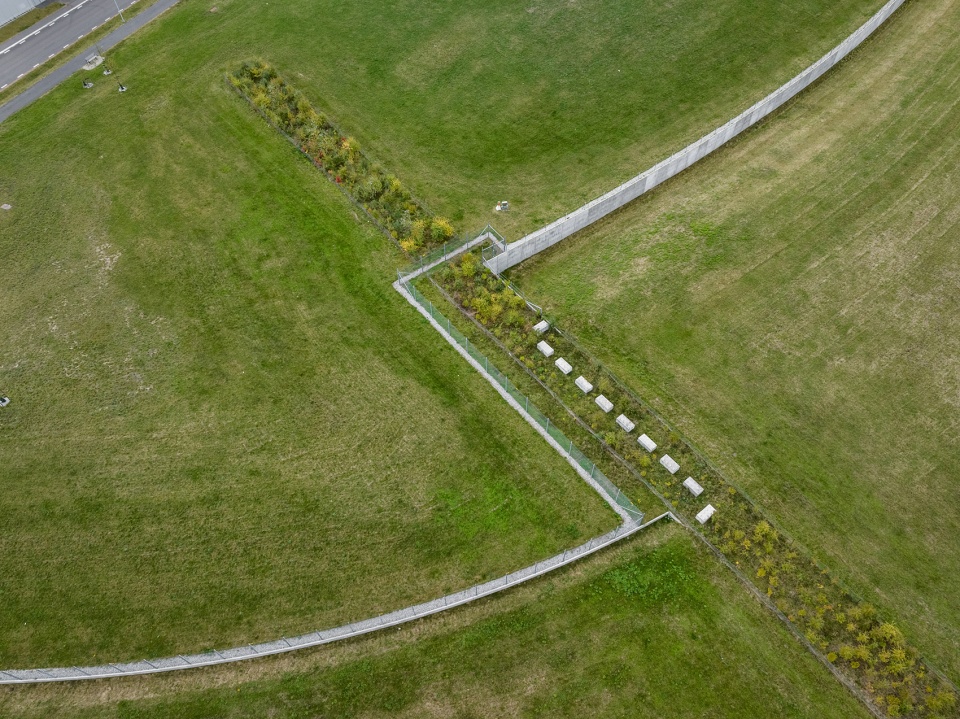
Henning Larsen、Cobe和SLA三家事务所为这座全球科学家社区构思了一个村落,为园区的发展起到了至关重要的作用;大量且多样的空间,包括步道、慢跑路径和雨水池塘,让来自全球科学机构的访问研究人员能够在室内和室外进行非正式的会面。以自然为基础的无栅栏景观配备了专门设计的下沉式“ha-ha”矮墙和各类植被,在保证设施安全的同时不会遮挡视线,为设施周围营造出宁静宜人的氛围。
Integral to the success of the campus, Henning Larsen, Cobe and SLA envisioned a village for an international community of scientists; a multitude of spaces allow visiting researchers from global science institutions to meet each other informally both indoors and outdoors, including pathways for walking and jogging and rainwater ponds. A nature-based ‘fenceless’ landscape with specially designed sunken ‘ha-ha’ fences and diverse vegetation keeps the facility secure without blocking the view whilst also creating a more serene and inviting atmosphere surrounding the facility.
▼公共空间,Public space © Rasmus Hjortshøj
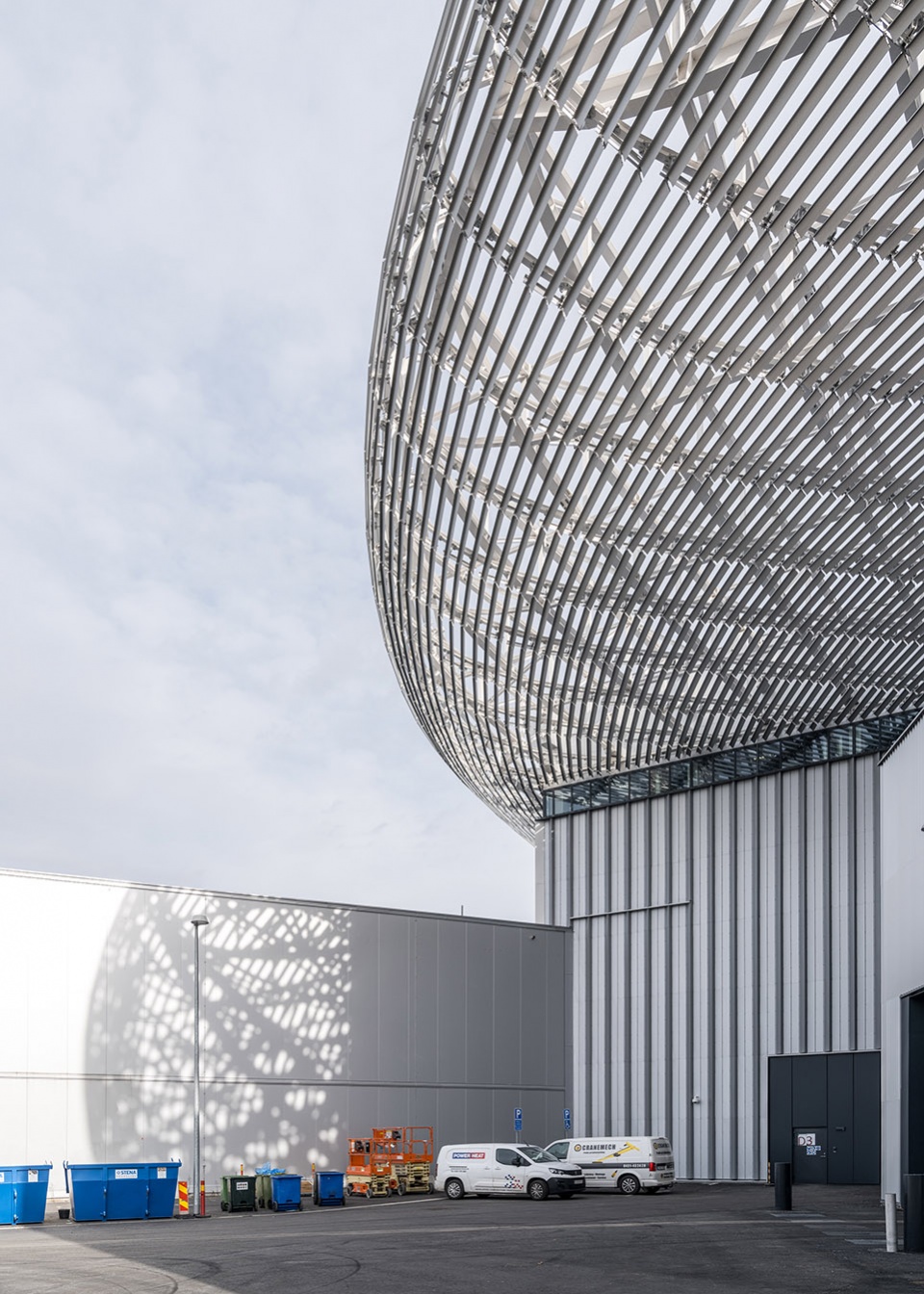
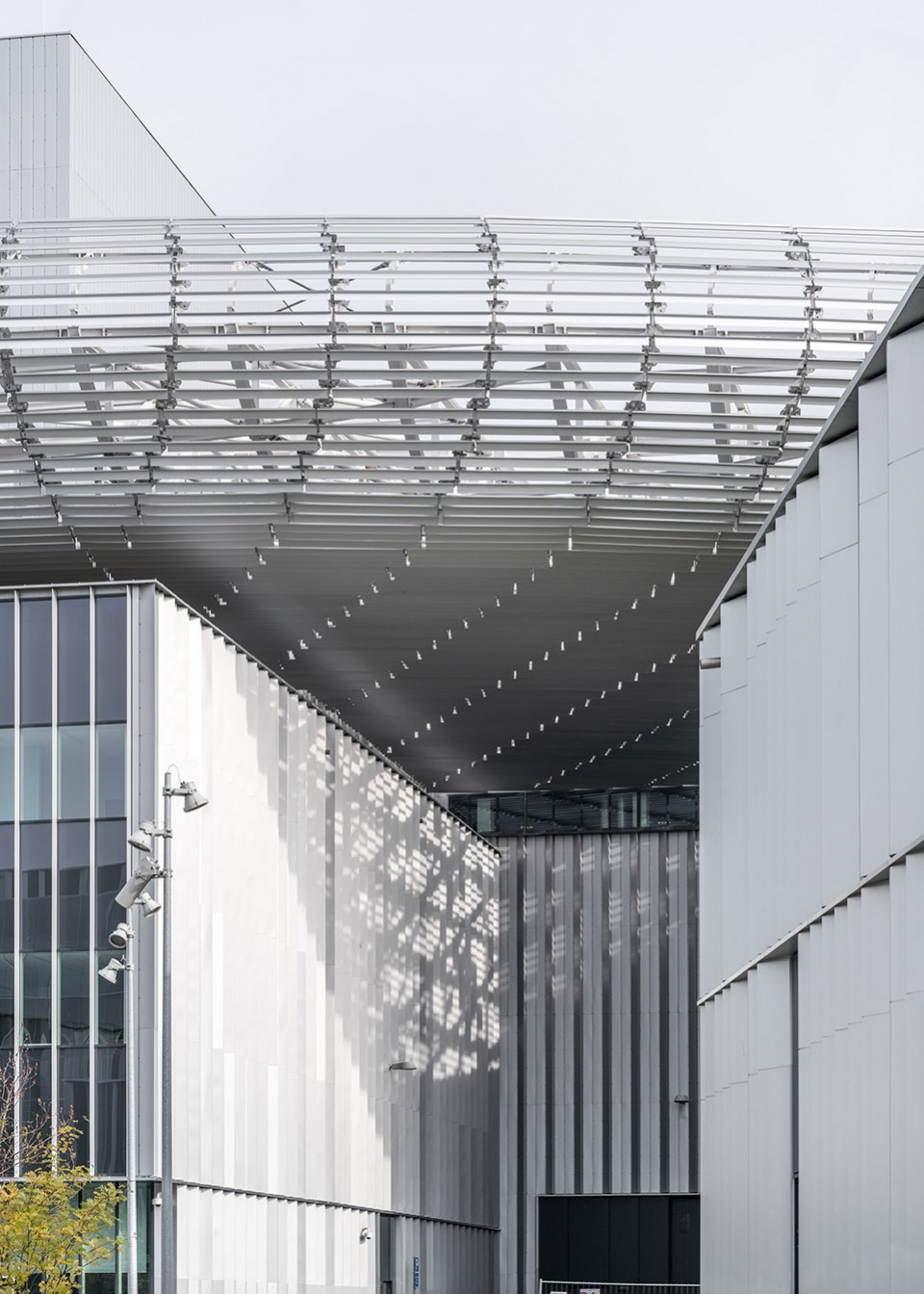
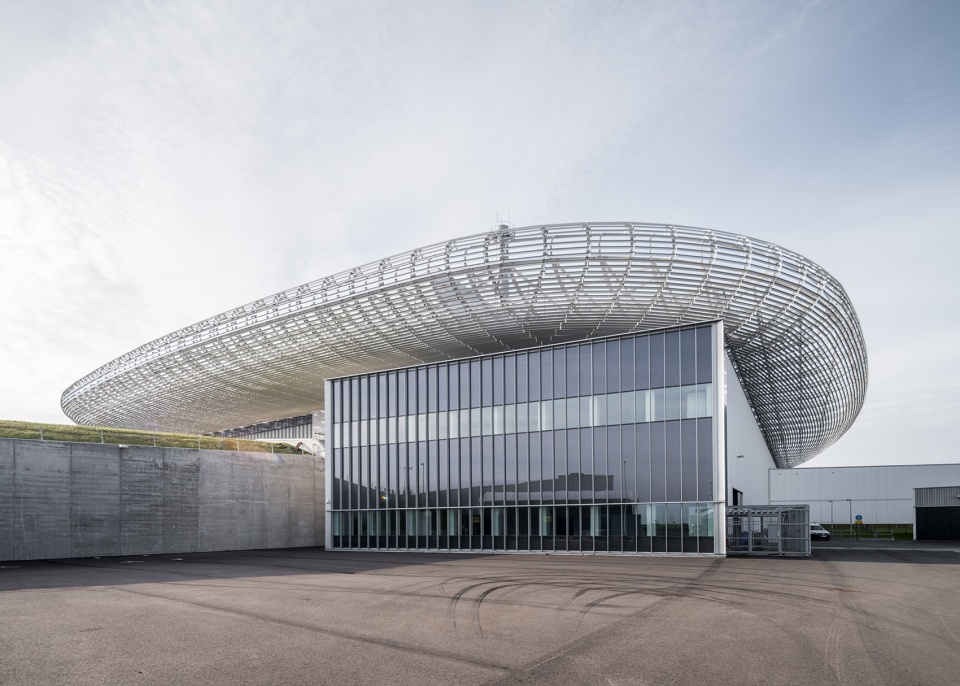
靶站大厅上方的圆形屋顶是整个ESS园区的中心定位点,它是散裂过程中最重要元素之一“钨轮”的所在地。从车轮获得启发,屋顶的大型圆形结构犹如漂浮在大厅上方,轻质的结构确保了屋顶在承载其庞大体积的同时还能为大厅引入光线,并抵御瑞典多雪的气候。
A central point of orientation for the entire ESS campus is the circular roof above the target hall, home to one of the most important elements in the spallation process, the tungsten wheel. Taking inspiration from the wheel, the roof’s large, rounded structure appears to float above the hall – a lightweight construction ensures the roof carries its significant volume whilst also letting light into the hall and withstanding Sweden’s snowy climate.
▼靶站大厅,Target hall © Rasmus Hjortshøj
▼屋顶近景,Roof structure © Rasmus Hjortshøj
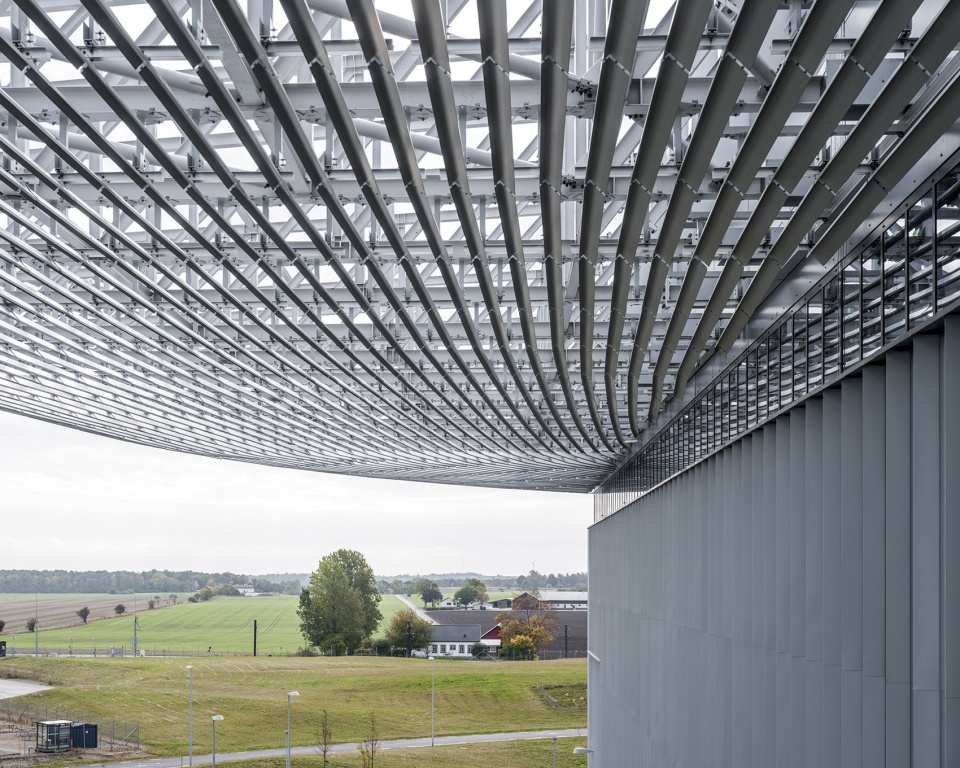
▼屋顶的大型圆形结构犹如漂浮在大厅上方,The roof’s large, rounded structure appears to float above the hall © Rasmus Hjortshøj
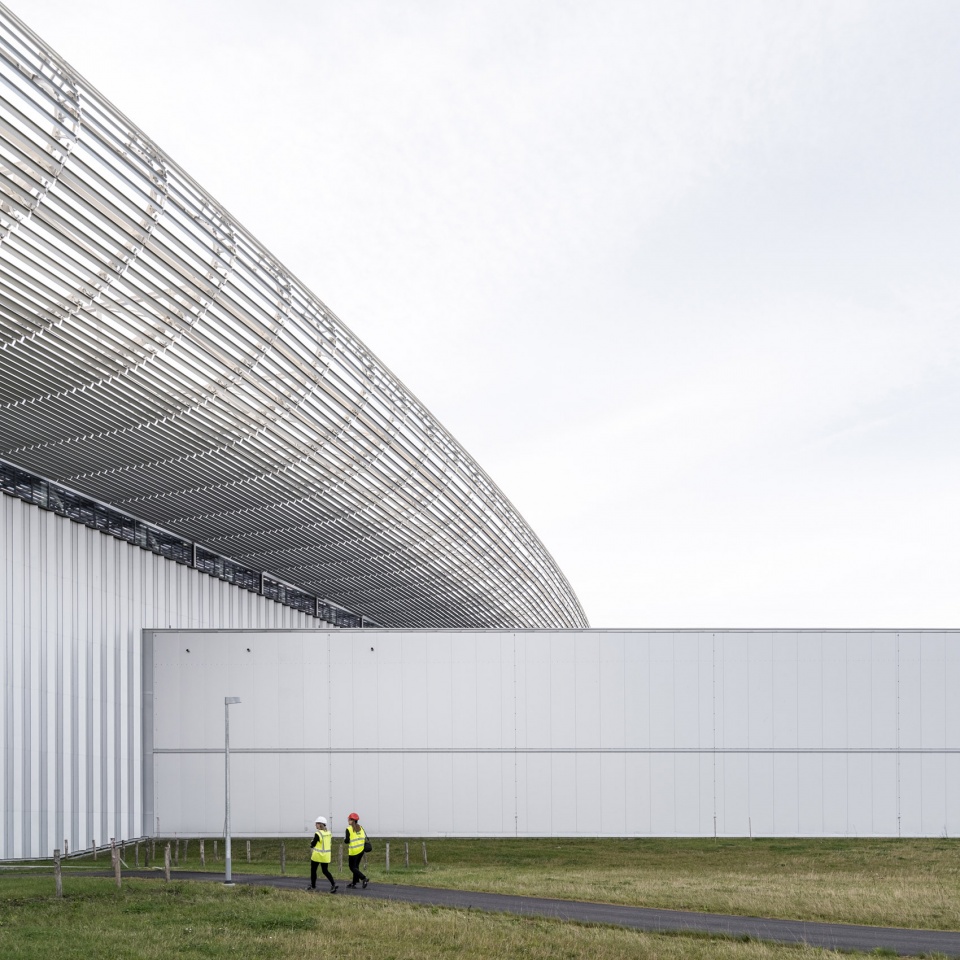
为了使整个园区保持统一的设计表达,所有建筑都被构想为景观中的单体大地艺术作品。ESS的每座建筑的所在位置都与散裂过程相关,拥有不同的大小和功能;虽然具有战略性的意义,但它们并没有遵循严格的规划网格。
To maintain a coherent design expression for the entire campus, the intention is that all buildings are monolithic land-art-objects placed in the landscape. Each building at ESS varies in size and function, positioned in correlation with the spallation process; strategically, yet without a strict grid.
▼园区景观,Landscape © Rasmus Hjortshøj
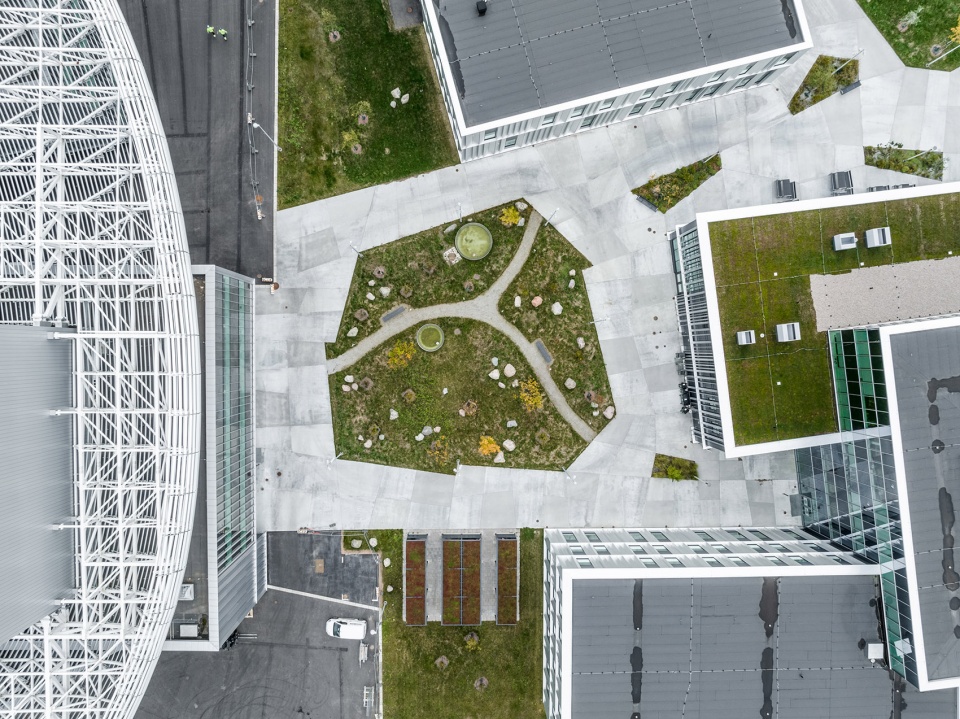
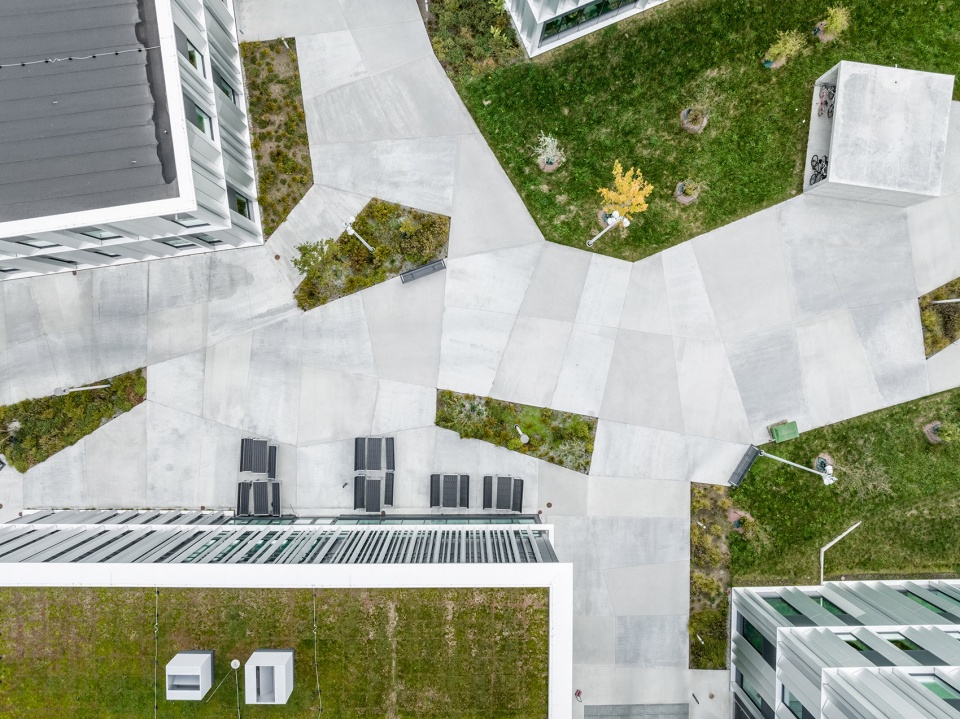
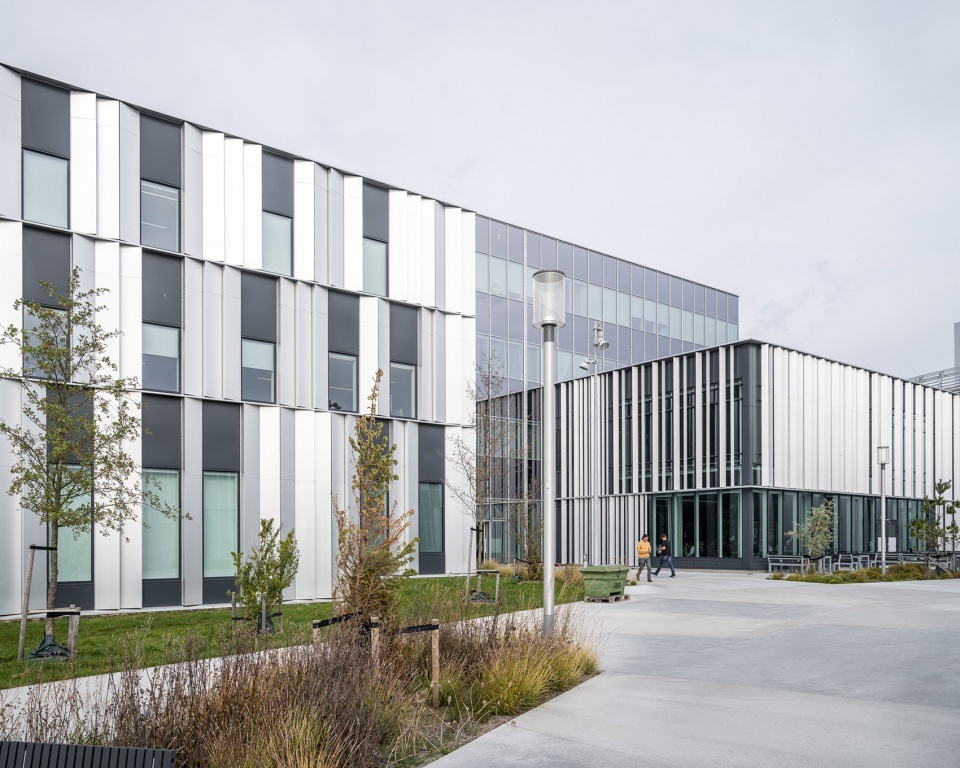
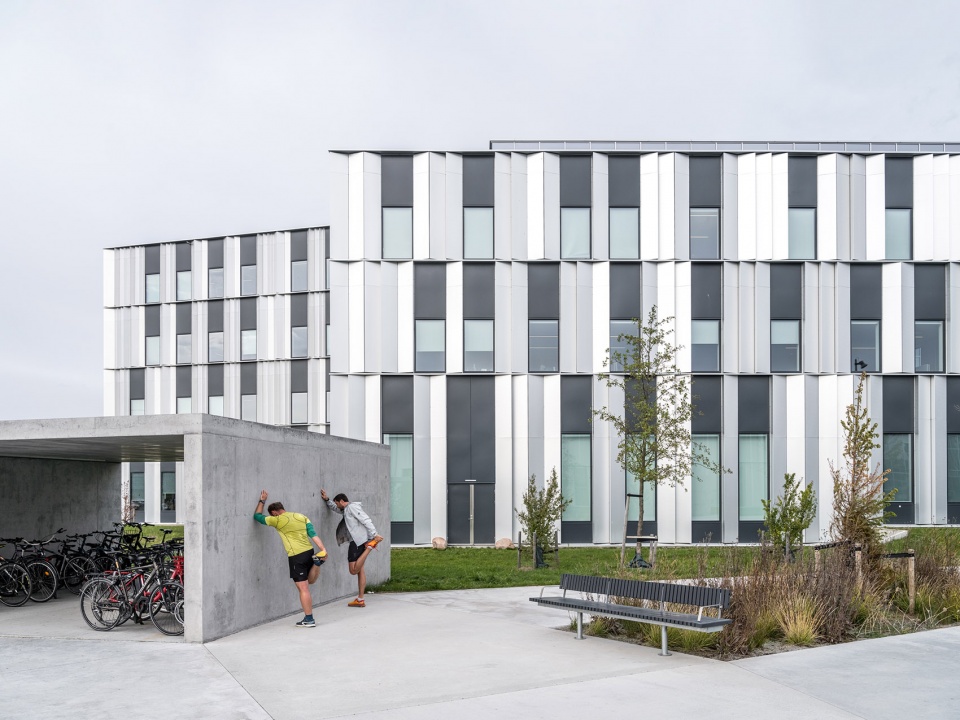
一些建筑体量保持独立,另一些则集中在一起,这主要是考虑到设计的灵活性,以便在未来容纳新的建筑。建筑的外观也反映了其自身的用途,外立面的类型和尺度遵循了从工业到精致的变化规律。这些建筑包括接待和办公空间、礼堂和实验室、加速器大楼、靶站和大厅等。具有工业感的外立面预示着容纳着穿梭的粒子的空间,而更加精致的阴影立面则代表了供人们聚集、交流知识和进行研究的空间。
Some volumes are solitary, and others are clustered, as it is imperative that the design also has the flexibility to accommodate new buildings in the future. The exterior reflects the purpose of each building, the type and scale of the facades is based on a graduation scale from industrial to more refined. The buildings comprise of welcome and office spaces, auditoriums and laboratories, the accelerator building, target room and halls. Industrial facades indicate an interior housing the travelling particles, whereas more refined and shadow facades contain spaces for people to gather, exchange knowledge, and research.
▼庭院,Courtyard © Rasmus Hjortshøj
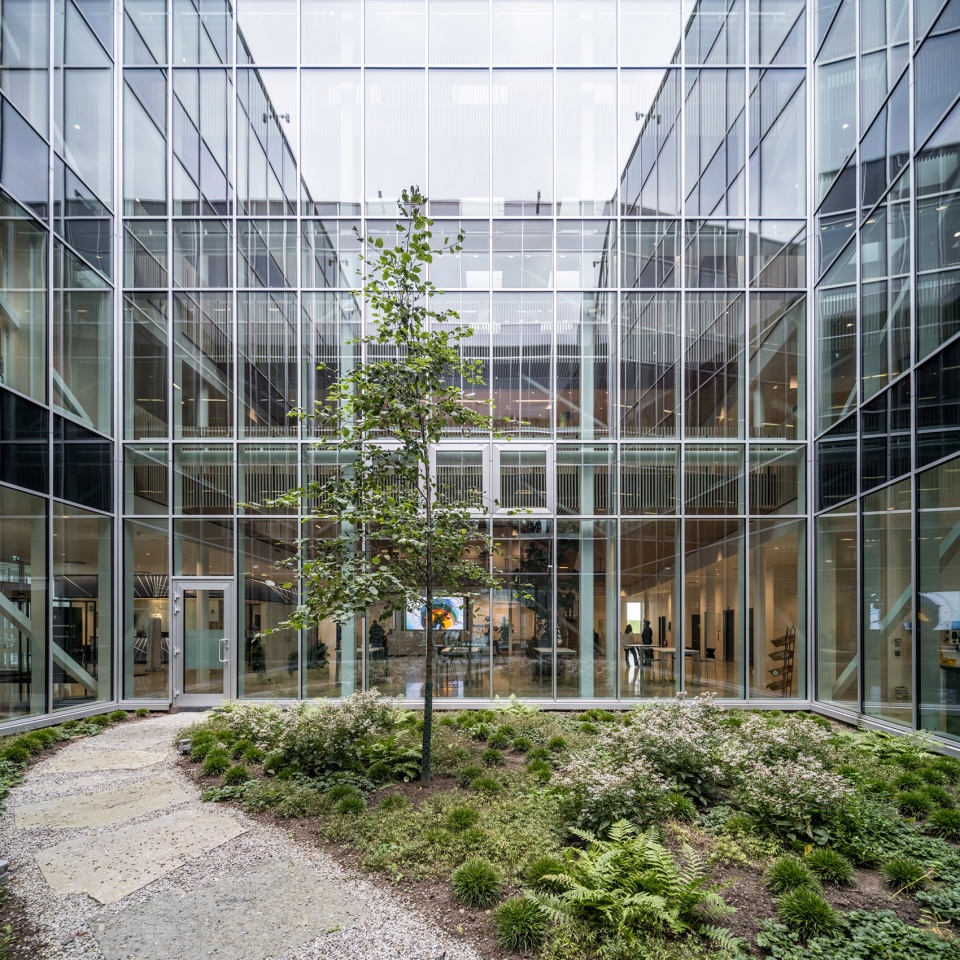
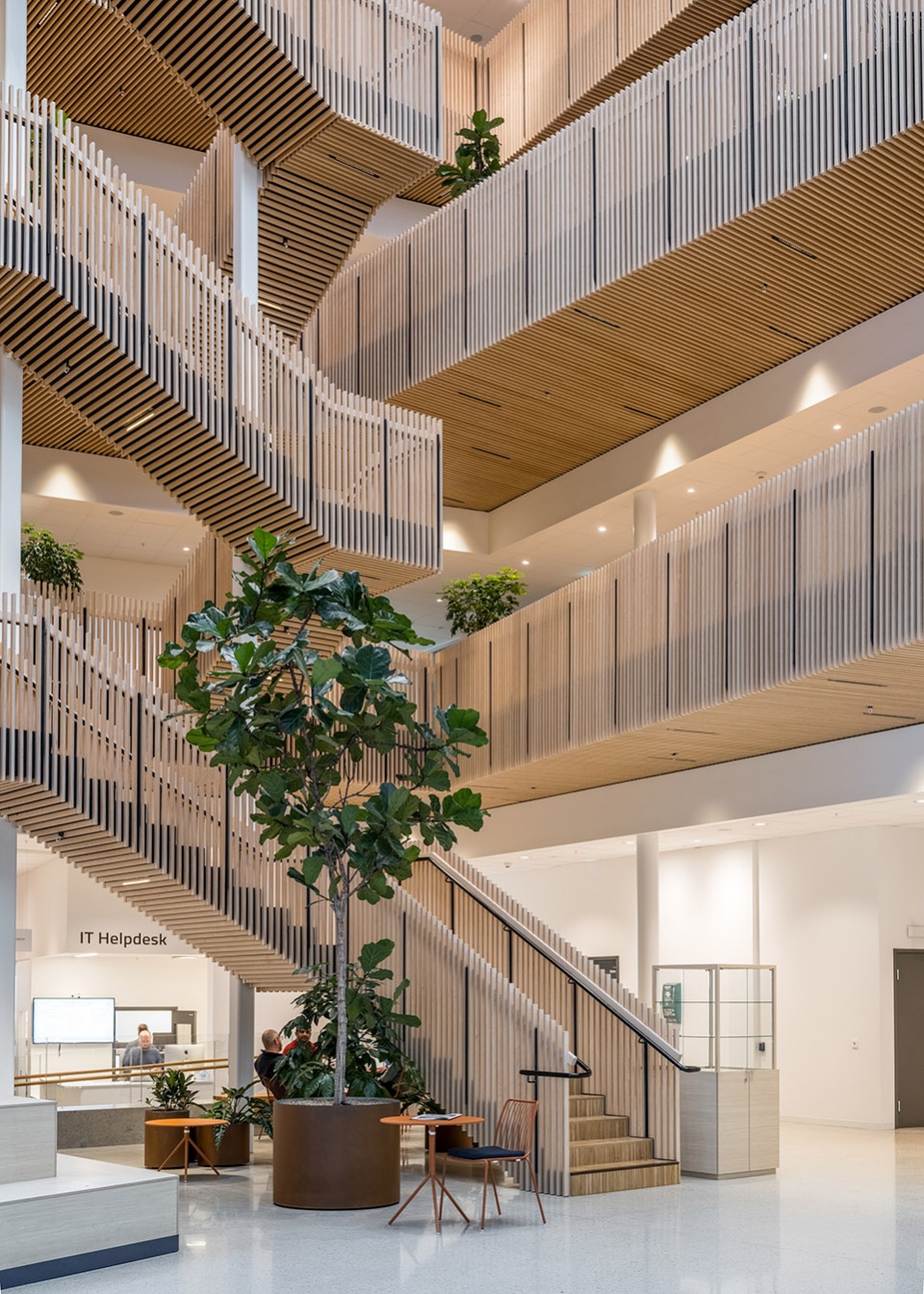
▼办公空间大厅,Lobby – office building © Rasmus Hjortshøj
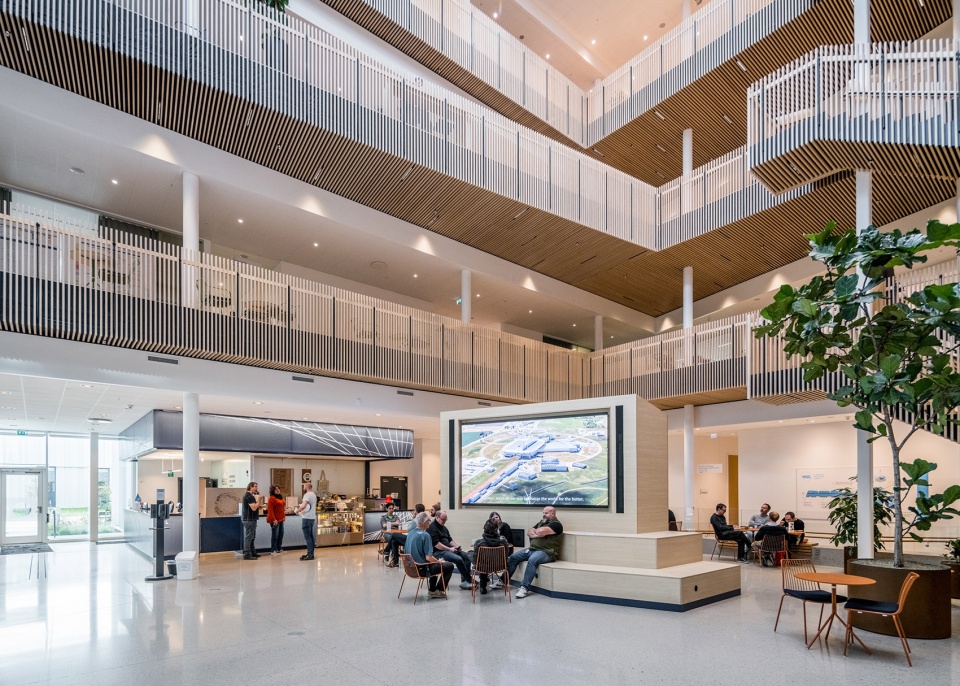
▼大厅公共区域,Public space © Rasmus Hjortshøj
ESS仍然处于建设当中,预计将于2025/2026年启动首批实验。该设施将于2027年全面投入使用。
The European Spallation Source is currently under construction and the first experiments are expected to start in 2025/2026. The facility will be fully operational by 2027.
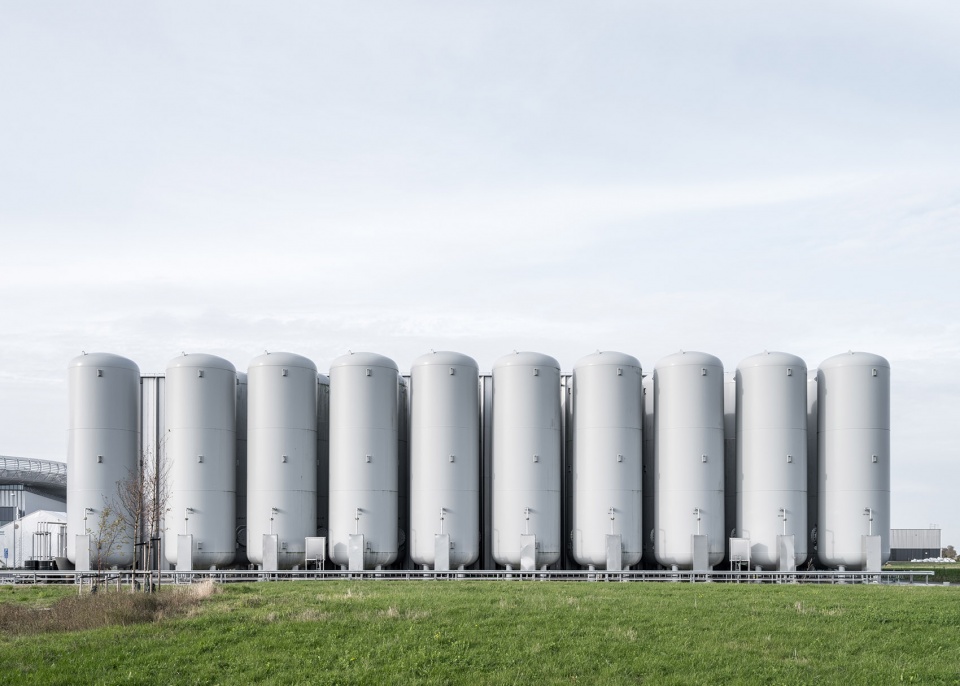
▼ESS设施,ESS facilities © Rasmus Hjortshøj
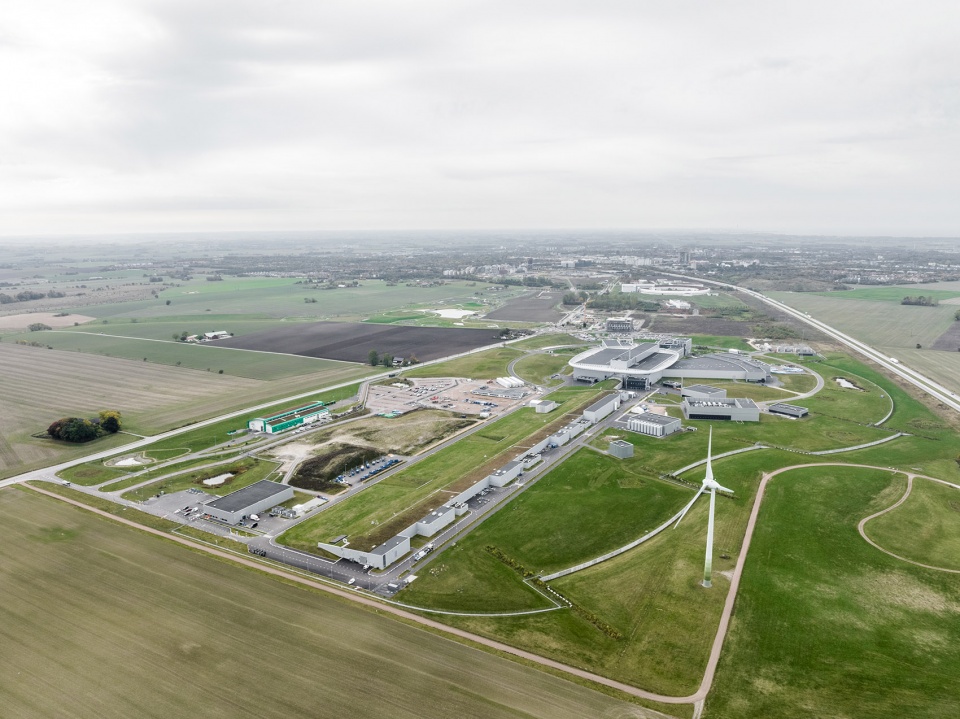
▼整体鸟瞰,Aerial view © Rasmus Hjortshøj
Location
Lund, Sweden
Client
ESS – European Spallation Source. ESS is hosted by Sweden and Denmark with the research facility located in Lund, Sweden, and the Data Management and Software Centre (DMSC) is based in Copenhagen, Denmark.
Architects
Henning Larsen and Cobe
More:Henning Larsen;COBE;SLA;更多关于他们:Henning Larsen on gooood;COBE on gooood;SLA on gooood




印象中的国外研究所就这样