“评审团表示,这是一项‘以弹性为导向的发展计划’,该计划将气候危机、防洪,与新的绿色空间带、社区连接点、住房,以及电力系统相结合,形成了多重价值的可能性。在该规划中,特定的景观设计策略可以对环境产生积极的影响,从而提高人们的生活质量,同时促进生态与社区弹性。详尽而彻底的分析,展现了改善生态的决心,同时在本项目的叙事与展览中也体现出了充满文化性的理解。”
– 2023年ASLA评审委员会评语“The Jury stated it’s a “resiliency-oriented development.” This plan integrates climate mitigation and flood protection with new belts of greenspace, community connectors, housing, and power to form a possibility of multivalence. It is a plan in which specific landscape design strategies can positively impact the environment and, therefore, quality of life while promoting resilience. The analysis is thorough and addresses the intent of ecological improvements. Cultural understanding is also prevalent in the narrative and exhibits.”
– 2023 Awards Jury
来自 ASLA 对gooood的分享。 Caño Martín Peña Comprehensive Infrastructure Master Plan | OLIN
项目陈述
Project Statement
Caño Martín Peña区的八个社区是由居民们一点一滴地建立起来的,面对不断变化的气候挑战,人们认识到他们最有价值的资产就是他们的社会资源。Caño Martín Peña综合基础设施总体规划的制定旨在满足社区的需求,改善人们的集体健康与生活质量,整体解决方案的制定结合了基于自然的战略和气候变化风险分析,同时以保护社区深厚的社会纽带作为根本原则。该计划以“社会正义”和“环境正义”为基础,除了对居民和社区领导人进行了广泛的调查与咨询外,本项目团队还与波多黎各自治州和联邦机构保持了紧密的合作。
The eight communities of the Caño Martín Peña District were built piece-by-piece by their residents who recognize that their greatest asset in the face of a changing climate is their social capital. The Caño Martín Peña Comprehensive Infrastructure Master Plan was developed to serve the communities’ needs by improving their collective health and quality of life, incorporating nature-based strategies and climate change risk analysis to develop holistic solutions while safeguarding the communities’ deep social bonds as the fundamental link. The plan is grounded in a social and environmental justice framework, surveys and consultation with residents and community leaders, as well as coordination with Commonwealth and Federal agencies.
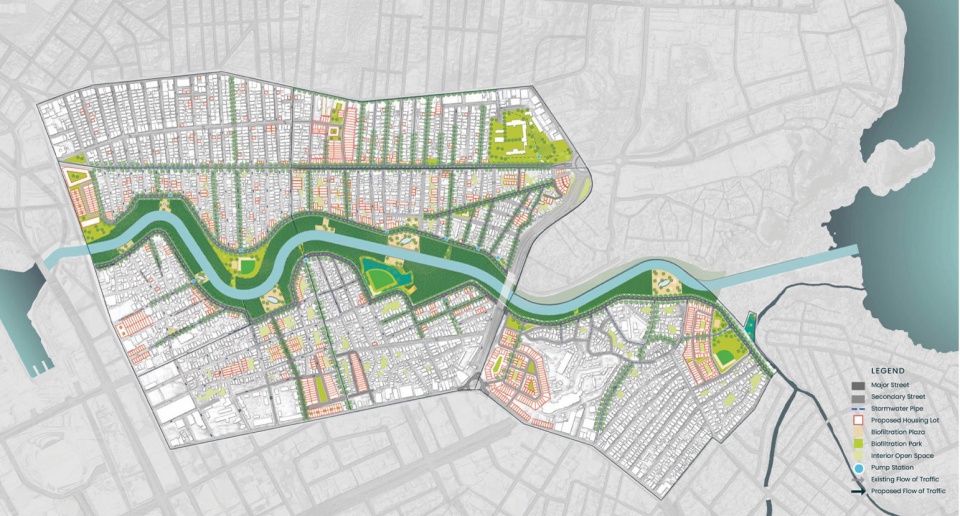
▲Caño Martín Peña地区综合基础设施总体规划:本项目采用了社区优先的方法,对基础设施、开放空间、防洪住房和生态增强策略进行了总体布局与规划,The Comprehensive Infrastructure Master Plan for the Caño Martín Peña District: The plan is a community-first approach to infrastructure planning open space, flood protected housing, and ecological enhancements © OLIN
项目说明
Project Narrative
Caño Martín Peña(CMP)区是由八个社区共同组成的集合社区,这些社区以自然的形式分布在圣胡安湾河口的河道周围,因此具有丰富的自然资源与良好的生态弹性。在面临众多挑战的同时,社区成员认识到他们的社会资源是他们生存和提高生活质量的最大资产。20多年前,八个社区成立了地方团体和统一联盟,为他们家园的权利进行辩护,并推动更好的基础设施、生态健康和经济发展。
Caño Martín Peña综合基础设施总体规划(CIMP)建立在2004年通过的《波多黎各489号法律》(PDI)的基础上,证明了社区机构在解决社区独特挑战方面的力量。CIMP展现了一个具有变革性和可操作性的愿景,旨在直接解决环境和社会正义方面的问题。该计划是项目团队通过与Caño Martín Peña八个不同社区联盟的广泛合作完成的。社区的12,000名居民因频繁的洪水和基础设施的缺乏而感到困扰。八个社区在制定提案方面发挥了重要作用,反映出他们对安全和繁荣未来的需求。
CIMP通过一种综合方法来解决关键的环境和社会正义问题,该方法结合了基于自然的策略、与自然系统协同作用的设计,以及基于政府间气候变化专门委员会第六次评估报告中对于当地海平面上升与气候变化的风险分析。本次综合规划的目标旨在,提供饮用水安全,增强卫生用水与雨水收集、防洪、增加经济发展机会、通过保障住房,并创造更多开放空间。环境敏感性和可持续性是该计划的核心原则,并将海平面上升和气候变化导致的洪水增加,以及实施基础设施和住房项目的财政预算和政治现实都纳入到了策略定制的流程中。
通过强调社区机构的重要性,CIMP加强了居民、地方组织和政府机构之间的联系,这些机构在确保Caño Martín Peña社区的长期社会、经济和环境恢复能力方面发挥了重要的作用。政府与民间的合作确保了CMP社区人们的声音被听到,让人们的需求在规划过程中得到了优先考虑。
此外,CIMP还展现出了强大的前瞻性,通过变革行动、可延伸的解决方案,以及保护圣胡安湾热带河口的生物多样性的策略来应对气候影响。雨水管理、防洪和住房开发的创新方法具有可扩展性和适应性,使得整体方案能够根据不断变化的环境条件进行持续改进。
总体来讲,Caño Martín Peña综合基础设施总体规划展示了社区机构在解决环境和社会正义问题方面的力量。通过结合CMP地区社区人们的需求和愿望,以更可持续、更公平、更有弹性的方式为社区未来发展铺平了道路,赋予居民权力并保护他们的社会资本。
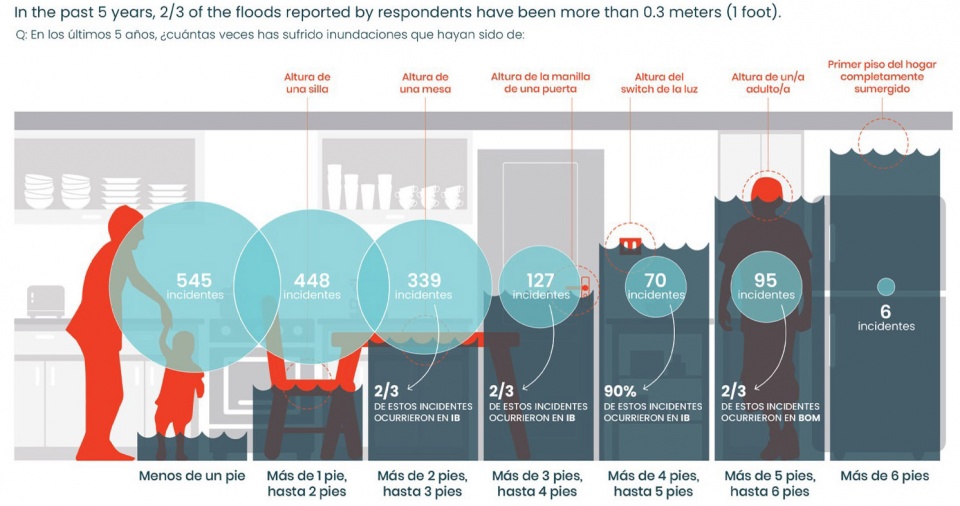
▲根据全区社区调查得出的洪水发生频率和降雨量高度分析图:在第一阶段,超过300名居民参与了对目前情况的调查。设计团队根据调查结果建立了防护标准,并帮助确定了关键的社区优先事项,Frequency of Flooding and Height from the Districtwide Community Survey: In Phase 1, over 300 residents were asked about existing conditions. Results established a baseline and helped identify key community priorities © OLIN
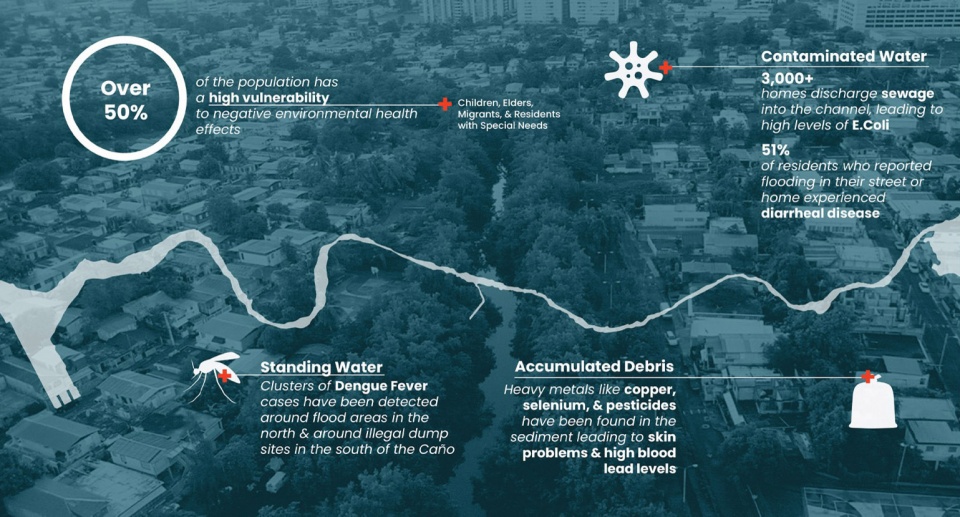
▲Caño Martín Peña环境条件对社区健康的影响:通过强有力的现场调查,设计团队对现有社区健康状况和与之相关的一些环境条件进行了基本地了解,Community Health Impacts from the Environmental Conditions of the Caño Martín Peña: A robust on-site review provided a foundational understanding of existing community health conditions and some environmental conditions tied to them © OLIN
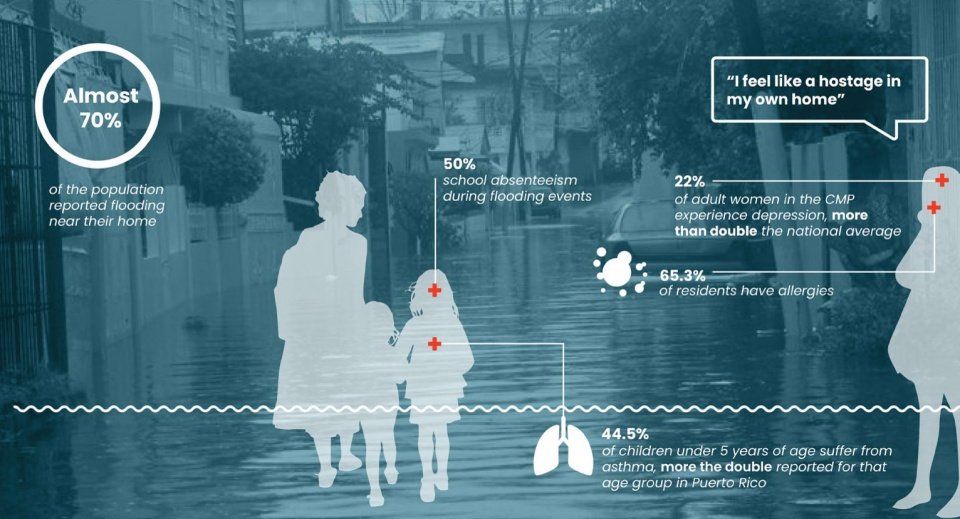
▲Caño Martín Peña洪水对社区健康的影响:气候变化的加剧导致了极端天气的反复出现,对公众健康构成了威胁,Community Health Impacts from Flooding in the Caño Martín Peña: Climate change has only exacerbated the threats to public health posed by recurring extreme weather events © OLIN
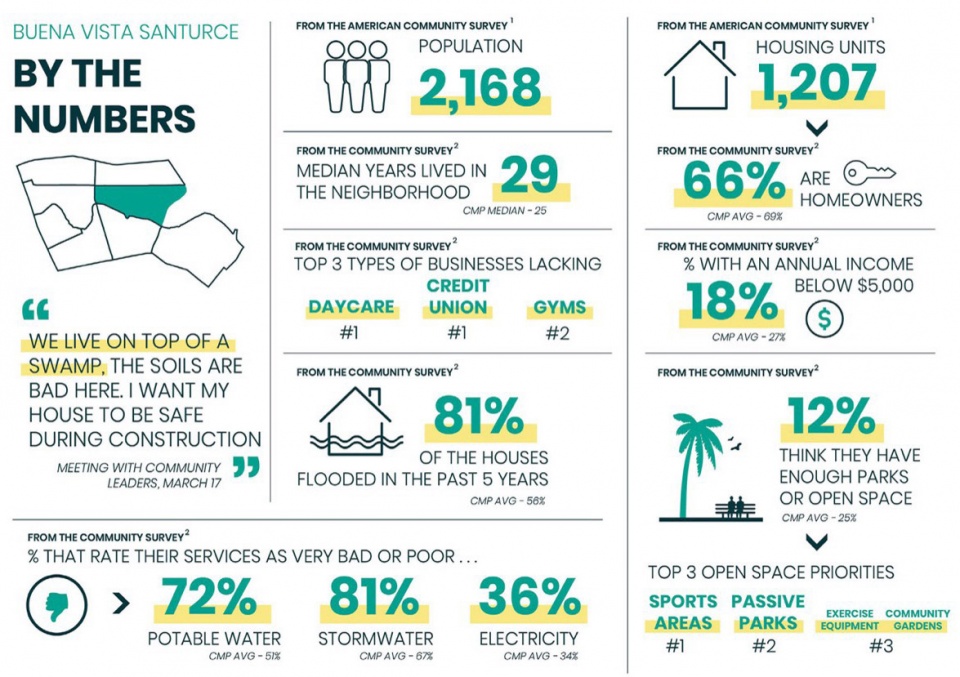
▲社区概况(八个社区概况):该信息图表为制定每个社区的具体基础设施战略和设计提供提举,并让团队对人们的需求和优先事项产生了基本的理解,Community Snapshots: a Profile on Each of the Eight District Communities – Infographics set the fundamental understanding of needs and priorities for the specific infrastructure strategies and designs of each neighborhood © OLIN
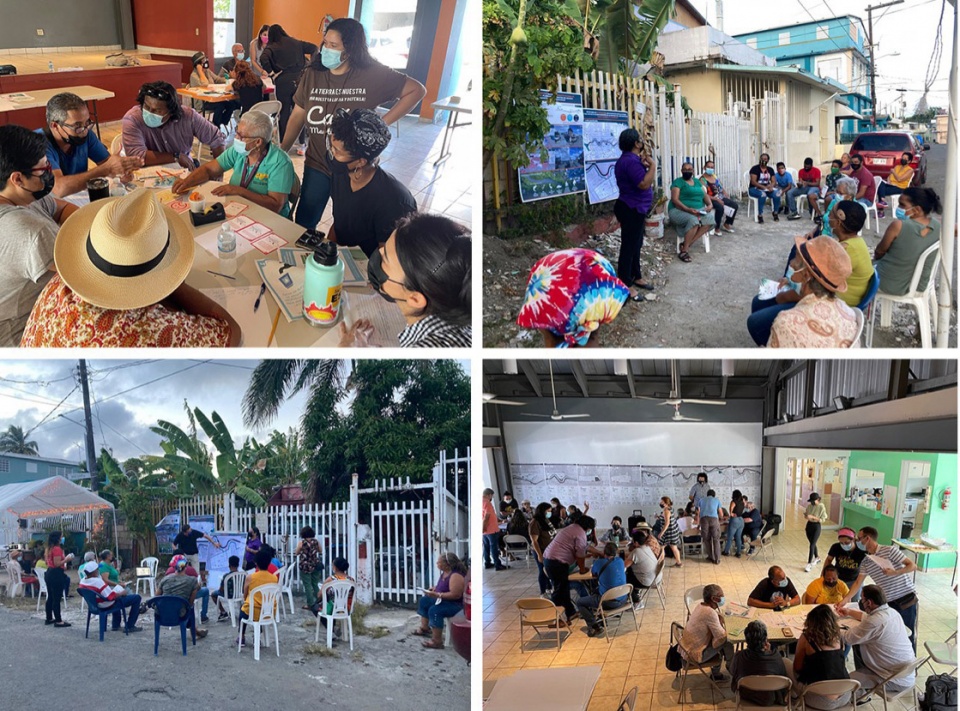
▲动态“面对面”参与:在疫情期间,本项目团队于整个地区举办了多场户外“面对面”会议,邀请利益相关者、社区领导人和居民参加,Dynamic In-Person Engagement: In-person meetings occurred across the District, often in outdoor spaces due to COVID-19, and engaged stakeholders, community leaders, and residents © OLIN
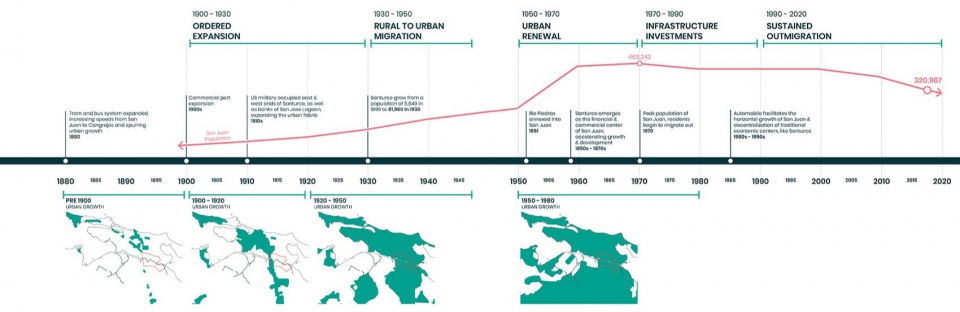
▲圣胡安和Caño Martín Peña地区的发展时期:该地区在20世纪30年代圣胡安从农村到城市的移民大潮中迅速发展,最终形成了如今的发展和环境条件,Eras of Developmentin San Juan and the Caño Martín Peña District: The District developed rapidly during San Juan’s rural-to-urban migration in the 1930s, leading to today’s development and environmental conditions © OLIN
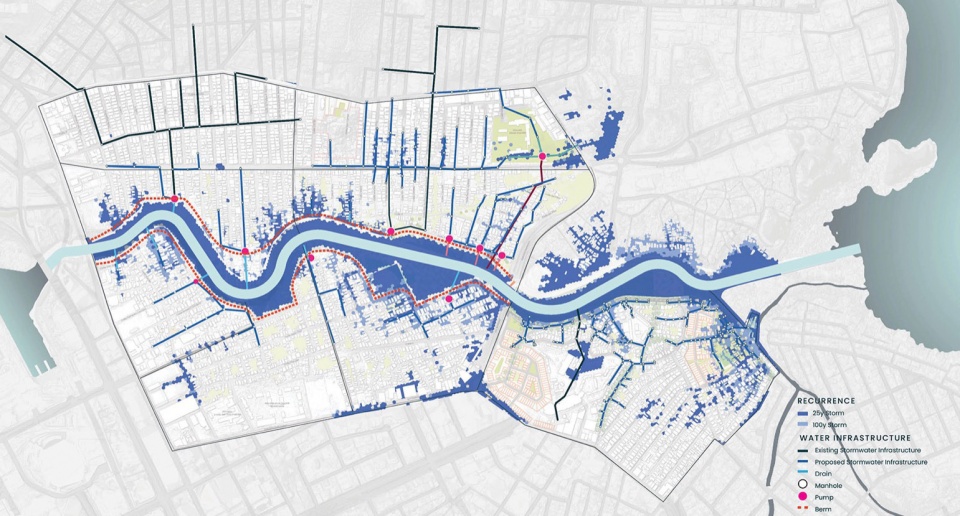
▲根据水文和水力模拟结果制定的设计方案和预估海平面上升总体平面图:设计团队针对每个设计方案都进行了一系列H-H模型模拟,最终的研究结果帮助确定了那种方案能更大程度地缓解洪水,Hydrologic and Hydraulic Modeling Results with the Design Scenario and Estimated Sea Level Rise: A series of H-H model runs were performed with each proposed design scenario. The results identified which scenario achieved greater flood mitigation © eDesign Dynamics / ARCADIS / OLIN
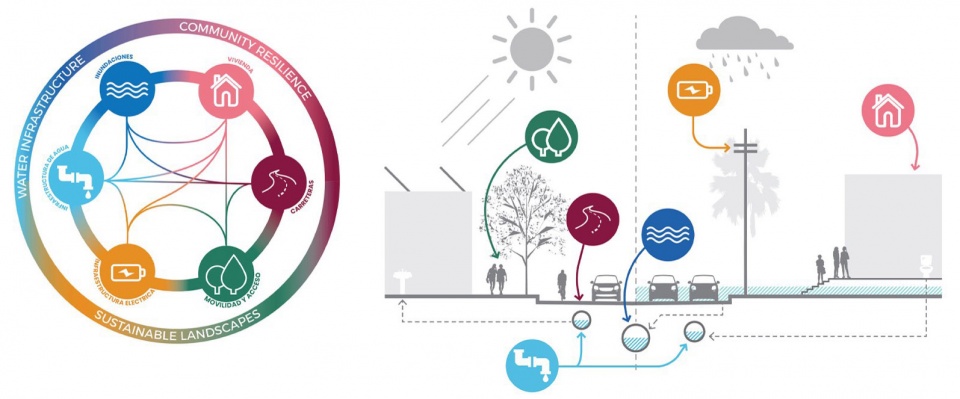
▲基础设施战略的综合实施:水基础设施、道路、电力基础设施、开放空间和住房之间存在着错综复杂的联系,在策略实施时必须进行相互的协调,Integrated Implementation of Infrastructure Strategies: Water infrastructure, roadways, power infrastructure, open space, and housing are all intricately linked and must be coordinated when implemented © OLIN
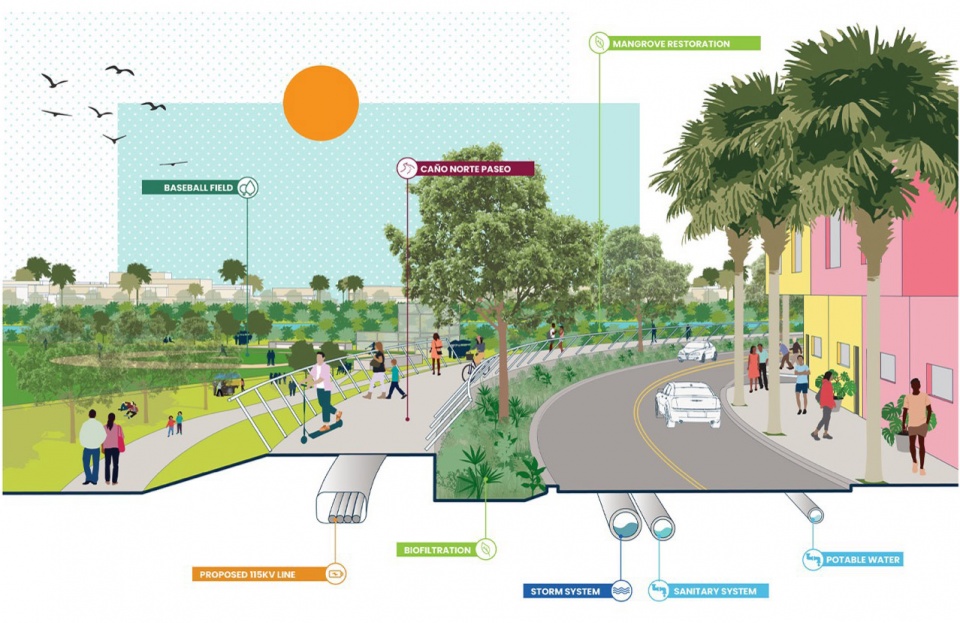
▲结合了基础设施的滨海大道:风暴堤和生物湿地将起到防洪、提供娱乐空间与生态服务的作用,并能够作为电力和水基础设施为社区提供服务,Bermed Paseo with Integrated Infrastructures: A storm surge levee and bioswale will provide flood protection, as well as recreation space, ecological services, power, and water infrastructure © OLIN
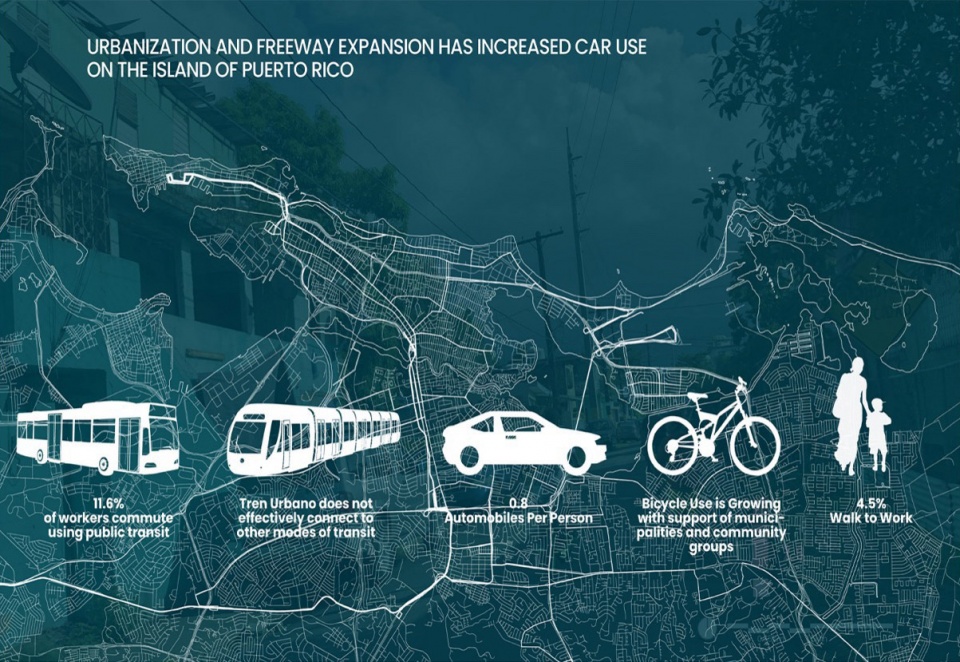
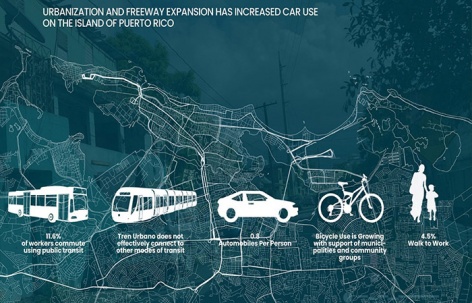
▲现有交通条件分析:圣胡安的发展模式具有城市扩展的特点。61%的该区居民称自己依赖汽车,这加剧了社会与环境的不平等,Existing Transit Conditions Analysis: San Juan’s development pattern is characterized by urban sprawl. 61% of District residents describe themselves as car-reliant, exacerbating inequity © OLIN
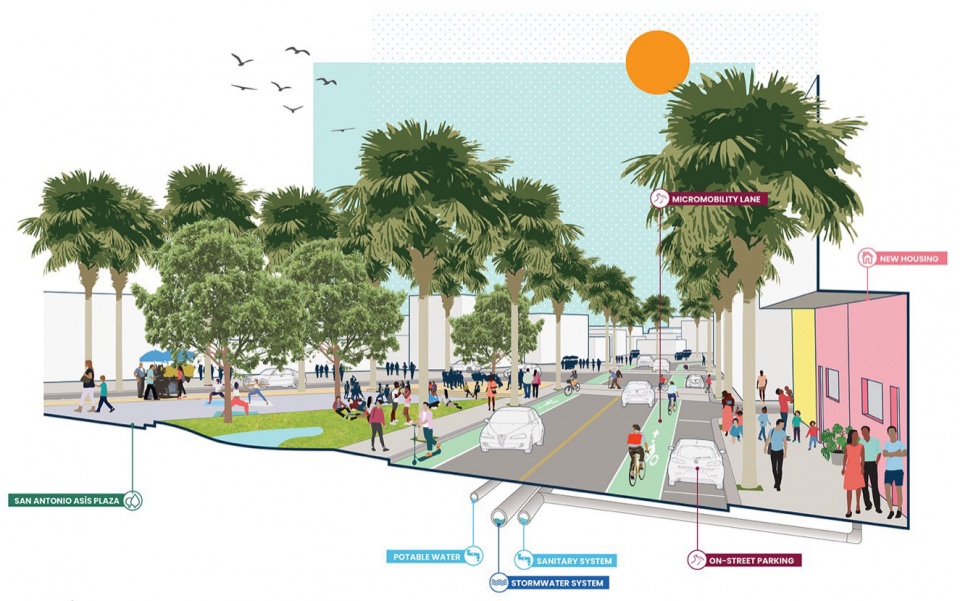
▲绿色街道和绿色基础设施:方案中拟议的绿色街道将包含:雨水基础设施、生态栖息地、更宽的人行道,以及其他交通改善措施,Green Streets and Green Infrastructure: Proposed green streets incorporate stormwater infrastructure, ecological habitats, wider sidewalks for pedestrians, and other mobility improvements © OLIN
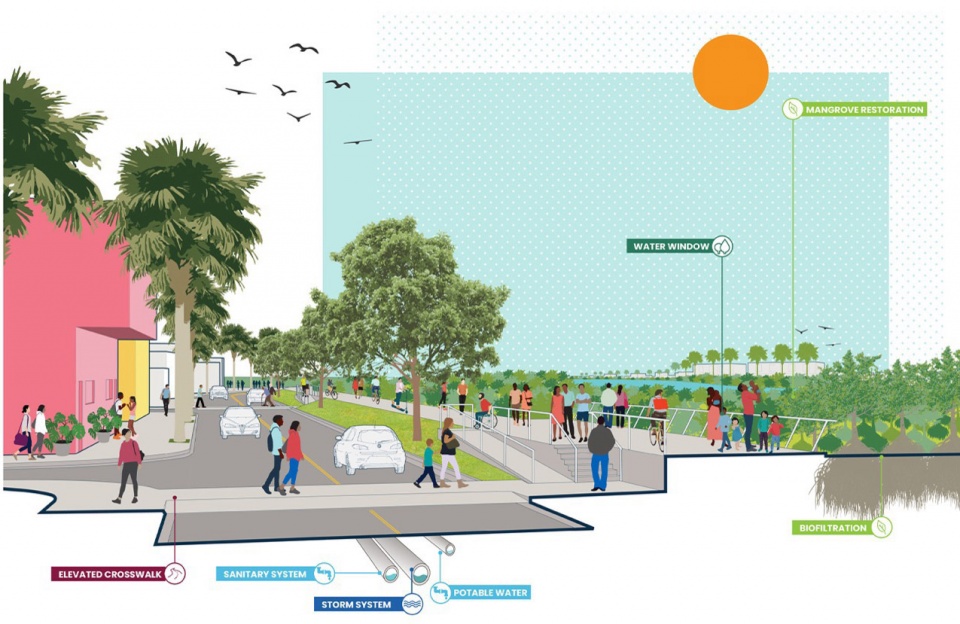
▲Caño大道南北向标准剖面:这条行人友好的林荫大道为河口地区提供了休闲通道与生态旅游路线,并改善了整个地区的交通,Typical Section through the Paseo del Caño North and South: This pedestrian-friendly boulevard promotes recreational access and eco-tourism to the Estuary as well as promoting circulation across the District © OLIN
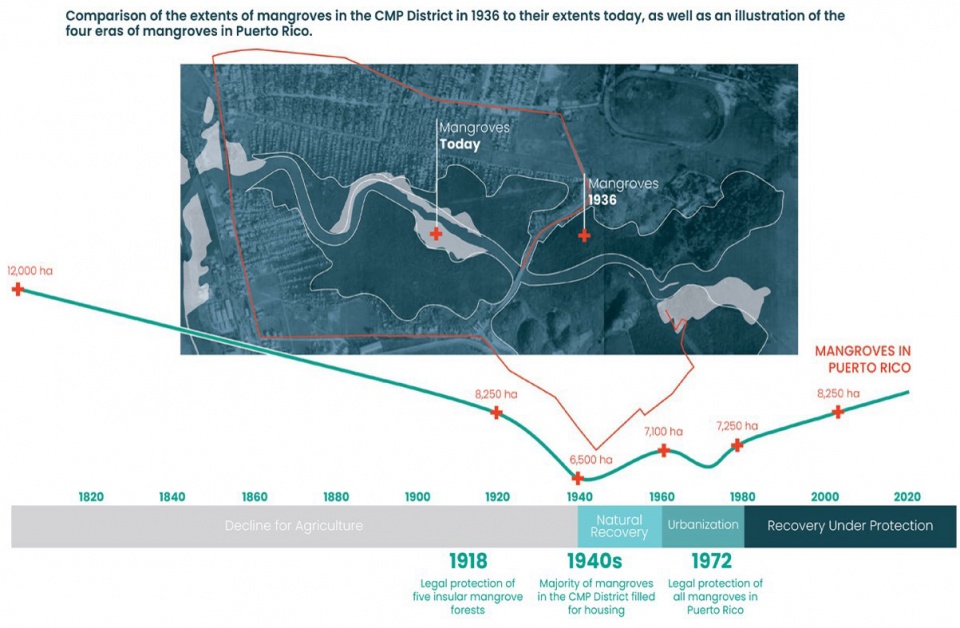
▲随着时间的推移,波多黎各和Caño Martín Peña地区的红树林逐渐消失:由于居民被迫沿着河口边缘建造房屋,红树林地遭到了大面积的破坏,直到1948年,该区的大部分红树林就已经消失了,Disappearance of Mangroves in Puerto Rico and the Caño Martín Peña District Over Time: Mangroves were lost as residents were forced to build housing along the estuary’s edges. By 1948, most of the mangroves in the District had been lost © OLIN
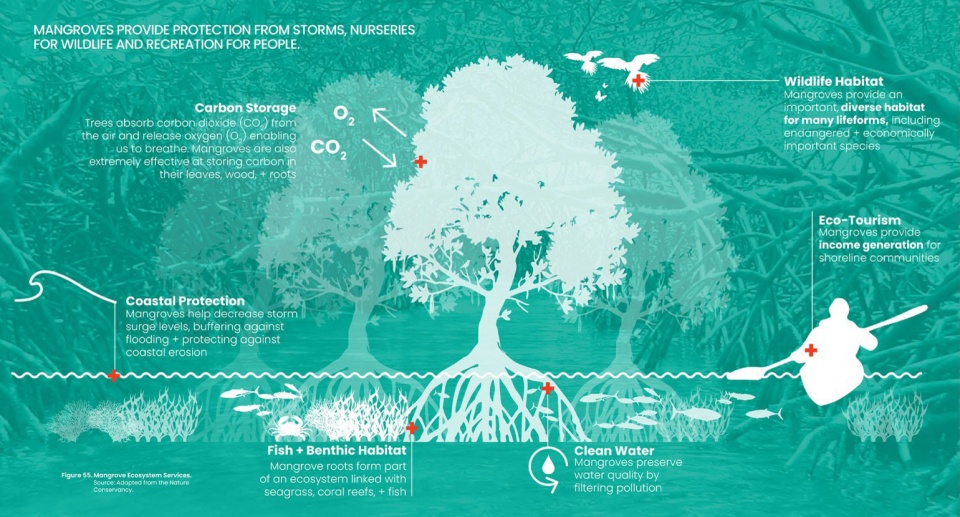
▲红树林的生态系统:红树林是当地生物多样性的基石,能够防止和抵消风暴潮的侵袭,保护当地居民的生活环境,并吸收二氧化碳,Ecosystem Services of Mangroves: Mangroves are keystones of biodiversity, providing carbon uptake and protection to residents by preventing erosion and absorbing storm surges © OLIN
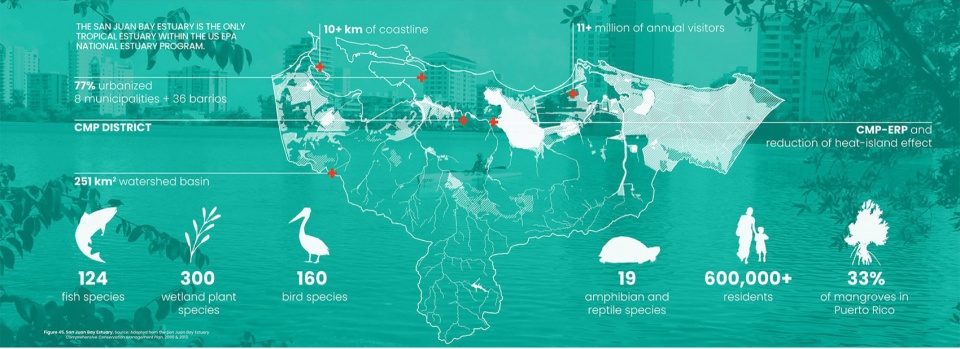
▲圣胡安湾河口 – 波多黎各重要的自然、娱乐和商业资源:河口与社区健康紧密相连,河口湿地能够收集和过滤雨水,保护家园免受风暴潮的侵袭与水土流失,The San Juan Bay Estuary: A Crucial Natural, Recreational, and Commercial Resource for Puerto Rico: The Estuary is deeply tied to the neighborhood’s health, absorbing and filtering stormwater and protecting homes from storm surges and erosion © OLIN
Project Narrative
The Caño Martín Peña (CMP) District is a resilient and resourceful collection of eight communities that emerged informally around a channel of the San Juan Bay Estuary. In the midst of facing numerous challenges, these community members recognized their social capital as their greatest asset for survival and improved quality of life. More than 20 years ago, the eight communities formed local groups and a unified coalition to advocate for their homes, their right to stay in their communities, and to push for better infrastructure, ecological health, and economic opportunities.
The Caño Martín Peña Comprehensive Infrastructure Master Plan (CIMP) is a testament to the power of community agency in addressing these communities’ unique challenges and is built upon the groundwork laid by the 2004 Plan de Desarrollo Integral y Usos del Terreno: Distrito Especial Caño Martín Peña (PDI), which was adopted as Puerto Rico Law 489. The CIMP is a transformative and actionable vision that directly addresses environmental and social justice concerns. The plan was developed through extensive collaboration with the coalition of the eight distinct communities of Caño Martín Peña. The 12,000 residents of these communities are beset with risks resulting from frequent flooding and a lack of infrastructure. The eight communities were instrumental in shaping the proposals to reflect their needs for a safe and thriving future.
The CIMP addresses critical environmental and social justice concerns through a holistic approach that incorporates nature-based solutions, designs that work with natural systems, and climate change risk analysis based on local sea level rise and the Intergovernmental Panel on Climate Change’s AR6 report. This comprehensive plan targets safe drinking water, sanitary water and stormwater collection, flood protection, economic opportunities, and access to safe housing and open space. Environmental sensitivity and sustainability are core principles of the plan, and it accounts for increased flooding due to sea level rise and climate change, as well as financial and political realities of implementing infrastructure and housing projects.
By emphasizing the importance of community agency, the CIMP strengthens the connection between residents, local organizations, and governmental agencies charged with ensuring the long-term social, economic, and environmental resilience of the Caño Martín Peña community. This collaboration ensures that the voices of the CMP District communities are heard and that their needs are prioritized in the planning process.
Furthermore, the CIMP is a forward-looking plan addressing climate impacts through transformative action, scalable solutions, and protection of biodiversity within the San Juan Bay Tropical Estuary. Innovative approaches to stormwater management, flood protection, and housing development are designed to be scalable and adaptable, allowing for continued improvement in response to changing environmental conditions.
In summary, the Caño Martín Peña Comprehensive Infrastructure Master Plan showcases the power of community agency in addressing environmental and social justice concerns. By incorporating the needs and desires of the CMP District communities, this plan paves the way for a more sustainable, equitable, and resilient future that empowers residents and safeguards their social capital.
More: ASLA;OLIN on gooood




国内的规划拿过奖吗求问
DK