非常感谢 郦文曦 (联系邮箱:lwx.magic@qq.com)予gooood分享以下内容。更多关于中国美术学院:China Academy of Art
Appreciation towards LI Wenxi (contact:lwx.magic@qq.com) for providing the following description:
悖论与动作——在场的空间教学 | 郦文曦
Anwesenheit and Spatial Action | LI Wenxi
中国美术学院大一设计课实录
China Academy of Art first grade design studio records
意图:中国美术学院象山校区的十处场所,每处有一组反义词作为设计的开始,
以提示场所的悖论。学生要以一到两个动作回应这种悖论进行设计。
安排:8周,每周3次,每次13:00-16:00
动作:分、穿、盖
内容:100方左右可供休憩的地方
表达:1:20平立剖面图,轴测图(2-3张A0),透视图(2张A0)
对象:建筑艺术学院二零级新生二十位
教师:郦文曦
Intention : Ten sites in Xiangshan Campus of China Academy of Art , each has a set of antonyms as the beginning of the design , to hint the paradoxes of the sites . Students should respond to these paradoxes by designing one or two actions.
Arrangement :8 weeks ,three times a week,13:00—16:00 every time.
Action : disperse, penetrate, cover
Content : A 100 square meters of rest space
Expression : Plans, elevations , and sections(1:20),axonometric drawing(2-3sheets in size A0),perspective drawing(2 sheets in size A0)
Object : The twenty 2020 freshmen in School of Architecture,China Academy of Art
Supervisor : LI Wenxi
▼教学过程,Tutorial ©郦文曦,朱吟秋
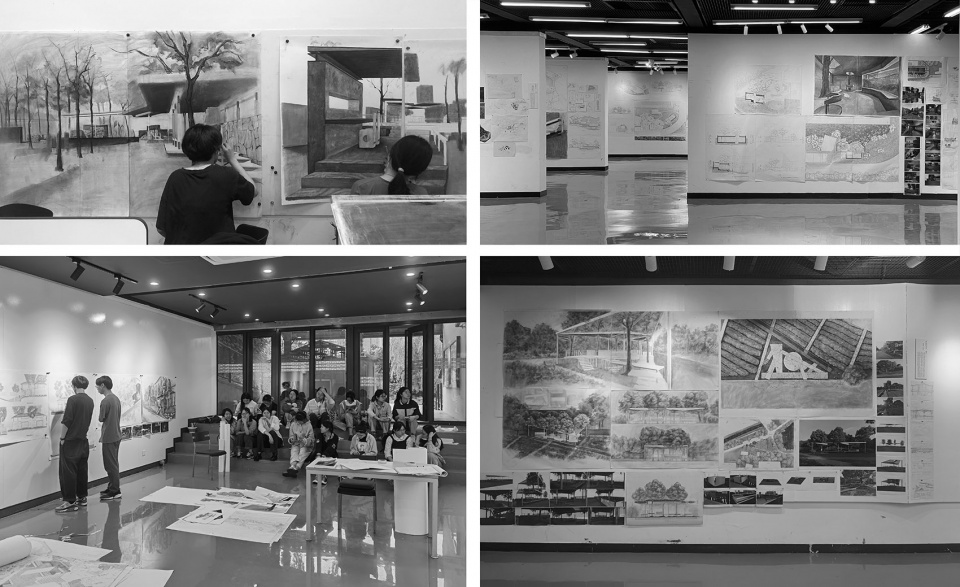
作为设计的入门,本课程试图讨论这样一个问题:感受如何进入场所?
动作是从身体迈向姿态的重要途径,空间动作也是建筑介入自然的感性方式。
在场:
风景与建造的发生共同依赖于某个契机,而提问是促使这种契机产生的有效方式,同时也是进入某个领域的开始,本次提问的对象是我们生活的象山校区山水与建筑, 教学全程是在场地中定策略,回去画图纸,然后再返回场地修正设计策略,反反复复数次定稿。
反义词:
针对不同场所的特征差异,我们选择了十个设计语素,它们是:
内与外、广与狭、远与近、到来与离开、因与借、游与憩、围与隔、光明与阴翳、显与隐、荣与枯、新与旧。两组分别强调了永久性,纪念性与临时性,可变性。
动作:
以上语素之间主要以反义词的形式出现,它们描述了空间的特质,以它们为起点去感受场地,塑造的是我们对于自然与建造这组关系的辩证理解。设计中使用三个动词:分、穿、盖。希望能够融入校园的山水环境并且为自然建造注释。
As an introduction to design,this course attempts to discuss such a question:Fell how to enter the sites?
Movement is an important approach from the body to the posture,space movement is also an emotional way for architecture to intervene in nature.
Anwesenheit:
The occurrence of landscape and construction depends on a certain opportunity , and asking questions is an effective way to make that happen , at the same time , it’s the beginning of getting into a field , the subject of this question is the landscape and architecture of Xiangshan Campus where we live . Teaching is all about strategy in the field , go back and draw the drawings, then return to the sites to revise the design strategy , go back and forth several times before the final draft.
Antonym:
Aiming to the characteristics of different sites are different, we have chosen ten design morphemes , they are: inside and outside、wide and narrow、far and near、arrival and departure、cause and borrow、visit and rest、enclosure and partition、light and shade、appear and hide、flourish and withered、new and old. The two groups emphasized permanence , remembrance and temporality and variability respectively.
Action:
The above morphemes mainly appear in the form of antonyms , they describe the character of space , use them as a starting point to feel the place , it’s shaping our dialectic understanding of the relationship between nature and construction . Three verbs are used in the design : disperse, penetrate, cover. Hope to integrate into the landscape of the campus and create notes for nature.
场所 —— 悖论
Site — Paradox
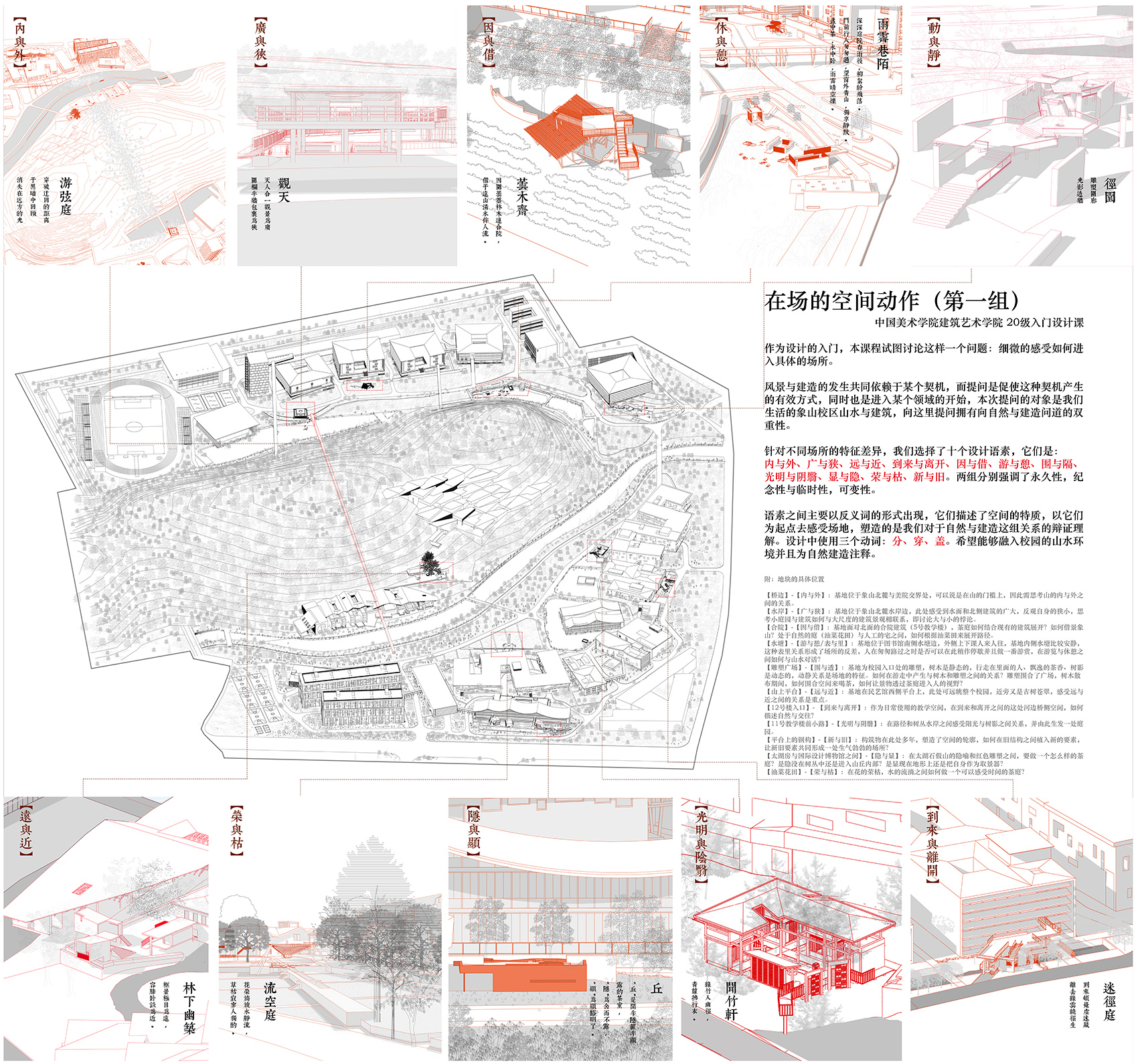
【桥边】-【内与外】:基地位于象山北麓与美院交界处,可以说是在山的门槛上,因此需思考山的内与外之间的关系。
【水岸】-【广与狭】:基地位于象山北麓水岸边,此处感受到水面和北侧建筑的广大,反观自身的狭小,思考小庭园与建筑如何与大尺度的建筑景观相联系,即讨论大与小的悖论。
【合院】-【因与借】:基地面对北面的合院建筑(5号教学楼),茶庭如何结合现有的建筑展开?如何借景象山?处于自然的庭(油菜花田)与人工的宅之间,如何根据油菜田来展开路径。
【水塘】-【游与憩/表与里】:基地位于图书馆南侧水塘边,外侧上下课人来人往,基地内侧水塘比较安静,这种表里关系形成了场所的反差,人在匆匆路过之时是否可以在此稍作停歇并且做一番游赏,在游览与休憩之间如何与山水对话?
【雕塑广场】-【围与透】:基地为校园入口处的雕塑,树木是静态的,行走在里面的人、飘逸的茶香、树影是动态的,动静关系是场地的特征。如何在游走中产生与树木和雕塑之间的关系?雕塑围合了广场,树木散布其间,如何围合空间来喝茶,如何让景物透过茶庭进入人的视野?
【山上平台】-【远与近】:基地在民艺馆西侧平台上,此处可远眺整个校园,近旁又是古树苍翠,感受远与近之间的关系是重点。
【12号楼入口】- 【到来与离开】:作为日常使用的教学空间,在到来和离开之间的这处河边桥侧空间,如何描述自然与交往?
【11号教学楼前小路】-【光明与阴翳】:在路径和树丛水岸之间感受阳光与树影之间关系,并由此生发一处庭园。
【平台上的钢构】-【新与旧】:构筑物在此处多年,塑造了空间的轮廓,如何在旧结构之间植入新的要素,让新旧要素共同形成一处生气勃勃的场所?
【太湖房与国际设计博物馆之间】-【隐与显】:在太湖石假山的隐喻和红色雕塑之间,要做一个怎么样的茶庭?是隐没在树丛中还是进入山丘内部?是显现在地形上还是把自身作为取景器?
【油菜花田】-【荣与枯】:在花的荣枯,水的流淌之间如何做一个可以感受时间的空间?
▼第一组十个房子与象山校区的关系:永久性与纪念碑性 ©中国美术学院建筑艺术学院20级学生
The relationship between the second group of ten buildings and Xiangshan Campus: Permanency and monumentality
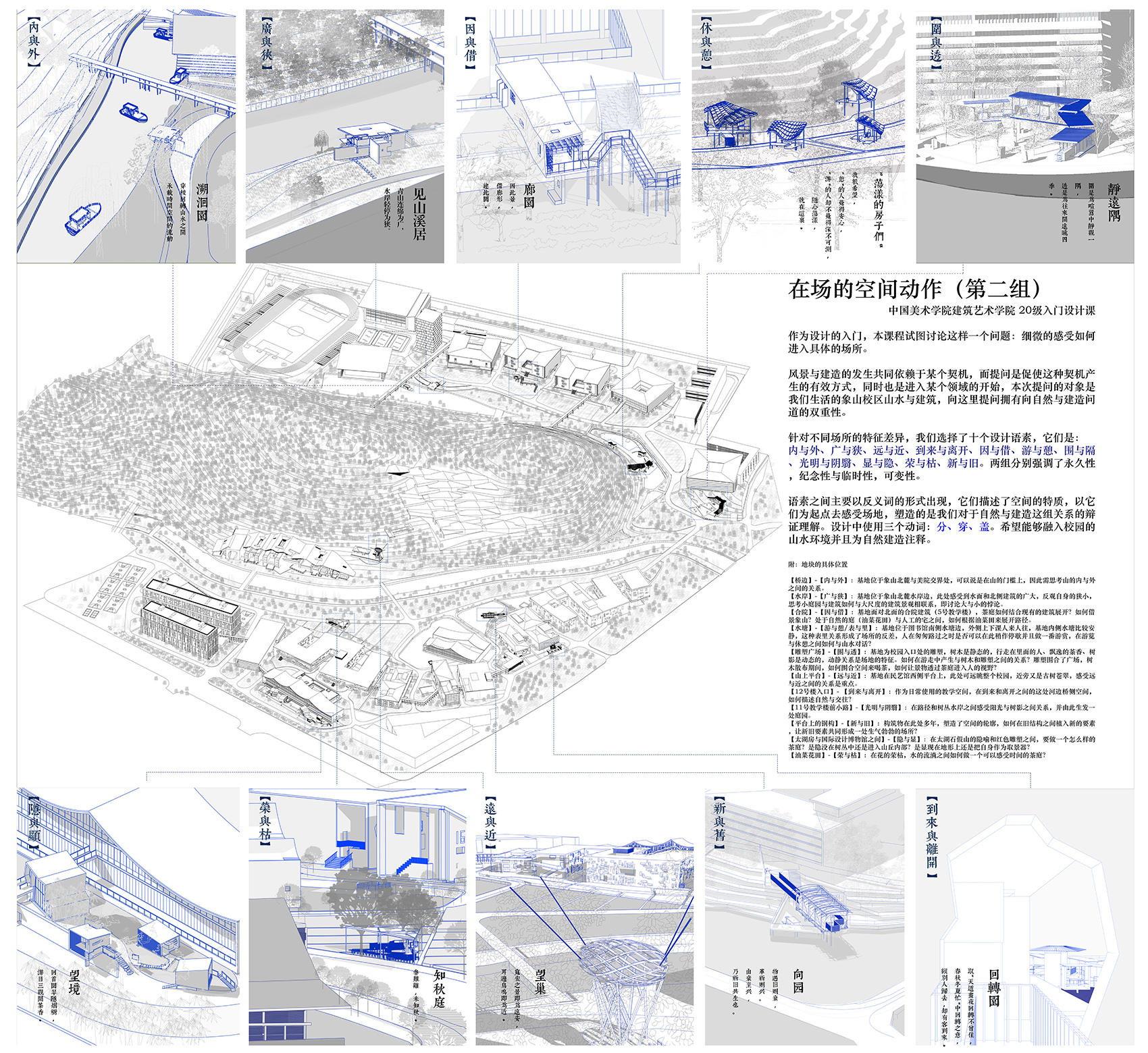
【Bridge side】-【 inside or outside 】:The base is located at the junction of Xiangshan north foot and Academy of Art , which can be said to be on the threshold of the mountain , so we need to think about the relationship between the inside and outside of the mountain.
【River edge】-【 wide or narrow 】:The base is located at the water bank at the north foot of Xiangshan , where you can feel the vastness of the water and the buildings on the north side , but look at our own narrowness , to think about how small courtyard and buildings relate to large-scale architectural landscapes is to discuss the paradox of large and small.
【Courtyard house】-【 cause or borrow 】:The base faces the courtyard building to the north(Teaching Building No.5),how does the tea court integrate with the existing building ? How to borrow scenery from Xiangshan ? Between the natural courtyard(rape flower field) and the artificial building , how to expand the path according to the rape field?
【Pond】-【 visit or rest /outside or inside】:The base is located on the south side of the library by the pond , outside the base , there are people coming and going during classes , inside the base ,the pond is quieter , this relation between exterior and interior forms the contrast of the place , if people could take a rest and do some sightseeing while passing by , how to communicate with the landscape between sightseeing and rest?
【Sculpture square】-【Enclosure or transparent】:The base is the sculpture at the entrance of the campus , trees are static , the people walking in it , the fragrance of the tea and the shadow of the trees are dynamic , dynamic and static relationship is the characteristic of the site . How to create the relationship between trees and sculpture in the wandering ? The sculpture encloses the square , and trees are scattered among it , how to enclose the space for drinking tea , and how to let the scenery enter people’s vision through the tea court?
【Platform on the hill】-【 far or near 】:The base is on the west platform of the Folk Art Museum , the whole campus can be seen from here,and there are ancient trees near by , feeling the relationship between far and near is the key.
【Entrance to NO.12 Teaching Building】-【 arrival or departure 】:As a teaching space for daily use , how to describe nature and interaction in the river bridge space between arrival and departure?
【Alley in front of No.11 Teaching Building】-【 light or shade 】:Feel the relationship between sunlight and tree shadows between the path and the water bank , and build a courtyard out of it.
【Steel structure on the plat form】-【 new or old 】:The structure has been there for many years , shaping the outline of the space .How to implant new elements between the old structures and make the old and new elements form a vibrant place together?
【Between the taihu Lake House and the International Design Museum】 -【 appear or hide 】 :Between the metaphor of taihu stone rockery and red sculpture , what kind of tea court should be built ? Does it disappear into the trees or into the hill ? Does it appear on the terrain or use itself as a viewfinder?
【 Rape flower field 】-【 flourish or withered 】:How to make a space that can feel time between the growth and decline of flowers and the flow of water?
▼第二组十个房子与象山校区的关系:临时性与可变性 ©中国美术学院建筑艺术学院20级学生
The relationship between the first group of ten buildings and Xiangshan Campus: Temporality and variability
作品介绍
PROJECTS
动作:分
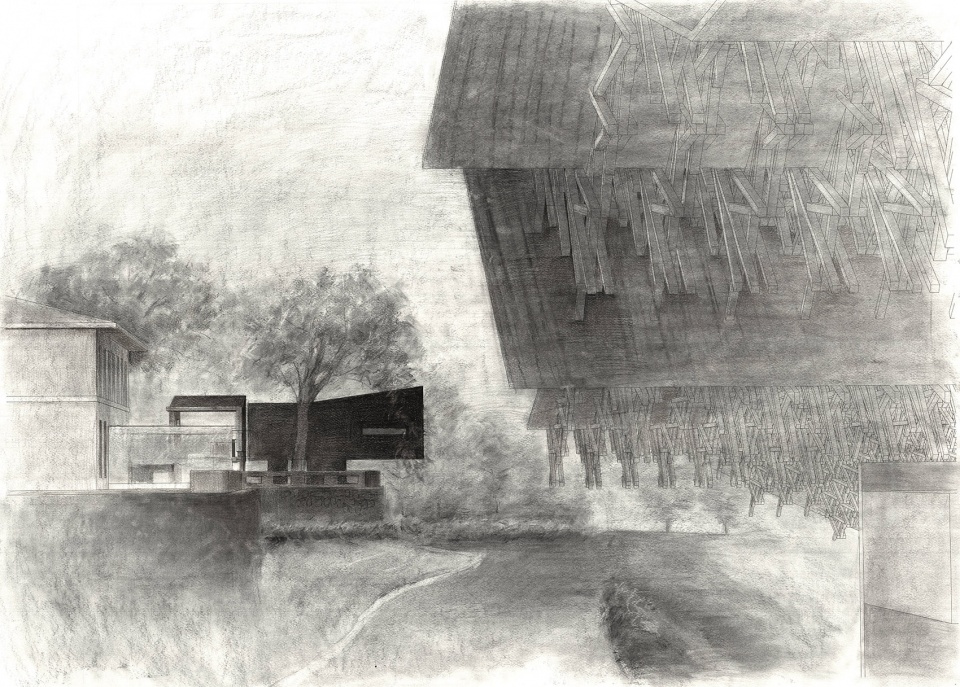
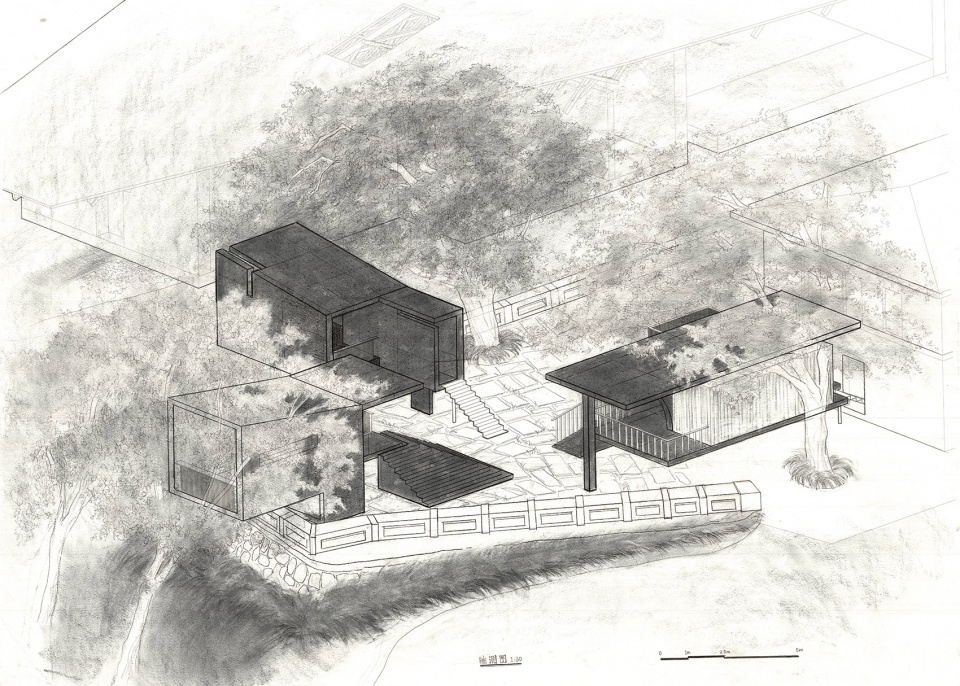
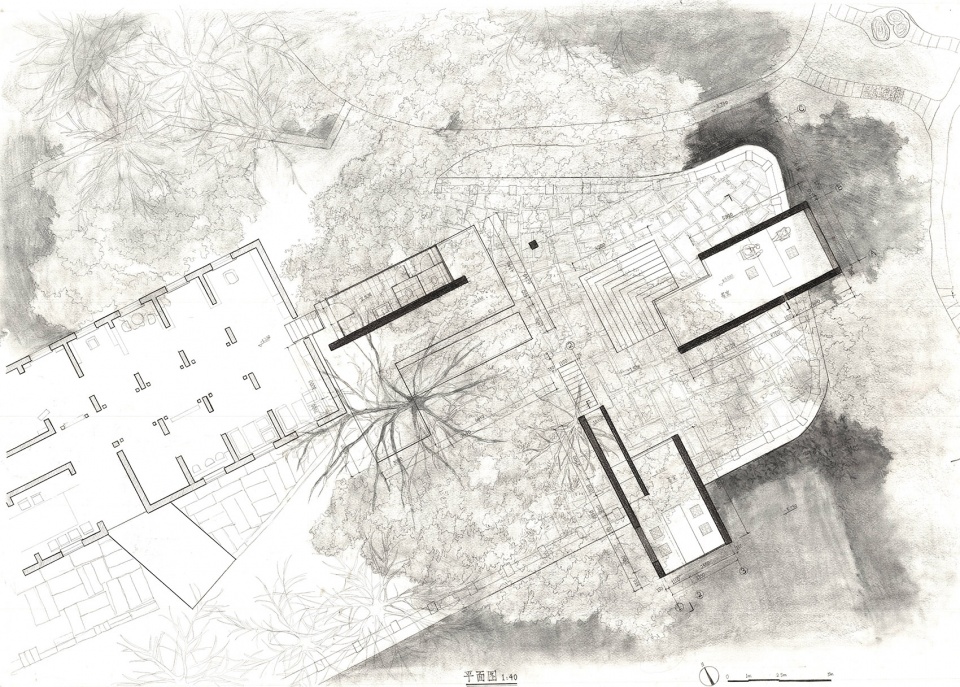
01. 林下幽筑
Secluded cottage under the trees
场地:山上平台
悖论:【远与近】
说明:基地在民艺馆西侧平台上,此处可远眺整个校园,近旁又是古树苍翠,感受远与近之间的关系是重点。
作品:林下幽筑
动作:分
阐发:框景极目为远,容膝卧谈为近。
Site: Platform on the hill
Paradox:【 far and near 】
Explanation: The base is on the west platform of the Folk Art Museum , the whole campus can be seen from here,and there are ancient trees near by , feeling the relationship between far and near is the key.
Work : Secluded cottage under the trees
Action : disperse
Elucidate :Looking far into the distance through the enframed scenery is far , sitting down and talking in the tight room is close.
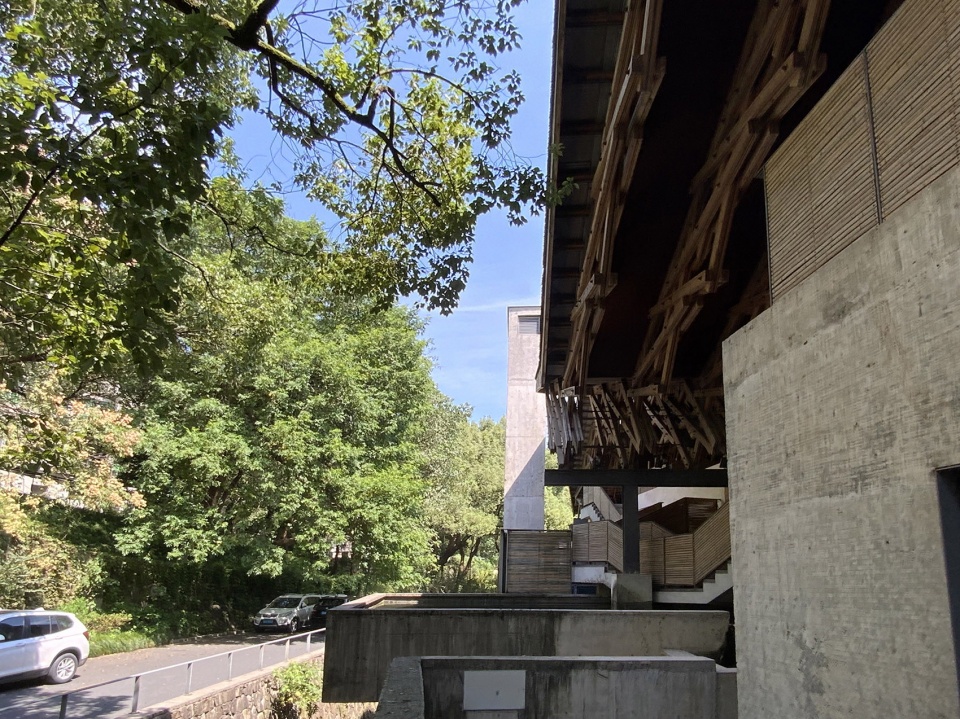
▼林下幽筑 – 现场,Secluded cottage under the trees – site ©曾楚茜
▼效果图,Perspective ©曾楚茜
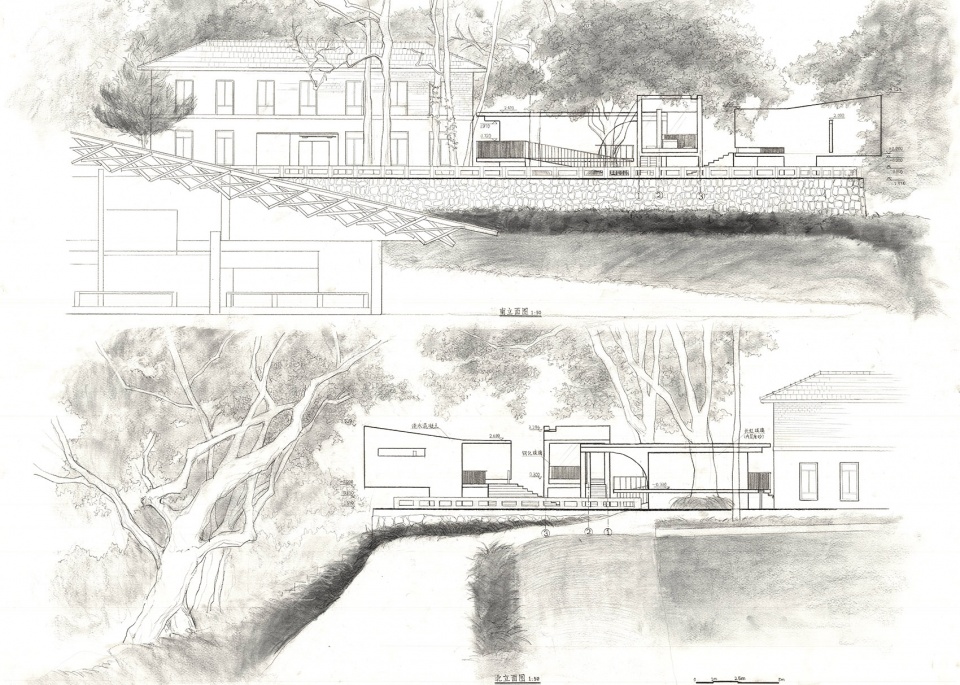
▼立面图,Elevation ©曾楚茜
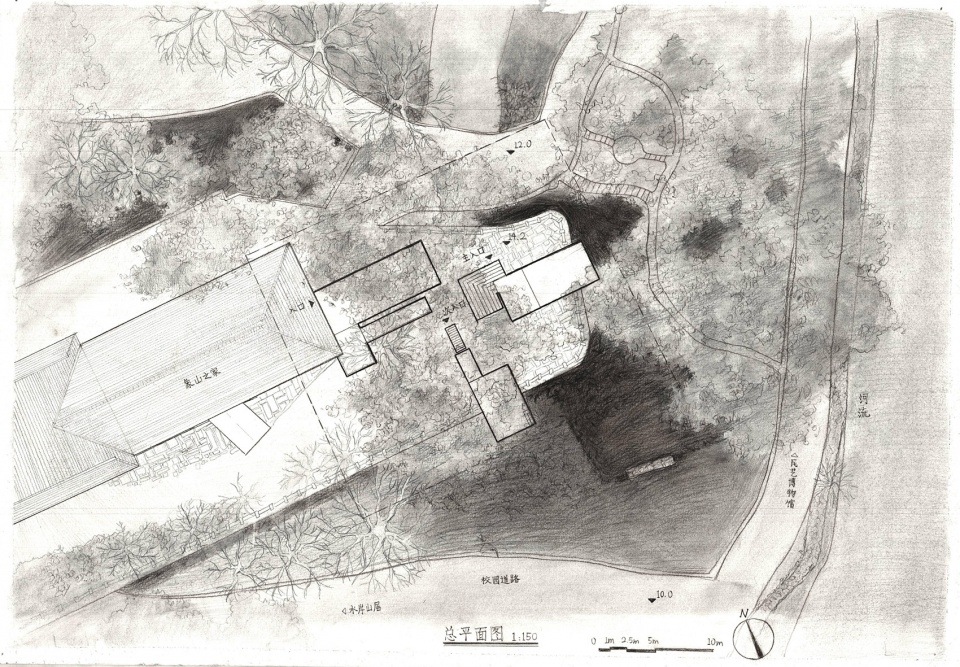
▼总图,Site plan ©曾楚茜
▼轴测图,Axon ©曾楚茜
▼一层平面图,Ground floor plan ©曾楚茜
02. 溯回园
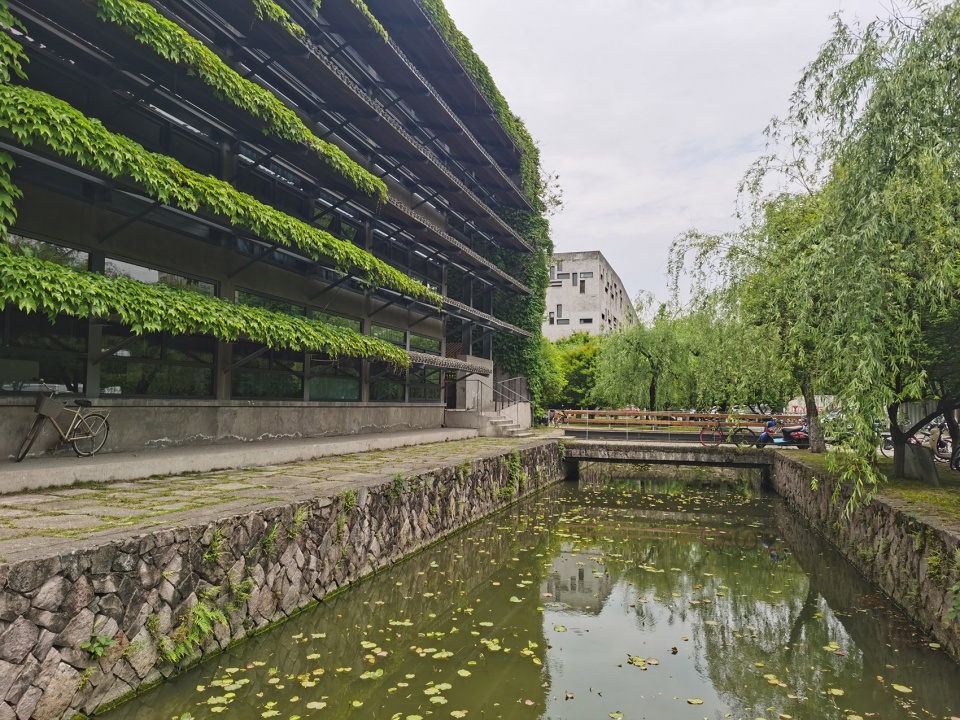
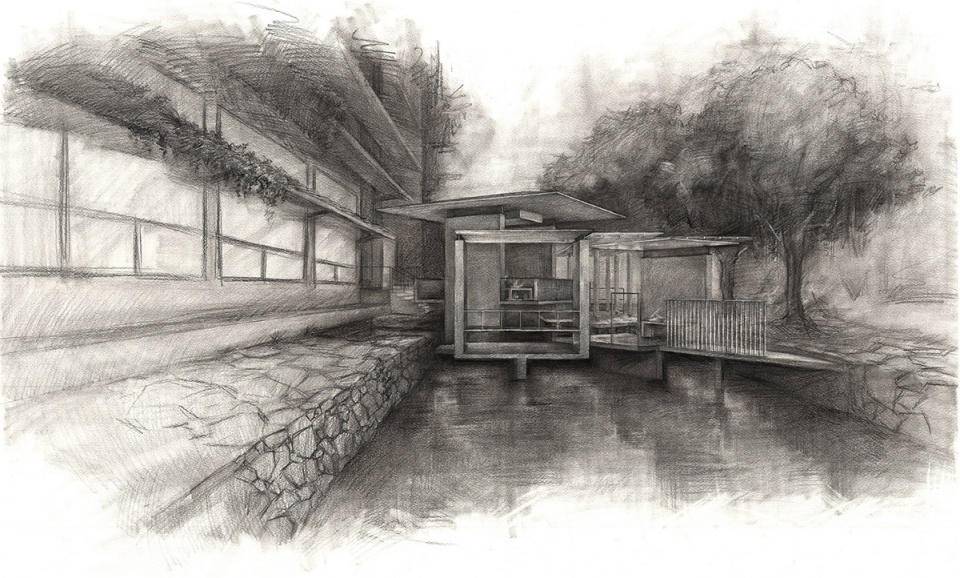
Adverse current garden
场地:12号教学楼前
悖论:【到来与离开】
说明:作为日常使用的教学空间,在到来和离开之间的这处河边桥侧空间,如何描述自然与交往?
作品:溯回园
动作:分
阐发:游目观鱼,信可乐也。
Site: In front of the NO.12 Teaching Building
Paradox:【 arrival and departure 】
Explanation:As a teaching space for daily use , how to describe nature and interaction in the river bridge space between arrival and departure?
Work :Adverse current garden
Action : disperse
Elucidate :Move eyes to watch the fish , that’s a pleasure.
▼溯回园 – 现场,Adverse current garden – site ©卞芊琪
▼效果图,Perspective ©卞芊琪
▼总平面图,Site plan ©卞芊琪
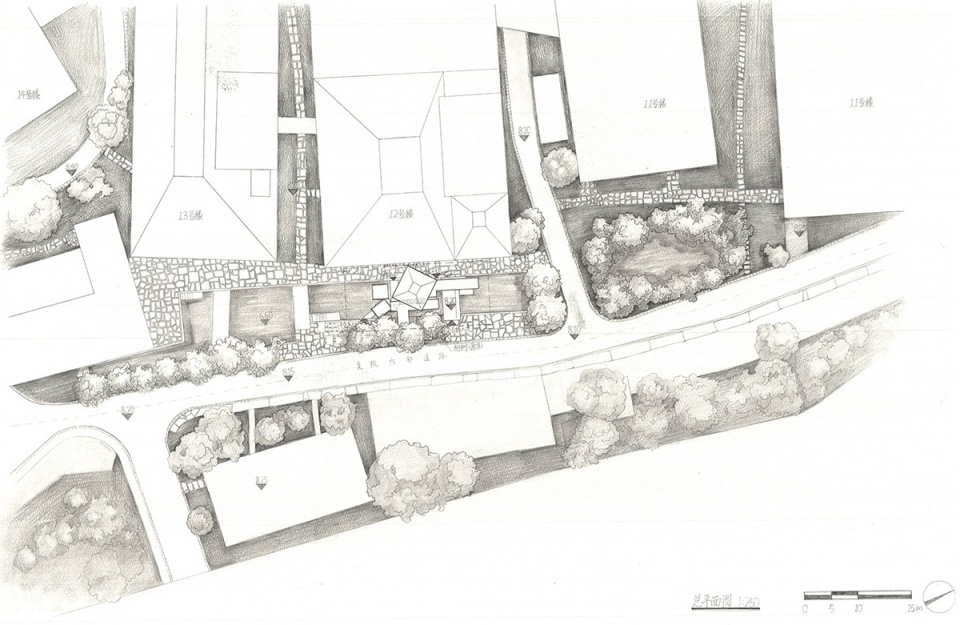
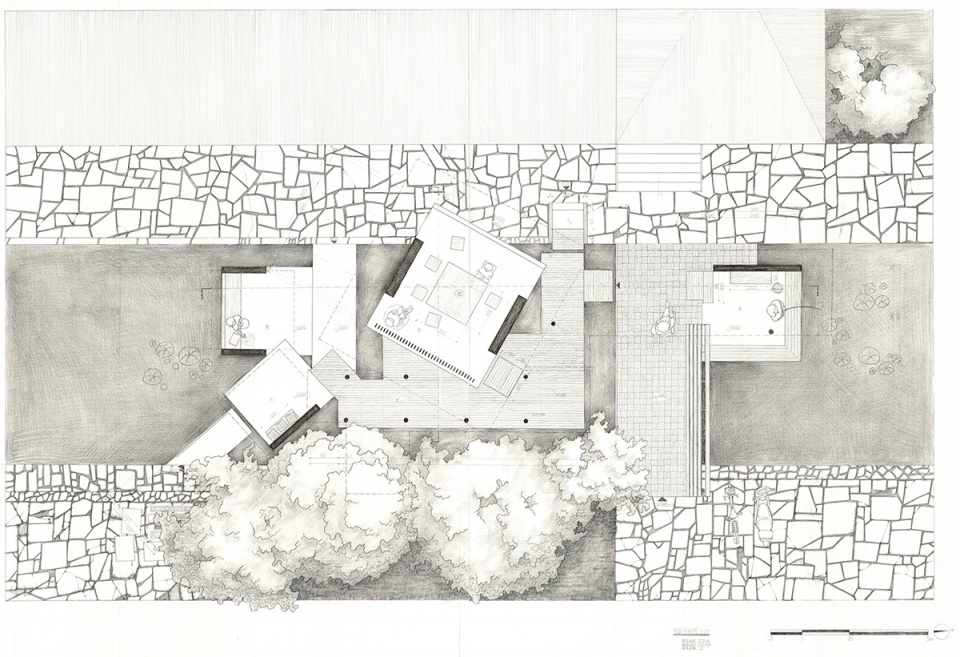
▼一层平面图,Ground floor plan ©卞芊琪
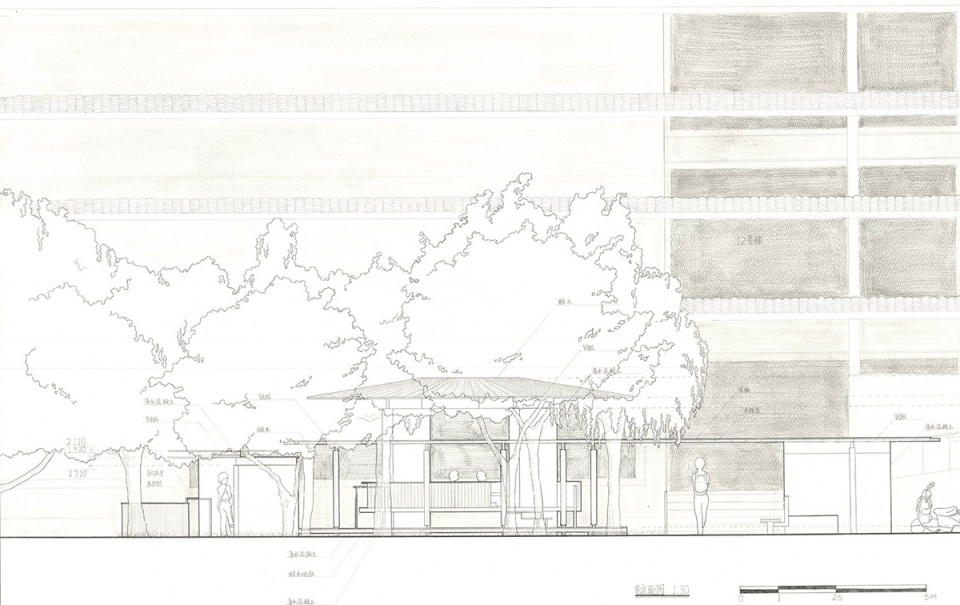
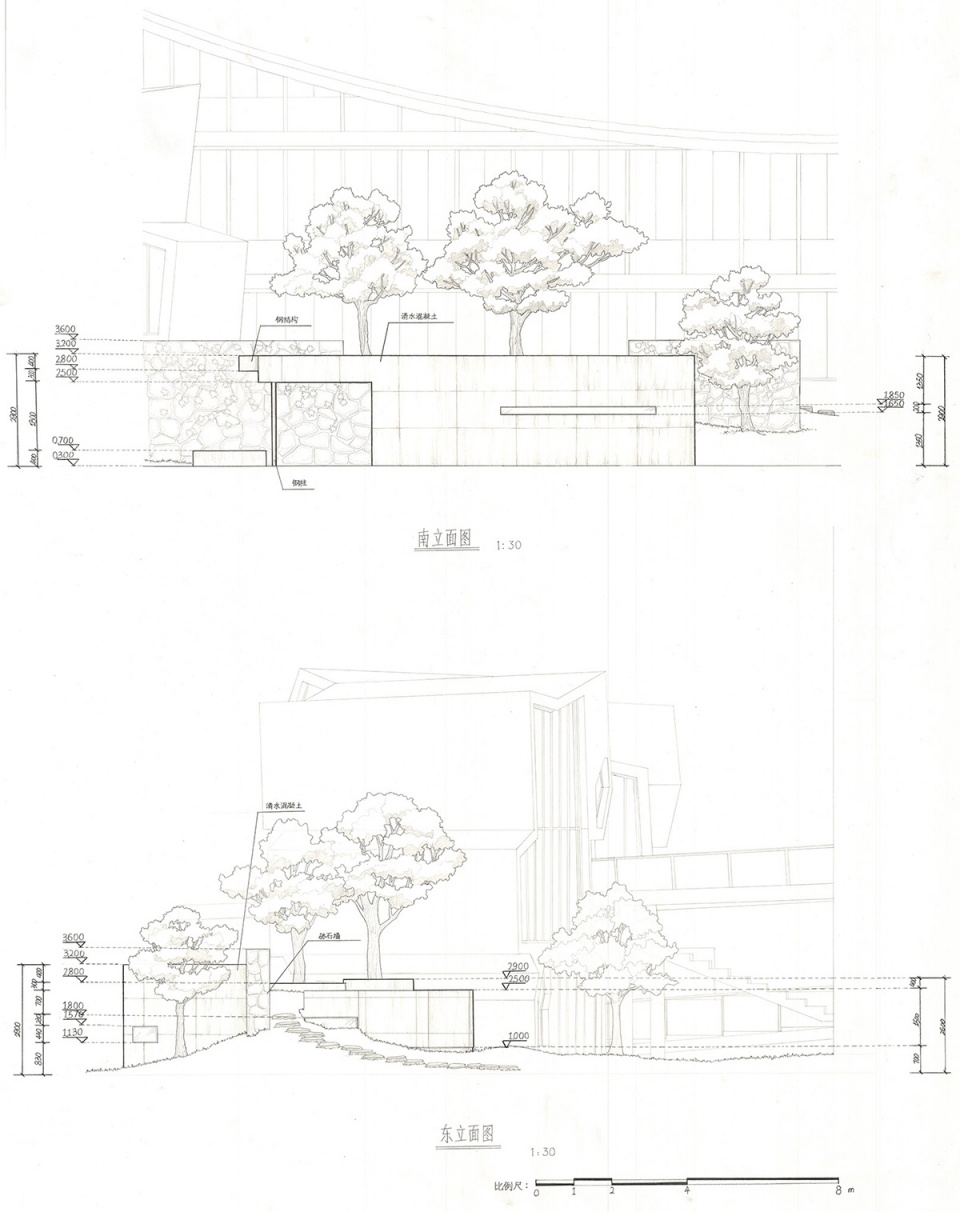
▼东立面图,East elevation ©卞芊琪
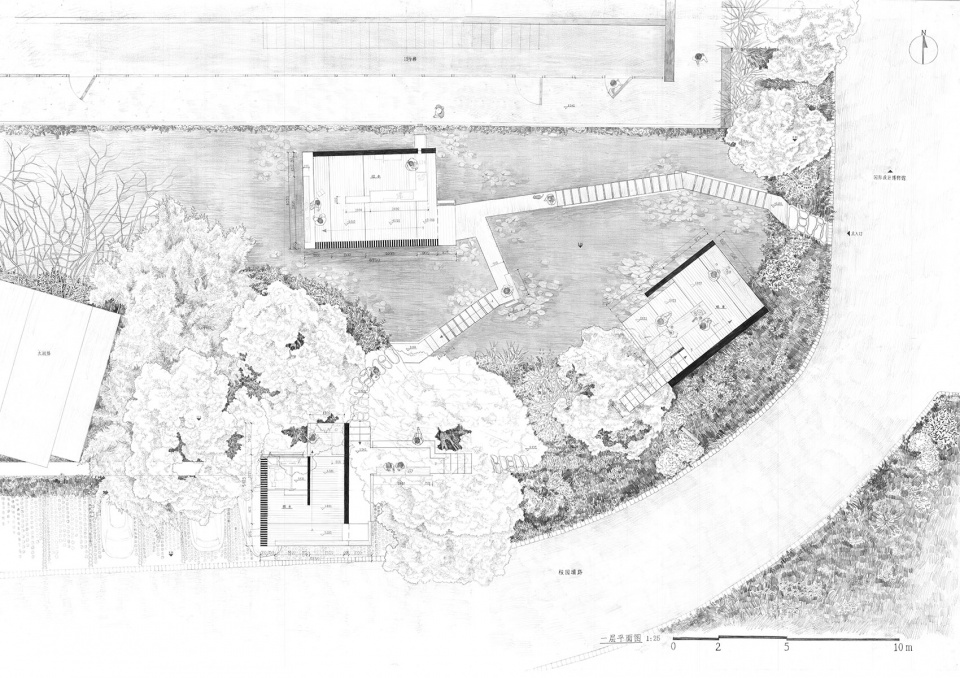
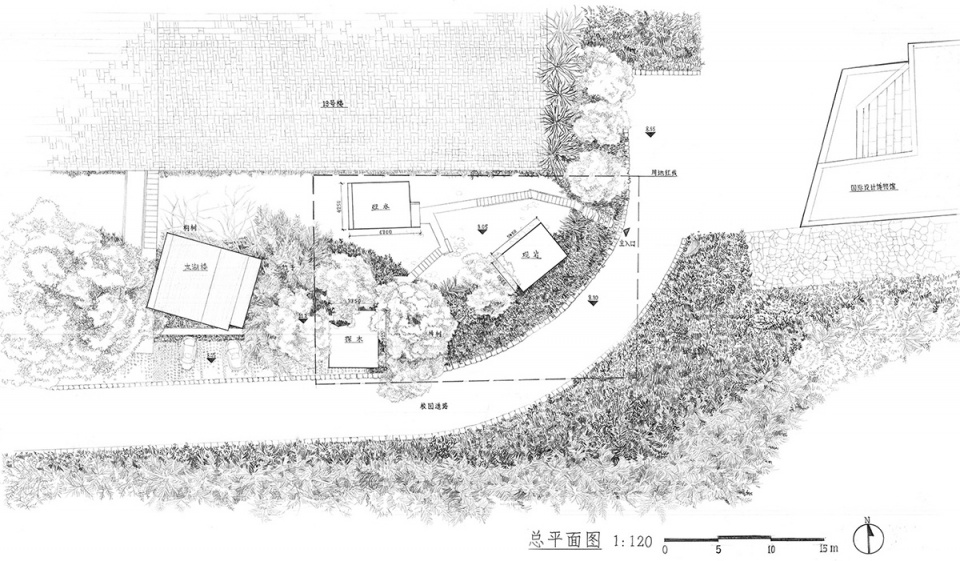
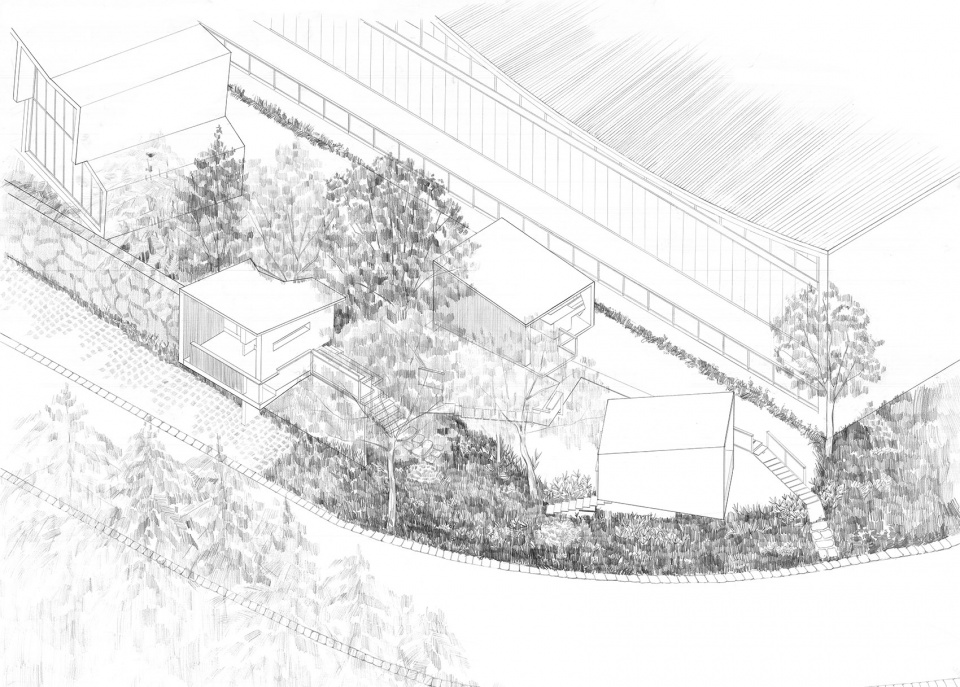
03. 望境
Architecture looking into the distance
场地:太湖房与国际设计博物馆之间
悖论:【显隐】
说明:在太湖石假山的隐喻和红色雕塑之间,要做一个怎么样的茶庭?是隐没在树丛中还是进入山丘内部?是显现在地形上还是把自身作为取景器?
作品:望境
动作:分
阐发:回首园翠隐烟树,游目三观闻茶香。
Site: Between the taihu Lake House and the International Design Museum
Paradox:【appear and hide】
Explanation: Between the metaphor of taihu stone rockery and red sculpture , what kind of tea court should be built ? Does it disappear into the trees or into the hill ? Does it appear on the terrain or use itself as a viewfinder?
Work : Architecture looking into the distance
Action : disperse
Elucidate :Look back at the green trees hidden in the clouds, the eyes drift away and smell the tea.
▼望境 – 现场,Architecture looking into the distance – site ©李明珊
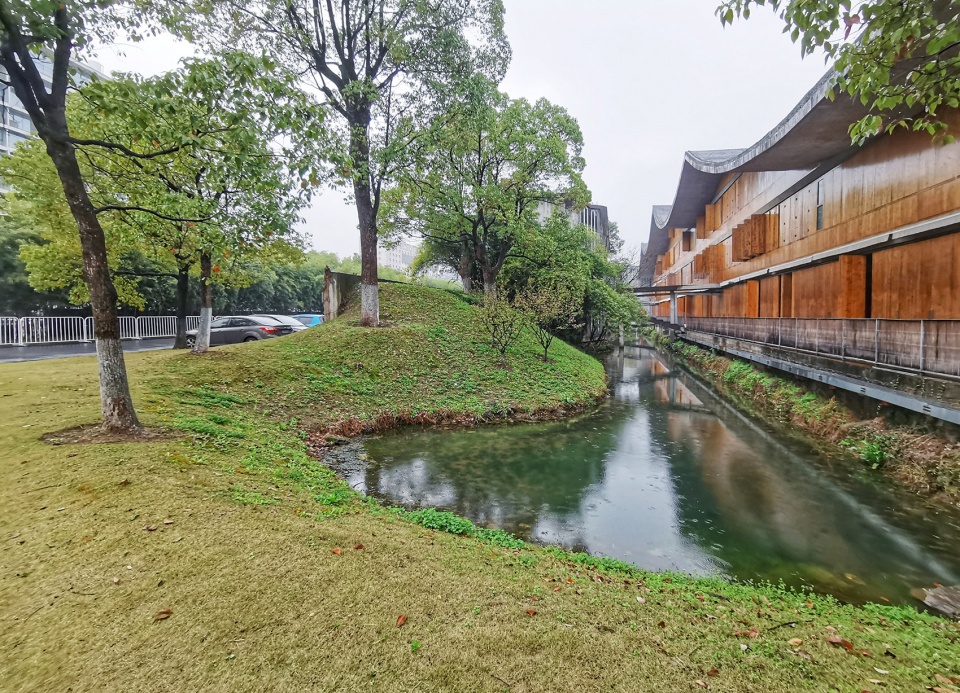
▼效果图,Perspective ©李明珊
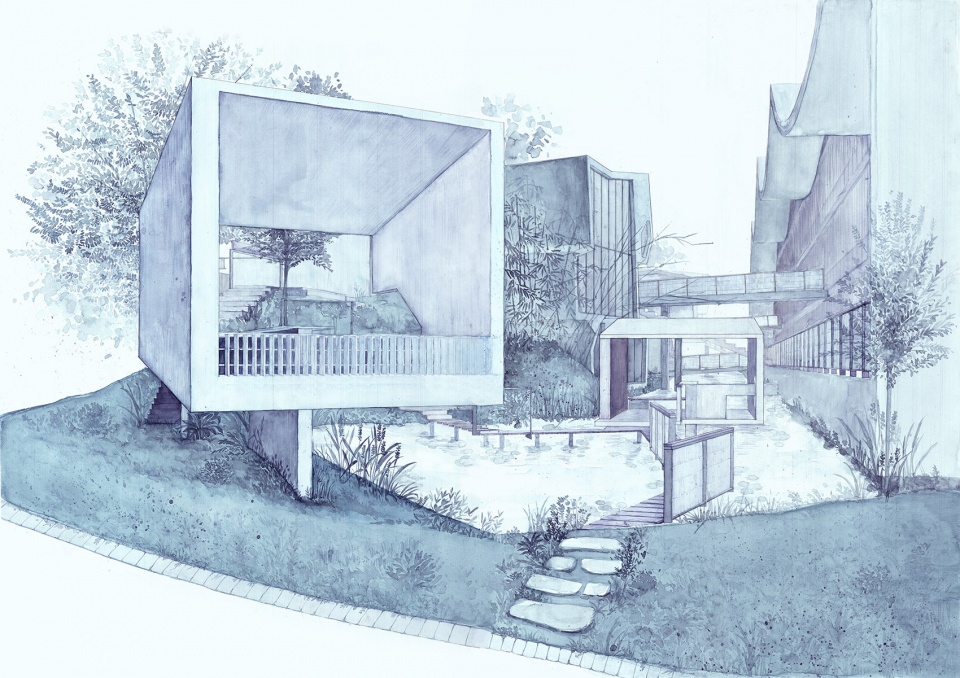
▼一层平面图,Ground floor plan ©李明珊
▼总平面图,Site plan ©李明珊
▼轴测图,Axon ©李明珊
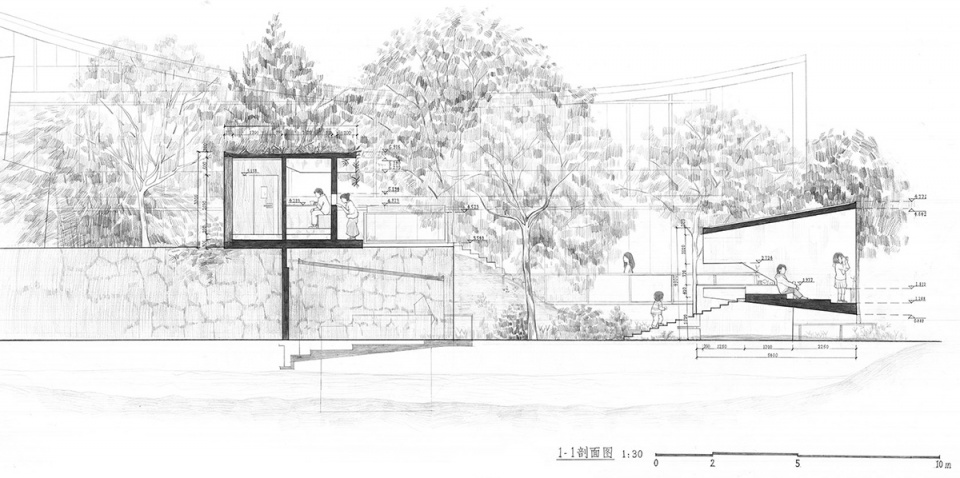
▼剖面图,Section ©李明珊
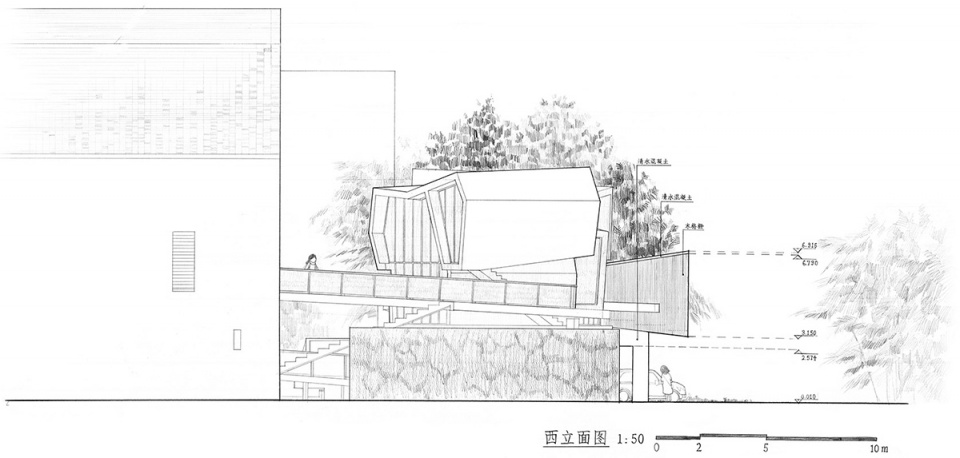
▼西立面图,West elevation ©李明珊
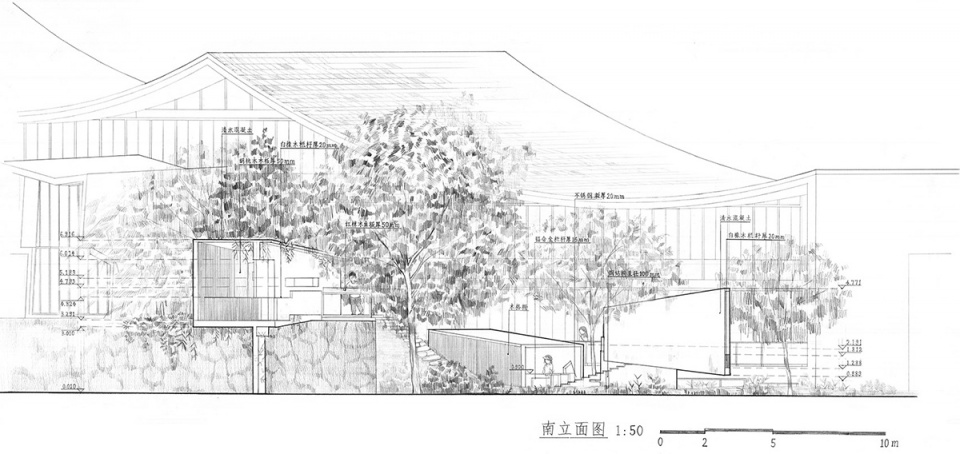
▼南立面图,South elevation ©李明珊
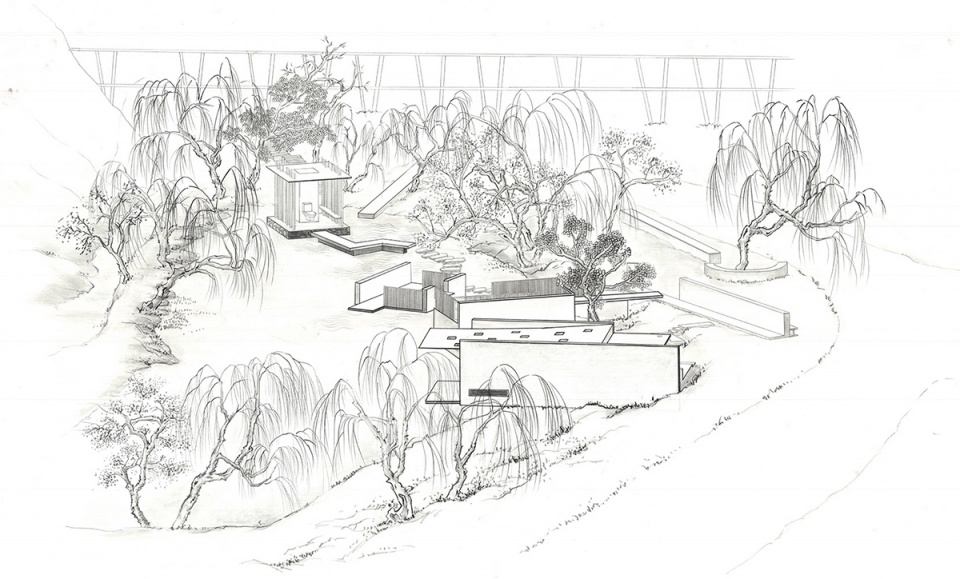
04. 雨霁轩
Raining pavilion
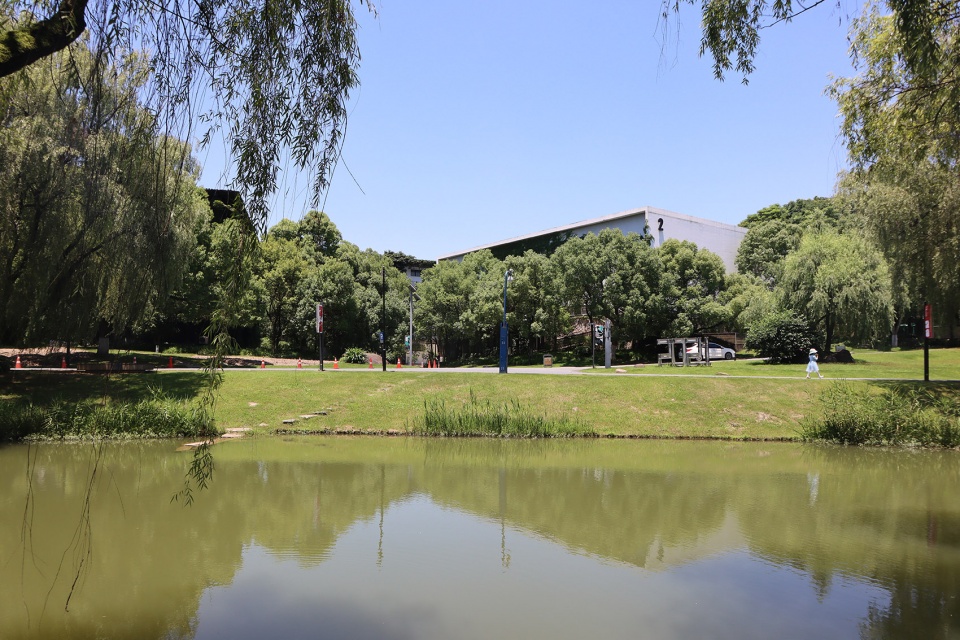
场地:图书馆门口池塘
悖论:【表里】
说明:基地位于图书馆南侧水塘边,外侧上下课人来人往,基地内侧水塘比较安静,这种表里关系形成了场所的反差,人在匆匆路过之时是否可以在此稍作停歇并且做一番游赏,在游览与休憩之间如何与山水对话?
作品:雨霁轩
动作:分
阐发:
碧池春雨后,柳絮纷飞落。
门前行人匆匆过,望窗外青山,静默。
盏中茶,水边卧,雨霁晴空烁。
Site:The pond in front of the libarary
Paradox:【 outside and inside 】
Explanation:The base is located on the south side of the library by the pond , outside the base , there are people coming and going during classes , inside the base ,the pond is quieter , this relation between exterior and interior forms the contrast of the place , if people could take a rest and do some sightseeing while passing by , how to communicate with the landscape between sightseeing and rest?
Work : Raining pavilion
Action : disperse
Elucidate :The pond is green after spring rains , catkins are falling down.Pedestrians walk pass in a hurry, looking out the window at the greenhills,keep silent. The tea is poured into the cup , the man lies beside the water,the sky was shining after the rain.
▼雨霁轩 – 现场,Raining pavilion – site © 江易璇
▼效果图,Rendering © 江易璇
▼轴测图,Axon © 江易璇
动作:穿
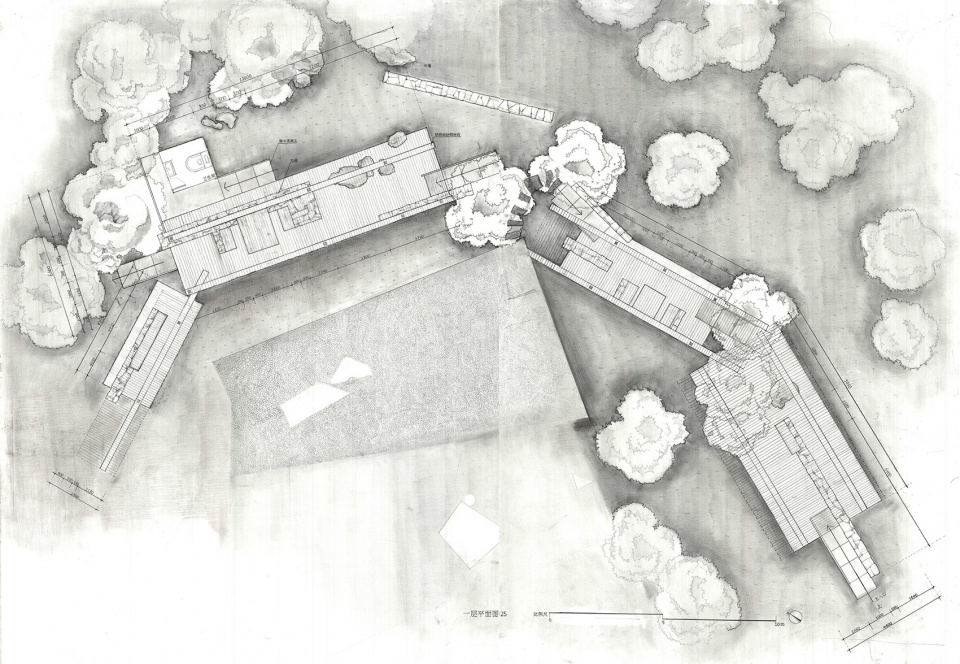
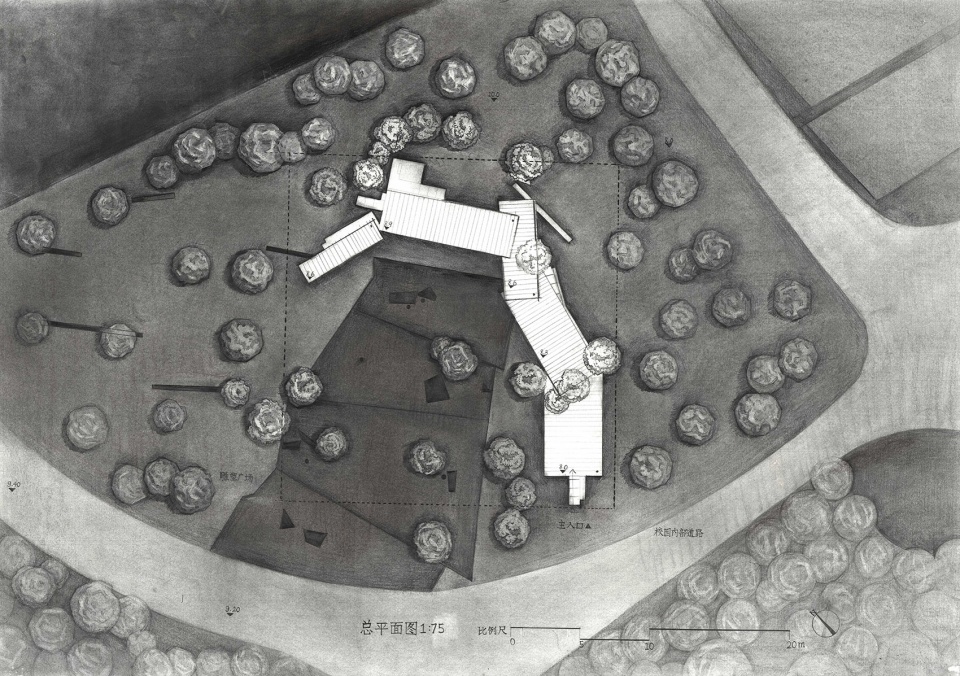
05. 静远隅
Tranquil court
场地:雕塑广场
悖论:【动静】
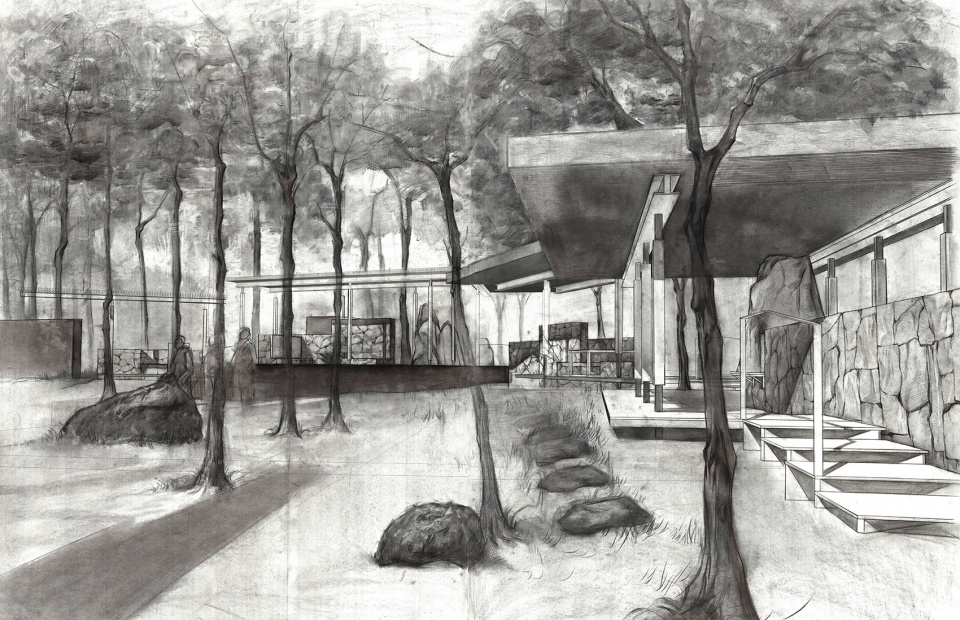
说明:基地为校园入口处的雕塑,树木是静态的,行走在里面的人、飘逸的茶香、树影是动态的,动静关系是场地的特征。如何在游走中产生与树木和雕塑之间的关系?雕塑围合了广场,树木散布期间,如何围合空间来喝茶,如何让景物透过茶庭进入人的视野?
作品:静远隅
动作:穿
阐发:
围是为喧嚣中静观一隅,透是为往来间远眺四季。
Site: Sculpture square
Paradox:【Dynamic and static】
Explanation:The base is the sculpture at the entrance of the campus , trees are static , the people walking in it , the fragrance of the tea and the shadow of the trees are dynamic , dynamic and static relationship is the characteristic of the site . How to create the relationship between trees and sculpture in the wandering ? The sculpture encloses the square , and trees are scattered among it , how to enclose the space for drinking tea , and how to let the scenery enter people’s vision through the tea court?
Work :Tranquil court
Action : penetrate
Elucidate :Enclosure is to watch a corner quietly amid the noise , transparent is walking and watching between the four seasons.
▼静远隅 – 现场,Tranquil court – site © 彭乐芝
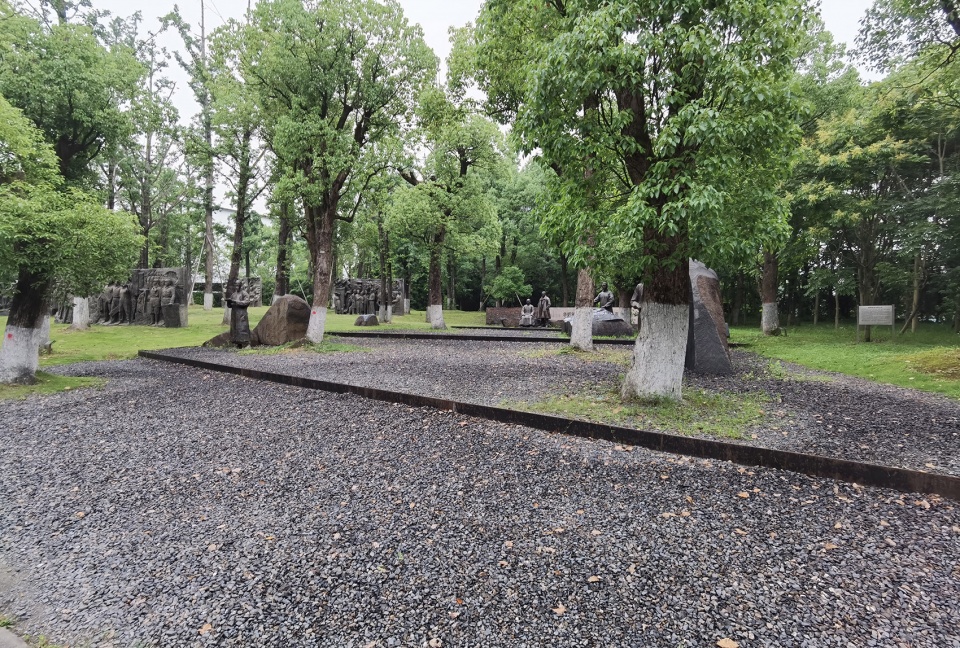
▼表现图,Perspective © 彭乐芝
▼平面图,Plan © 彭乐芝
▼总平面图,Site plan © 彭乐芝
▼轴测图,Axon © 彭乐芝
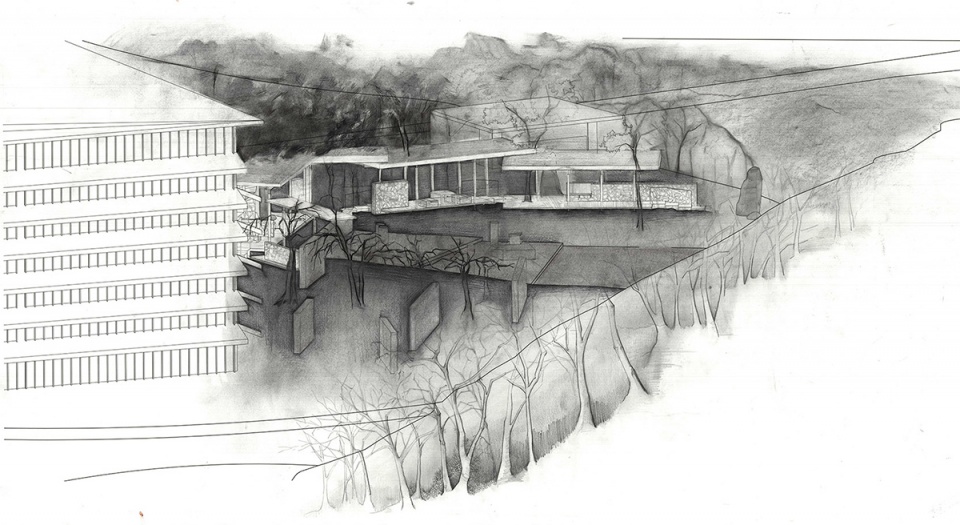
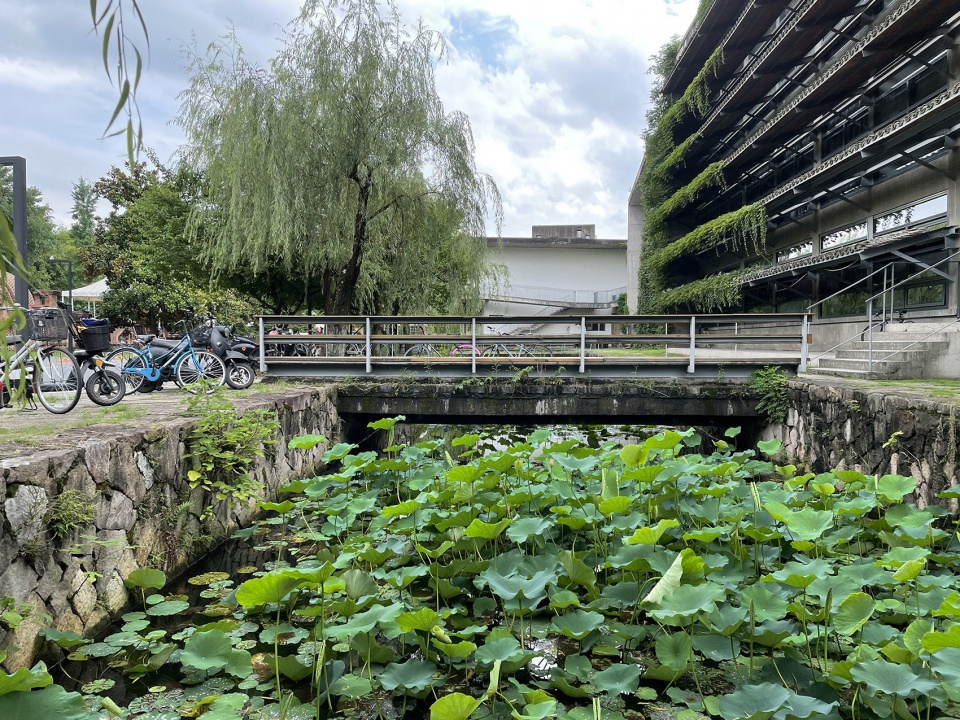
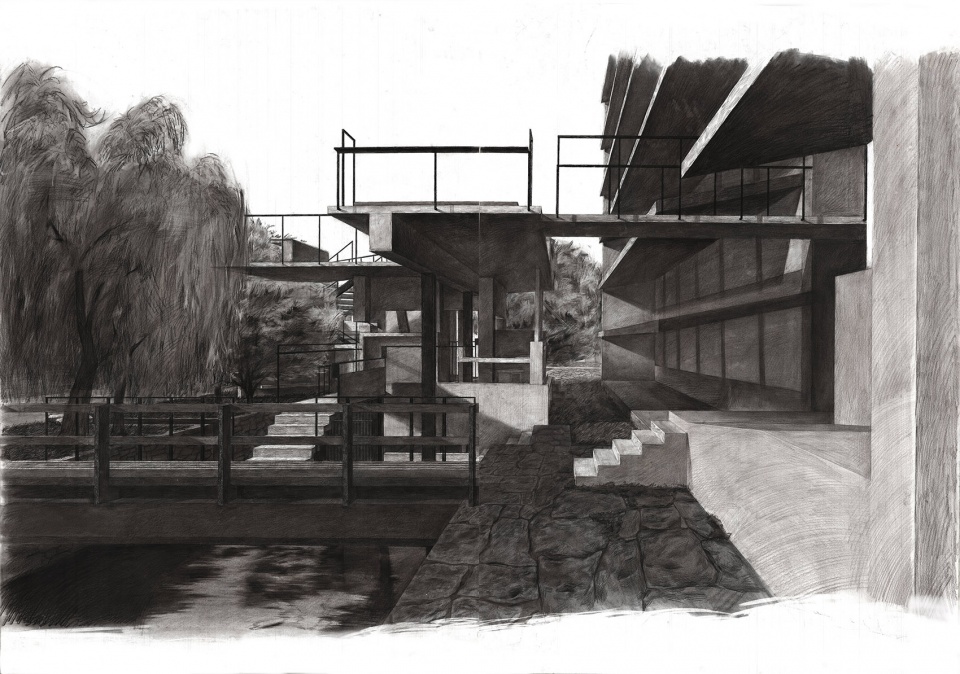
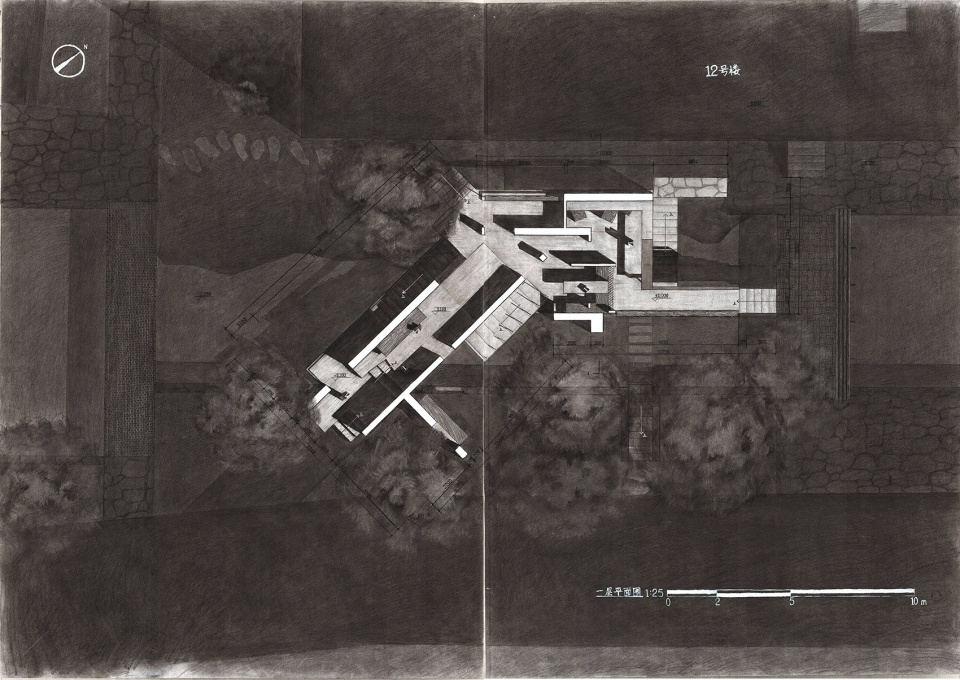
06. 迷境
Labyrinth
场地:12号教学楼入口
悖论:【到来与离开】
说明:作为日常使用的教学空间,在到来和离开之间的这处河边桥侧空间,如何描述自然与交往?
作品:迷境
动作:穿
阐发:来时云深客行迷,去日风清香饶径。
Site: In front of the NO.12 Teaching Building
Paradox:【 arrival and departure 】
Explanation : As a teaching space for daily use , how to describe nature and interaction in the river bridge space between arrival and departure?
Work :Labyrinth
Action : penetrate
Elucidate :The guests came in misty clouds , left with the wind blew over the road with fragrance.
▼迷境 – 现场,Labyrinth – site © 熊可欣
▼效果图,Perspective © 熊可欣
▼一层平面图,Ground floor plan © 熊可欣
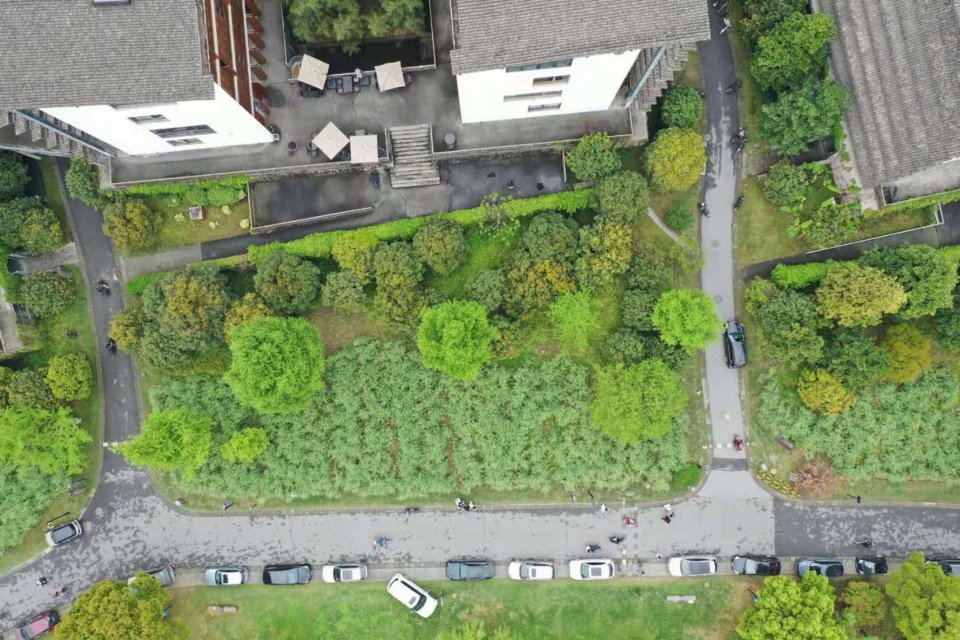
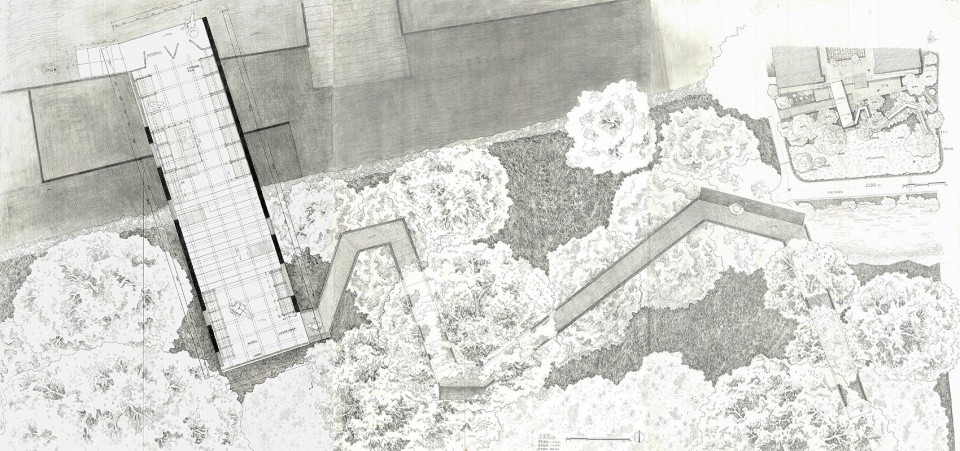
07. 望园
Gaze court
场地:5号教学楼平台
悖论:【因与借】
说明:基地面对北面的合院建筑(5号教学楼),茶庭如何结合现有的建筑展开?如何借景象山?处于自然的庭(油菜花田)与人工的宅之间,如何根据油菜田来展开路径。
作品:望园
动作:穿
阐发:因山景,借廊形,造望园。
Site : The platform of Teaching Building No.5
Paradox:【 cause and borrow 】
Explanation:The base faces the courtyard building to the north(Teaching Building No.5),how does the tea court integrate with the existing building ? How to borrow scenery from Xiangshan ? Between the natural courtyard(rape flower field) and the artificial building , how to expand the path according to the rape field?
Work :Gaze court
Action : penetrate
Elucidate :By the scenery of the mountain , by the shape of the verandah , to create a garden for distant view.
▼望园 – 现场,Gaze court – site © 陈克
▼平面图,Plan © 陈克
▼立面图,Elevation © 陈克

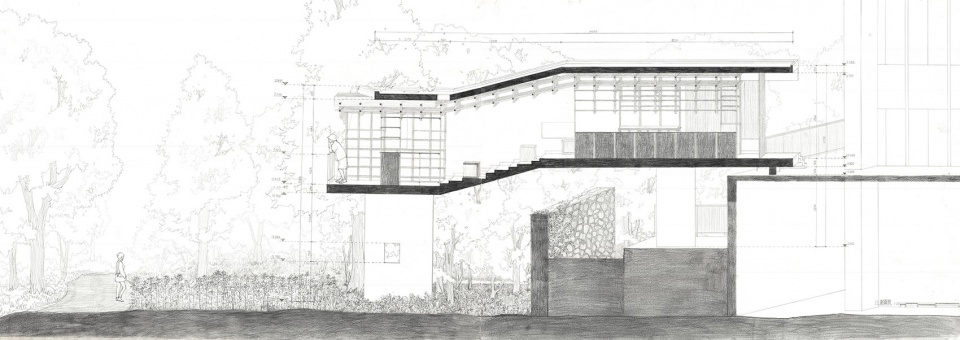
▼效果图,Rendering © 陈克
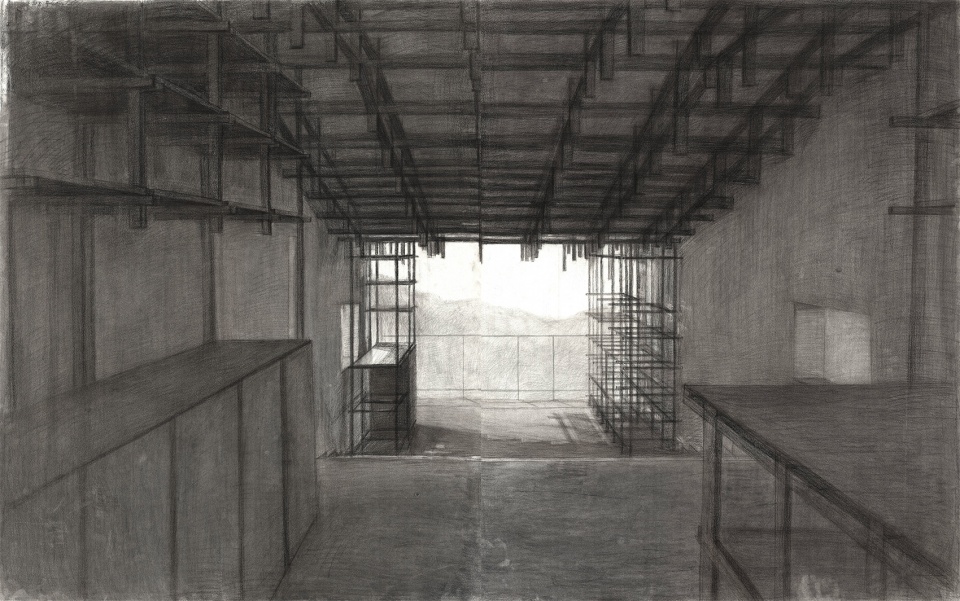
▼轴测图,Axon © 陈克
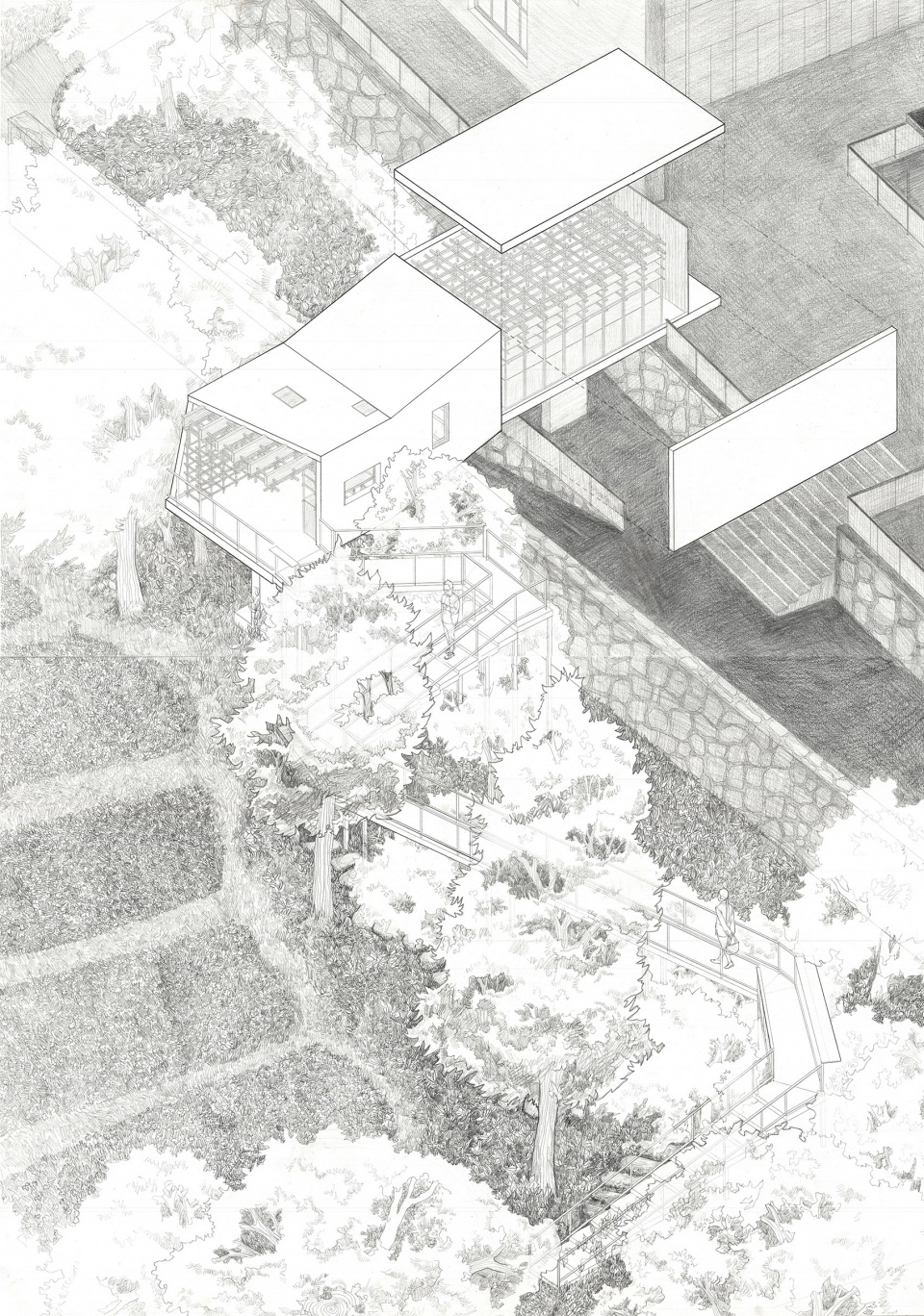
08. 过庭
Traverse garden
场地:雕塑广场
悖论:【围与透】
说明:基地为校园入口处的雕塑,树木是静态的,行走在里面的人、飘逸的茶香、树影是动态的,动静关系是场地的特征。如何在游走中产生与树木和雕塑之间的关系?雕塑围合了广场,树木散布期间,如何围合空间来喝茶,如何让景物透过茶庭进入人的视野?
作品:过庭
动作:穿
阐发:雕塑围廊,光影透墙
Site: Sculpture square
Paradox:【Enclosure and transparent】
Explanation : The base is the sculpture at the entrance of the campus , trees are static , the people walking in it , the fragrance of the tea and the shadow of the trees are dynamic , dynamic and static relationship is the characteristic of the site . How to create the relationship between trees and sculpture in the wandering ? The sculpture encloses the square , and trees are scattered among it , how to enclose the space for drinking tea , and how to let the scenery enter people’s vision through the tea court?
Work :Traverse court
Action : penetrate
Elucidate :Sculptures surround the verandah,light and shadow flow through the walls.
▼过庭 – 现场,Traverse garden – site © 张宇涵
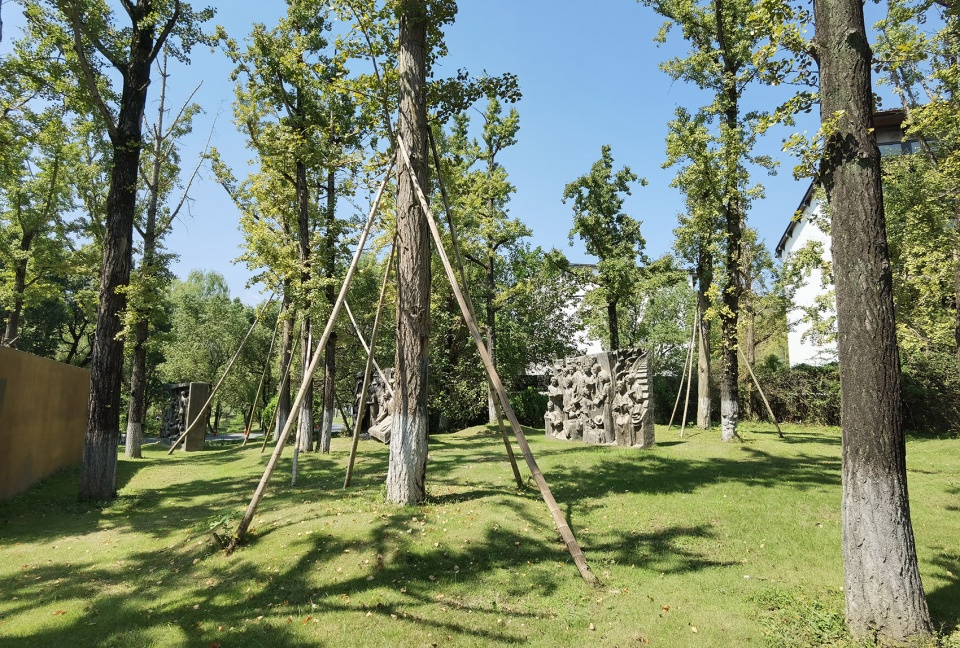
▼表现图,Perspective © 张宇涵
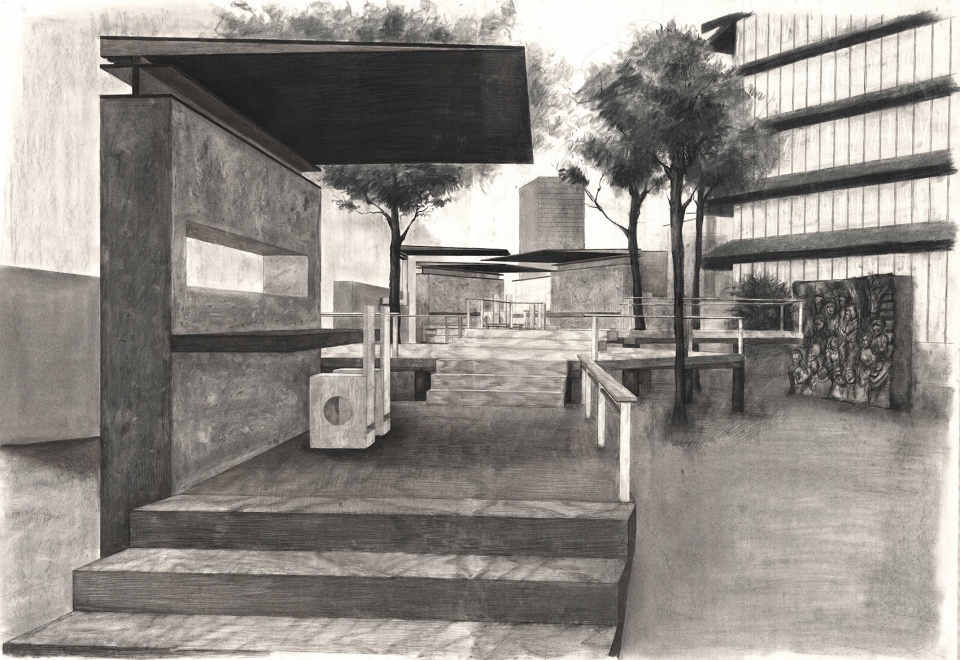
▼轴测图,Axon © 张宇涵
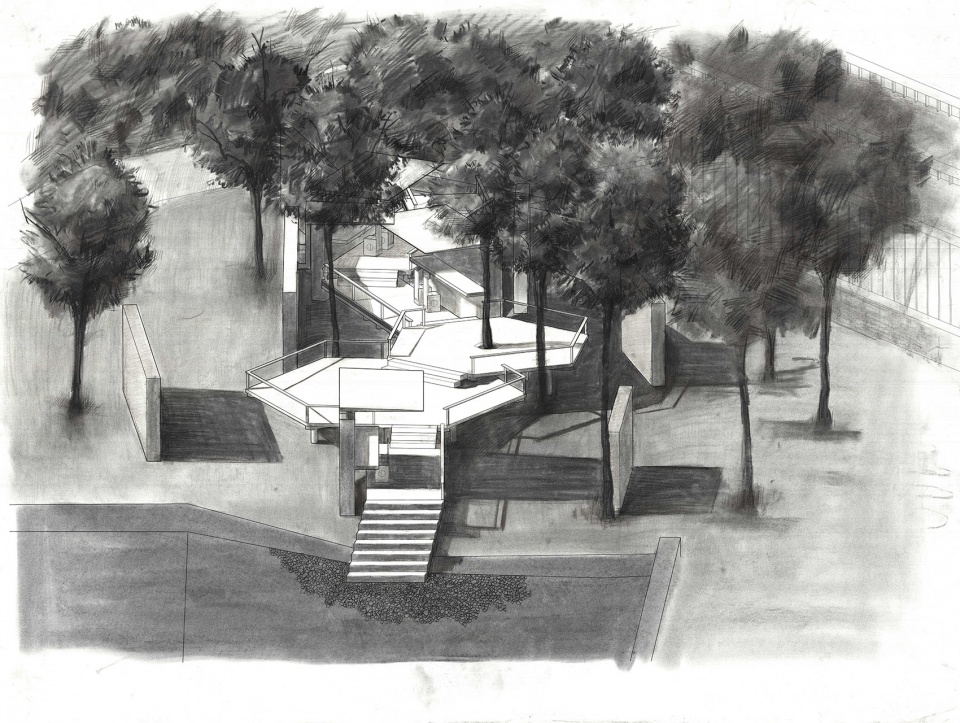
09. 游弦庭
String court
场地:象山校区
悖论:【内与外】
说明:基地位于象山北麓与美院交界处,可以说是在山的门槛上,因此需思考山的内与外之间的关系。
作品:游弦庭
动作:穿
阐发:翠岭藏诗轴,飞梭贯碧山。
Site: Xiangshan Campus
Paradox:【 inside and outside 】
Explanation :The base is located at the junction of Xiangshan north foot and Academy of Art , which can be said to be on the threshold of the mountain , so we need to think about the relationship between the inside and outside of the mountain.
Work :String court
Action : penetrate
Elucidate :Poetry hidden in the verdant mountains , shuttle through the mountains.
▼游弦庭 – 总平面图,String court – Site plan © 熊梓贝
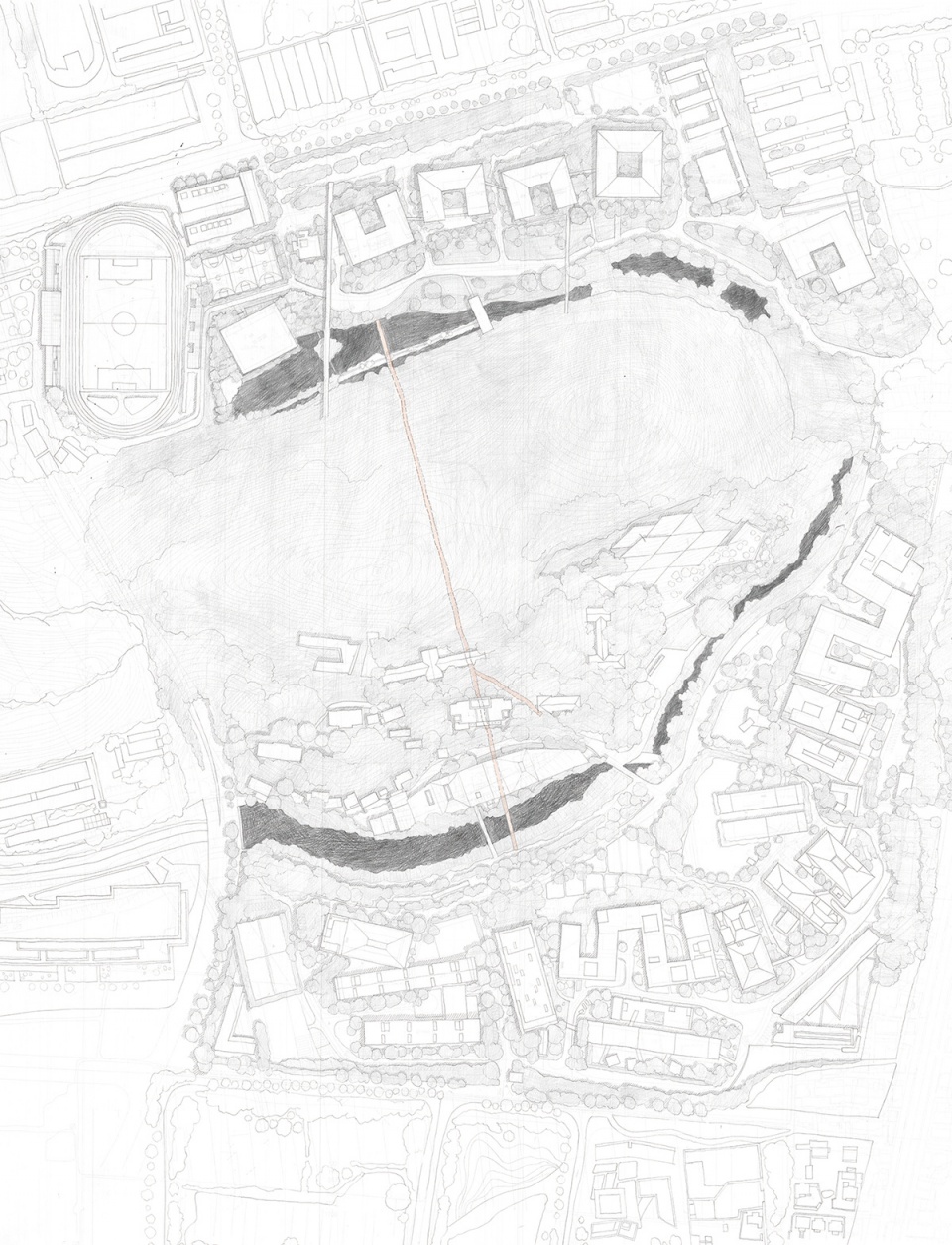
▼剖面图,Section © 熊梓贝

动作:盖
10. 流空庭
The flowing court
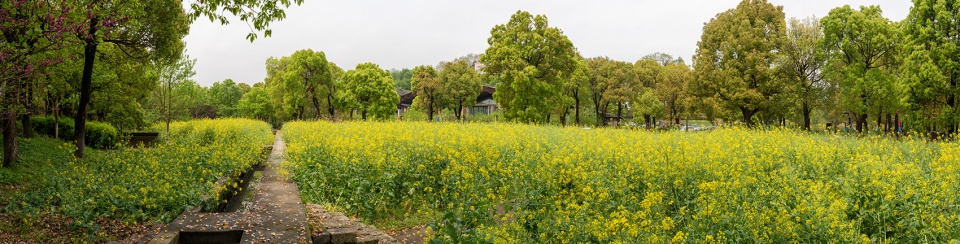
场地:油菜花田
悖论:【荣与枯】
说明:在花的荣枯,水的流淌之间如何做一个可以感受时间的空间?
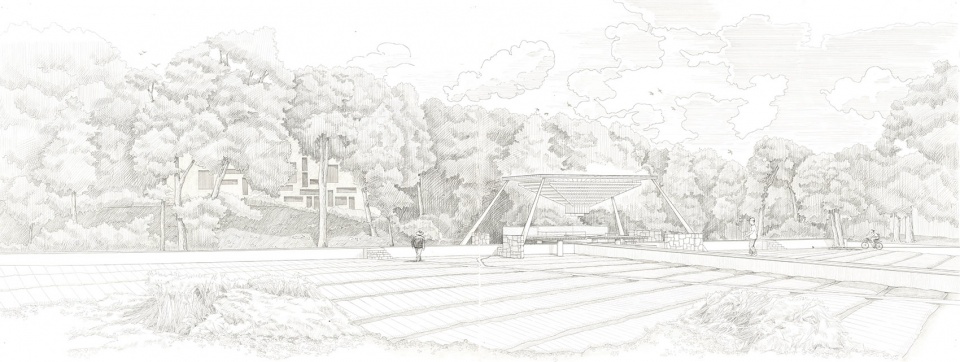
作品:流空庭
动作:盖
阐发:花荣旖旎水静流,草枯寂寥人独酌。
Site:Rape flower field
Paradox:【 flourish and withered 】
Explanation: How to make a space that can feel time between the growth and decline of flowers and the flow of water?
Work : The flowing court
Action : cover
Elucidate : Flowers are like brocade and water quietly flowing , the grass withered and there was the man drinking alone.
▼流空庭 – 现场,The flowing court – site © 王子倩
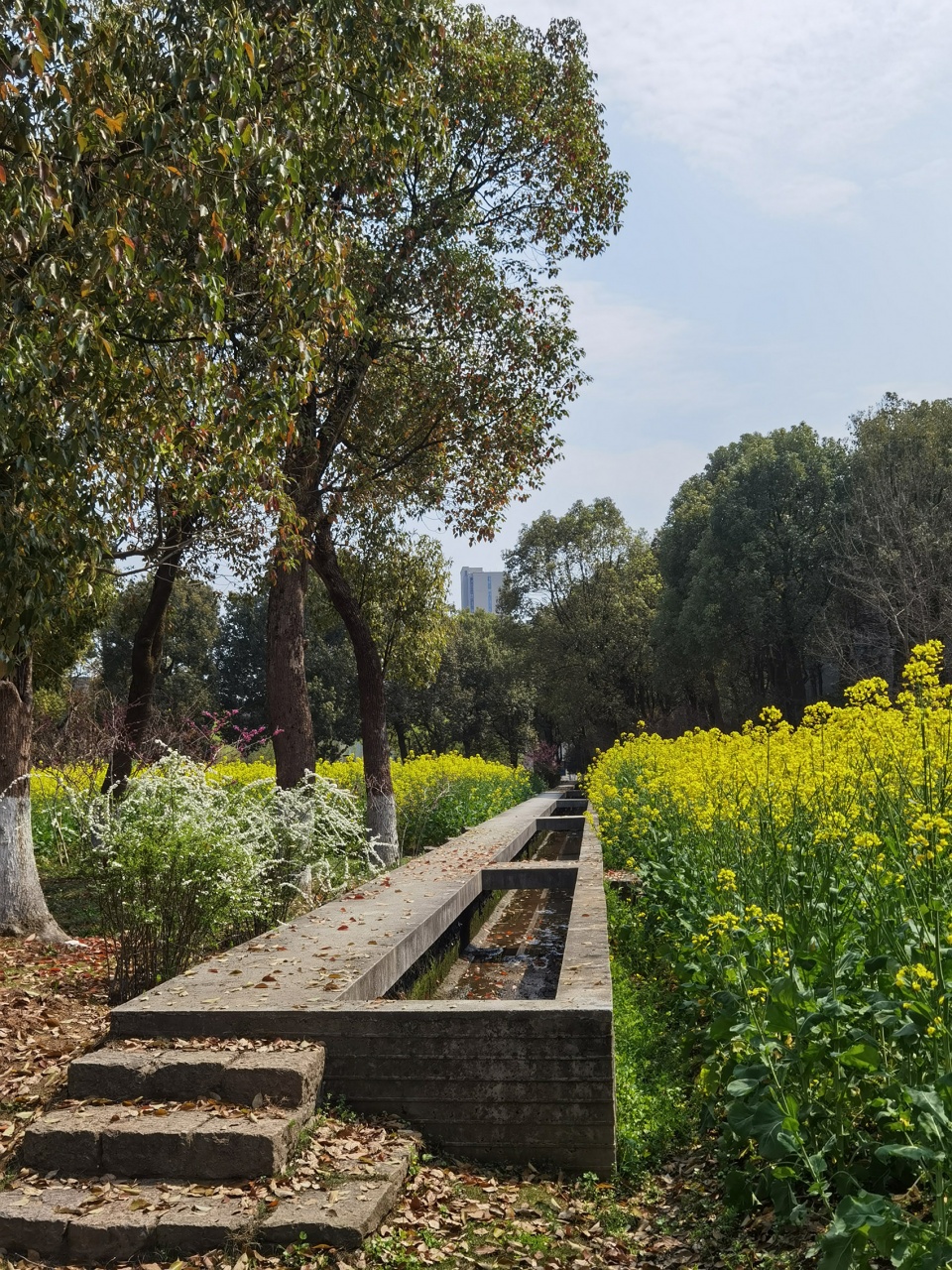
▼效果图,Perspective © 王子倩
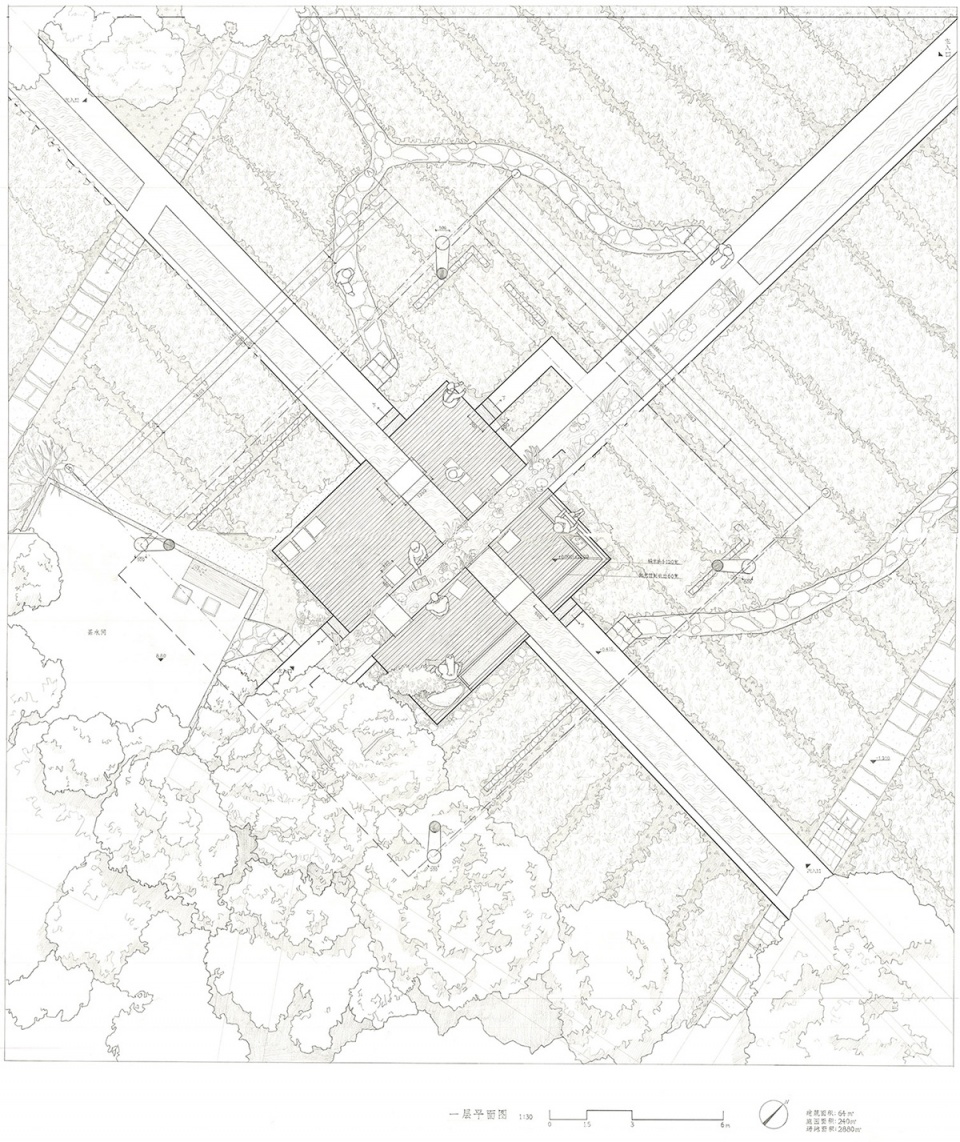
▼一层平面图,Ground floor plan © 王子倩
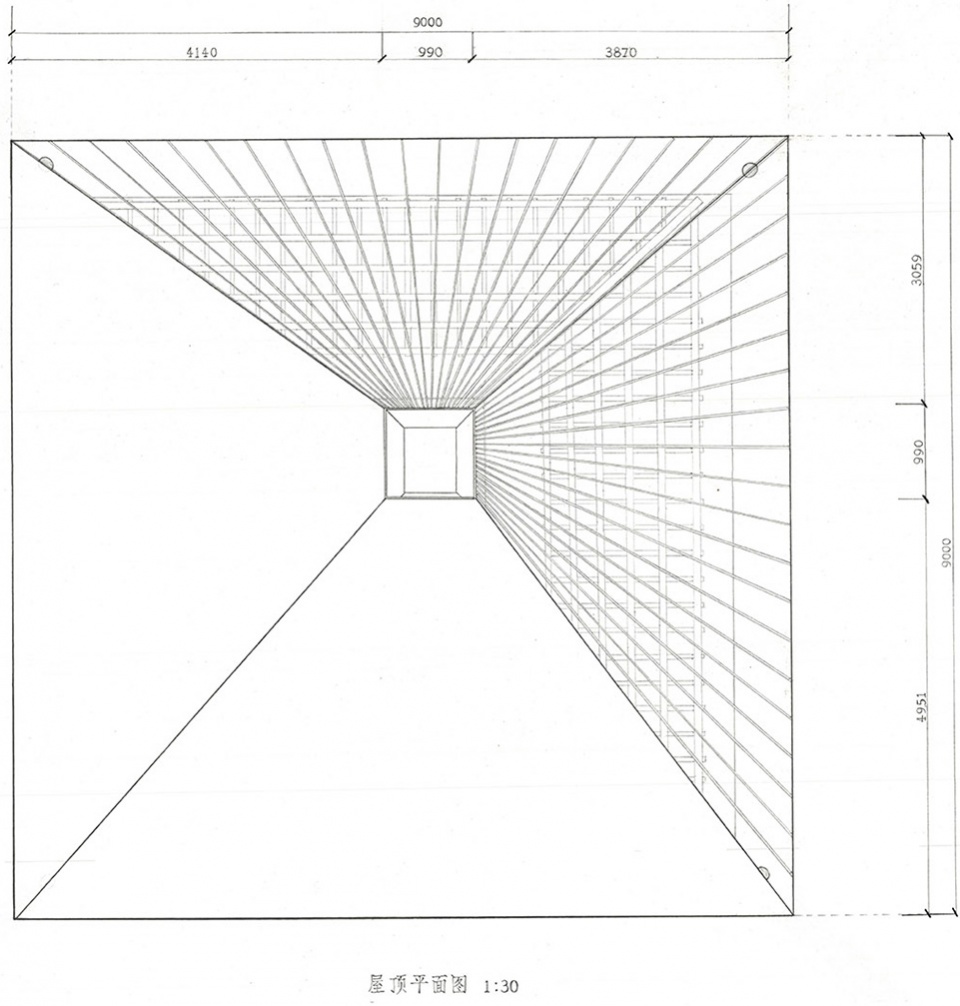
▼屋顶平面图,Roof plan © 王子倩
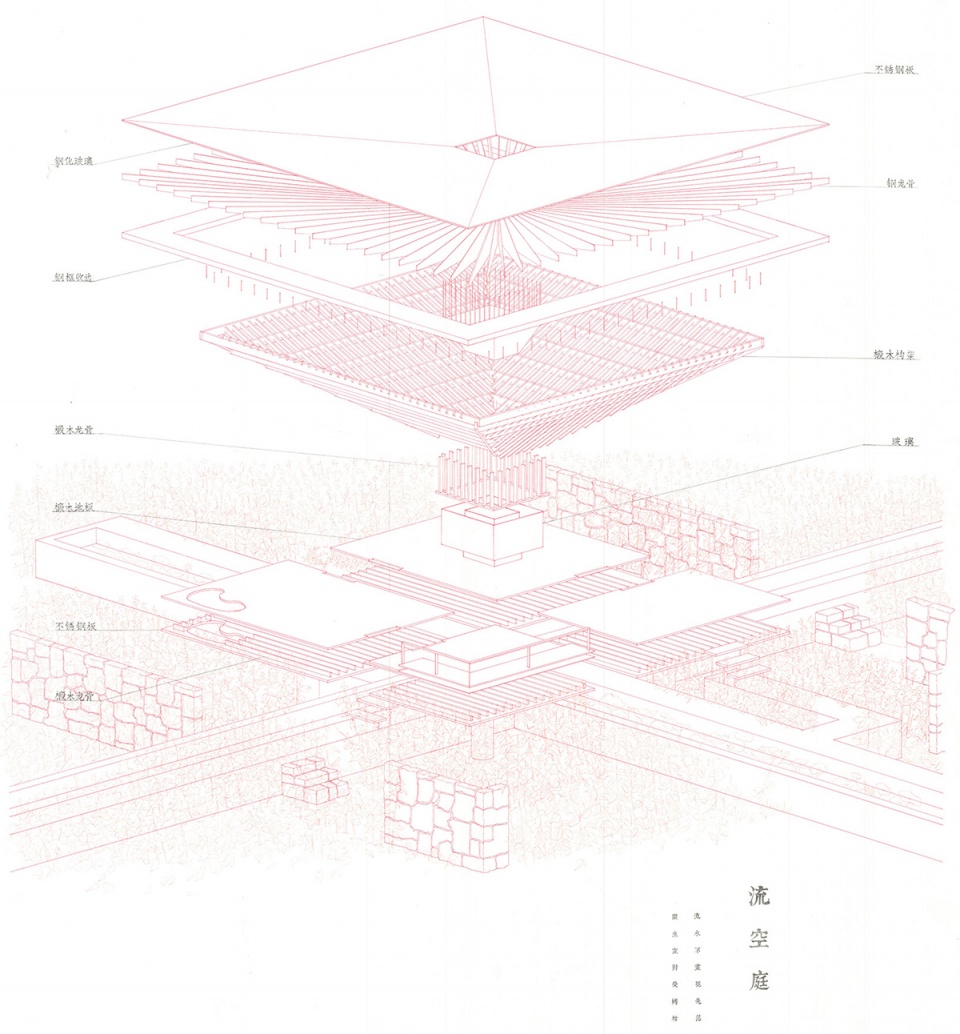
▼轴测图,axon © 王子倩
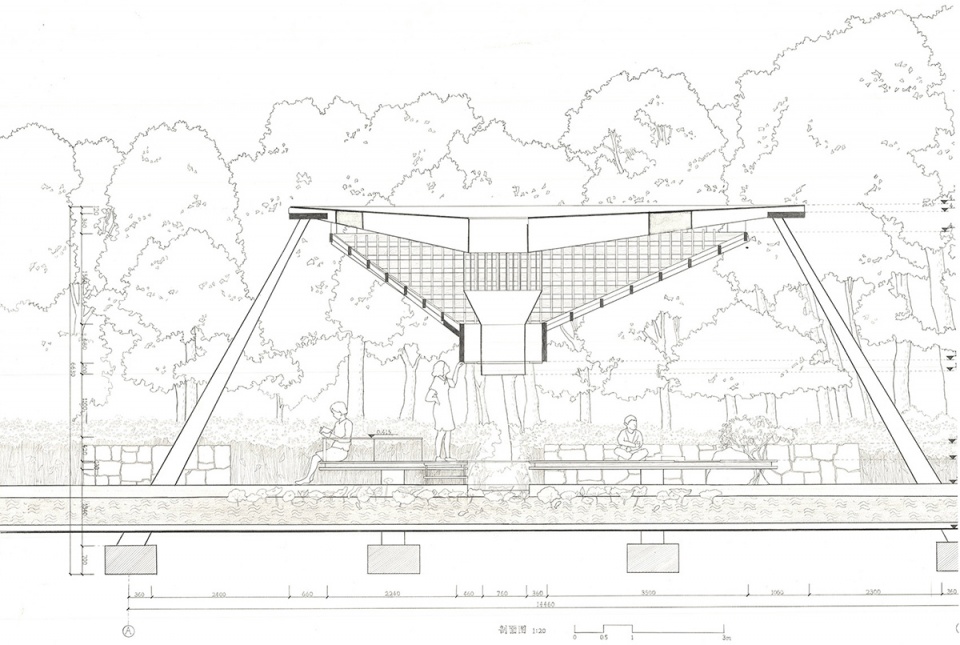
▼剖面图,Section © 王子倩
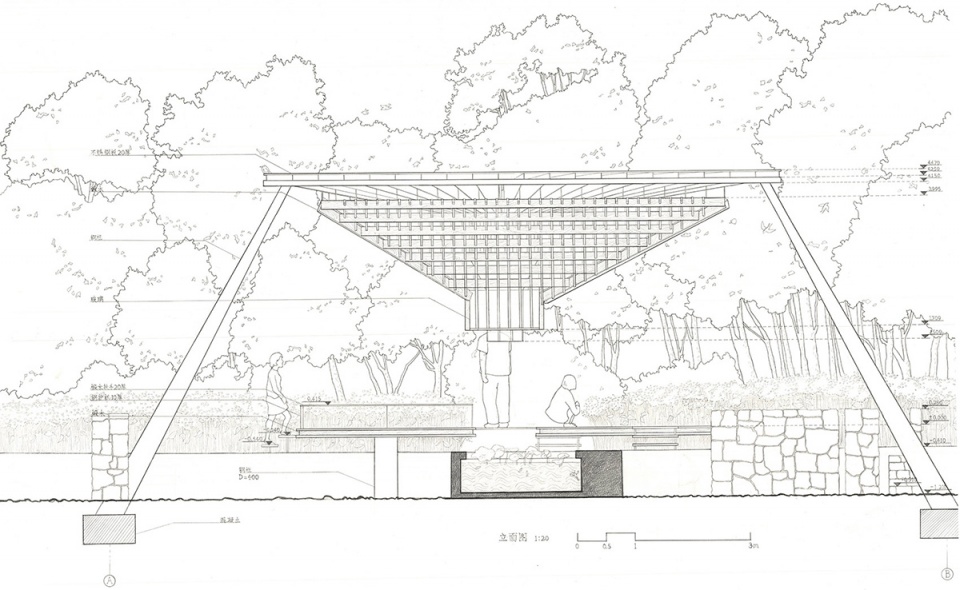
▼立面图,Elevation
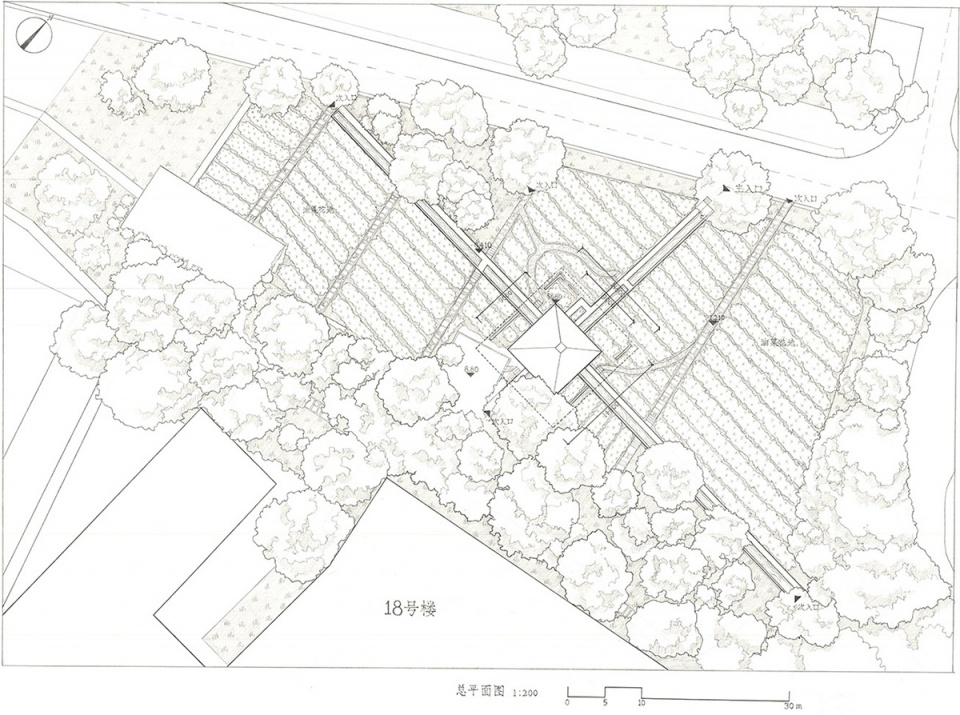
▼总平面图,Site plan © 王子倩
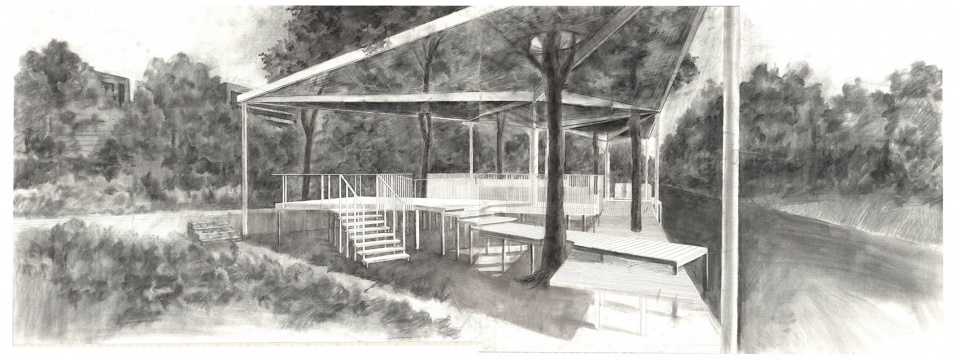
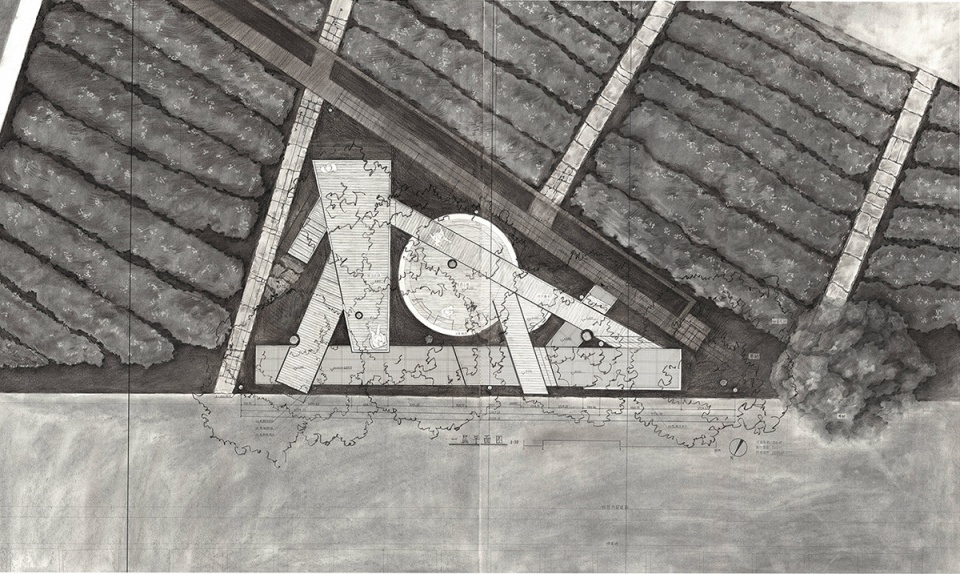
11. 知秋庭
The pavilion with fallen leaves
场地:油菜花田
悖论:【荣与枯】
说明:在花的荣枯,水的流淌之间如何做一个可以感受时间的空间?
作品:知秋庭
动作:盖
阐发:眷难离,未知秋。
Site:Rape flower field
Paradox:【 flourish and withered 】
Explanation: How to make a space that can feel time between the growth and decline of flowers and the flow of water?
Work : The pavilion with fallen leaves
Action : cover
Elucidate: Sentimentally attached to hard to leave , wondering when autumn will come.
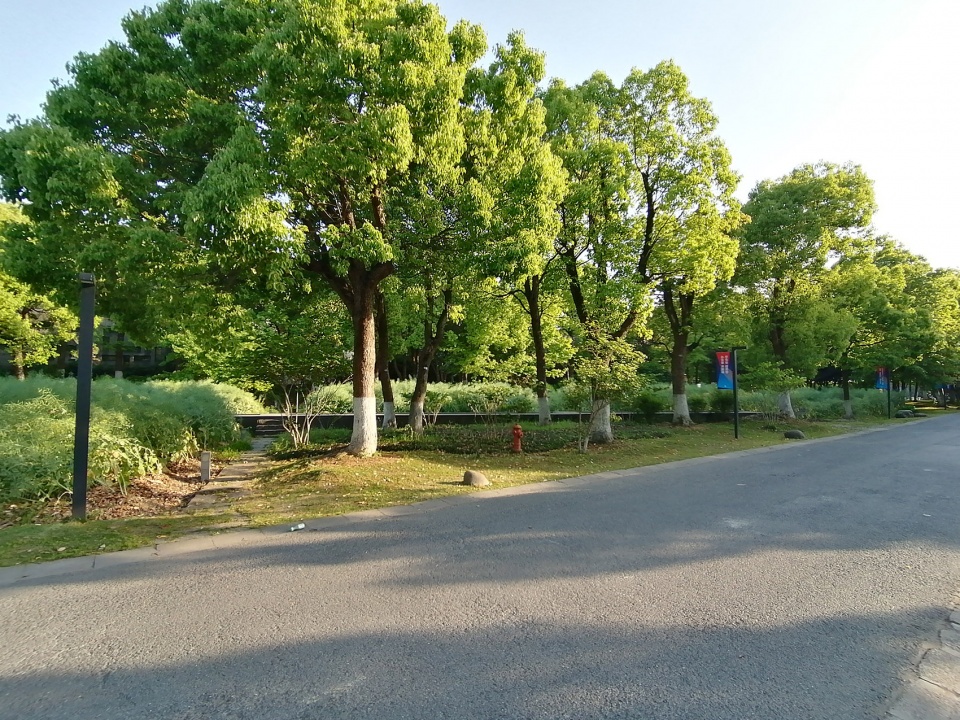
▼知秋庭 – 现场,The pavilion with fallen leaves – site © 陈赐乐
▼效果图,Perspective © 陈赐乐
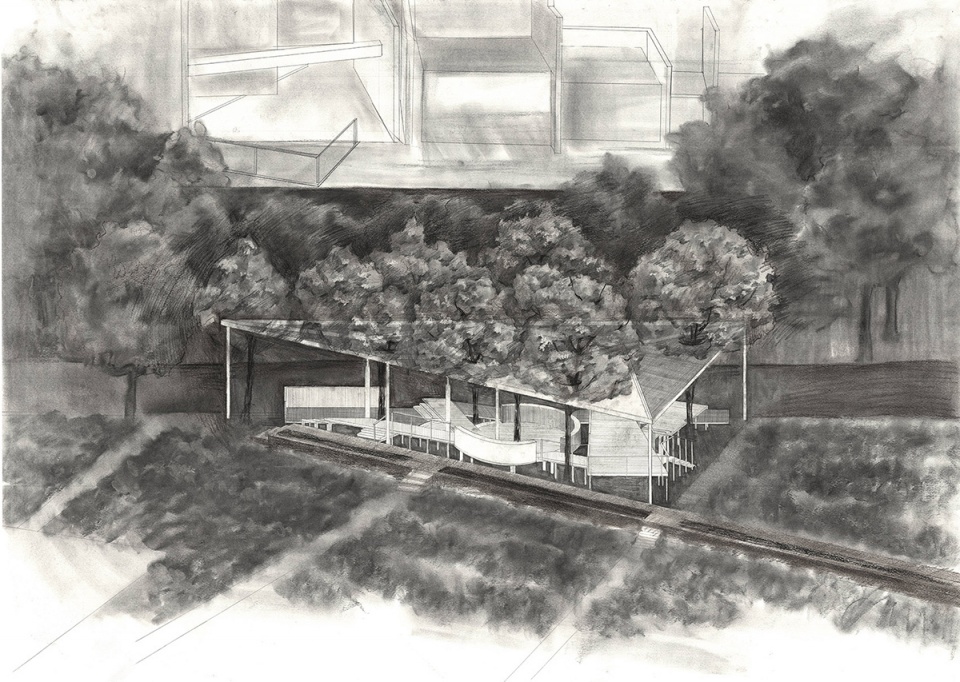
▼轴测图,Axon © 陈赐乐
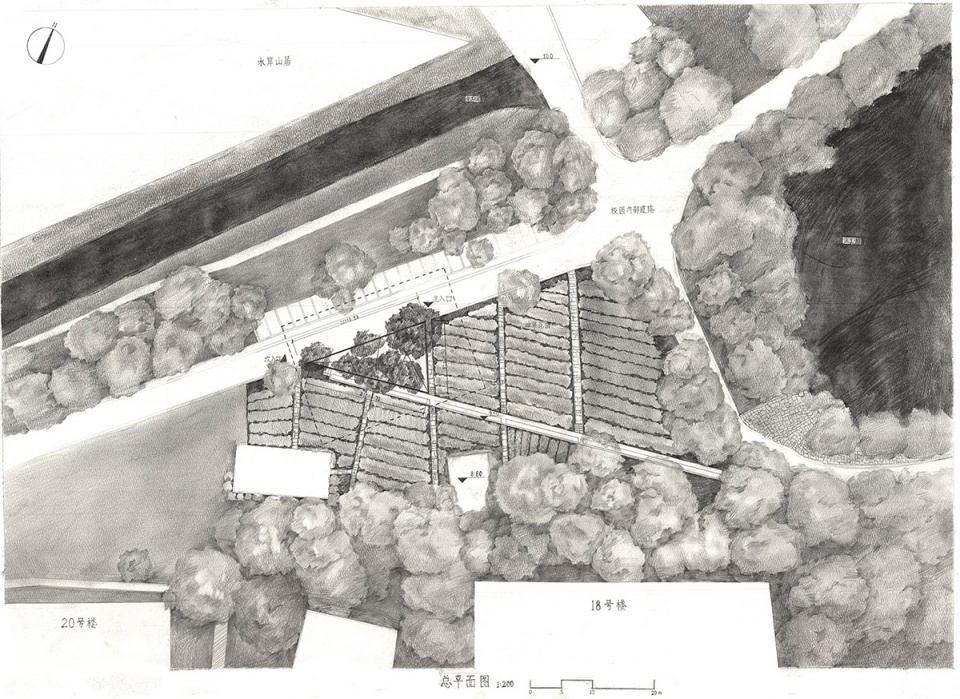
▼总平面图,Master plan © 陈赐乐
▼平面图,Plan © 陈赐乐
▼立面图,Elevation © 陈赐乐
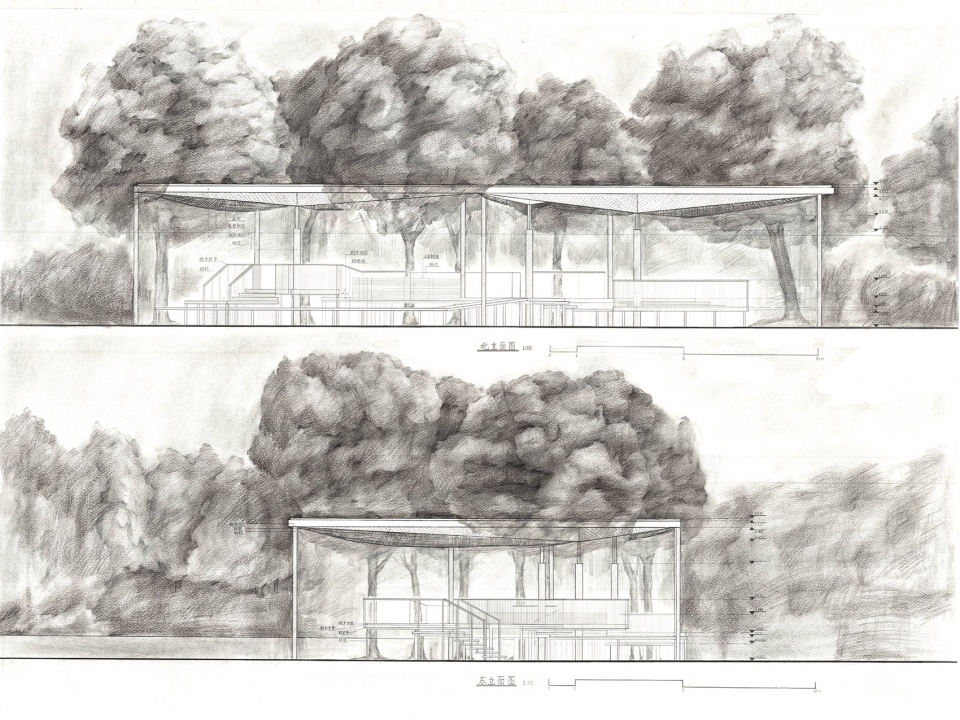
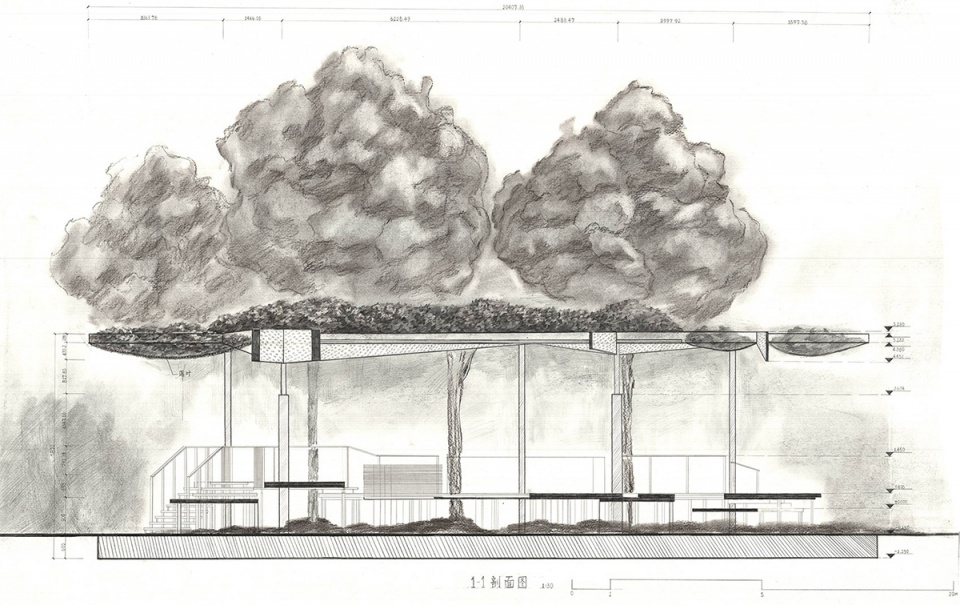
▼剖面图,Section © 陈赐乐
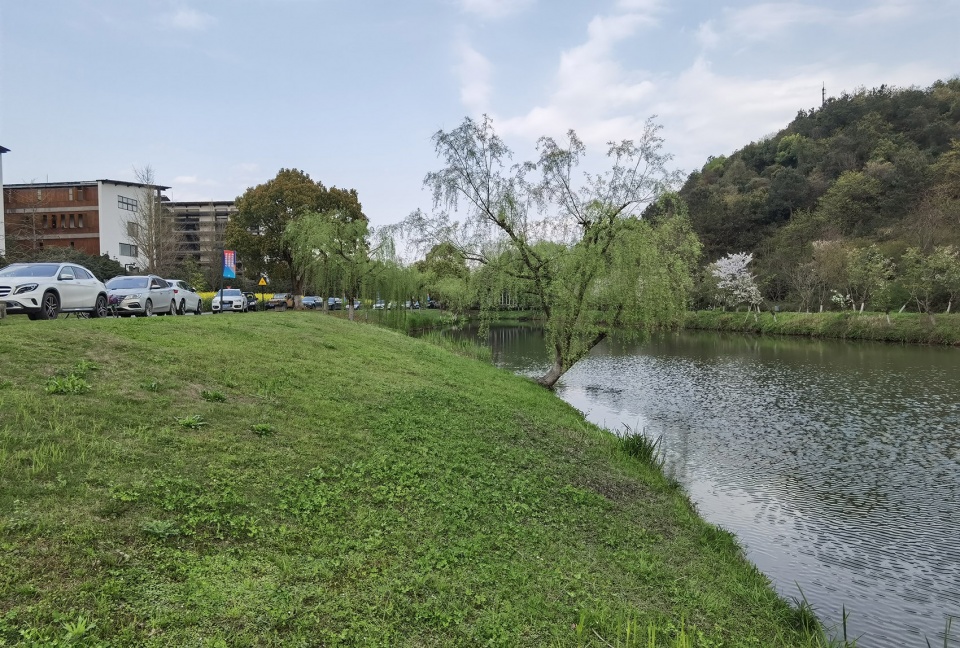
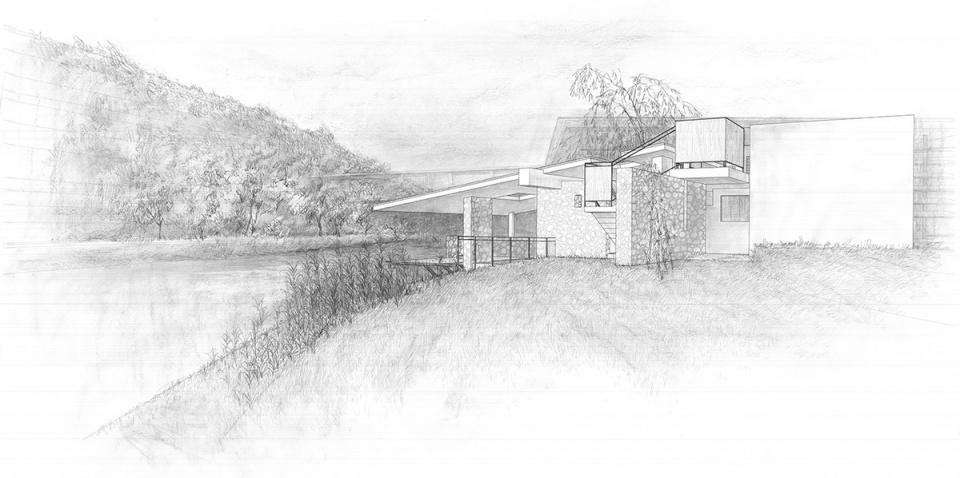
12. 山见溪居
Mountain by the stream
场地:象山北麓水岸边
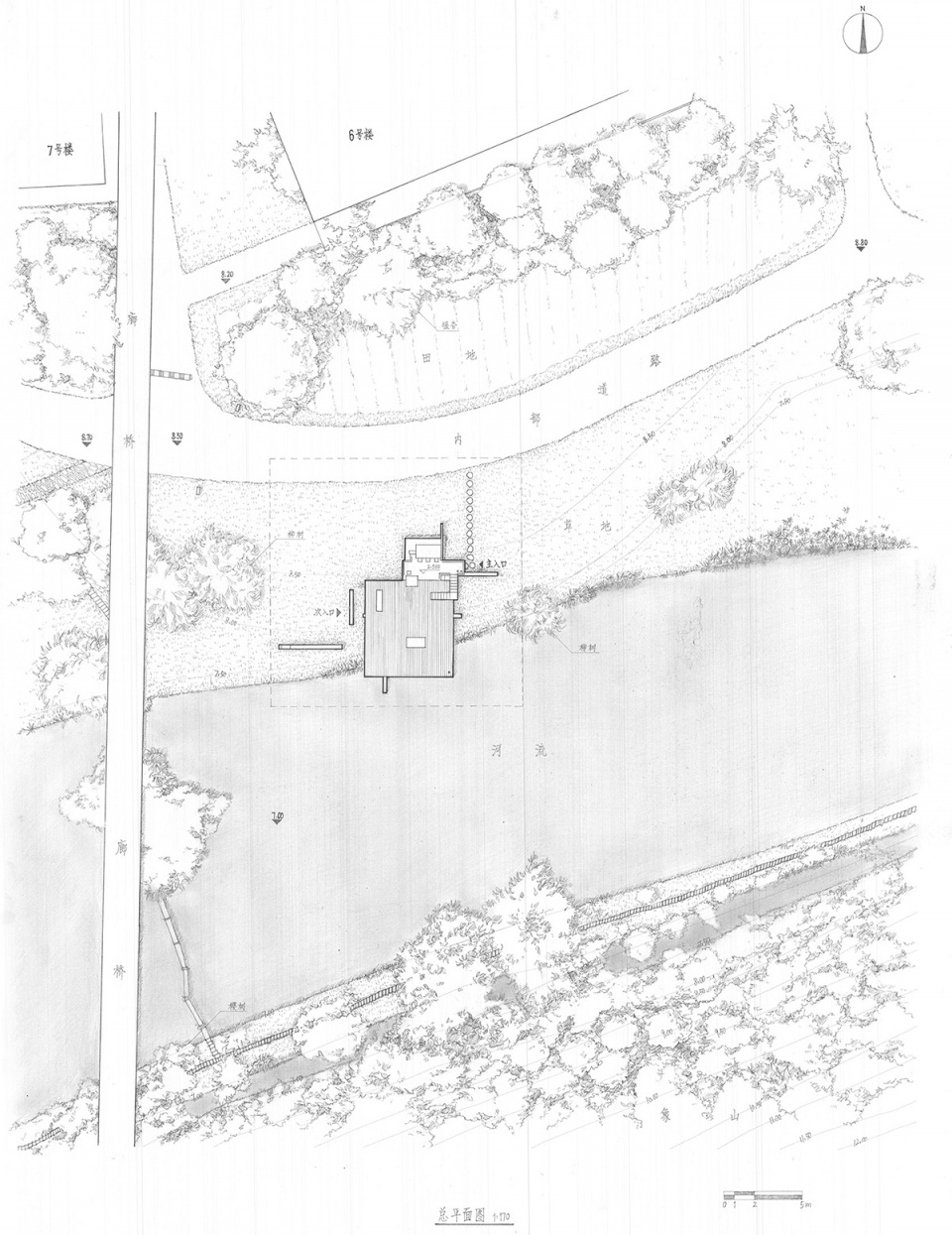
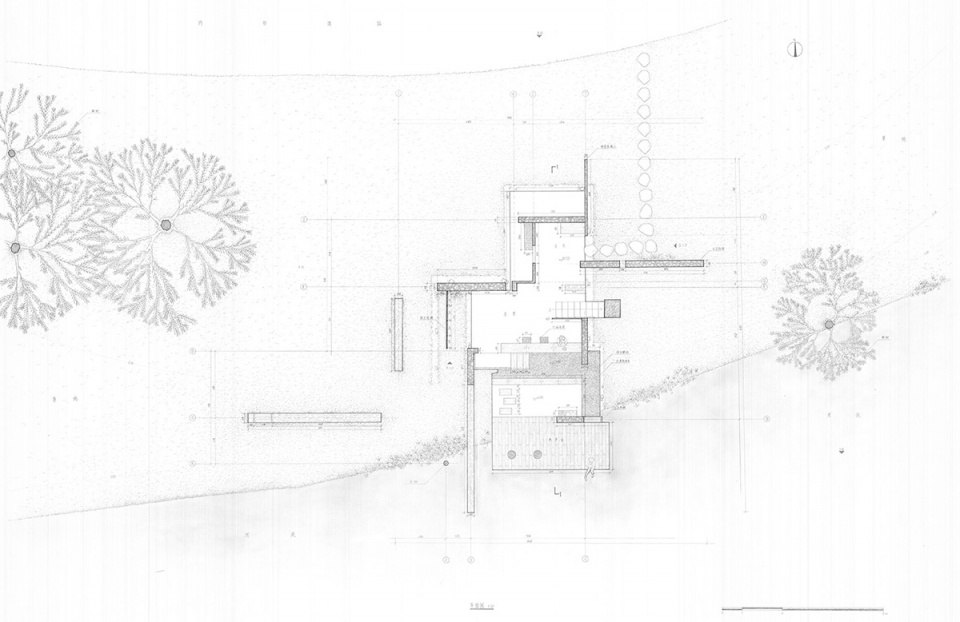
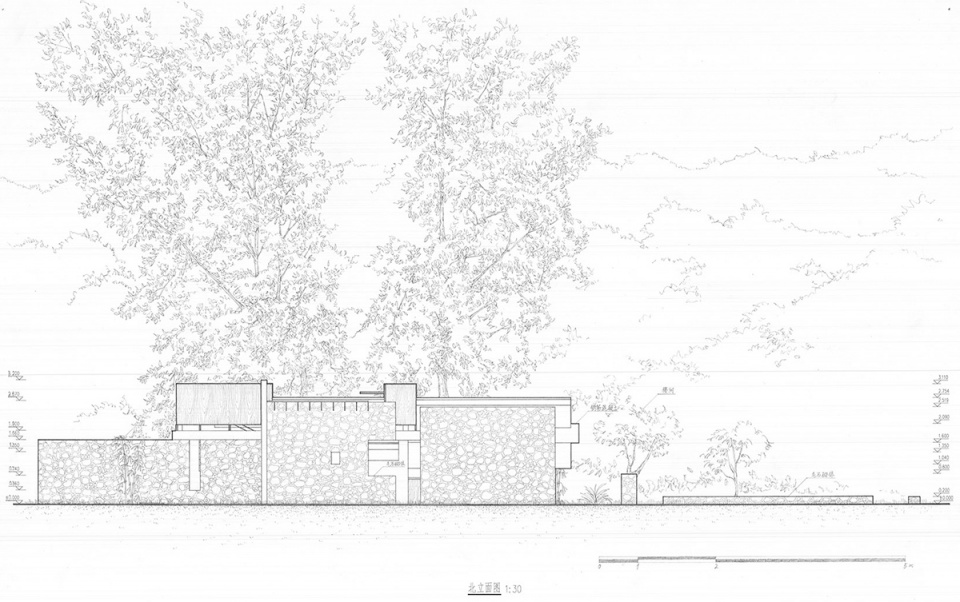
悖论:【广与狭】
说明:基地位于象山北麓水岸边,此处感受到水面和北侧建筑的广大,反观自身的狭小,思考小庭园与建筑如何与大尺度的建筑景观相联系,即讨论大与小的悖论。
作品:山见溪居
动作:盖
阐发:青山连绵为广,水岸轻停为狭。
Site : Water bank at the Xiangshan north foot
Paradox:【wide and narrow】
Explanation:The base is located at the water bank at the north foot of Xiangshan , where you can feel the vastness of the water and the buildings on the north side , but look at our own narrowness , to think about how small courtyard and buildings relate to large-scale architectural landscapes is to discuss the paradox of large and small.
Work :The residence which could look at the mountain by the stream
Action : cover
Elucidate :Continuous green mountains are wide , light stop beside the water bank is narrow.
▼山见溪居 – 现场,Mountain by the stream – site © 朱吟秋
▼透视图,Perspective © 朱吟秋
▼总平面图,Site plan © 朱吟秋
▼平面图,Plan © 朱吟秋
▼北立面图,North elevation © 朱吟秋
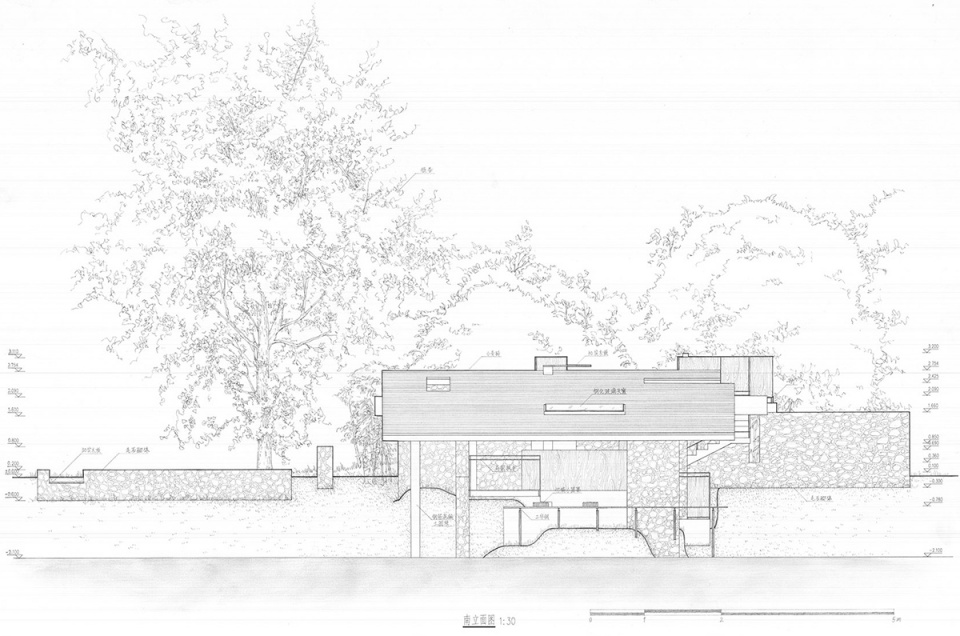
▼南立面图,South elevation © 朱吟秋
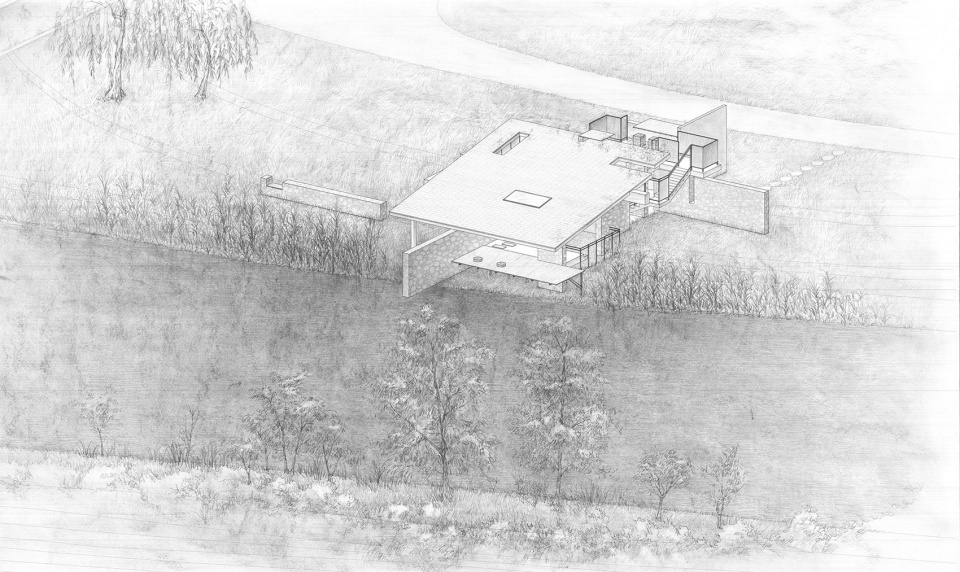
▼轴测图,Axon © 朱吟秋
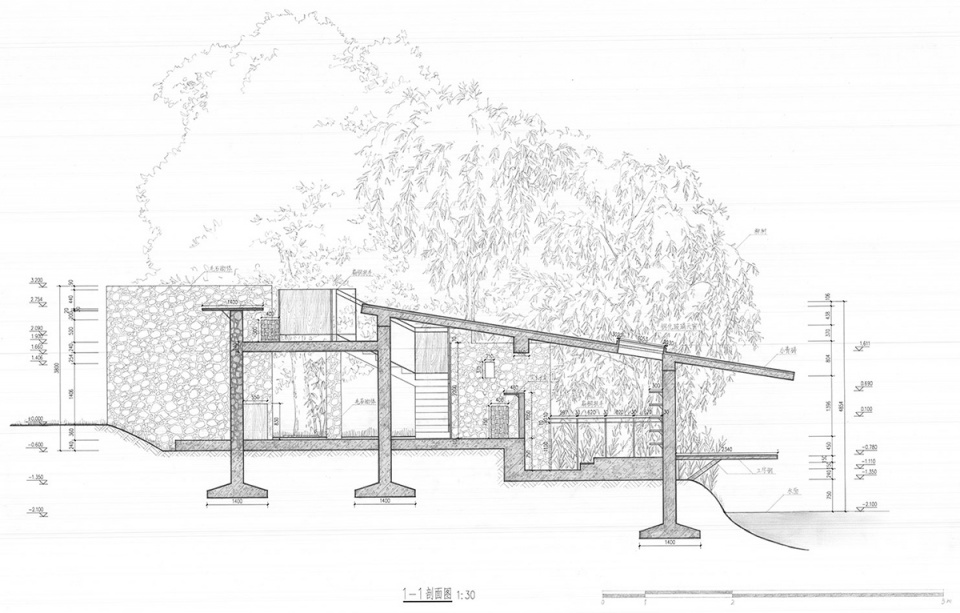
▼剖面图,Section © 朱吟秋
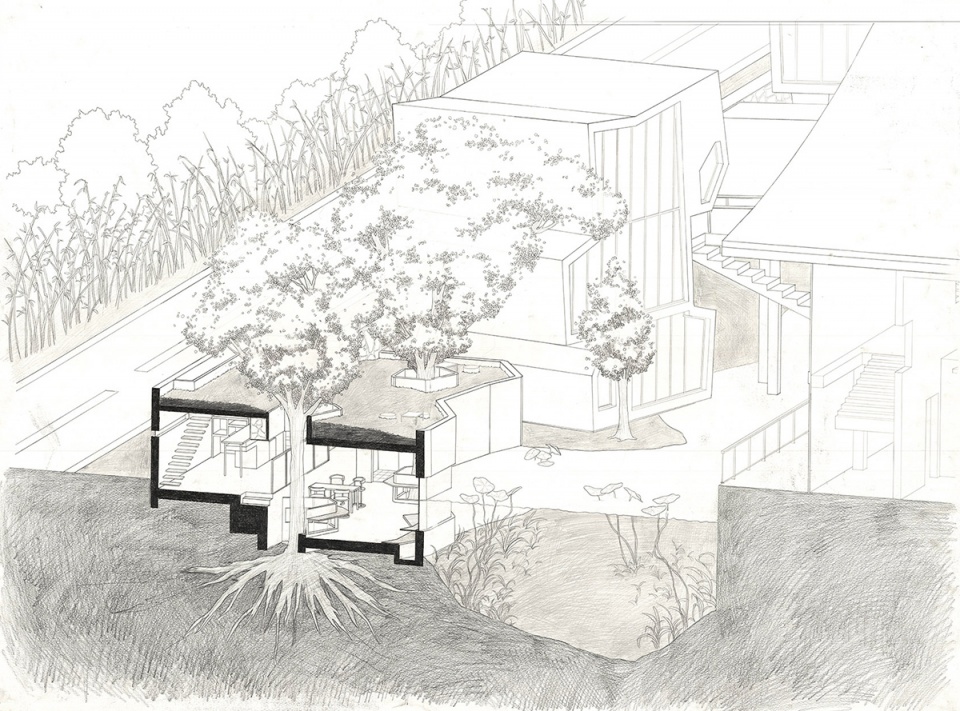
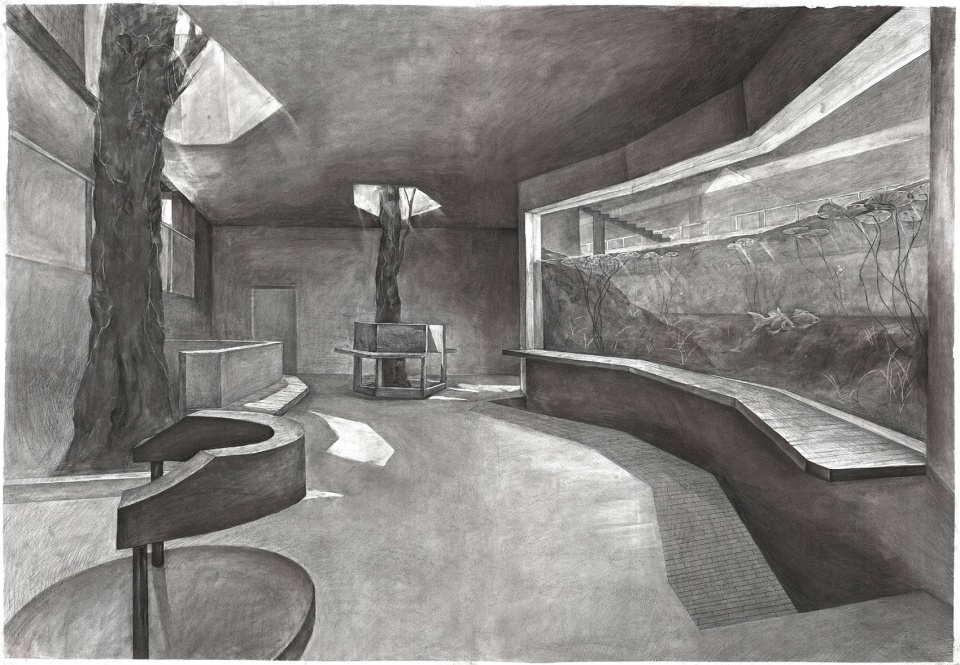
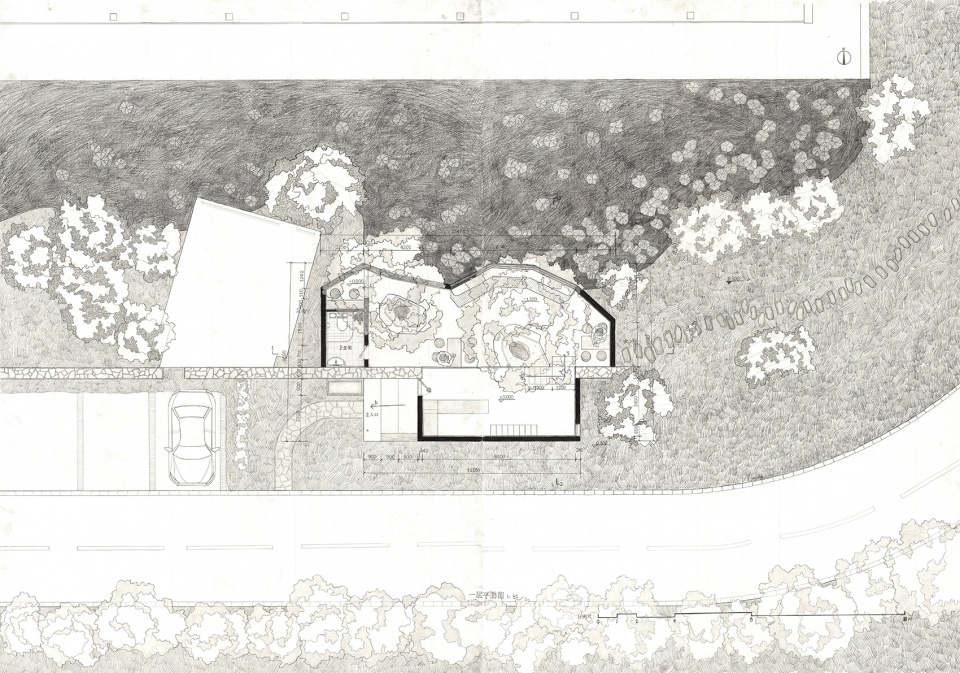
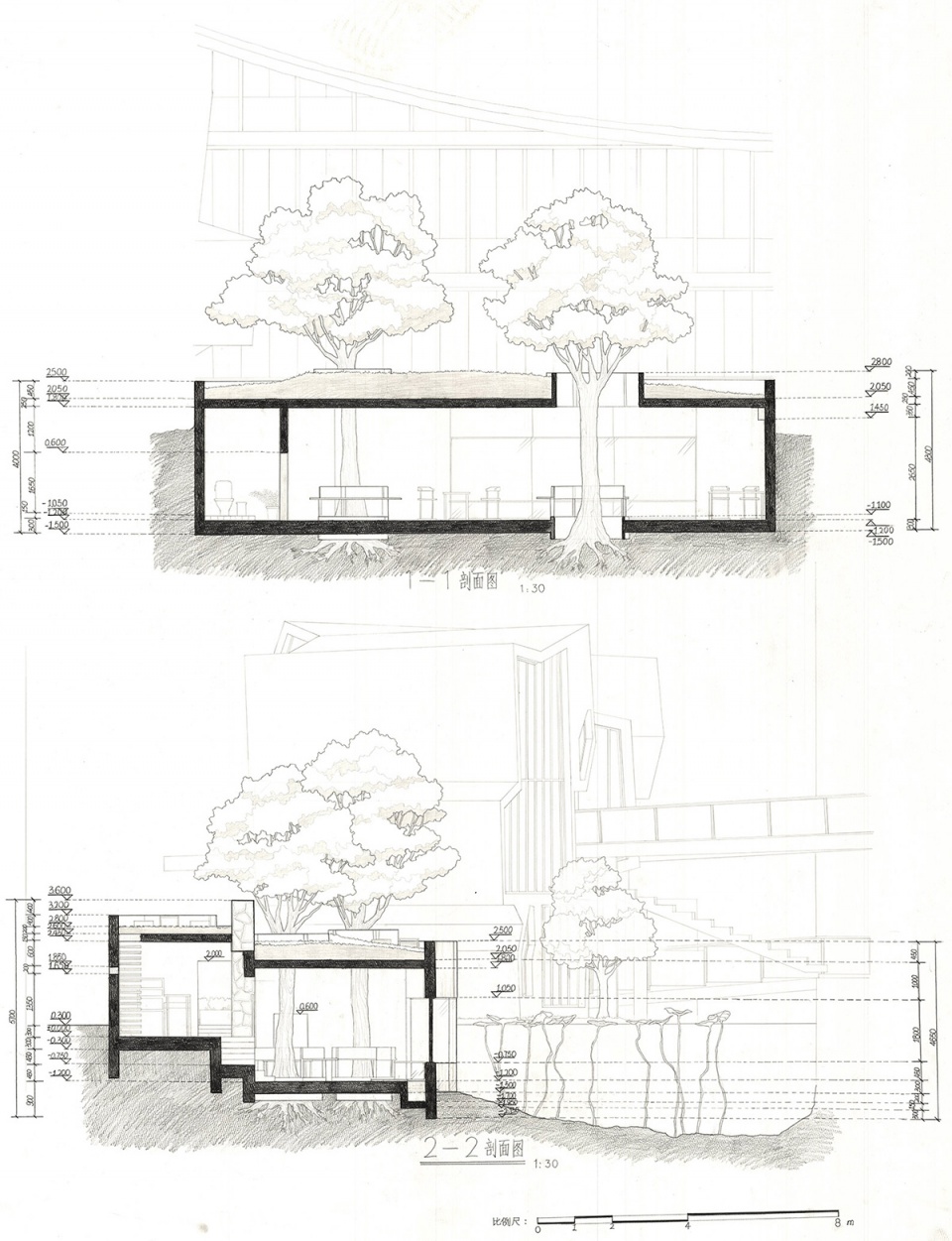
13. 丘
Hillock
场地:太湖房侧面
悖论:【显与隐】
说明:在太湖石假山的隐喻和红色雕塑之间,要做一个怎么样的茶庭?是隐没在树丛中还是进入山丘内部?是显现在地形上还是把自身作为取景器?
作品:丘
动作:盖
阐发:
隐于山水,观斜阳。
落叶入厢,临水旁。
自是含而不露,亦是显豁明了。
Site:Side view of Taihu House
Paradox:【appear and hide】
Explanation: Between the metaphor of taihu stone rockery and red sculpture , what kind of tea court should be built ? Does it disappear into the trees or into the hill ? Does it appear on the terrain or use itself as a viewfinder?
Work : Hillock
Action : cover
Elucidate : Hidden in the landscape , watching the sunset, the fallen leaves floated into the room , beside the river, it is , of course , implicit and revealing.
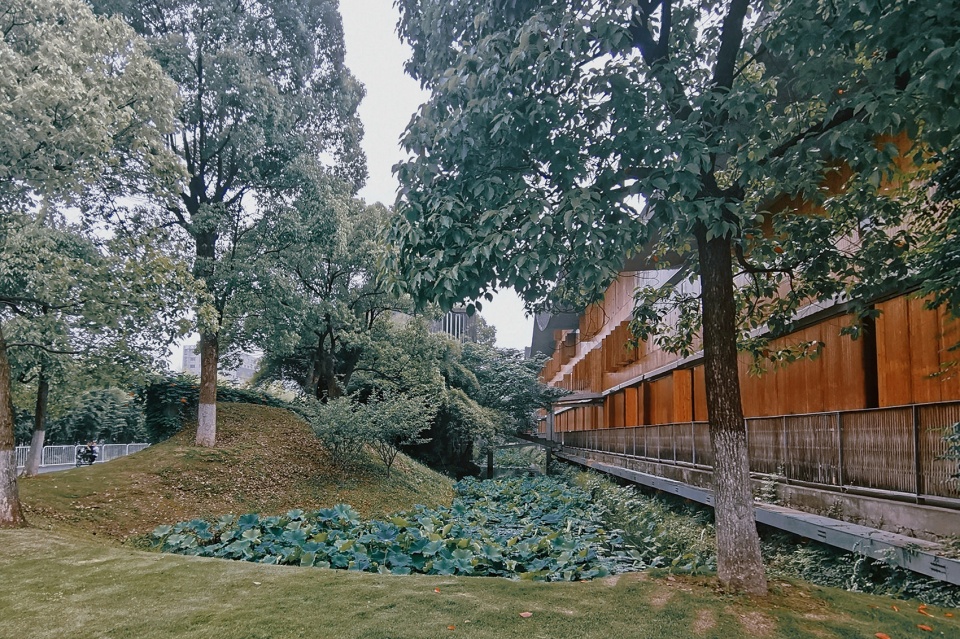
▼丘 – 现场,Hillock – site © 郑若雪
▼轴测图,Axon © 郑若雪
▼人视图,Perspective © 郑若雪
▼一层平面图,Ground floor plan © 郑若雪
▼剖面图,Section © 郑若雪
▼立面图,Elevation © 郑若雪
致谢
Acknowledgment
感谢中国美术学院建筑艺术学院全体教师及参与课程的20级景观系同学。本课程版权归属于中国美术学院建筑艺术学院、授课教师与参与同学共同所有。
附入选作品的人员名单:
《流空庭》:王子倩
《知秋庭》:陈赐乐
《丘》:郑若雪
《林下幽筑》:曾楚茜
《望境》:李明珊
《雨霁轩》:江易璇
《静远隅》:彭乐芝
《迷境》:熊可欣
《游弦》:熊梓贝
《过庭》:张宇涵
《山见溪居》:朱吟秋
《望园》:陈克
《溯回园》:卞芊琪
Thanks to all the teachers and Grade 20 students of the School of Architecture, China Academy of Art. The copyright of this course belongs to CAA, Dr. LI Wenxi and the participating students.
Attached is a list of selected works:
《The flowing court》 Ziqian Wang
《The pavilion with fallen leaves》 Cile Chen
《Hillock》 Ruoxue Zheng
《Secluded cottage under the trees》Chuqian Zeng
《Architecture looking into the distance》Mingshan Li
《Raining pavilion》Yixuan Jiang
《Tranquil court》Lezhi Peng
《Labyrinth》Kexin Xiong
《String court》Zibei Xiong
《Traverse court》Yuhan Zhang
《The residence which could look at the mountain by the stream》Yinqiu Zhu
《Gaze court》Ke Chen
《Adverse current garden》Qianqi Bian
导师简介
Introduction of Supervisor
郦文曦
早稻田大学建筑学博士,招聘研究员
郦文曦建筑事务所 主持建筑师
日本建筑学会 正会员
中国美术学院 毕业设计导师
LI Wenxi
Ph.D. in Architecture, Waseda University, Adjunct Researcher
Founding Partner/ Leading Architect of LI WENXI Architects
Graduated design supervisor, China Academy of Art
More: 郦文曦 (联系邮箱:lwx.magic@qq.com); 更多关于中国美术学院:China Academy of Art



牛逼
建筑学正统在美院
这波素描表达满分 太顶了
表现手法也太震撼了 再看动作主题 简直点睛之笔 还是国美厉害!
有些自然不改还更美。反而改了就不美了
我就是想说哈,这么牛逼的内容以后谷德能否多发一些
有几个也太牛逼了 我大二第一次设计课的时候对建造和结构根本毫无概念
不愧是国美,表现太牛了,设计上有几个也相当可圈可点,后生可畏啊
以小见大
国美可以的
中国美院牛逼!
建筑不是王澍做的吗?这个建筑早几年就做好了。可能只是梳理景观吧
厉害,意境满满
牛啊牛啊
郦大师牛逼
可以,大一就有这水平。
好家伙 我大一还不知道我们专业是干啥的
未来可期